
Often the first clue is a thin whistle from somewhere downstream, then a streak of blue skimming the surface. The kingfisher is a sparrow-sized fisher of clear rivers, streams and lakes, and it gets by entirely without a song.
No song at all, just a whistle that cuts through the river noise
A riverside Wren sings; the kingfisher never does. What reaches you instead is the flight call, a brief, high ‘chee’ that usually comes in twos or threes as the bird shoots past.
An uneasy bird changes register to a grating ‘shrit-it-it’. Near an occupied bank in summer, a churring from the hole is the brood inside, demanding food.
In spring, courtship starts as the male chases the female along the water, calling the whole way.
Electric blue above, orange below, and a bill that tells the sexes apart
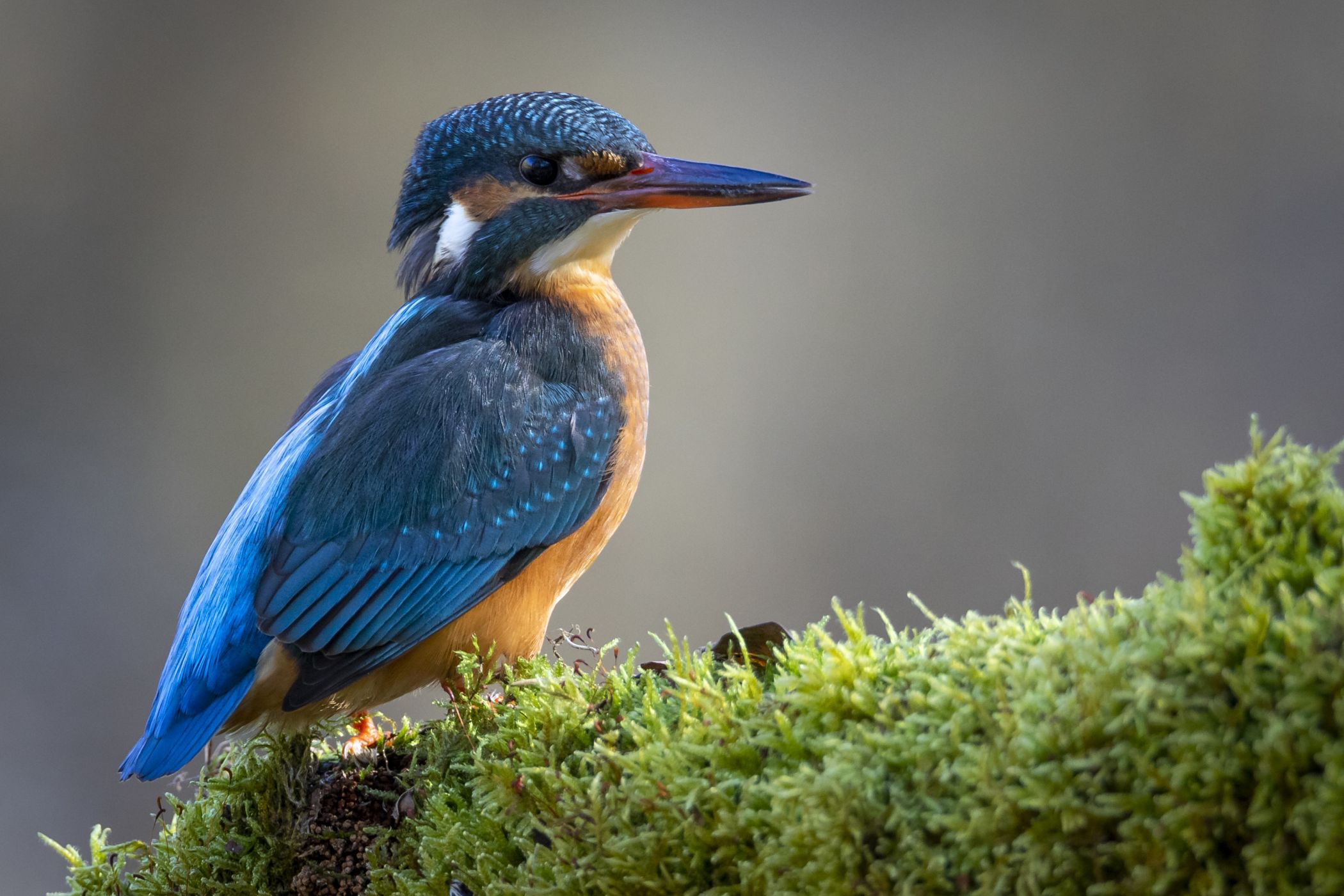
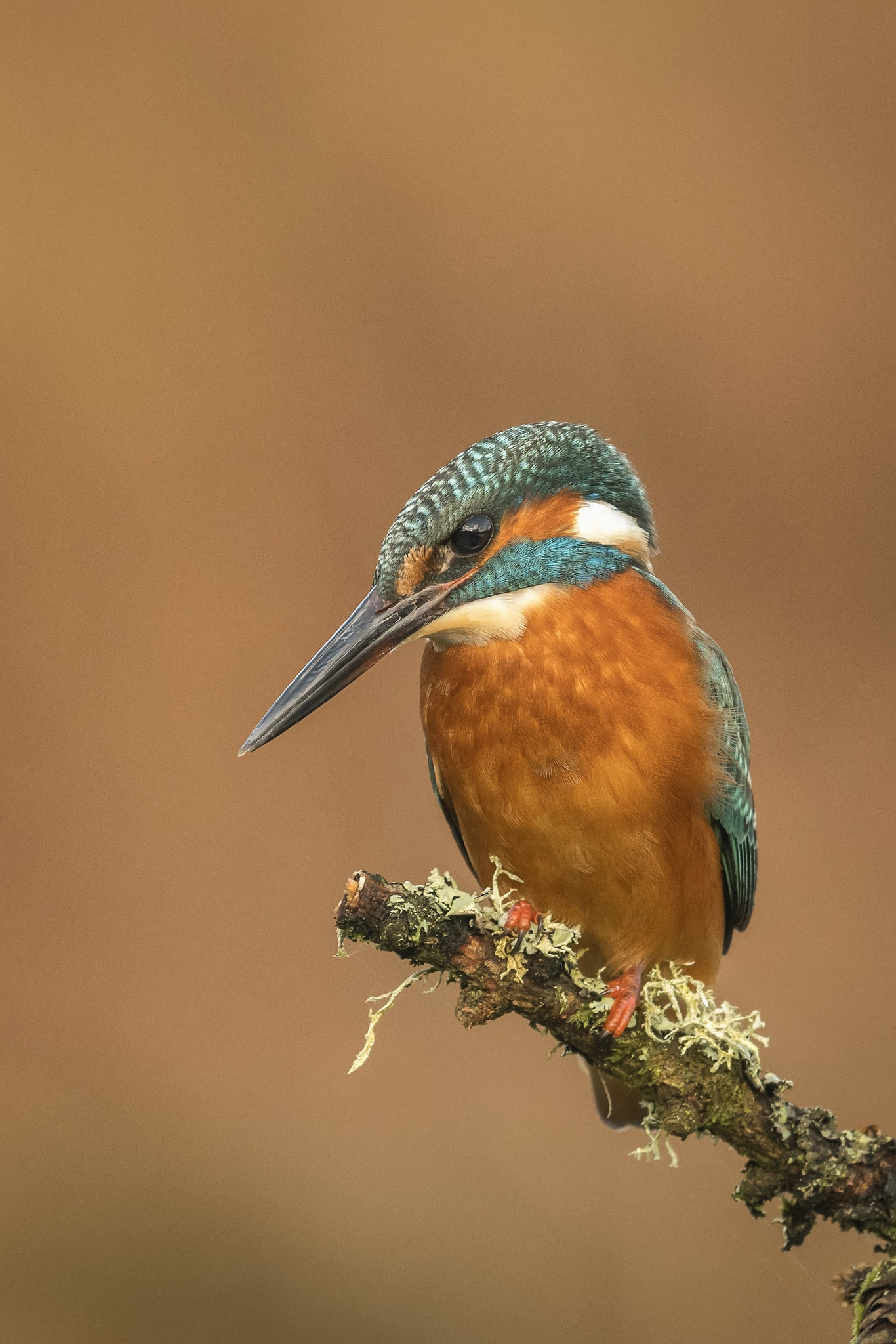
Shape comes before colour. Look for a large head, a dumpy body, a stub of a tail and a long, dagger-like bill on a bird only about 16 cm long.
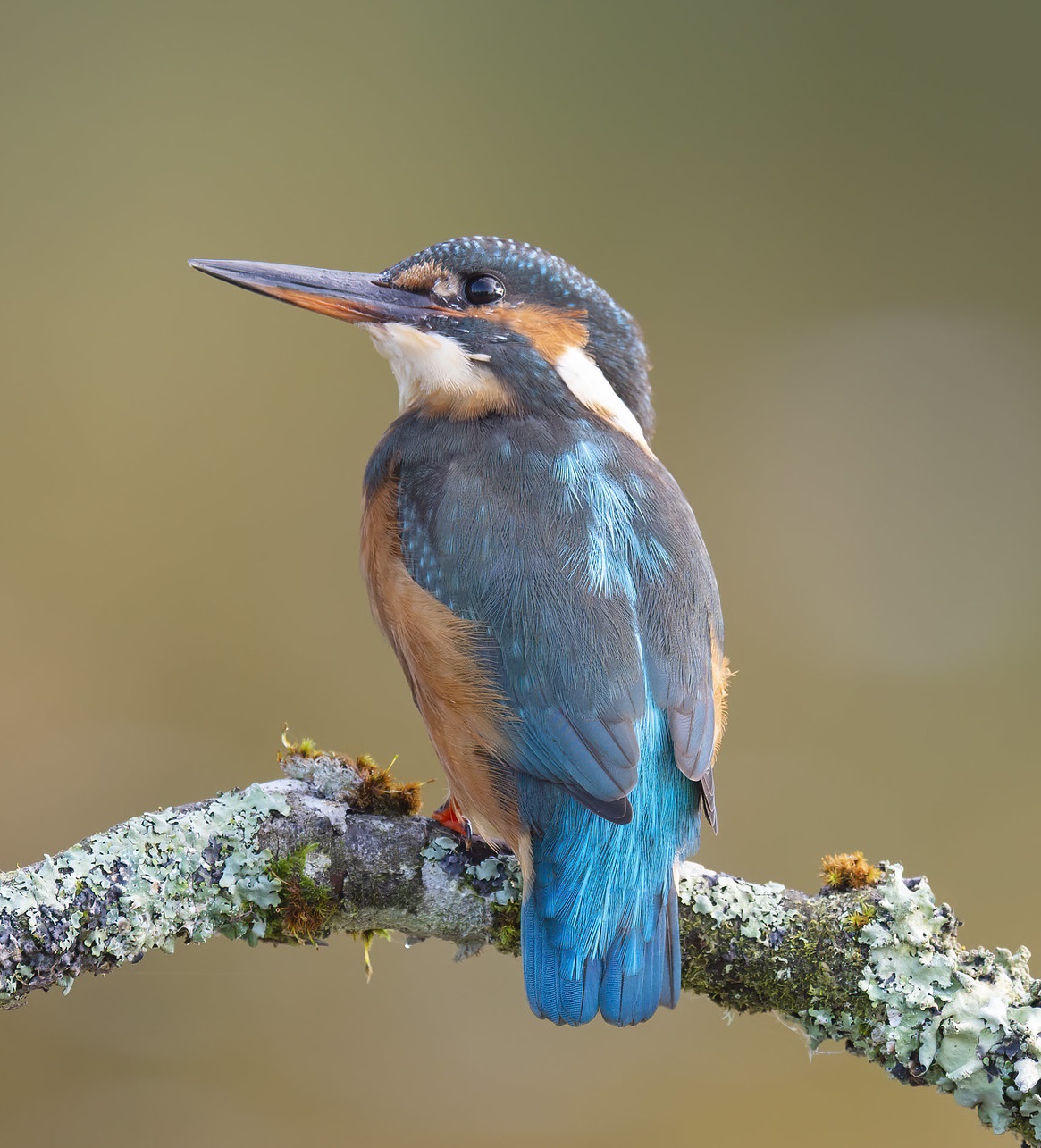
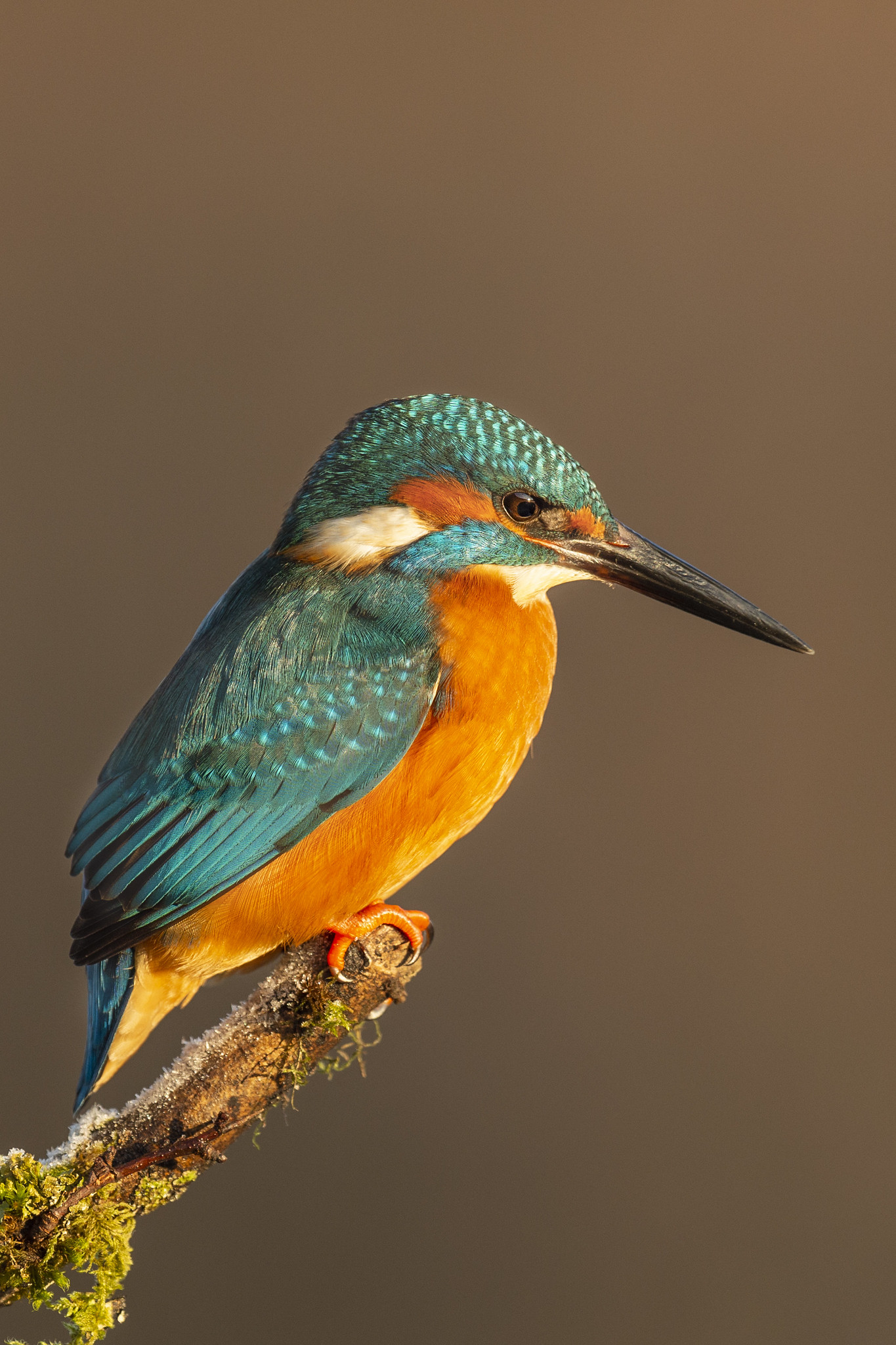
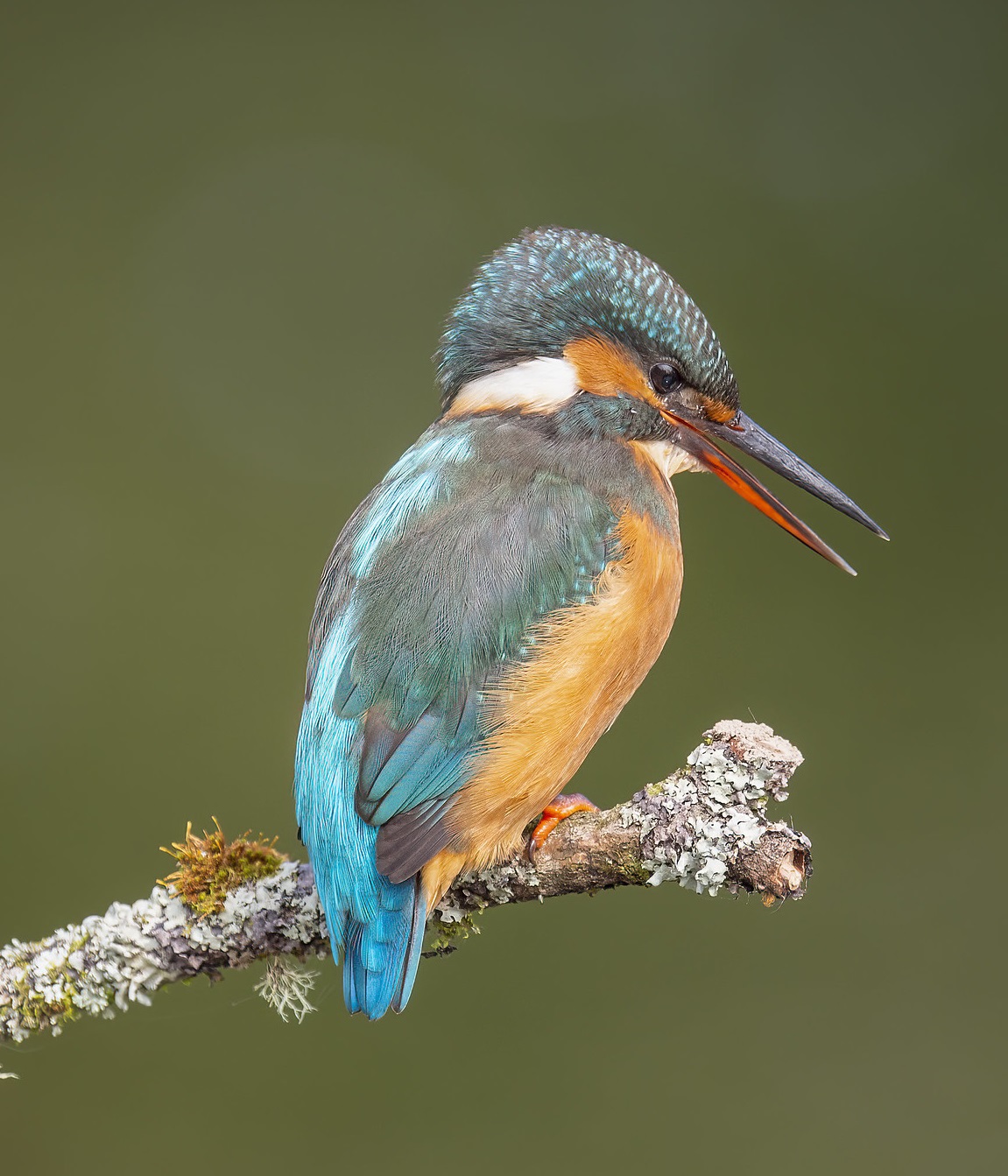
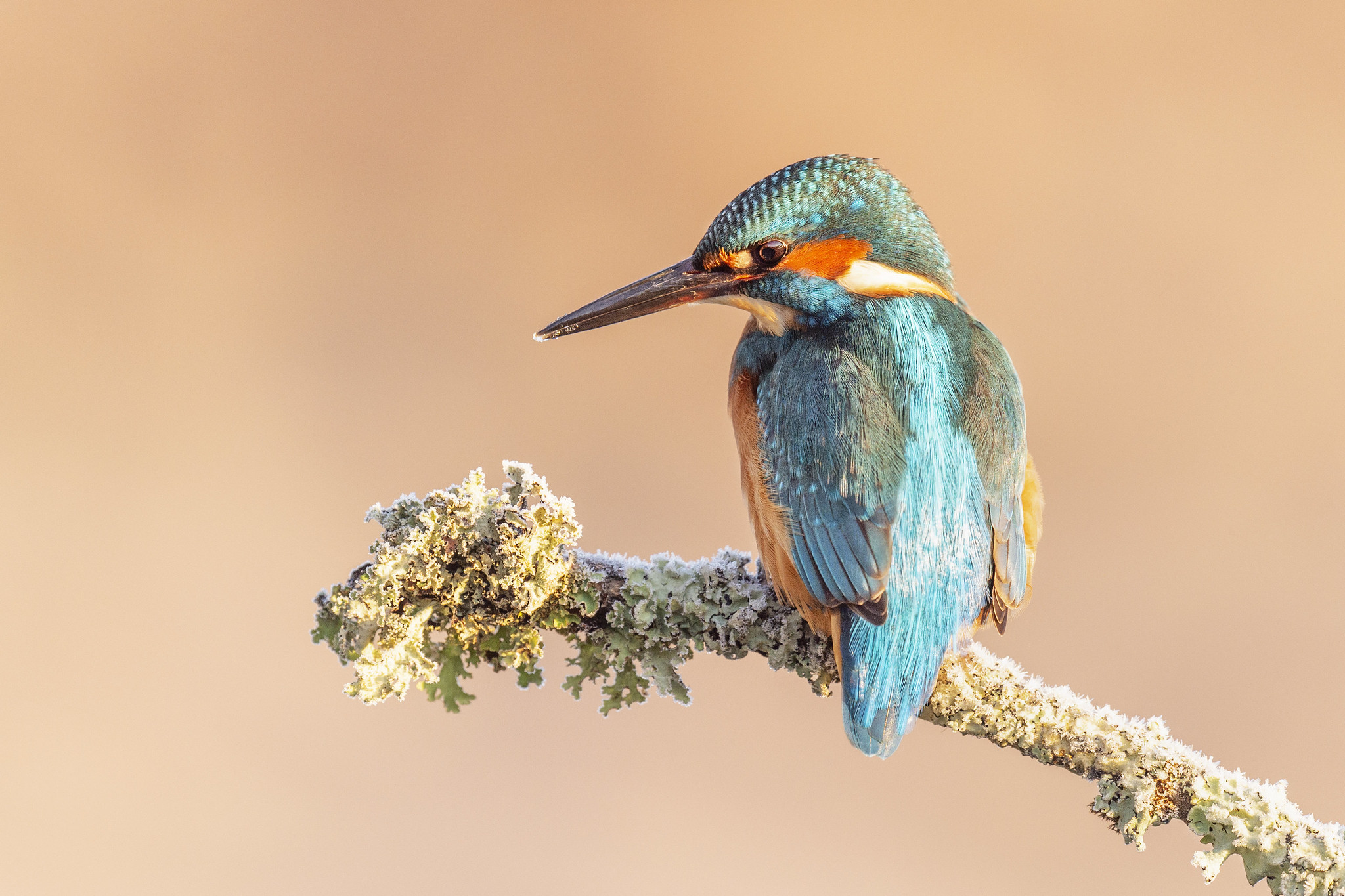
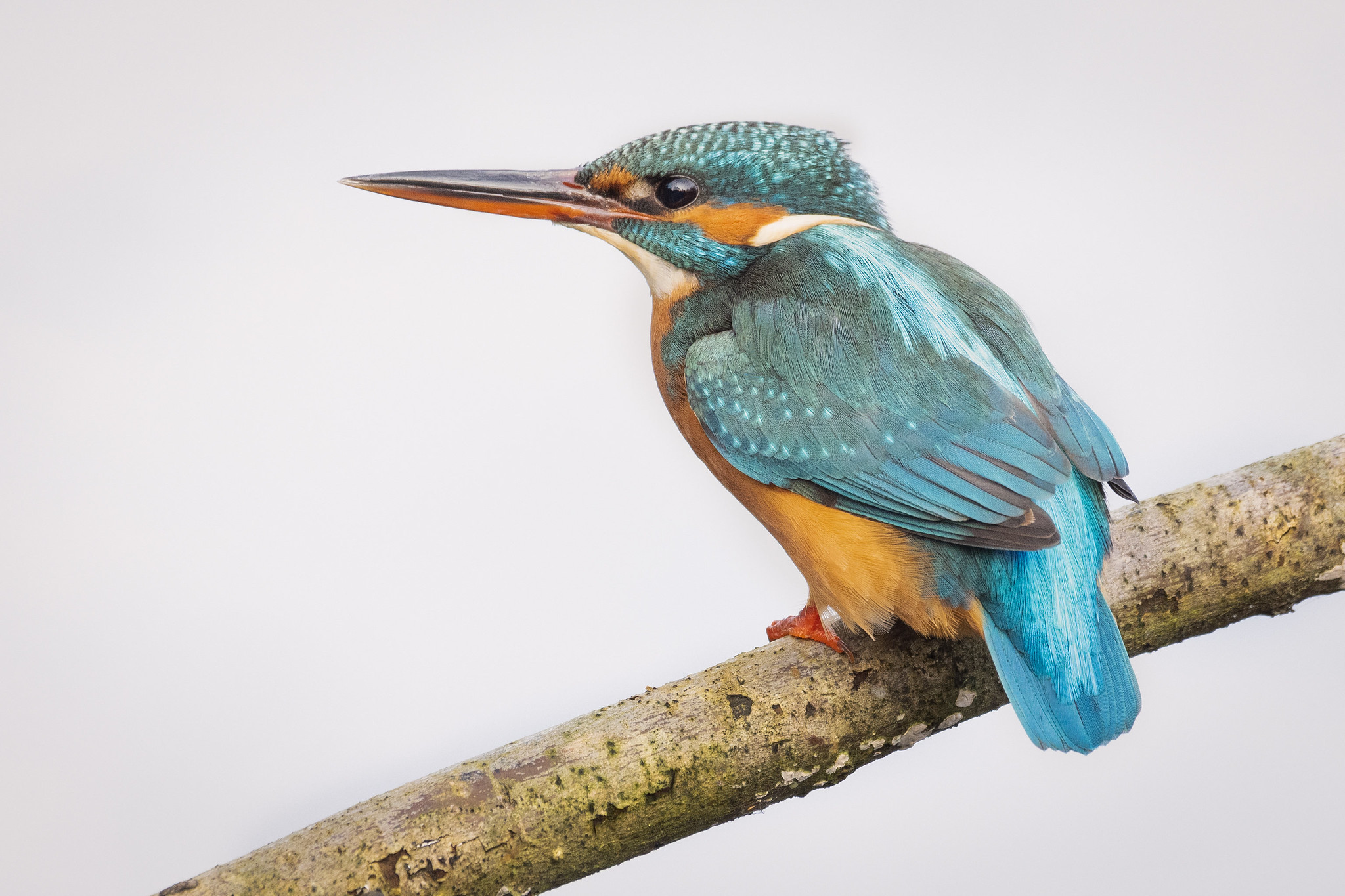
Kingfishers in Britain and Ireland belong to the race ispida. Green-blue above, they show a paler azure band down the back that flashes as the bird flies off. Below they are rufous, with a white throat and neck blaze and orange patches at the bill base and ear.
To sex a perched bird, check the lower mandible: black with a touch of red at the base in the male, orange-red with a dark tip in the female. Young birds are duller and greener, and their legs start out black.
Clear, slow water with branches leaning over it
Search slow-flowing streams and rivers with clear water, and lakes whose banks are thick with plants. The bird needs shallow open water to fish in and shrubs or overhanging boughs to watch from.
Clarity matters because prey has to be visible from above, and the busiest stretches combine clean water with trees on the banks. Replace a natural bank with hard engineering and fish, amphibians and kingfishers all decline.
How a bird under 50 grams lands a minnow
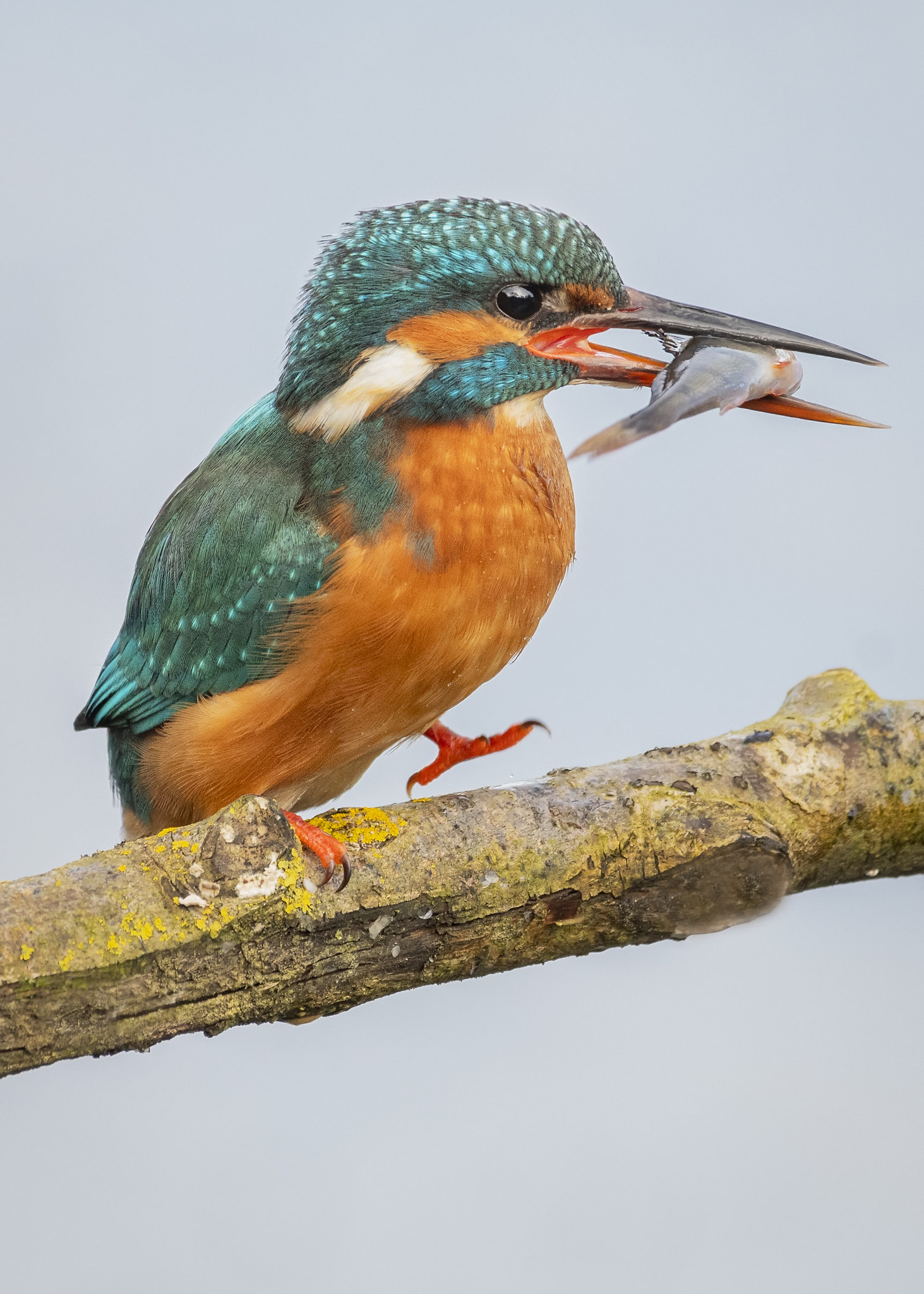
Fishing begins from a perch a metre or two over the water: a branch, a post or the bank itself. The bird points its bill down, bobs its head to judge the range, then plunges steeply, rarely going deeper than 25 cm.
Back on the perch it knocks the fish against the wood a few times, then swallows it head first. Several times a day it coughs up a small grey pellet of bones.
Typical catches are minnows, sticklebacks, trout and little roach, with dragonfly larvae, water beetles and, in winter, freshwater shrimps as extras. Needing around 60% of its own weight in food daily, each bird guards its own section of river.
A tunnel in the bank and a chamber full of fish bones
Pairs form in autumn, yet each partner keeps a separate territory, normally at least a kilometre of river, until spring. Then both dig into a low, vertical bank, or occasionally a quarry face, making a straight tunnel 60–90 cm long that widens into a chamber.
Nothing is brought in as lining, but the floor soon fills with fish remains and pellets. The eggs hatch after 19–20 days; both adults sit during the day, and only the female at night.
Chicks spend 24–25 days or more underground, coming to the entrance to be fed once big enough. Two broods are normal, sometimes three. The first dives are a real danger, and some youngsters soak their plumage and drown.
Calling in every month, busiest from courtship to the last brood
Resident birds can be heard all year. Spring courtship and up to three broods keep a territory lively into late summer, and in winter some birds shift towards the coast.
Kingfisher in pictures
Kingfisher questions: winter and water quality
Where do kingfishers go in winter?
In mild climates they stay put. Birds from regions where rivers freeze for long spells have to leave after breeding. In winter many feed along estuaries, harbours and rocky shores, and a hard freeze kills a large share of them through cold and hunger.
Is a kingfisher a sign of clean water?
Largely, yes. Breeding density peaks where clear water and bankside trees coincide, and those rivers also score best on water quality. As a fish-eater near the top of the food chain, it suffers from industrial and farm pollution, which shuts it out of many otherwise suitable rivers.