
Watch a feeder for ten minutes and the Blue Tit is usually the bird dangling beneath it. It weighs about 11 grams, and the birds of Britain, Ireland and the Channel Islands form their own subspecies, obscurus. It belongs to the tit family alongside the bigger Great Tit, its chief competitor for food and nest holes.
Built for thin twigs and upside-down feeding
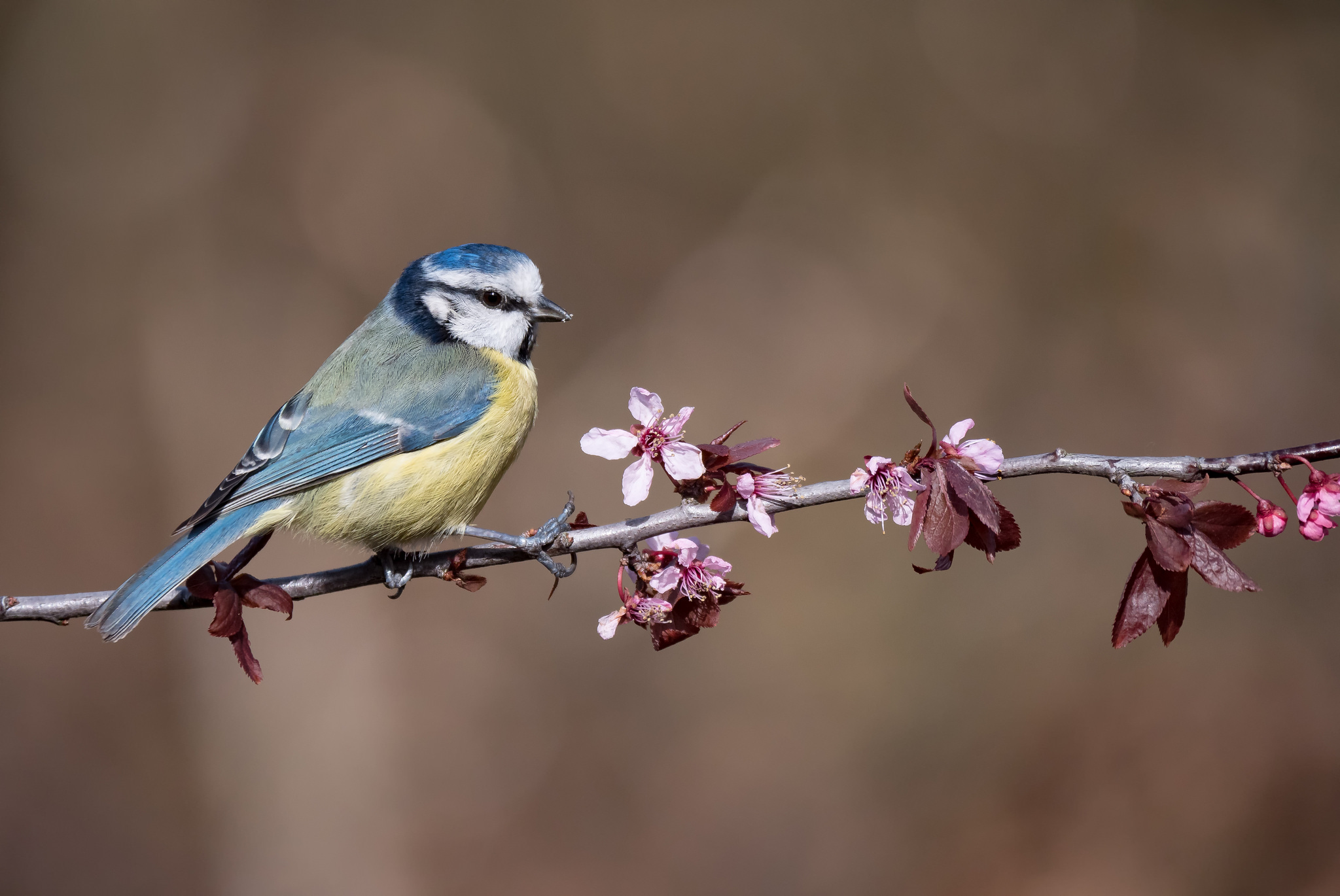
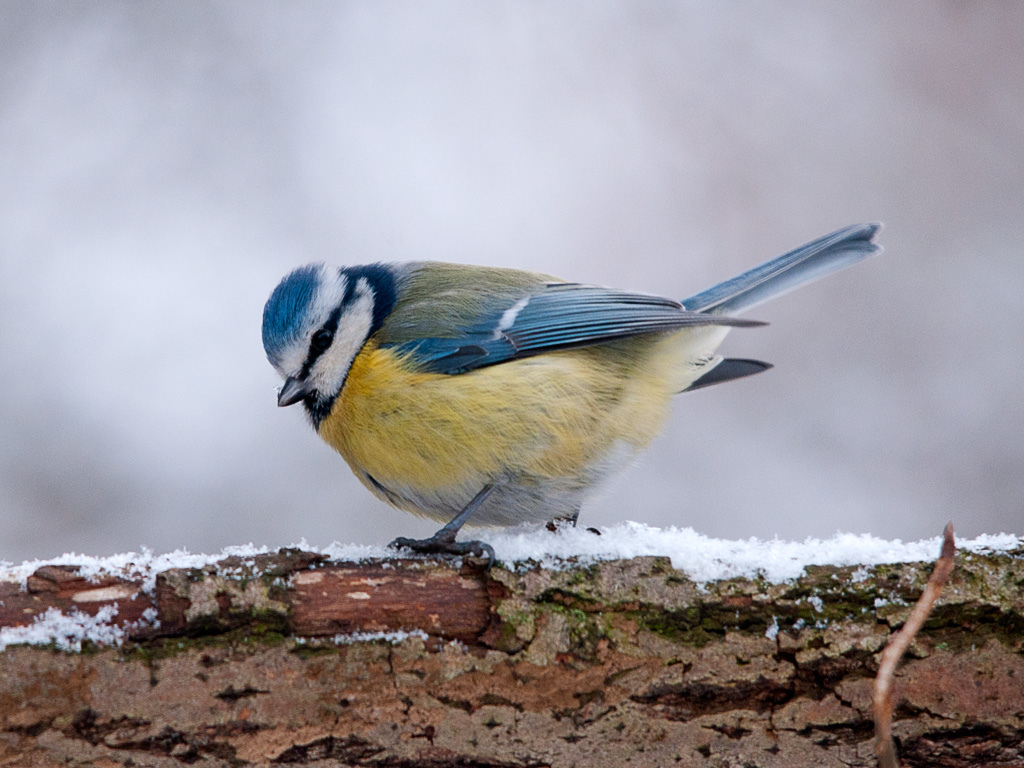
Slender twigs are where this bird excels. A Blue Tit clings to the very tips of branches, then swings round to work the underside. In a winter flock with Great Tits, it is probably the steadier of the two on thin wood.
On a trunk it climbs in short, jerky hops, rather like a Treecreeper. Nights are spent in ivy or other evergreen cover; in a hard winter any small cavity will do.
Some habits spread by copying. From the 1920s, Blue Tits in Britain learned from each other to pierce the foil tops of doorstep milk and drink the cream. Bark-stripping has a domestic version too: thatch, wallpaper and window putty all get peeled.
Contact notes, scolding and a whistle for hawks
Blue Tits call in every month, mostly to tell the flock where each bird is in the canopy. Song is seasonal, strongest from late winter into spring.
Listen for the scolding. It targets danger on the ground, such as a fox, cat or dog, or a perched owl. Robins, Great Tits and Treecreepers react to it too, and sometimes a crowd gathers to mob the intruder.
Threats from the sky get a separate alarm whistle, given for a Sparrowhawk, Goshawk or Buzzard. Around mating, both partners trade strings of high ‘zeedling’ notes.
Caterpillars for the brood, seeds when insects run short
Insects and spiders are the staple, earwigs and moths among them, often taken while the bird hangs head down. It probes opening buds and peels hazel bark, yet seldom hovers or feeds on the ground.
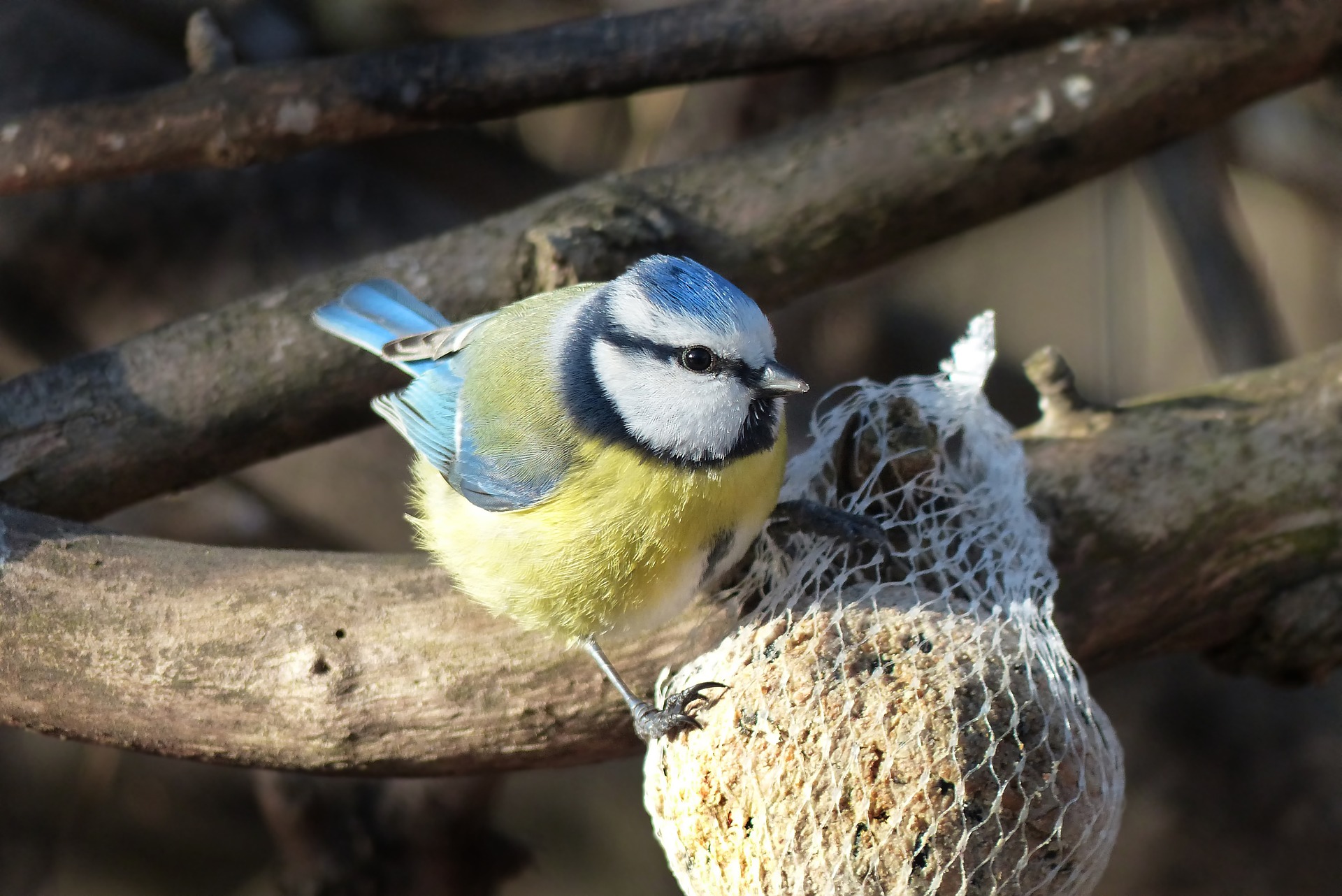
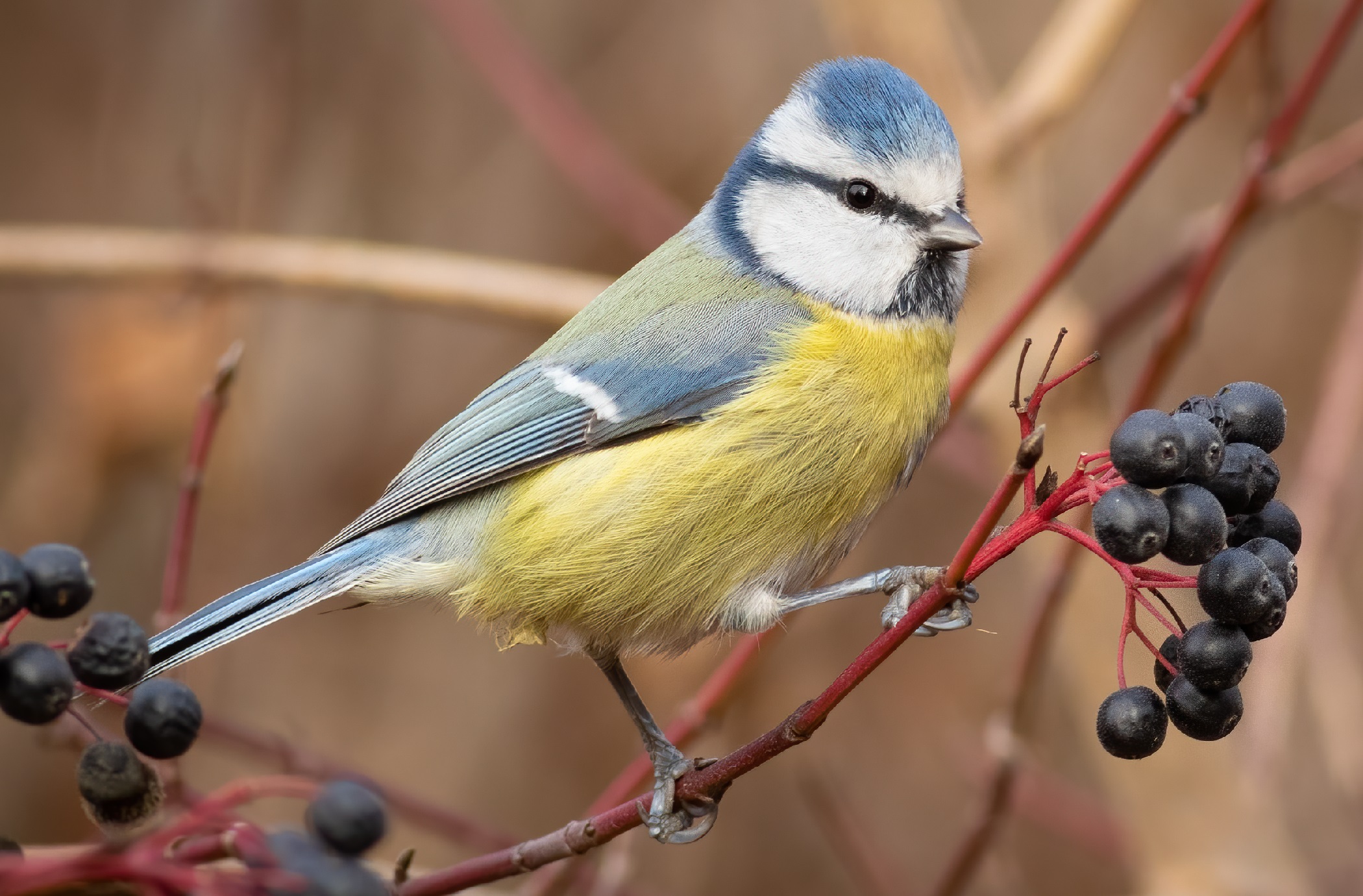
In autumn and winter, fruit and seeds join the diet. At the bird table it takes bread, cheese, fat and sunflower seeds above all. A big seed goes to a nearby branch, where the bird pins it under one foot and hammers it open.
Why a nest box suits the ‘Billy Biter’
Tree cavities, gaps in walls and old stumps all serve, and hardly any bird takes to a box more readily. Good sites are reused for years, a new pair moving in when the old one dies. Great Tits and House Sparrows want the same holes.
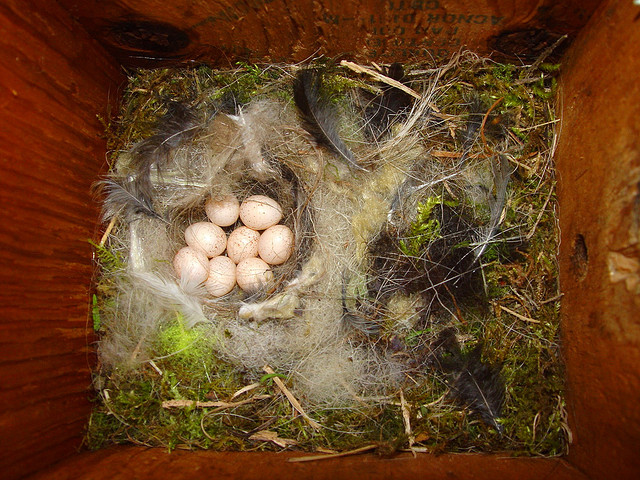
Eggs appear in April or May on a bed of moss, wool, hair and feathers. Seven or eight is normal, though single females in the UK have laid 14. The female incubates alone and her mate feeds her.
A sitting bird hisses and bites at a probing finger, which earned it the name ‘Billy Biter’ in south-west England. At peak, one parent can arrive with food every 90 seconds. A cold, wet spell between May and July, just as green caterpillars emerge, can ruin the season.
Blue cap, white cheeks and a dark line through the eye
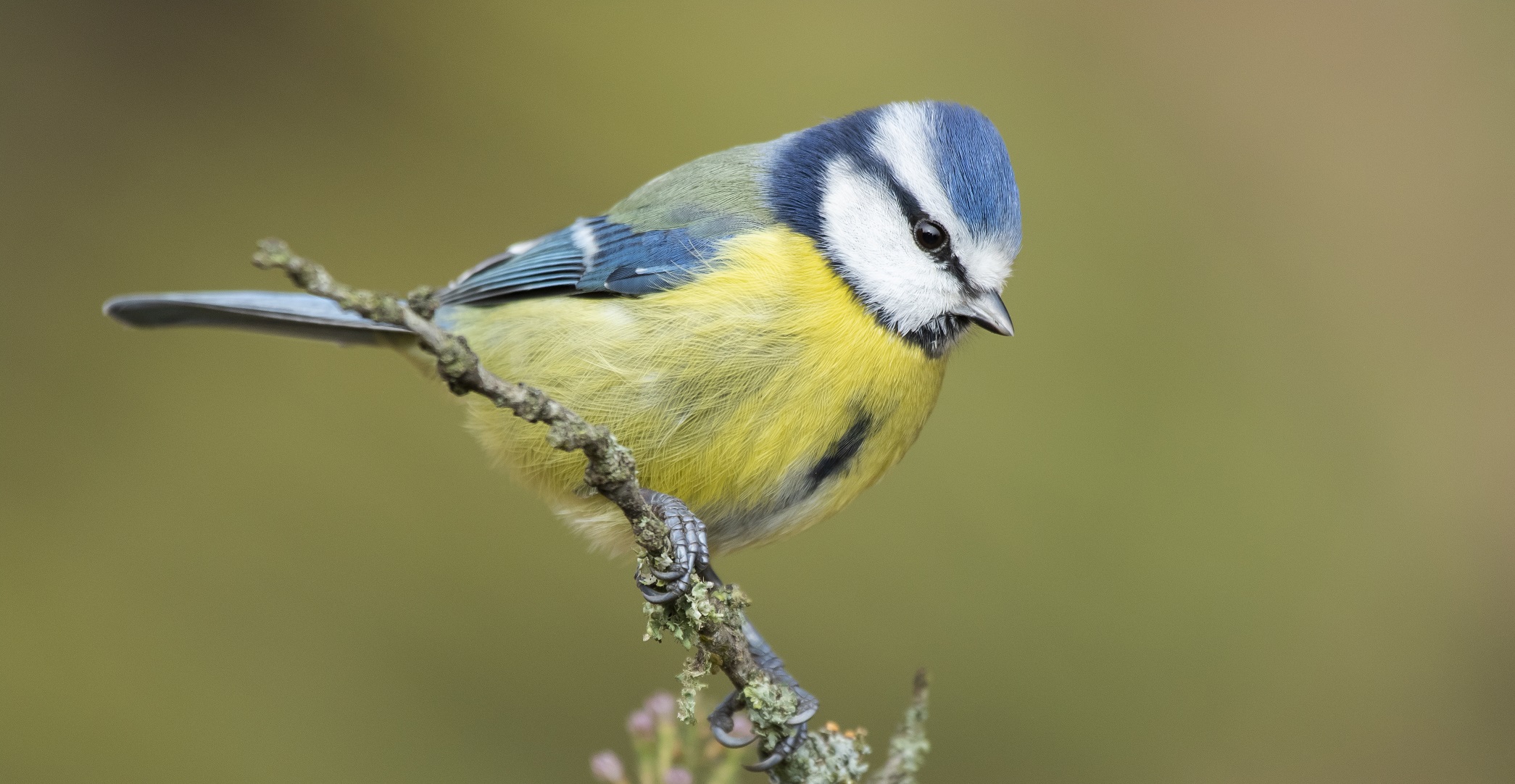
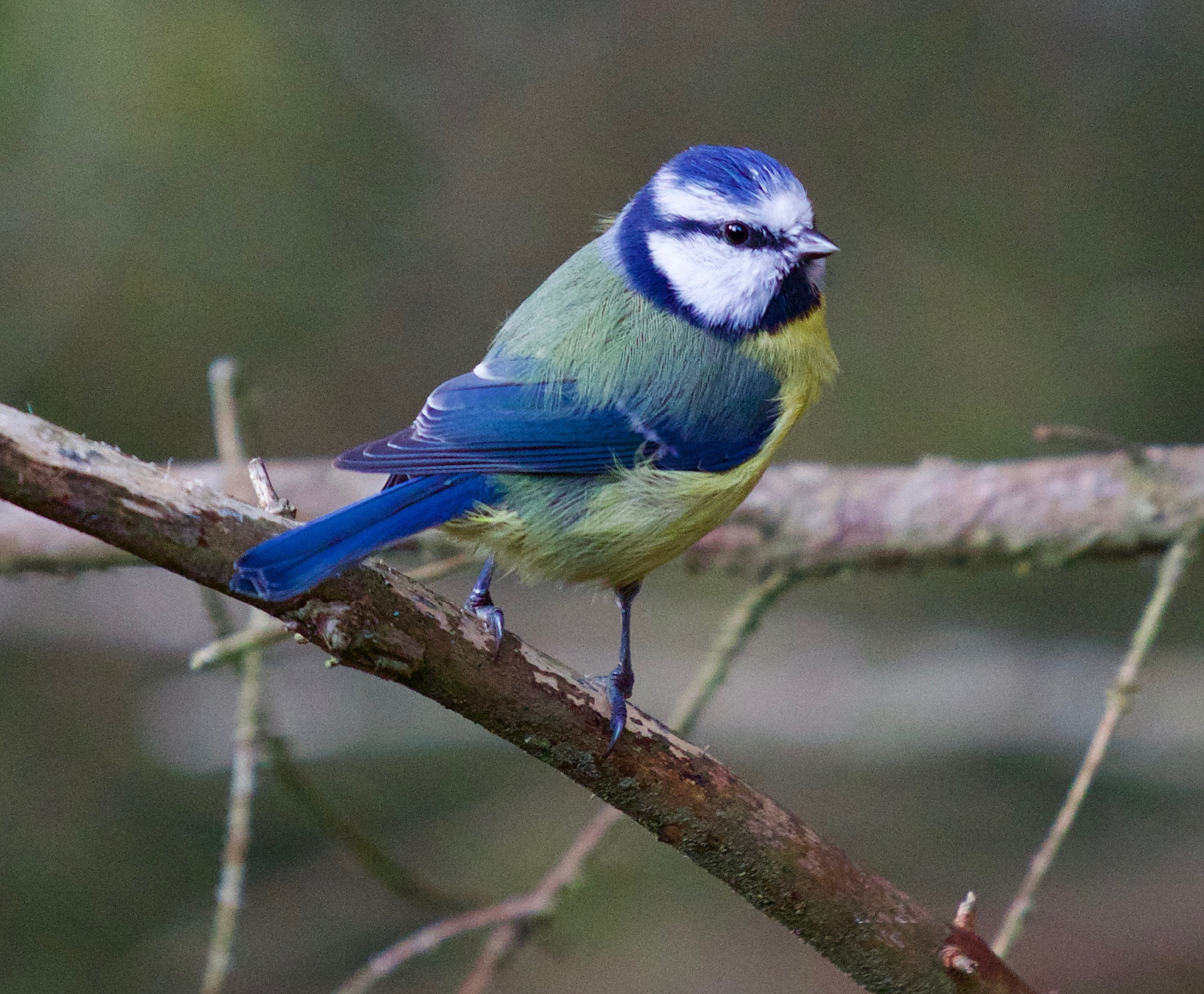
The crown is intense blue, and a dark blue line passes through the eye and loops round white cheeks and chin. Look also for the white forehead and wing bar, a yellowish-green back and a yellow front split by a dark central line. The richer that yellow, the more yellow-green caterpillars the bird has eaten.
The sexes look alike to you, but Blue Tits see ultraviolet, and in that light the male's cap is brighter. Juveniles are yellower and duller until about September.
Blue Tit year: singing peaks before the eggs
Calls carry on through every month. Singing builds from late winter, eggs follow in April or May, and by autumn the young look like adults and roam in flocks with other tits.
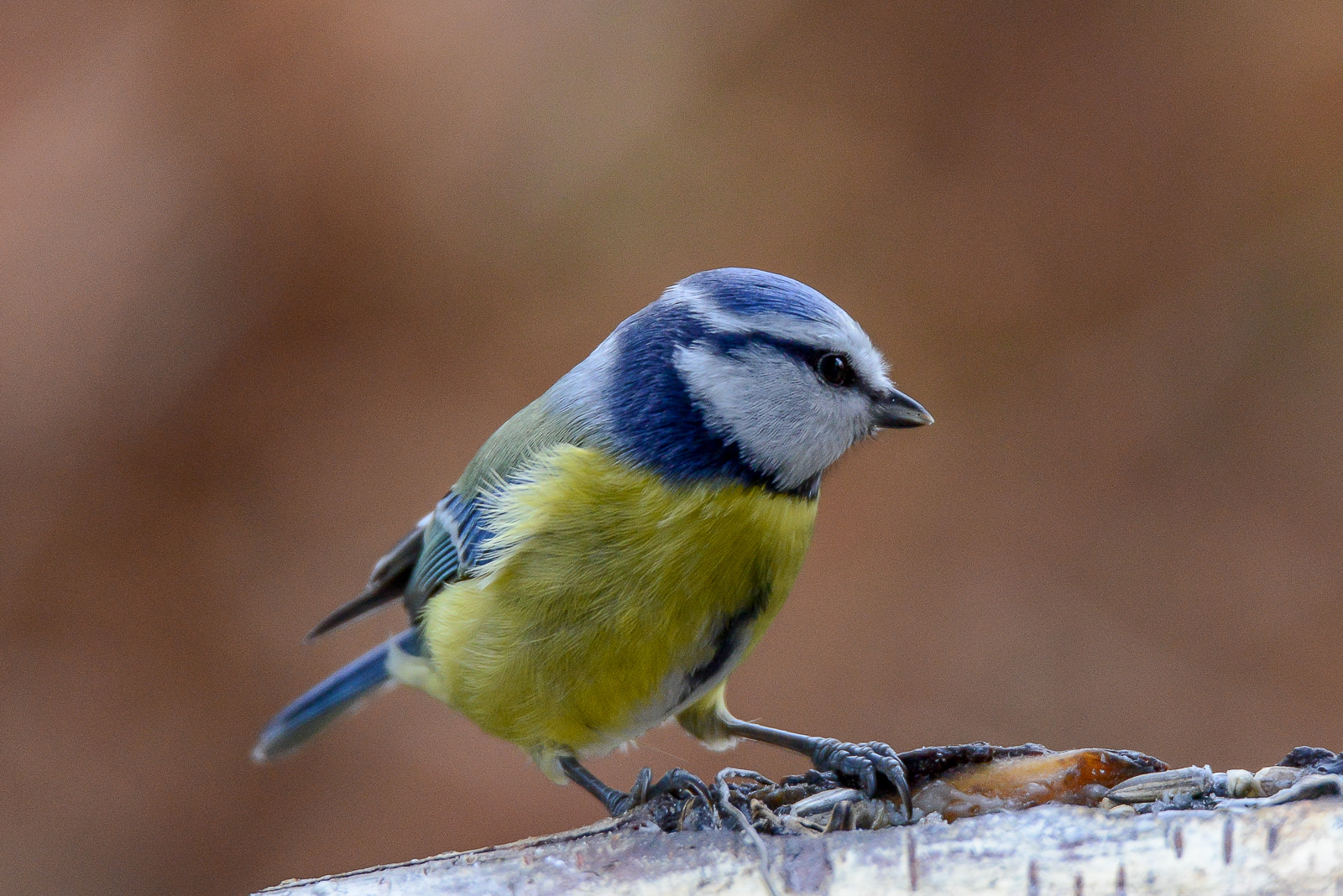
Blue Tit in pictures
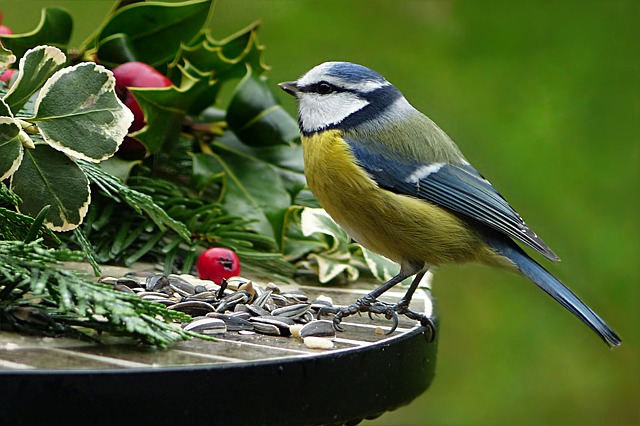
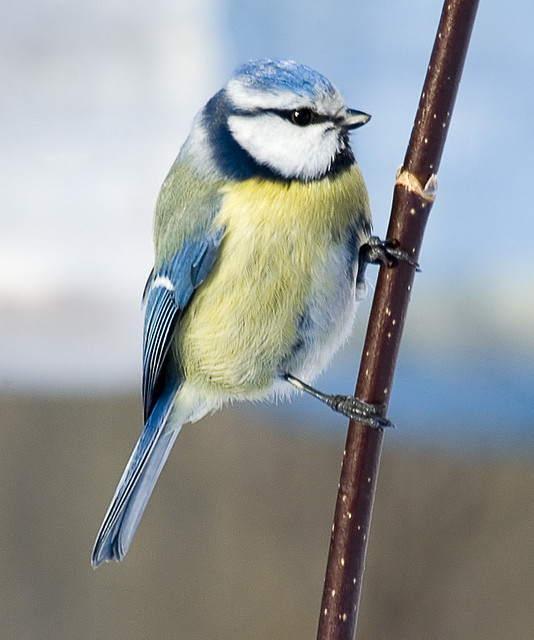
Other small tits in the same flock
Two relatives often feed beside it in gardens and woods.
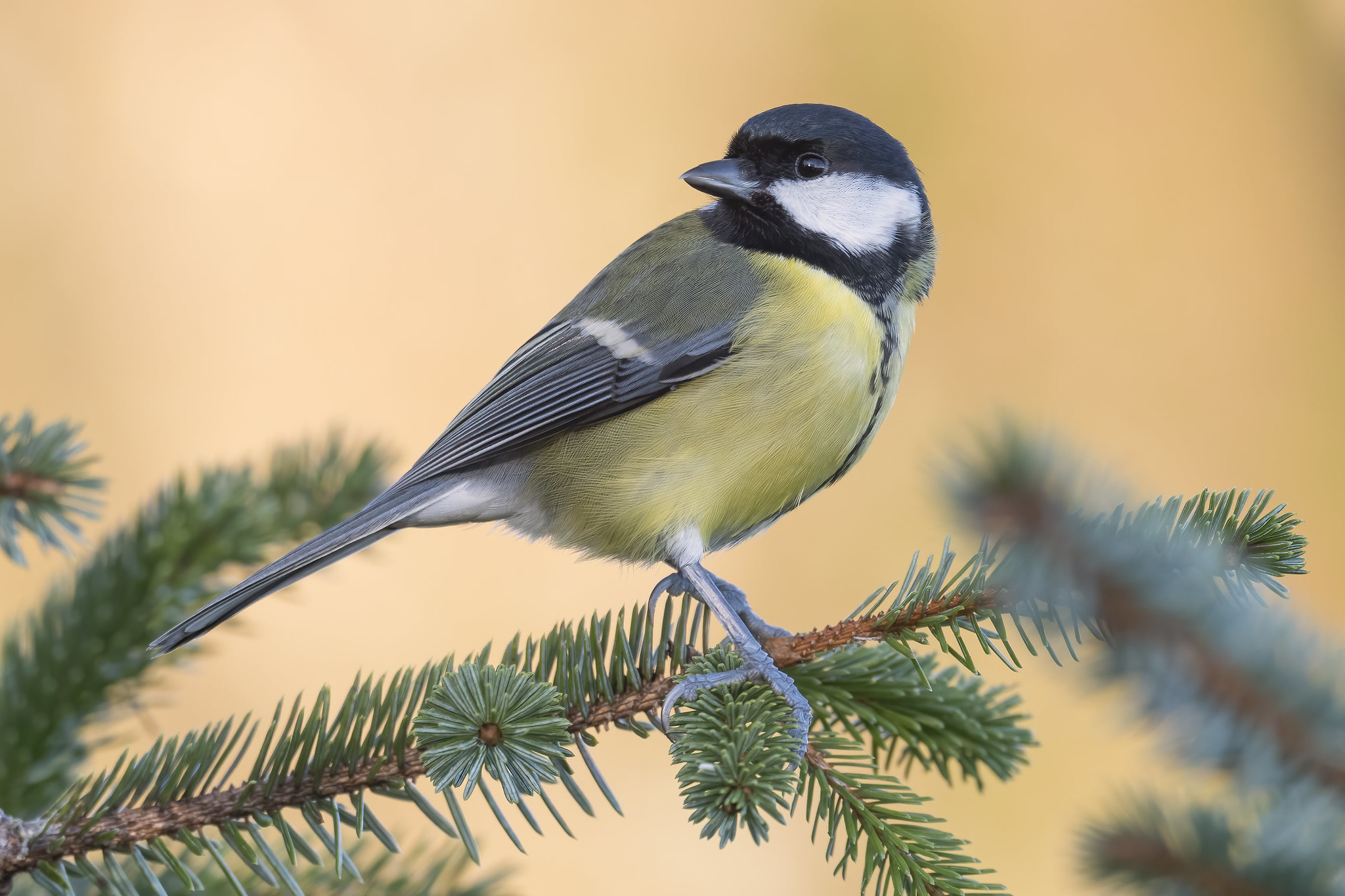
Great Tit
Larger, with a black head and neck around white cheeks and a black stripe down the yellow front. No blue cap.
Blue Tit survival and numbers
What are a young Blue Tit's chances of surviving?
British ringing data put first-year survival at 38 %, against 53 % a year for adults, so a bird reaching breeding age can expect about three years. The national record is a Bedfordshire bird at 10 years and 3 months.
Are Blue Tits doing well?
Across Europe numbers rose by 30 % between 1980 and 2016, and the range edge in Fennoscandia moved 500 km north. Laying is now earlier, and the RSPB has rated it Green since 1996.