
Hear whistles, mechanical clicks and a snatch of some other bird tumbling out of one throat, and you are probably listening to a Starling. Close to, it is a glossy, short-tailed bird that a quick glance can file as a Blackbird. On a winter evening it may be one of thousands.
Four parts in a fixed order: how a Starling sings
The male does most of the singing, in bouts of a minute or longer. Each bout runs through four kinds of song: pure whistles first, then a long, changeable middle, then clicks, and finally a burst of very high notes.
That middle is where the mimicry lives. Starlings lift phrases from other species and from natural and mechanical noises, and one wild bird copied a sound it had heard just once. Every borrowed clip is played over a few times, then dropped for the next.
The best males command a repertoire of 35 changeable song types plus 14 sorts of click, and older birds know more than young ones. Females favour the richer singers.
Song carries on in every month except during moult. Feeding flocks bicker constantly, and a passing flock makes a whoosh with its wings audible hundreds of metres off.
Spangled in winter, glossy in spring
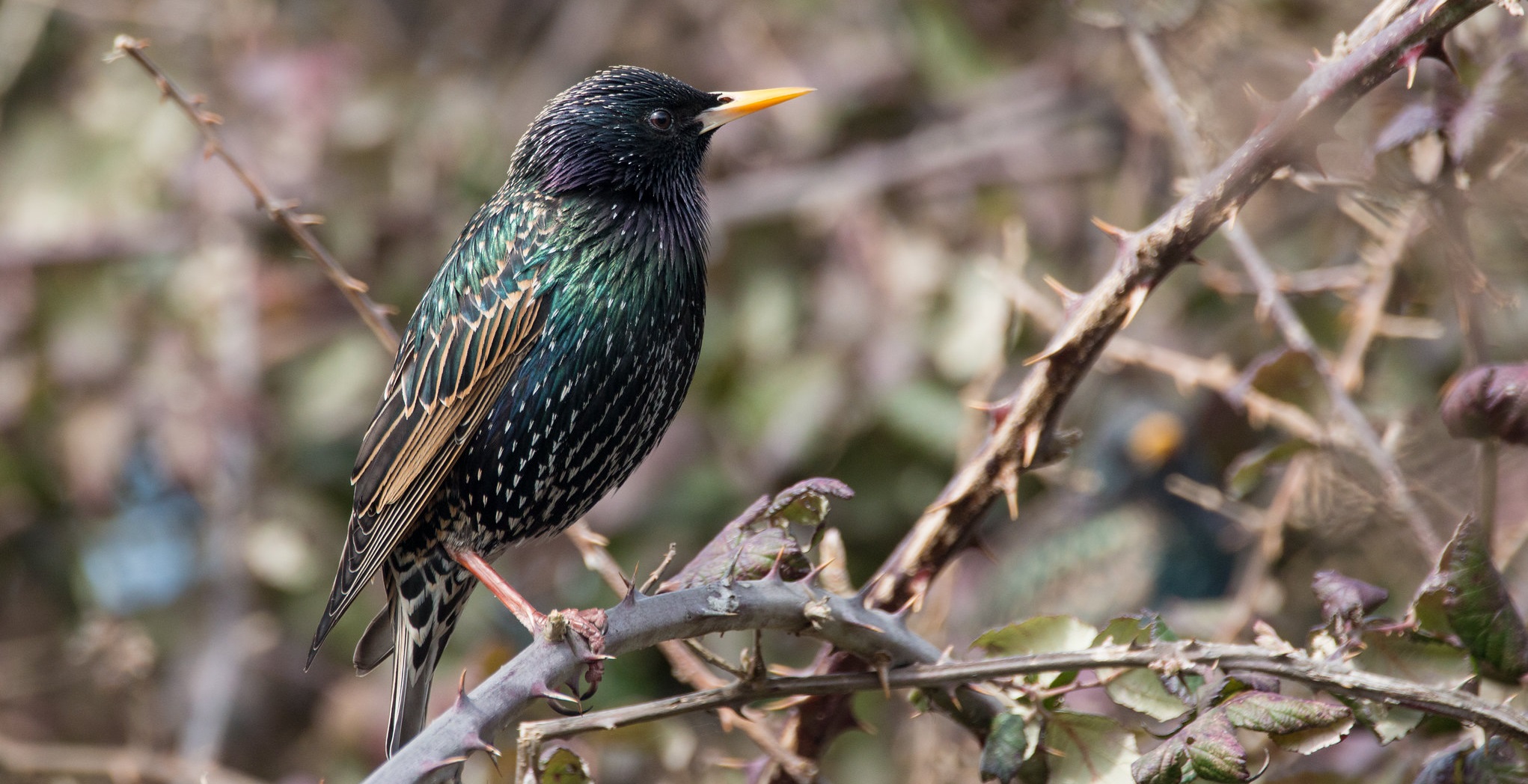
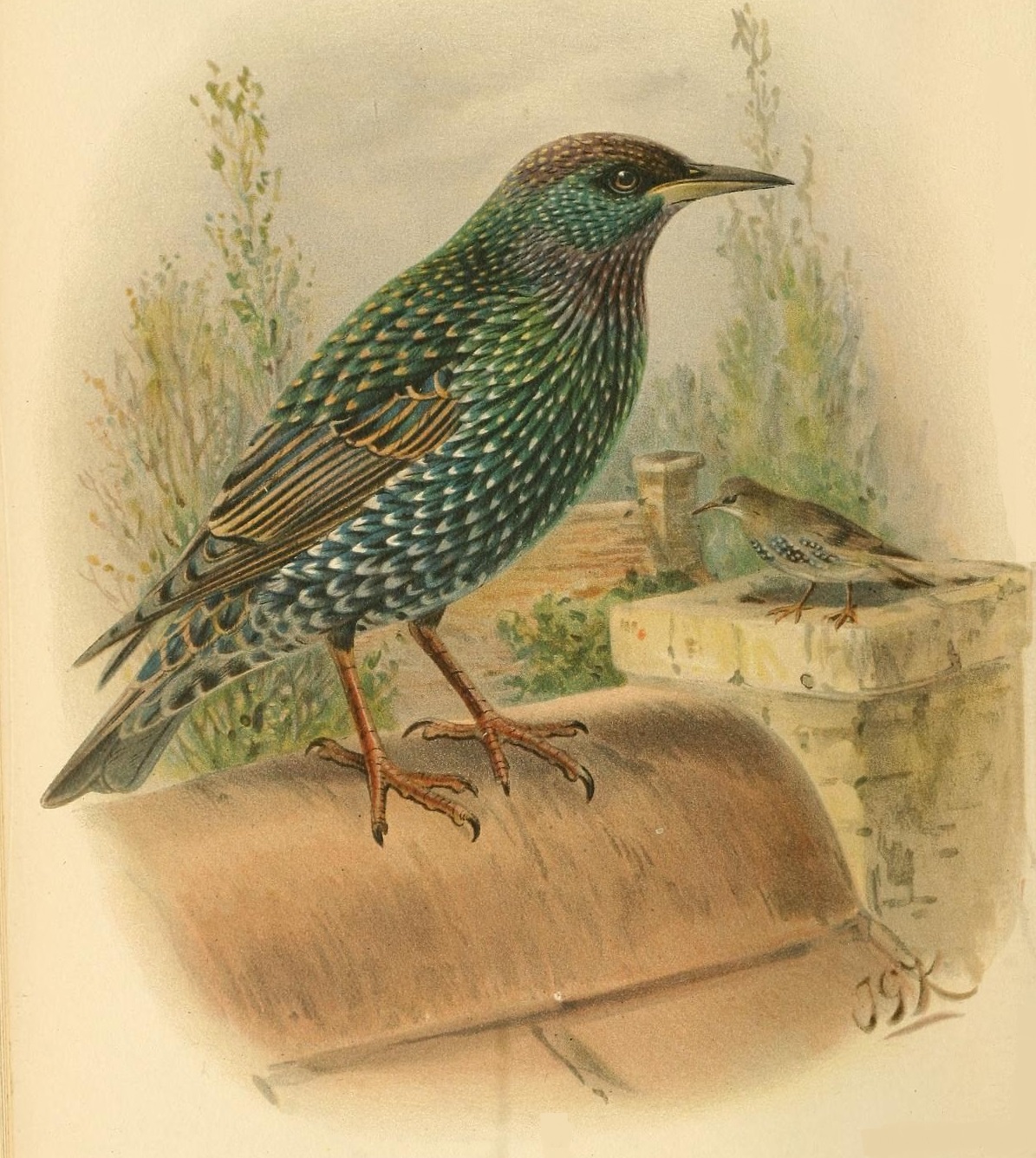
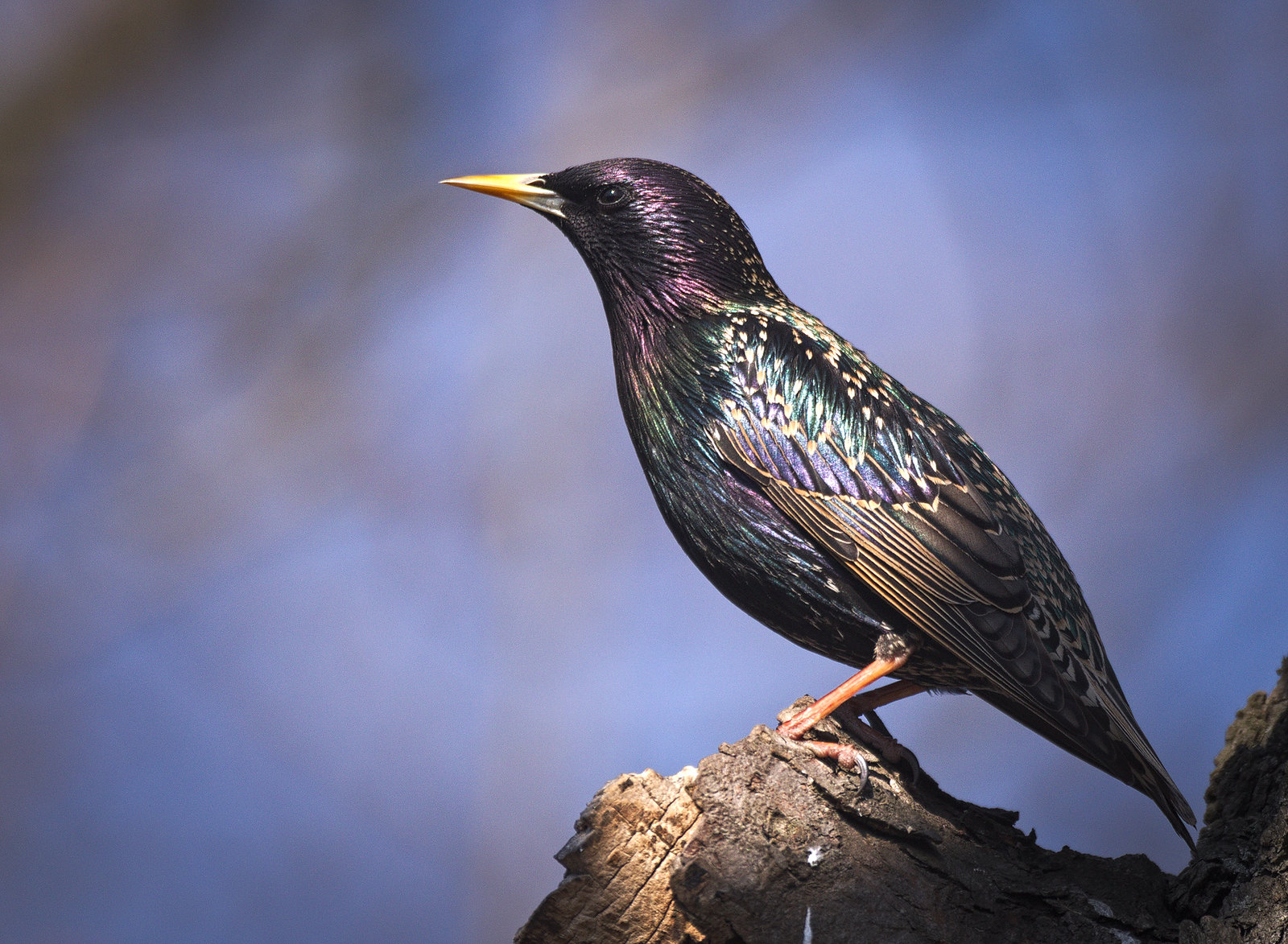
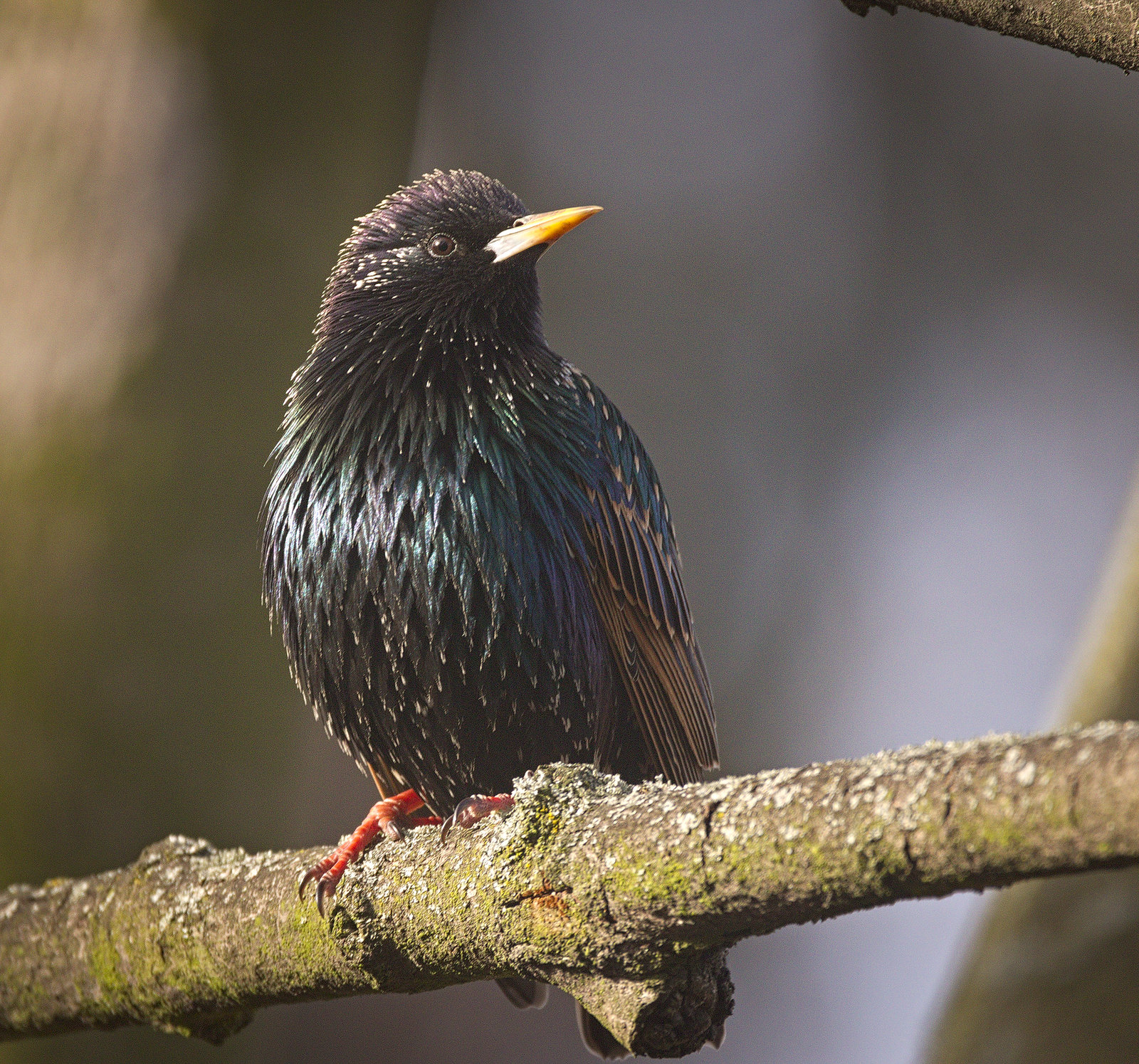
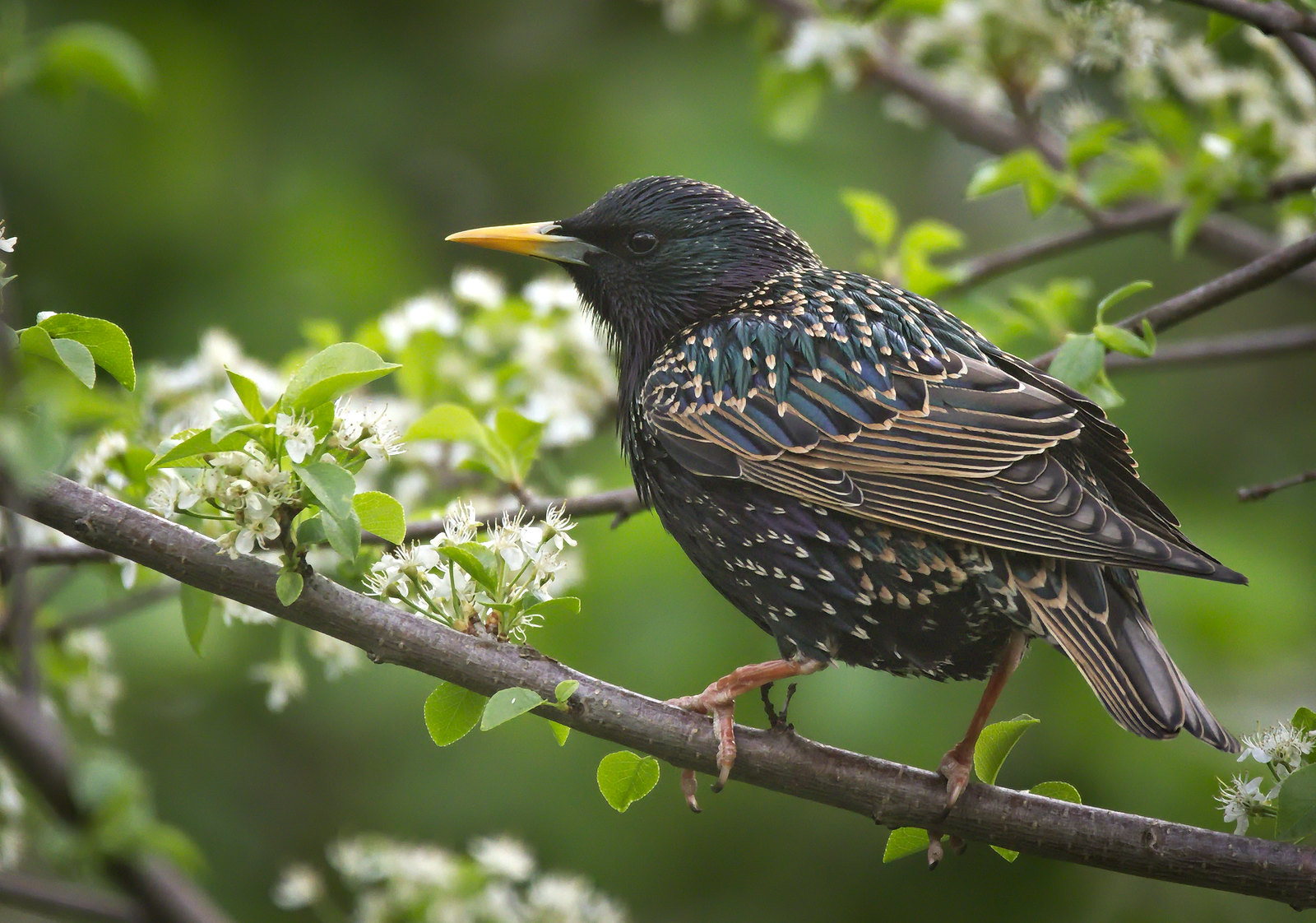
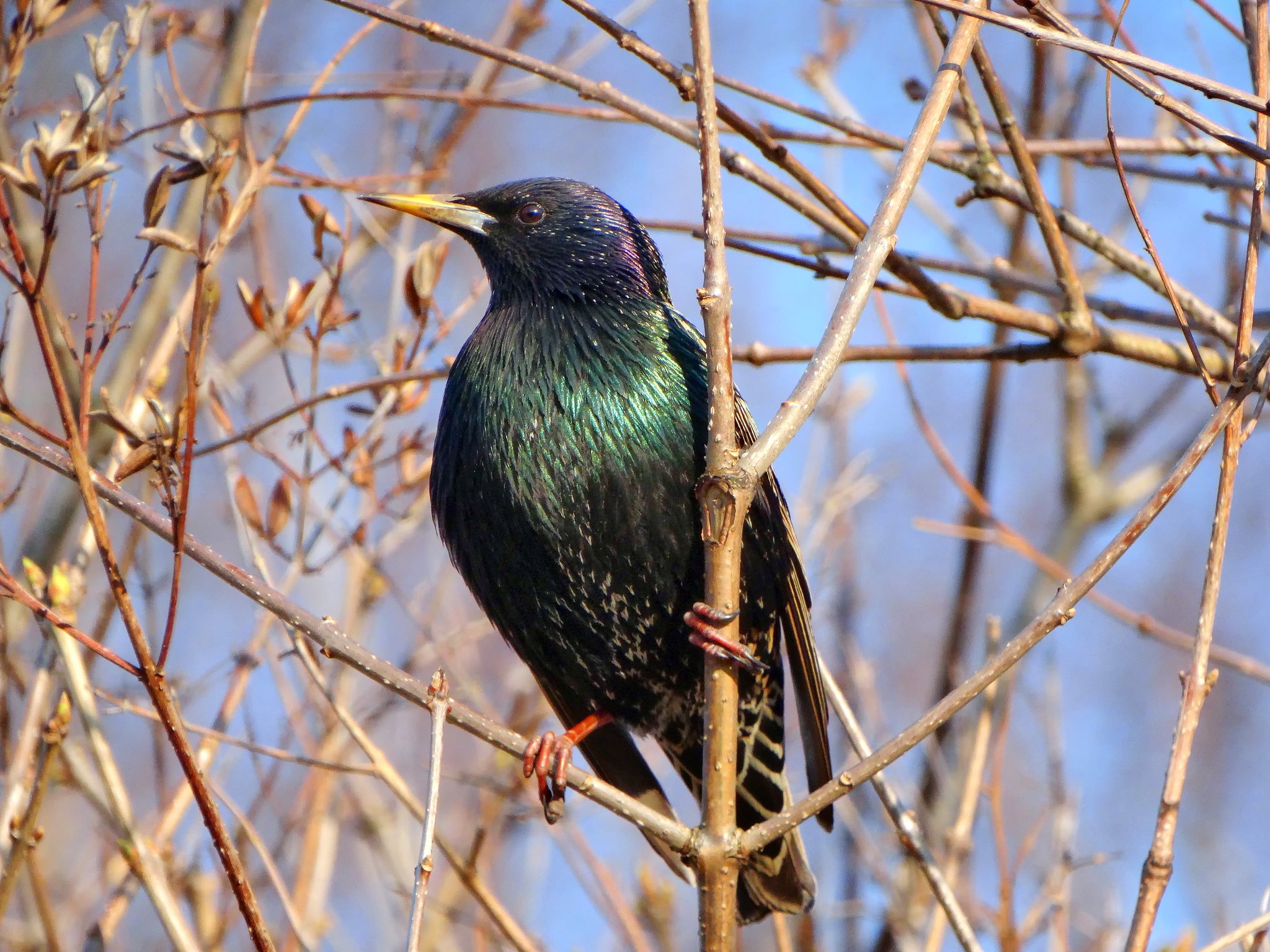
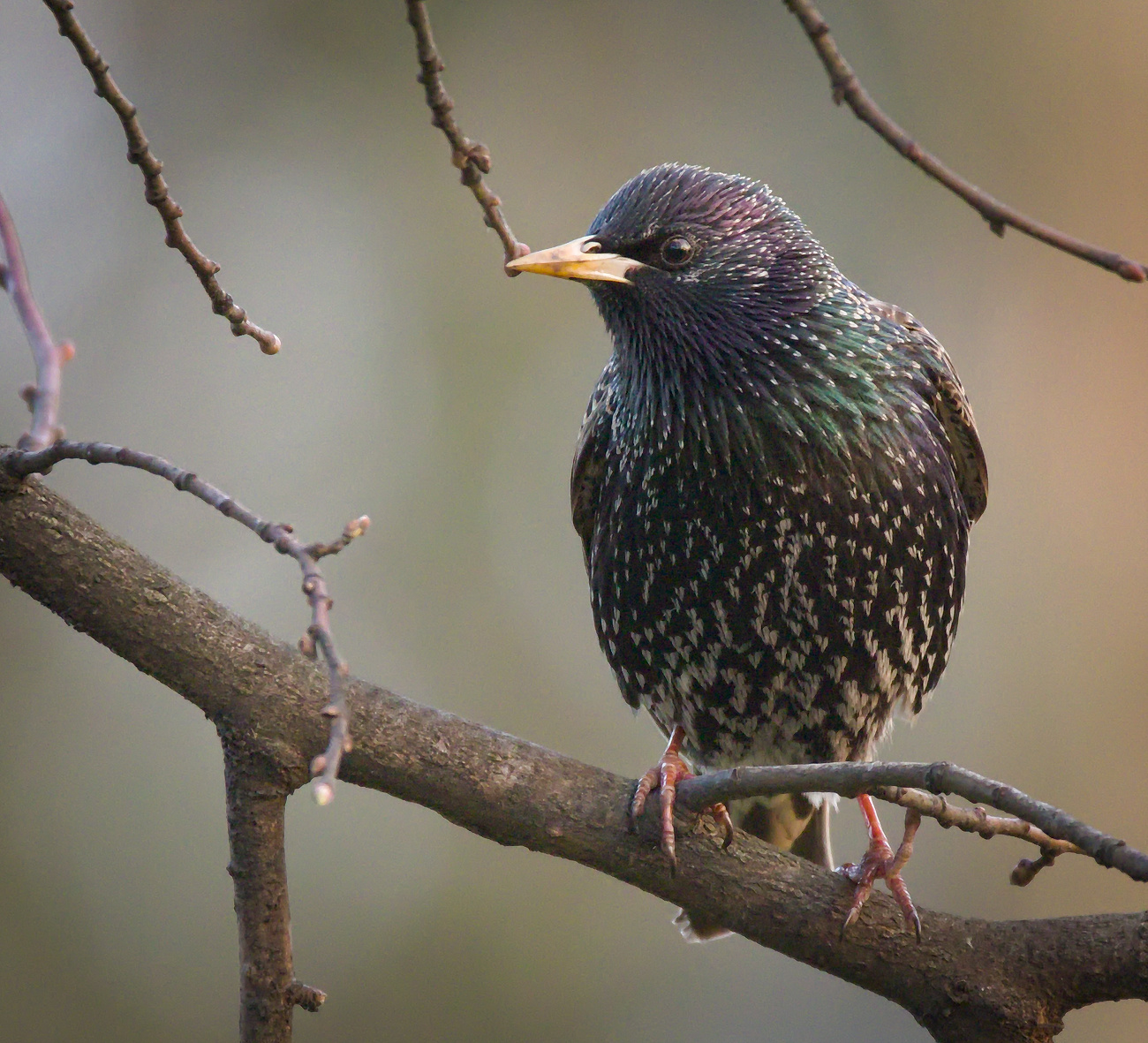
A Starling is 19–23 cm long, with a short tail, a sharp, blade-like bill and a rounded belly. The plumage is black with a purple or green gloss. Feathers grown in the late-summer moult have white or buff tips, which give the speckled winter look and wear away by spring.
The bill is brownish-black in winter and turns yellow for summer, with a blue-grey base in males and a pink one in females.
In flight the pointed, triangular wings stand out; on the ground it walks, waddling slightly, rather than hopping. A Waxwing flock can look much the same overhead.
Towns, short grass and reedbed roosts
Starlings favour towns and suburbs, where buildings and trees give them places to nest and roost. They feed where the grass is kept short: airfields, golf courses, sports pitches, farmland and grazing land.
Coastal birds use cliffs and forage in seaweed; inland, they sleep in city centres, woodland and reedbed roosts.
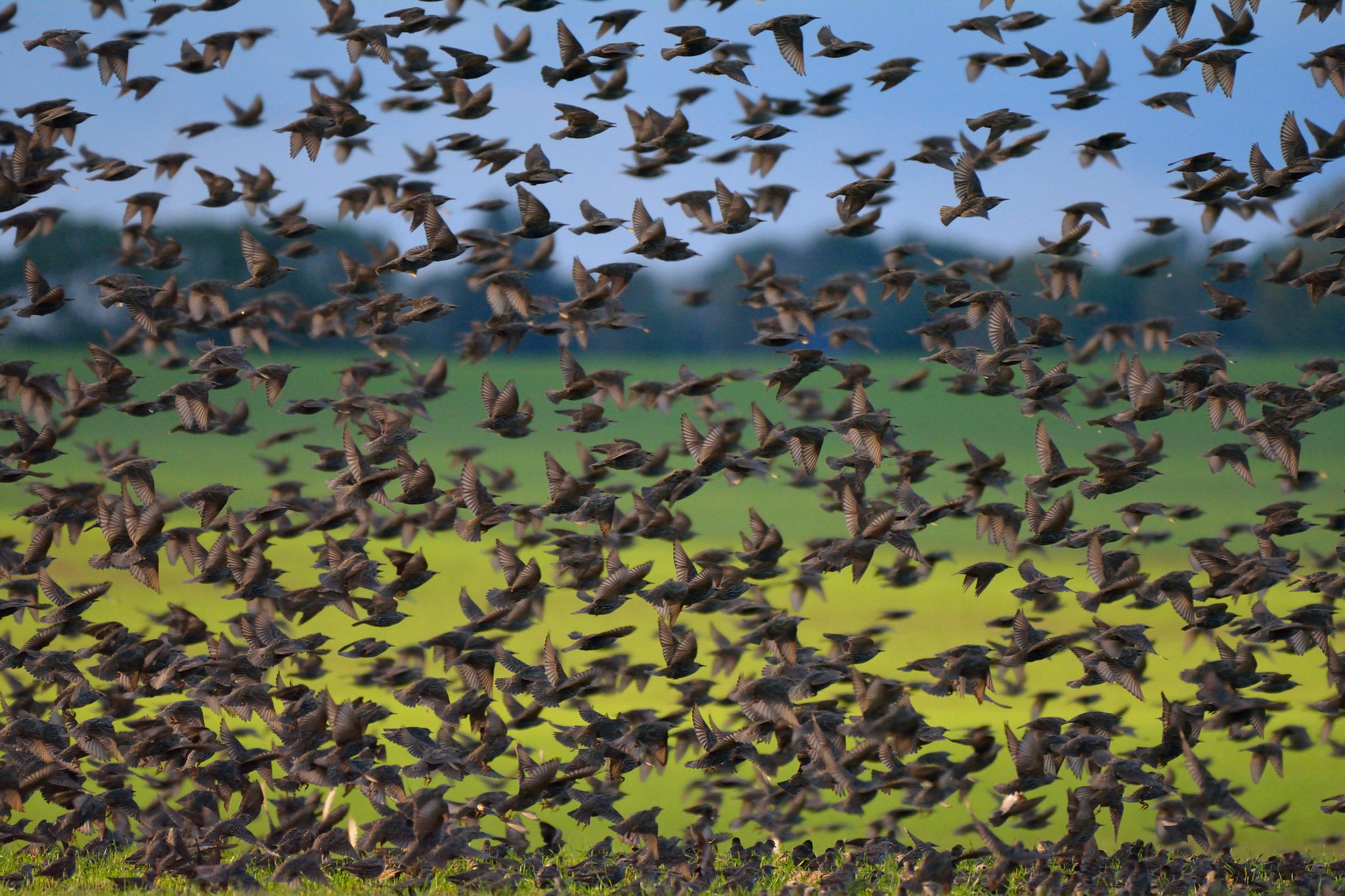
In mid-winter, flocks of five to fifty thousand form over parts of the UK shortly before dusk: the murmurations. The birds turn together with no leader, and the dense mass is thought to protect them from Peregrines and Sparrowhawks.
In autumn many British Starlings leave for Iberia and North Africa just as birds from eastern Europe arrive.
Probing the turf with an open bill
Most food comes from the surface or just below it. The Starling pushes its closed bill into the ground and then opens it to widen the hole, while a narrow skull lets the eye look straight down the bill.
Insects dominate, among them crane flies, beetles and moths, and spiders, earthworms and snails are taken too. Grain, seeds, fruit and scraps fill the gaps.
Herbs in the nest and eggs of pale blue
An unpaired male picks a cavity and decorates it with flowers and fresh greenery to win a female. Aromatic herbs such as yarrow seem to count, and she clears the decoration out once she accepts him.
Tree holes, buildings, stumps and nest boxes all serve. The clutch is four or five pale blue eggs with a gloss; the chicks stay about three weeks and are fed for another week or two once out. Two broods a year is typical.
If your box is meant for smaller birds, an entrance narrower than 38 mm keeps Starlings out.
When Starlings are loudest
Song continues in every month except during the late-summer moult, and winter adds the evening murmurations.
Photo gallery
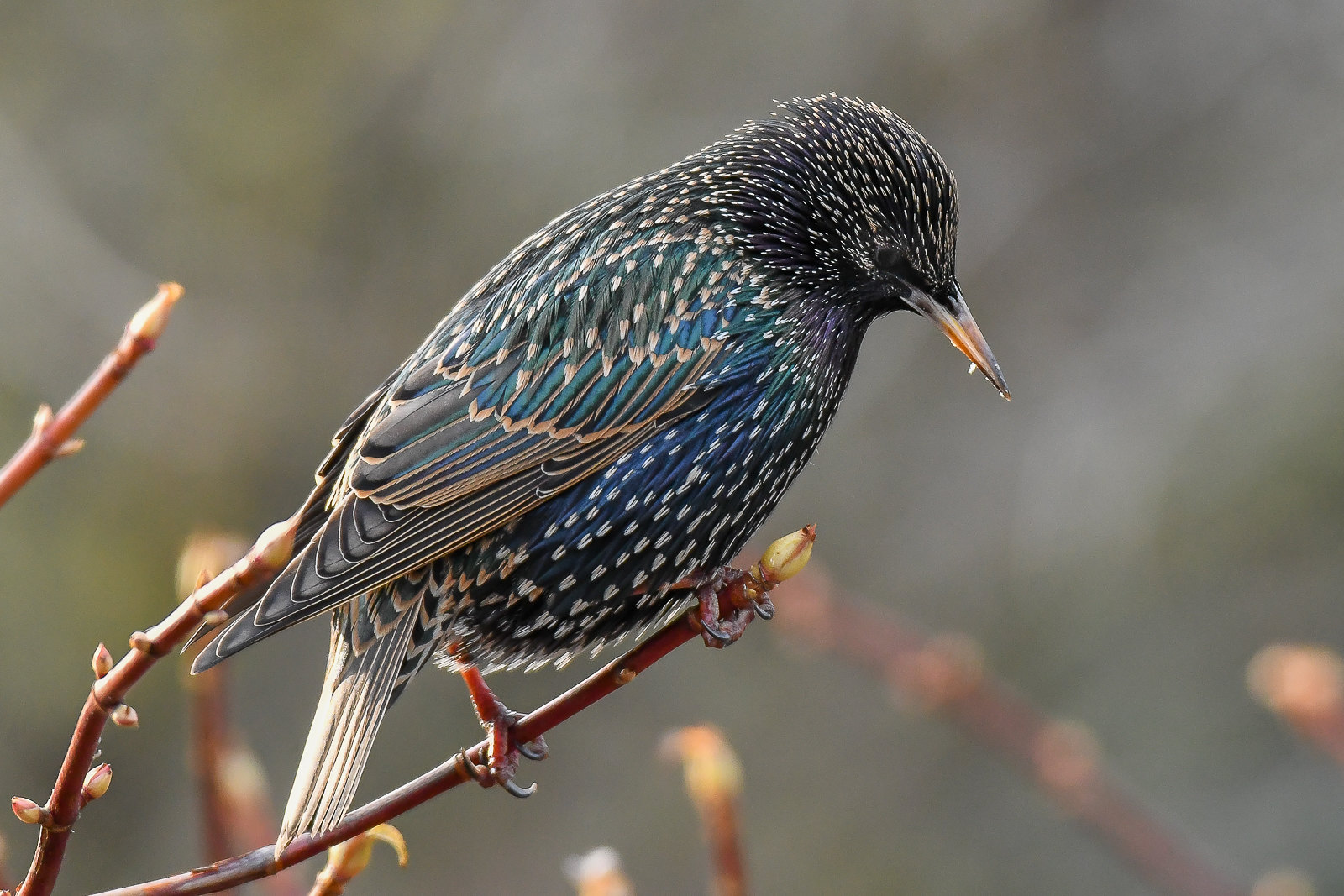
Dark, glossy and easily confused
Tail length, gait and wing shape separate these quickly.
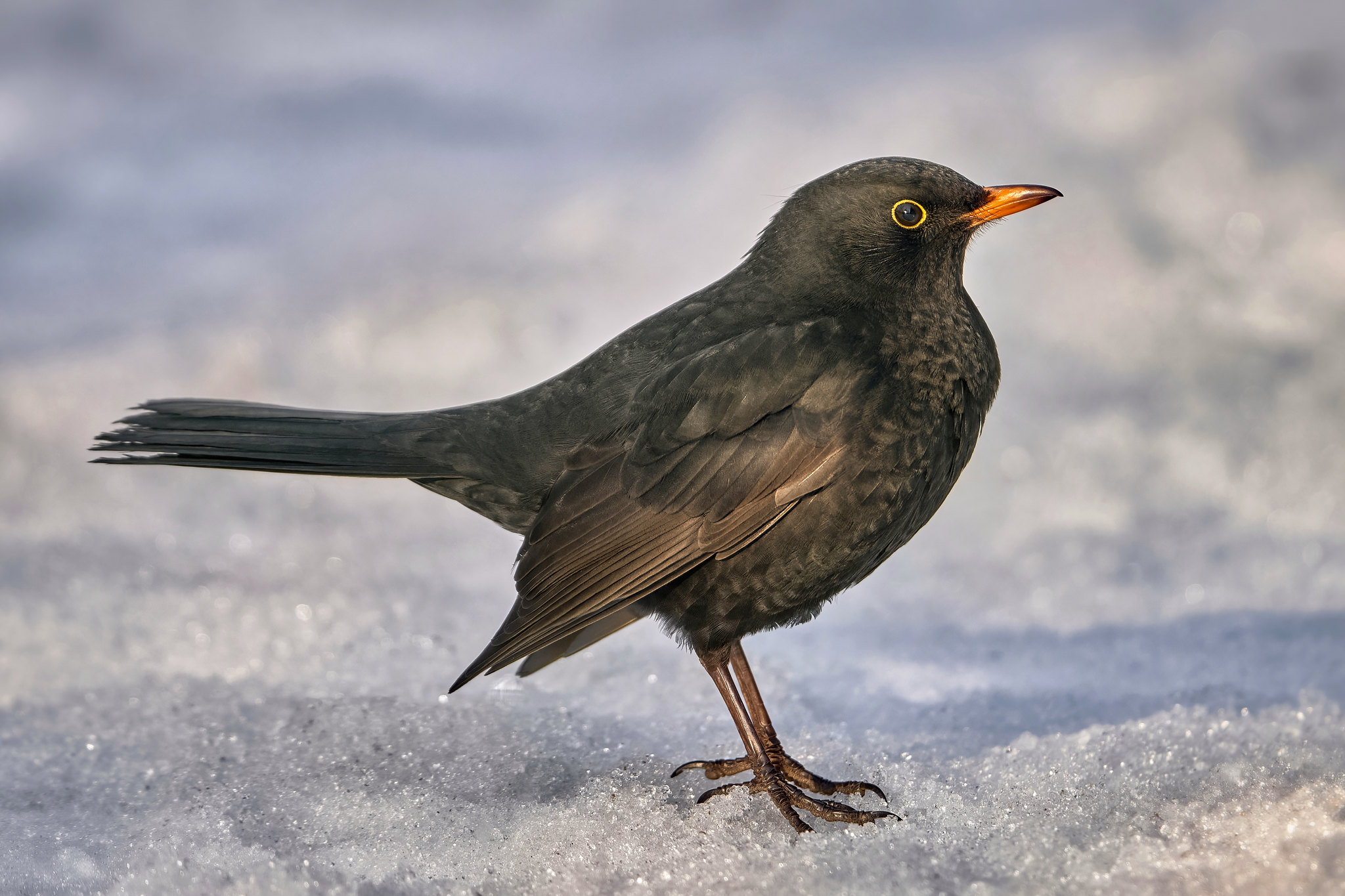
Blackbird
Long-tailed and hops on lawns; males are plain black with a yellow bill and eye-ring, never spangled.
Falling numbers and talking Starlings
Why have Starlings declined in Britain?
UK numbers dropped by over 80% from 1966 to 2004, with England hit hardest while parts of Northern Ireland held steady. Too few young survive, probably because intensive farming leaves less pasture and fewer grassland invertebrates for the chicks.
Can a Starling really learn to talk?
Pet birds pick up phrases readily. Mozart kept one that could sing part of one of his piano concertos, and strangers have looked round in vain for the person they were sure had just spoken.