Birds of the coast, cliffs and estuaries
Waders and gulls you can watch from any seafront come first, birds of offshore colonies after them. The recordings help when the bird is only a silhouette against the light.
Gannet cities off Scotland, Ireland and Wales
Britain and Ireland hold some of the largest Gannet colonies anywhere. Bass Rock had about 75,000 pairs in 2014, St Kilda around 60,000 in 2013 and Little Skellig, off the Irish coast, about 35,000 in 2011; Grassholm in Wales has another. Gannets plunge into the sea after fish at up to 60 mph, on wings spanning as much as 180 cm.
The Puffin spends autumn and winter far out on the ocean and comes ashore to breed only in late spring, when the red-and-black bill regains its colour. The Fulmar looks like a gull but has tube nostrils on top of its bill. Its name goes back to Old Norse for foul gull, after the stinking oil it can eject.
Piping on the beach, laughing on the roof
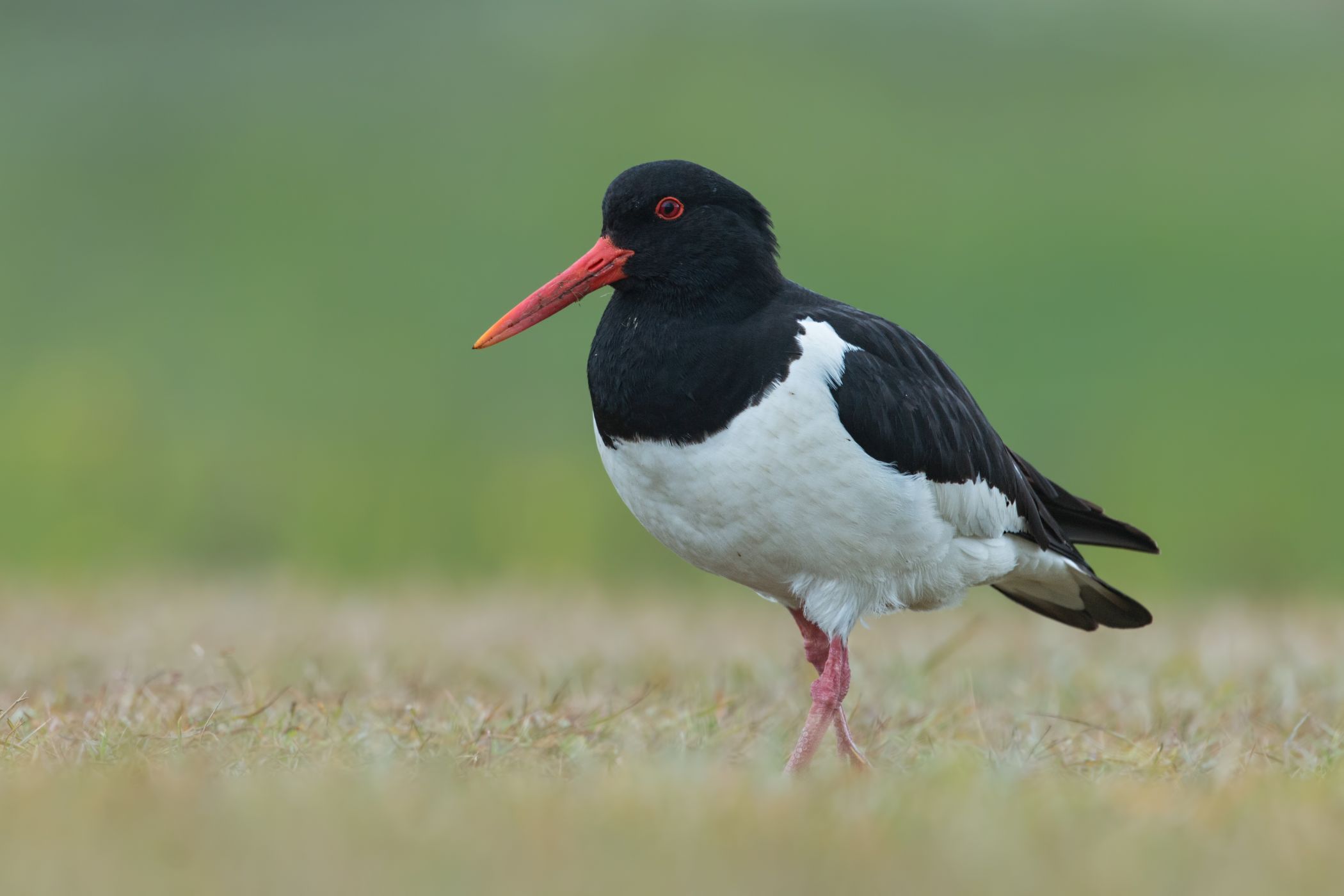
A loud, insistent piping along the tideline means Oystercatchers. Pied plumage, pink legs and a heavy orange-red bill make them hard to miss, and that bill hammers or levers open mussels and other shellfish. The big winter flocks on estuaries in south-west England are mostly birds that nest in northern England and Scotland.
The Herring Gull supplies the laughing call that many people in the UK treat as the sound of the seaside. Adults have a pale eye and a yellow bill with a red spot. Plenty of British and Irish birds stay put all year rather than moving south.
Seabirds that say their own names
The Kittiwake takes its name from a shrill ‘kittee-wa-aaake’, repeated over and over from the cliff ledges. In Europe it is the only gull of its genus, so most people drop the black-legged part of the official name.
Terns get named by ear as well. In Scots the Arctic Tern goes by pictarnie or tarrock, words thought to echo its call. Its migration is the longest known of any animal: one bird fitted with a tracker on Northumberland’s Farne Islands flew about 96,000 km in ten months.