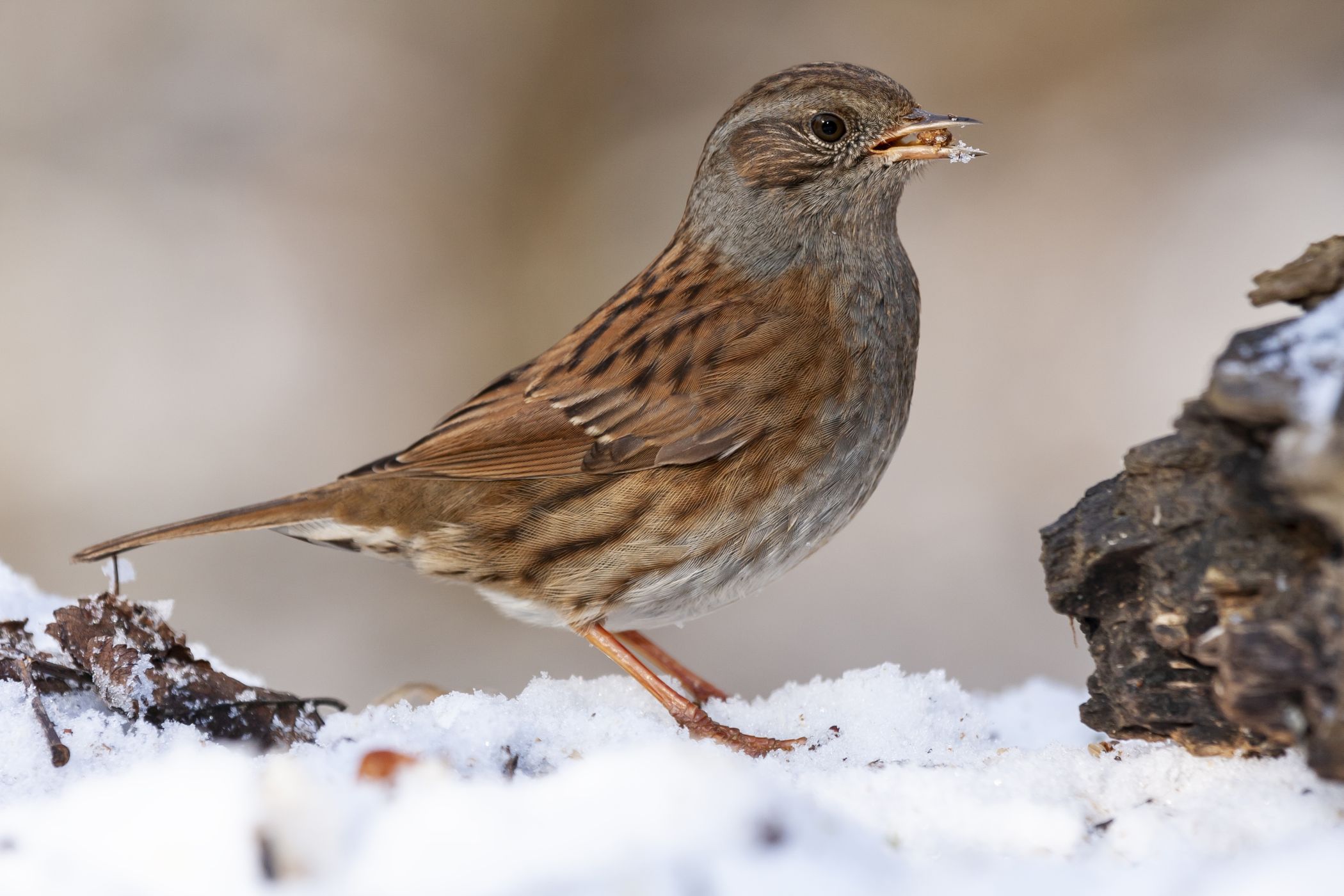
Almost anyone in Britain or Ireland can name a Robin from its breast, yet the bird has a few disguises. A speckled youngster, a washed-out migrant from Scandinavia and the similarly sized Dunnock in the hedge bottom all catch beginners out.
An orange face framed in blue-grey
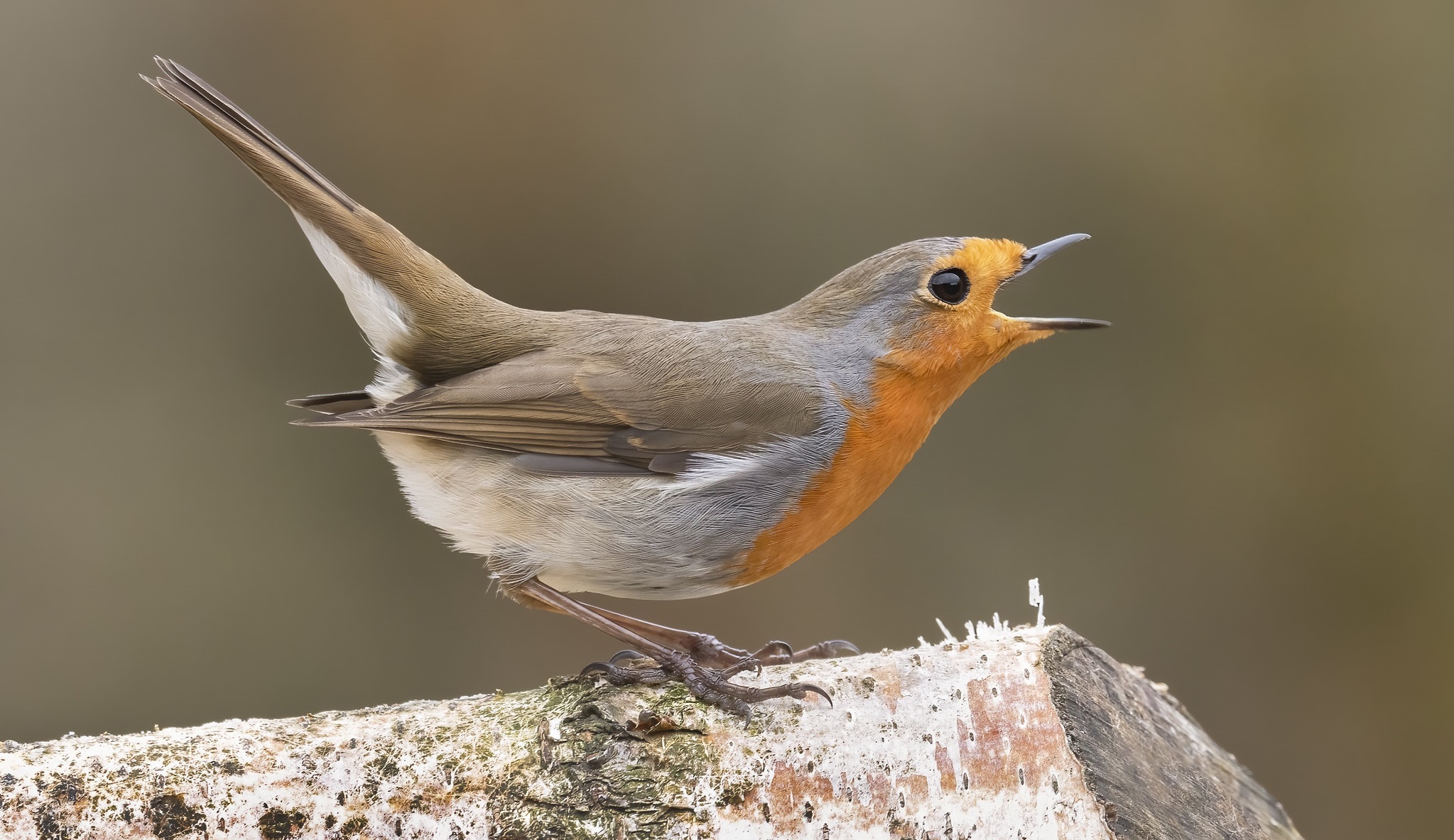
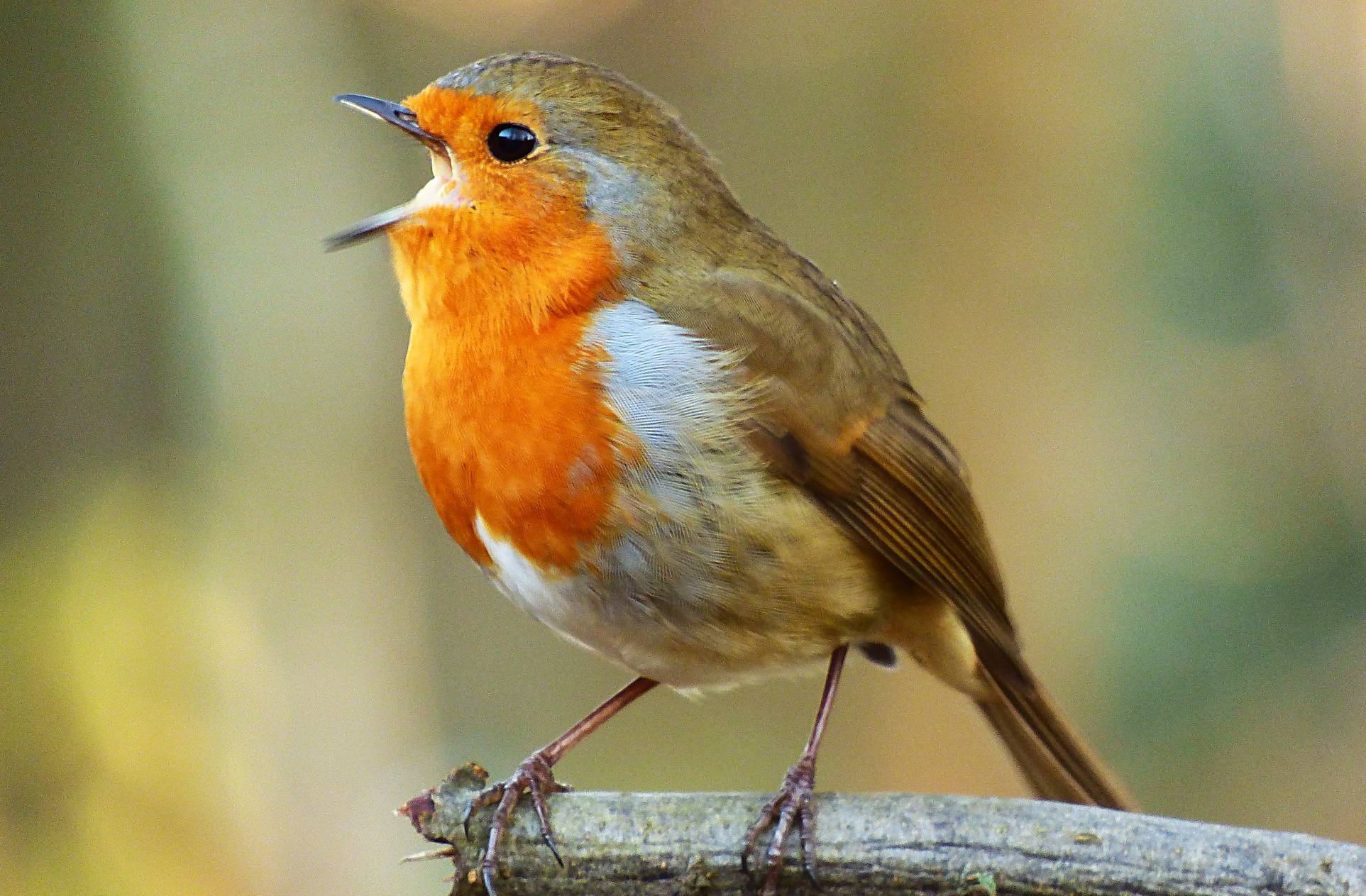
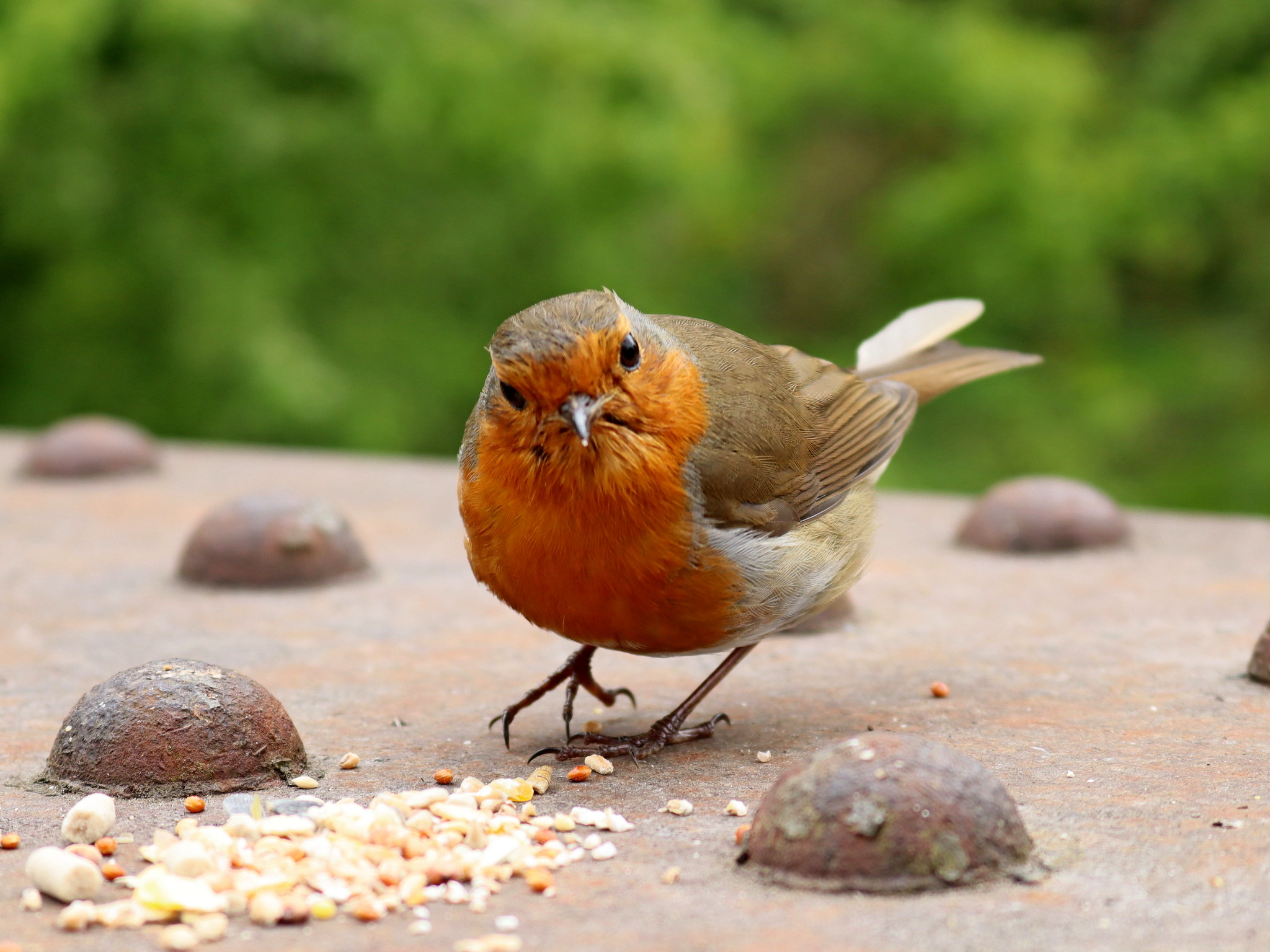
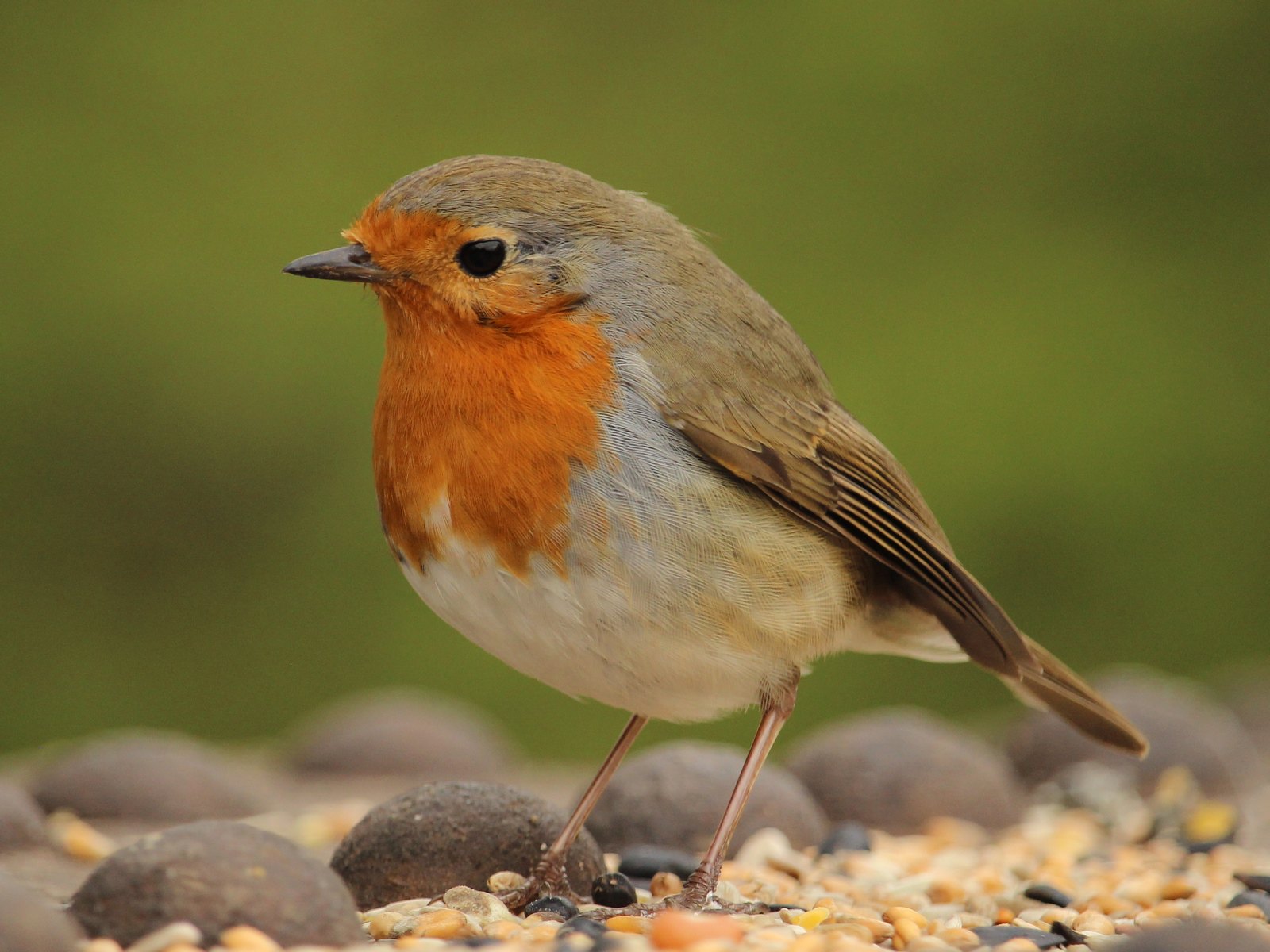
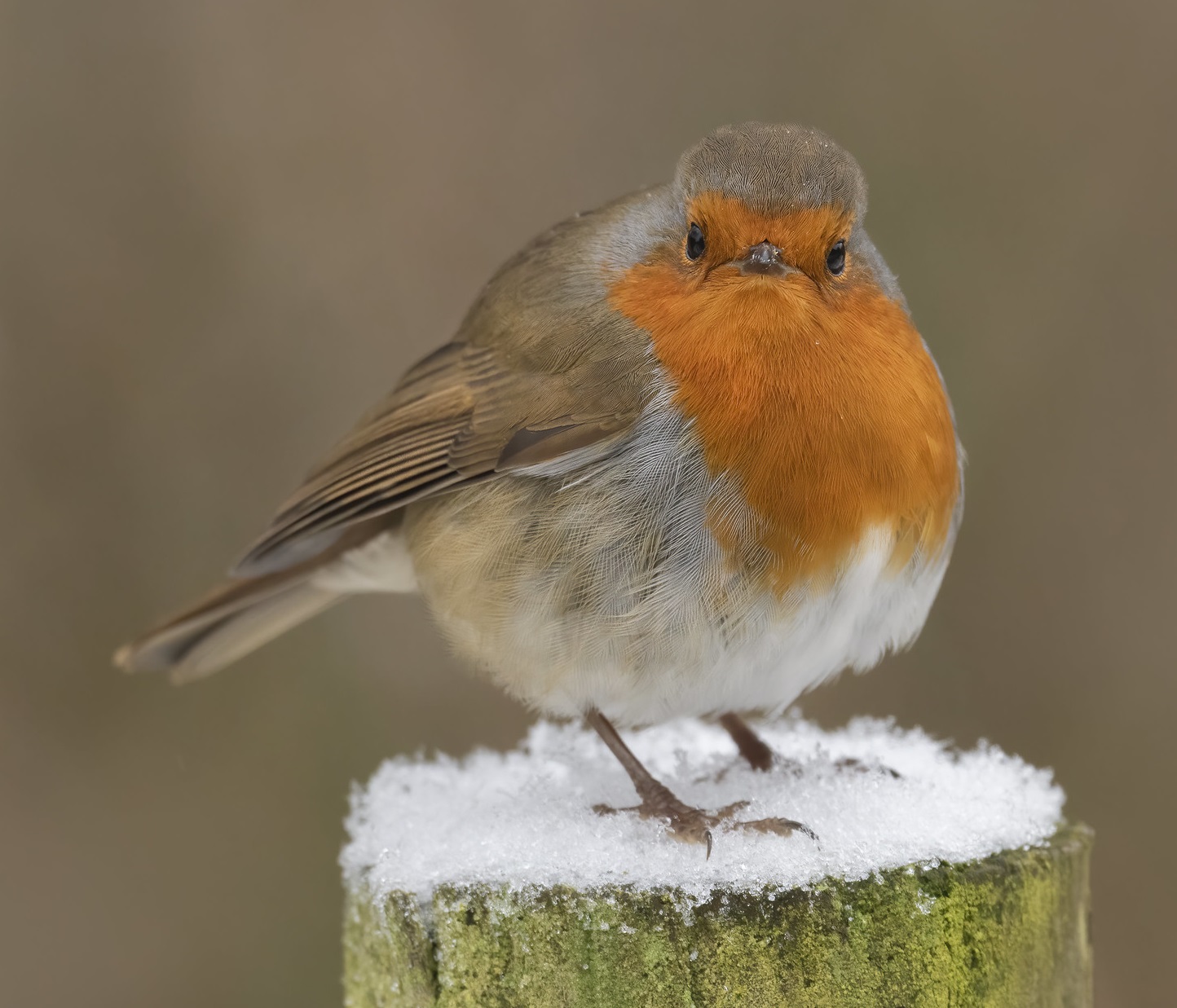
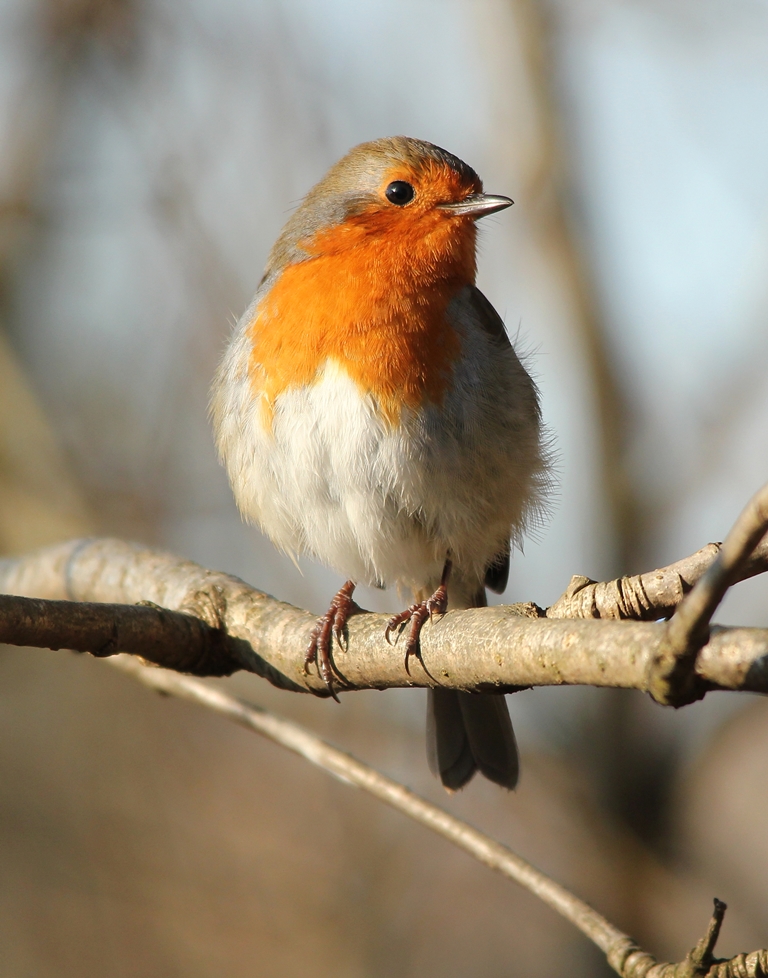
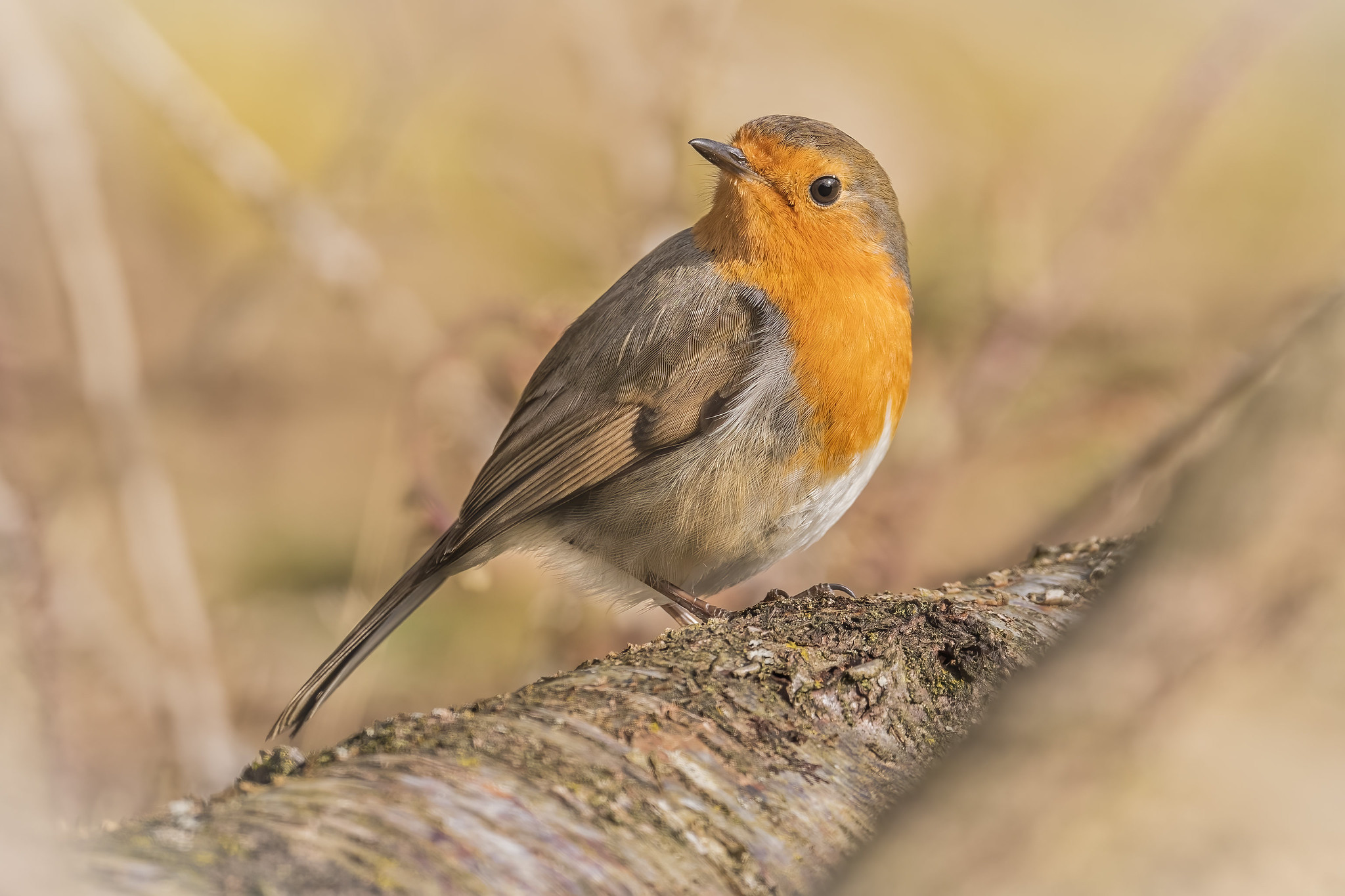
Adults measure 12.5 to 14 cm and weigh 16–22 g. Orange covers the face and breast, and a strip of bluish grey edges it where the neck meets the chest. Below that, the belly is whitish.
Males and females look identical. Birds breeding here belong to the race melophilus, with a richer orange and an olive tinge to the brown back. Eyes and bill are both black, the legs brown.
Fledglings leave the nest brown and mottled from head to tail, with no red at all. Two or three months on, a few orange feathers show under the chin, and the patch spreads until it fills the breast. In their first winter, young birds still carry yellowish-brown tips on the wing coverts, which adults mostly lack.
Pale migrants and an American namesake
Winter brings Robins from Scandinavia and Russia, escaping the harder cold further north. They look greyer on the back and their breast is a duller orange. A faded-looking Robin on a January lawn may be a visitor rather than your resident bird.
The American robin is another creature altogether: a far bigger thrush that shares a genus with the common Blackbird and is named only for its orange chest. Across Britain it is a vagrant of the rarest kind. Our Robin was itself once filed with the thrush family, though it now sits among the Old World flycatchers.
Why you still hear Robins in December
Listen for a fluting, warbling song that carries on when most garden birds have gone quiet. Male and female both sing through the year, each defending a separate patch in winter. The cold-season version is noticeably more plaintive than the spring one.
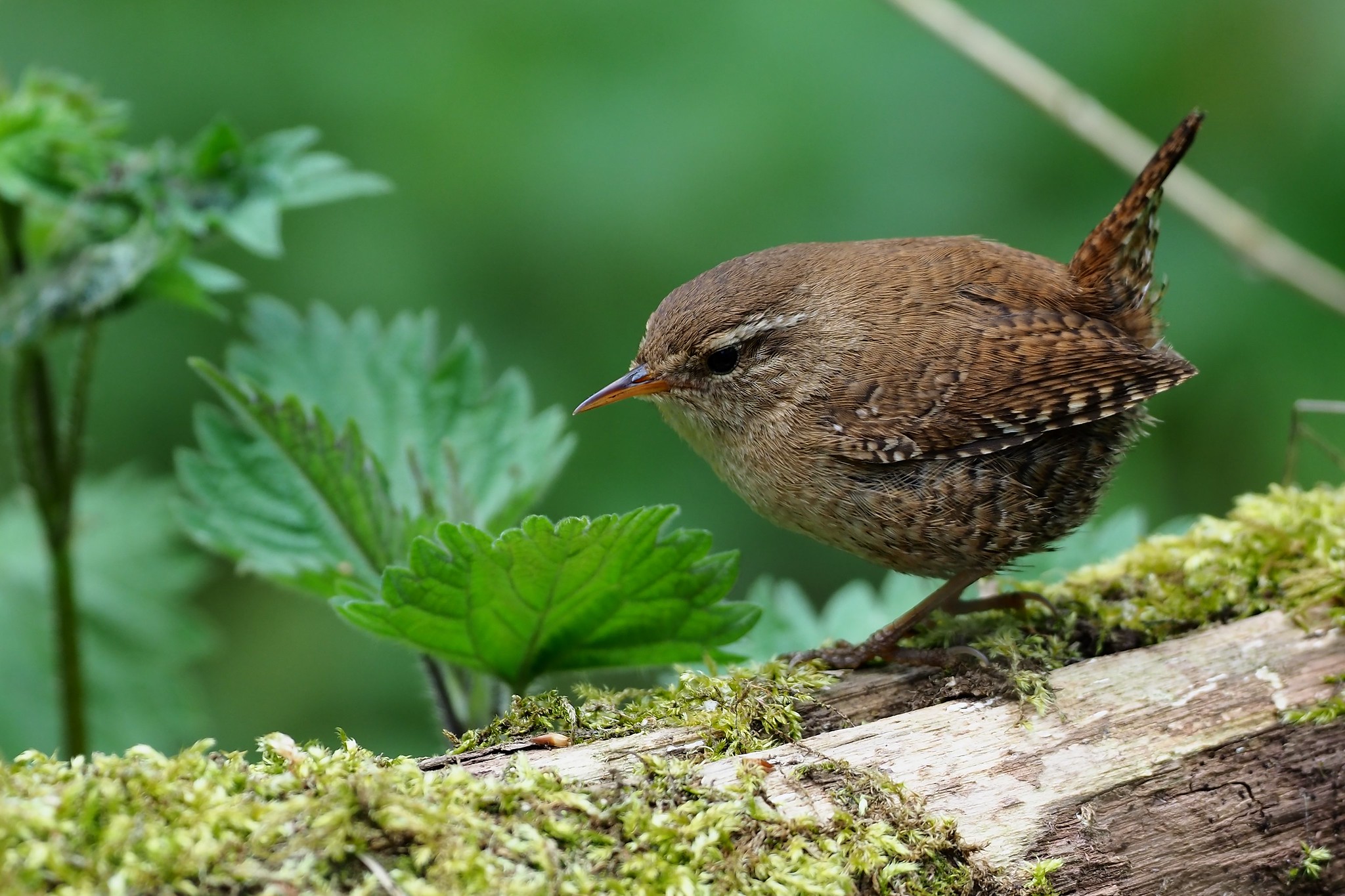
Once nesting starts, males open their day about an hour ahead of civil sunrise and stop roughly thirty minutes after sunset. In lit-up towns some keep going into the night, a way of dodging daytime noise. A Wren’s scolding ‘tic-tic-tic’ is often taken for a Robin call; it is quicker, with the notes run closer together.
Garden bird here, shy woodland bird abroad
In Britain and Ireland the Robin lives mainly in parks and gardens, and most birds stay put all year. A small share, usually females, head for southern Europe in winter, a few as far as Spain. Continental migrants behave differently and choose spruce woods in northern Europe.
Its tameness is a local habit. British and Irish gardeners never harmed it, partly because legend linked the red breast to the blood of Christ, while on the Continent Robins were hunted like other small birds and stayed wary. Turn a bed over with a fork and one will soon arrive, checking the fresh soil for earthworms.
Kettles, flowerpots and old hats: where Robins nest
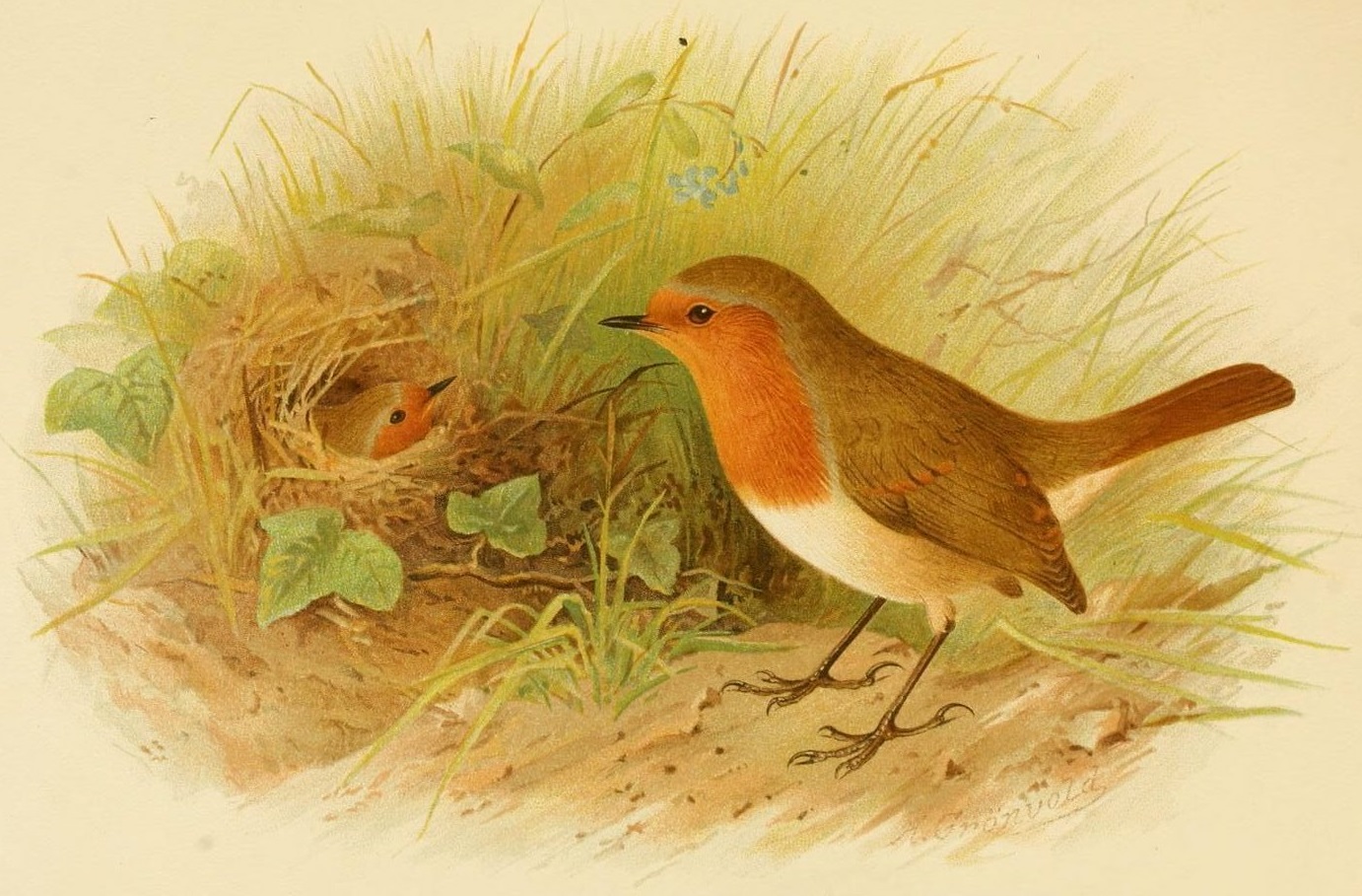
Almost any sheltered hollow will do. Nests have turned up in old kettles, watering cans, bicycle handlebars and the bristles of a broom left upside down.
If you put up a box, choose an open-fronted design in a sheltered spot no higher than 2 m. The nest is moss, leaves and grass, lined with hair, feathers and finer grass.
Here the first eggs appear in March, and a pair can fit in two or three broods in a season, each of five or six eggs. They are cream, buff or white, freckled with reddish-brown and usually heaviest at the broad end.
The Robin’s year in song
Values show how much singing you can expect. Both sexes sing through winter, and the output rises from March as nesting gets under way.
What the Robin looks like
Small brown birds that pass for a Robin
Juvenile Robins have no red, so shape and call matter as much as colour.
Robin questions from the garden bench
Why do Robins fight so much?
Males defend their ground fiercely and will set on rival males, other small birds and even their own reflection. In some areas these disputes account for up to a tenth of adult deaths.
Is the Robin Britain’s national bird?
Unofficially, yes. A vote promoted by The Times adopted it in the 1960s, and in 2015 a poll run by David Lindo gave it 34% of the final vote.