
Big, black and usually seen in pairs, the Raven is the heaviest of all perching birds. In Britain and Ireland it belongs mainly to the north and west, among upland birds and along sea cliffs, and the call is the quickest way to confirm it.
One croak, thirty kinds of call
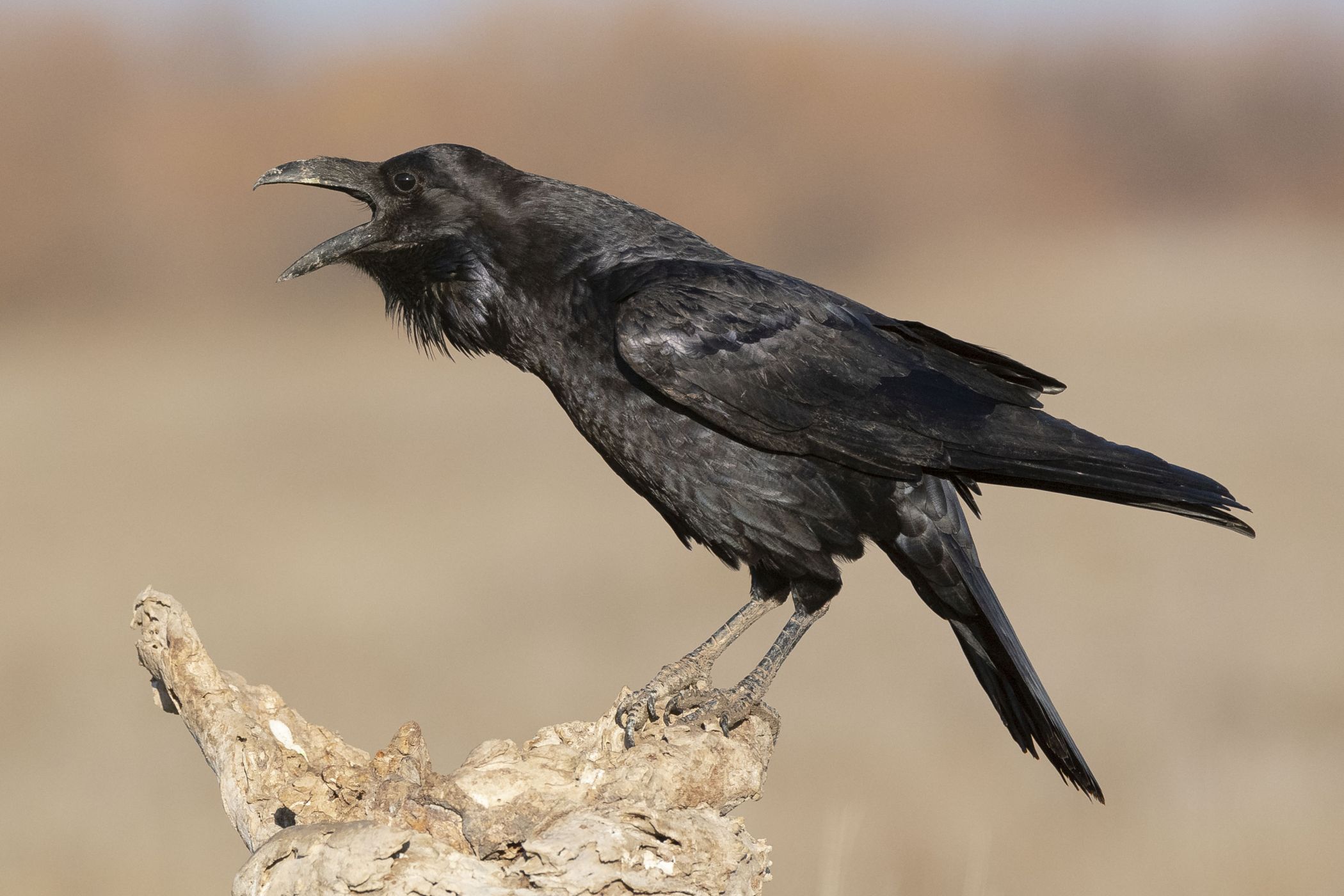
Listen first for a deep, resonant ‘prruk-prruk-prruk’. To an experienced ear no other corvid sounds like it: it is far richer and more sonorous than anything a Carrion Crow manages.
That croak is only the start. The repertoire runs to 15–30 call types, mostly used between birds. Among them are a knocking, high ‘toc-toc-toc’, a ‘kraa’ that sounds dry and grating, a low rattle from the throat and a few almost musical notes.
Ravens mimic too, human speech included. If one of a pair goes missing, its partner has been heard giving the lost bird's own calls, apparently to call it back.
Wedge tail, shaggy throat, heavy bill
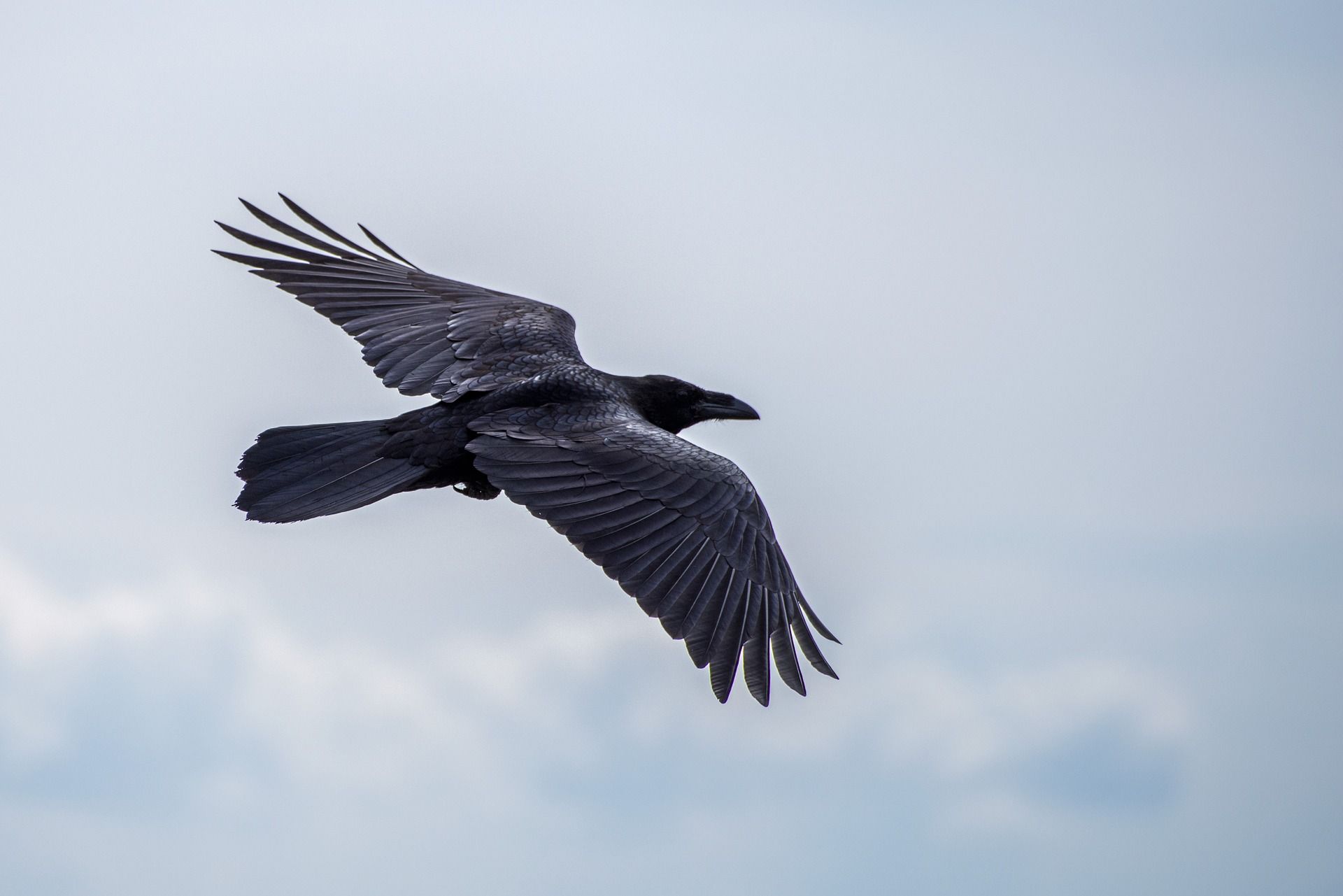
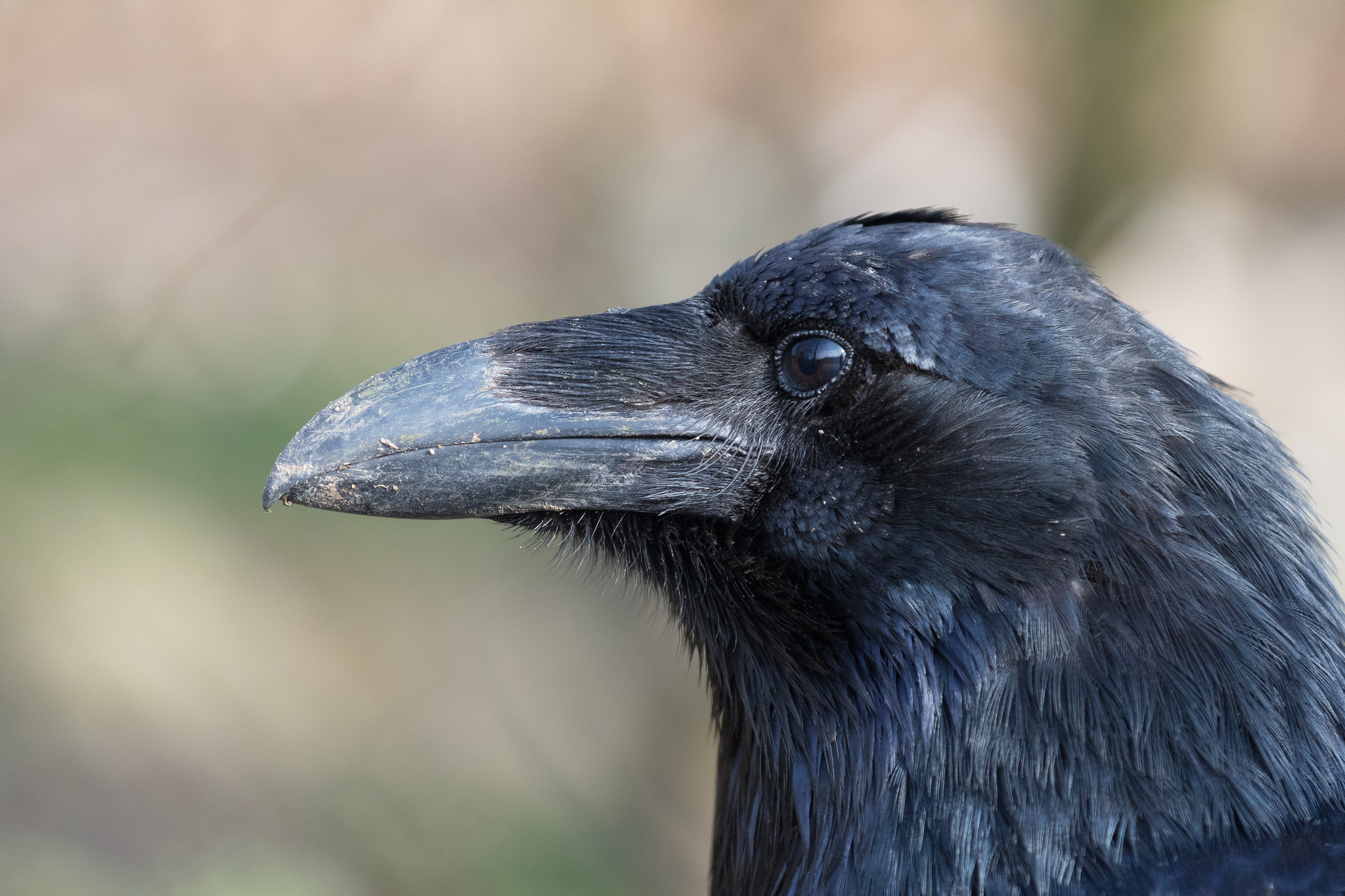
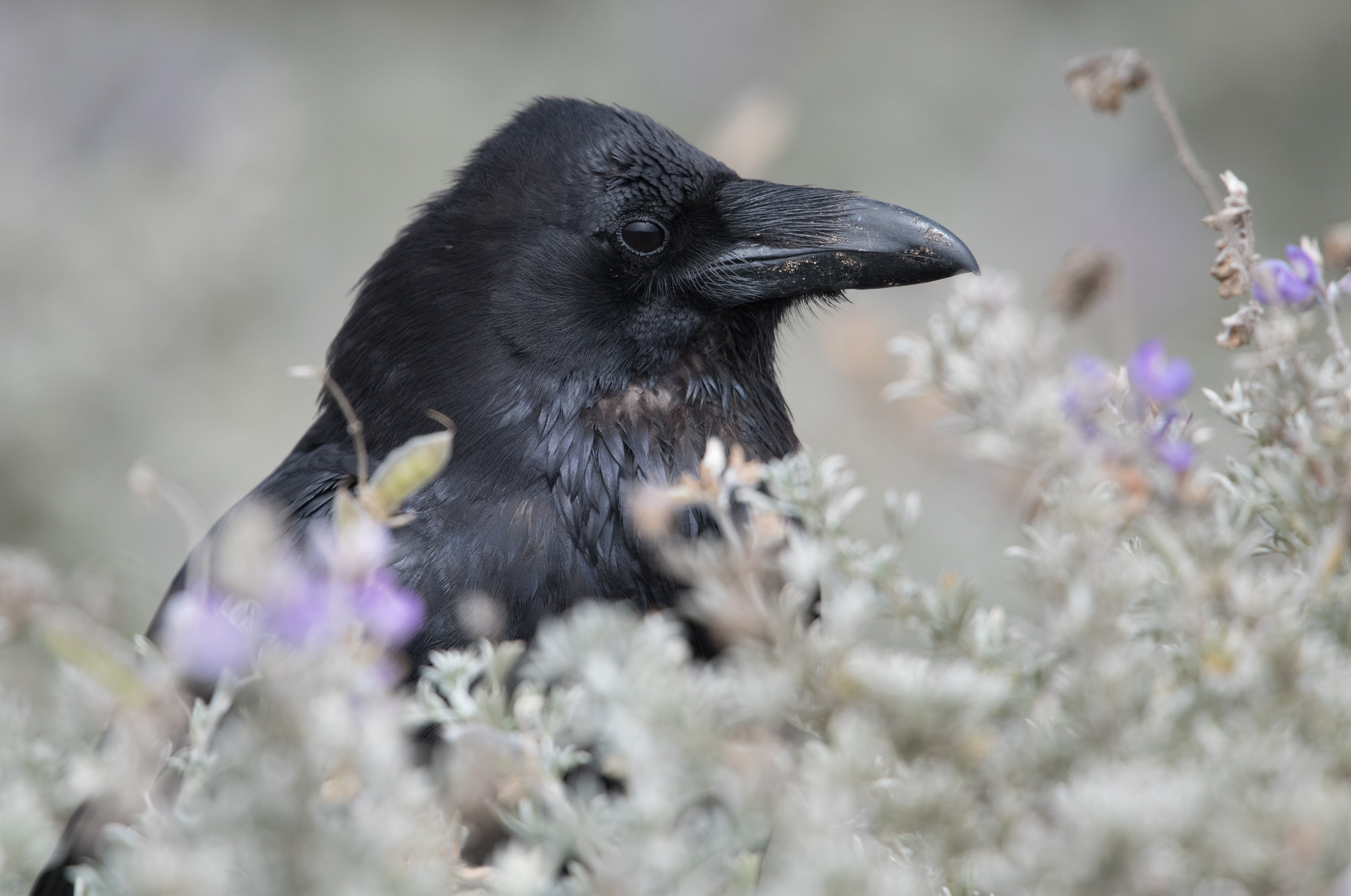
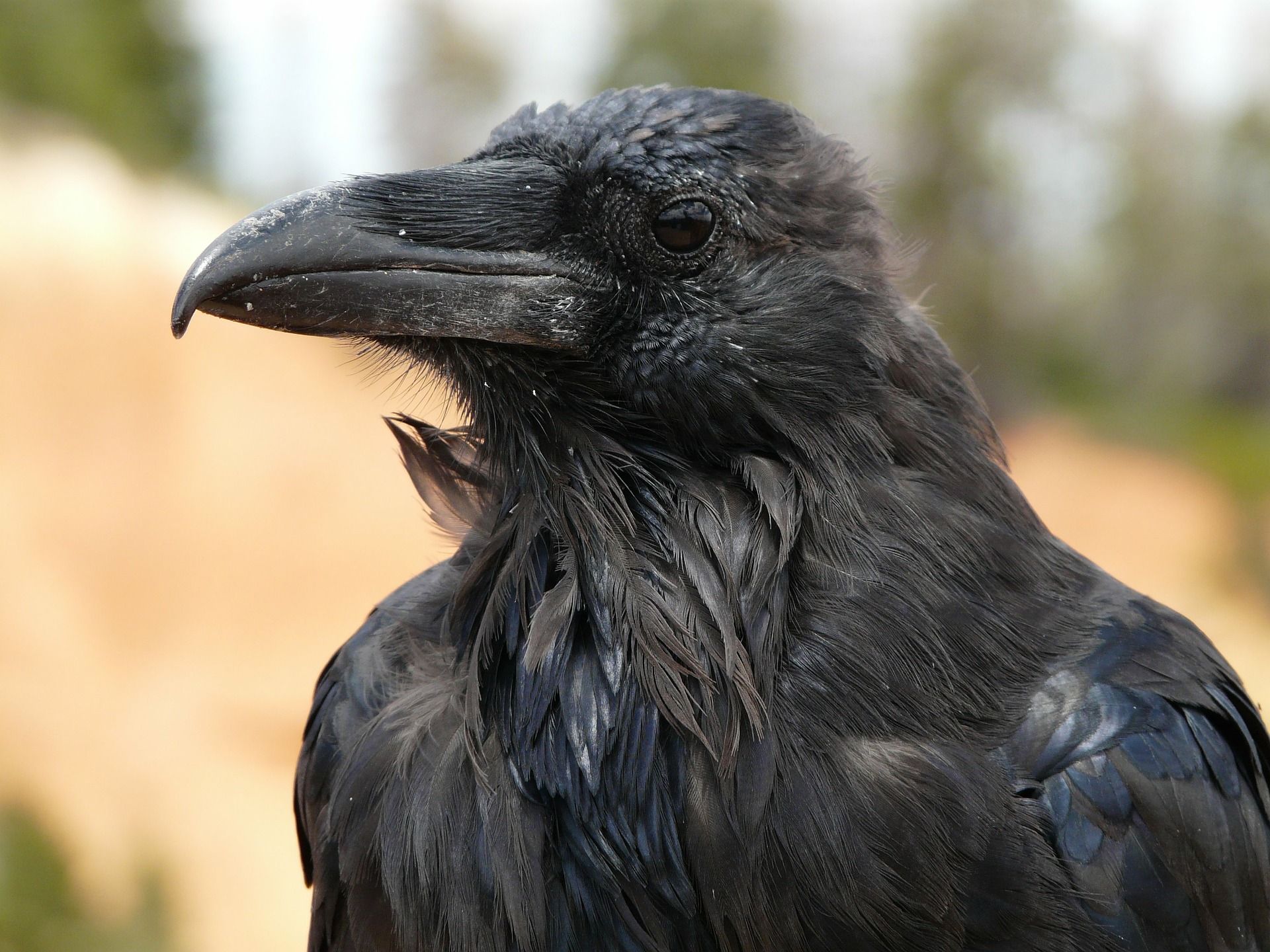
Size helps, but shape settles it. The bill is massive and slightly curved, up to 8.5 cm along the top. Long, pointed throat feathers form a ragged beard, and the long graduated tail looks like a wedge in flight.
Carrion Crows and Rooks can look big-billed, yet both are clearly smaller with ordinary crow wings and tails. A soaring Raven shows more wing area and flaps less. It is just as agile, though. Pairs fly loops and even lock talons in the air.
Pushed west by gamekeepers, now spreading back
Its British and Irish strongholds are Wales, Scotland, Ireland and the west of England; gamekeeping wiped it out elsewhere. Better legal protection is now letting the UK range spread south again, though illegal killing persists in many areas.
Mountains and coasts suit it best. On the coast, pairs space out along the cliffs to nest, and over hills they ride the lift along a ridge. Birds stay all year; only the young wander locally.
Carrion first, but almost anything will do
What a Raven eats depends on place, season and luck. Carrion matters most, maggots and beetles included, though a big carcass has to be opened by something else first. Grain, berries, small mammals, ewes' afterbirth and the chicks of other birds all go down too.
Young ravens that find a carcass yell to bring others in, and a gang of juveniles can then outnumber the resident pair. Spare food, fatty scraps above all, is hidden out of sight of other ravens. Some birds even fake a cache to fool an onlooker.
Eggs in the depth of winter
Ravens nest early. Most pairs lay from late January into February. On a cliff ledge or in a big tree they make a deep bowl of sticks, some of them 150 cm long, bound together with mud, roots and bark and given a soft lining such as deer fur.
The female lays four to six blue-green eggs blotched with brown and sits alone for 18–21 days. Young leave at 35–49 days, and the adults guard them closely: in one case a pair drove off a Peregrine that dived at their newly fledged chick. The family stays together for about six months more.
An early breeder that never leaves
Ravens are resident in Britain and Ireland, so you can hear them in any month. The busiest stretch is late winter and early spring, when pairs lay from late January, and family parties stay together well into autumn.
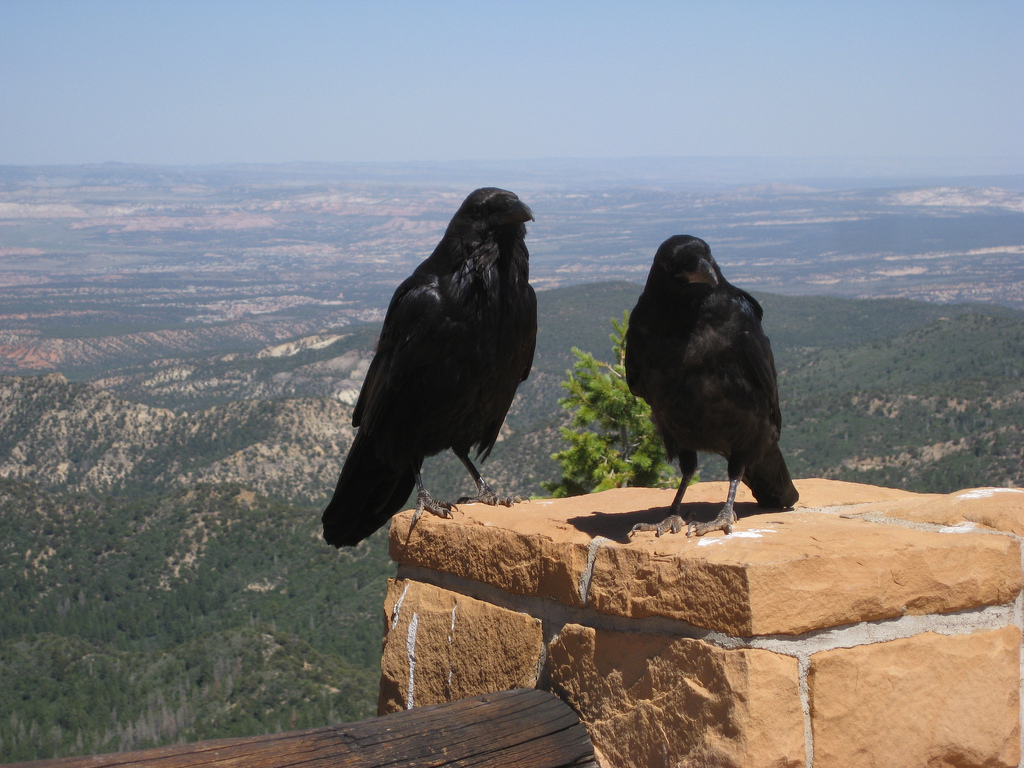
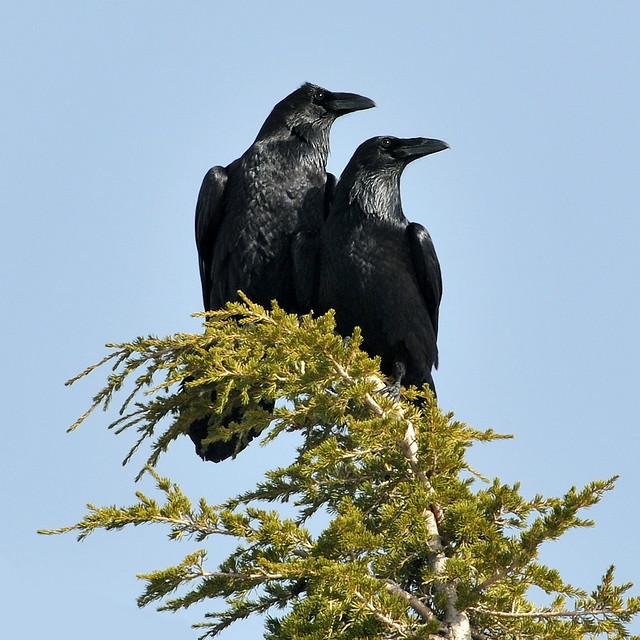
Field photos of the Raven
Raven questions answered
Are the Tower of London ravens an ancient tradition?
The story goes that England will not fall while ravens live at the Tower. Its official historian, Geoff Parnell, thinks this is a romantic Victorian invention. Birds kept there have passed 40 years, against 10–15 in the wild.
How clever is a raven?
In one test, meat hung on a string below a perch. Four of five birds worked out how to haul it up loop by loop, pinning the slack with a foot, with no visible trial and error. At four months, young ravens match grown chimpanzees and orangutans on reasoning tests.
What is a group of ravens called?
An ‘unkindness’ or a ‘conspiracy’. In Scotland the old word ‘corbie’ covered both the Raven and the Carrion Crow.