
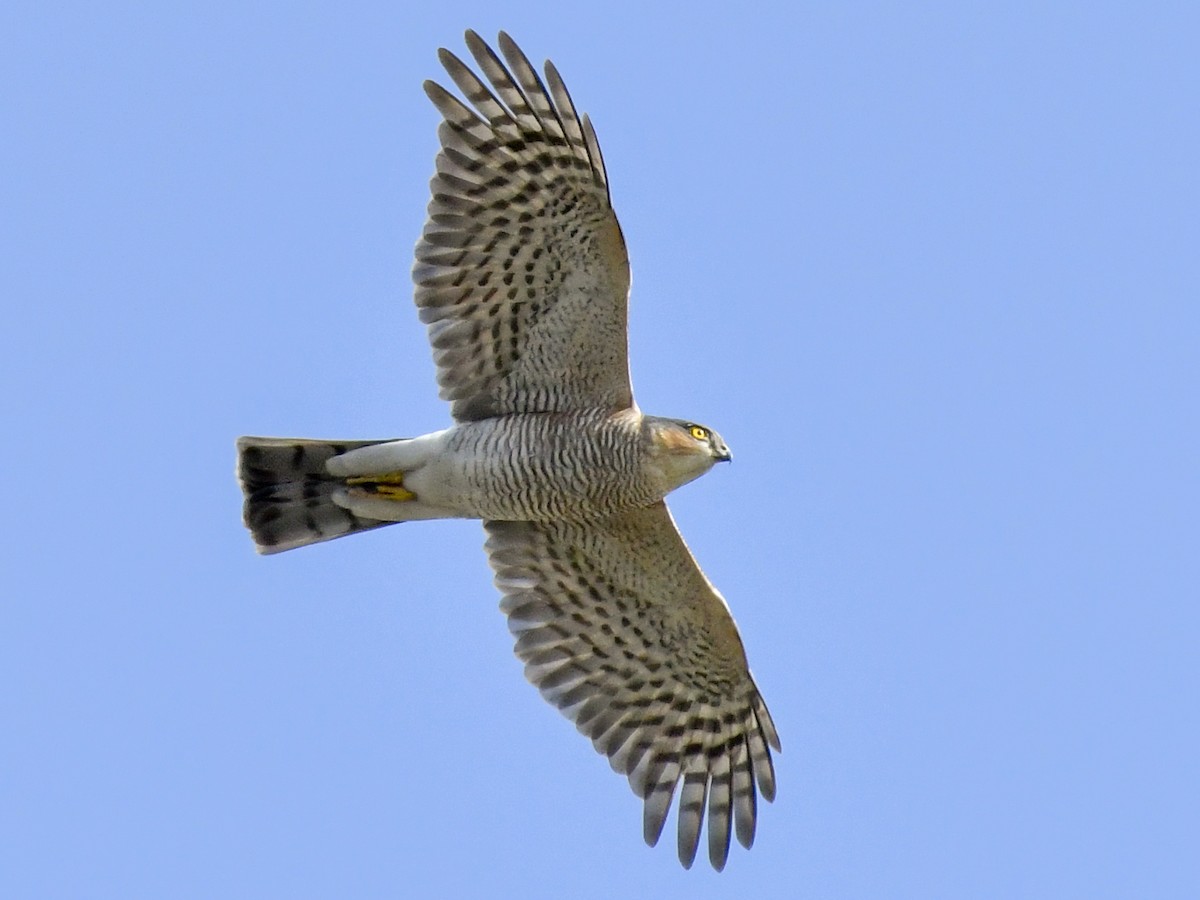
The mewing over the valley
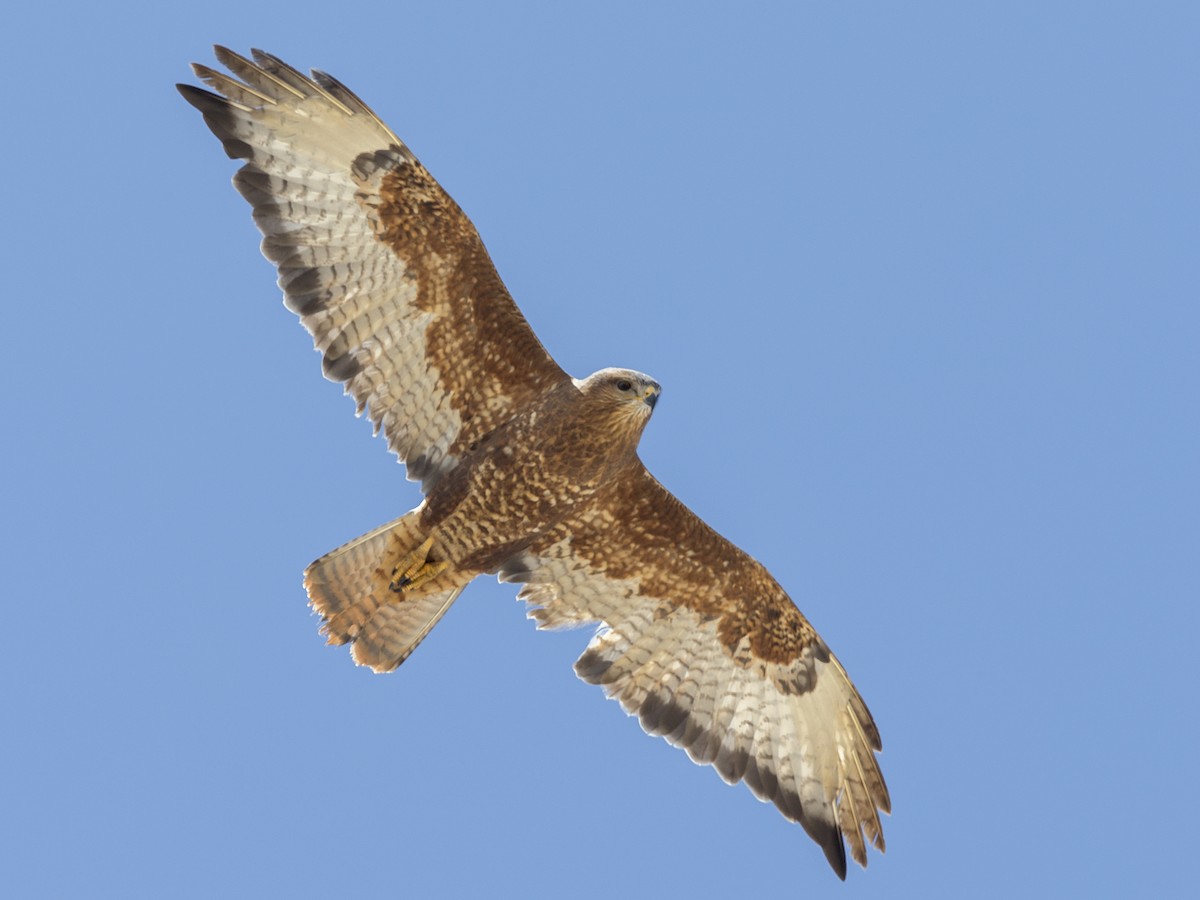
A plaintive, far-carrying ‘peee-oo’ above open fields is almost always a Buzzard, and resident birds call in every month. It is very likely the most numerous daytime raptor in Europe, with at least 700,000 pairs. Today it nests in Ireland and almost everywhere in England, Wales and Scotland.
The Red Kite shares the broad-winged outline but steers with a long, forked tail that twists as the bird turns. Every one of the world’s 32,200 to 37,700 breeding pairs is in Europe, the UK included. A bird recovered dead in Buckinghamshire in 2018 set the Britain and Ireland age record at 25 years and 8 months.
Birds of prey and owls by searches
The common raptors, the ones you meet over a motorway or a back garden, sit near the top. Owls are mixed in by search volume rather than grouped at the end.
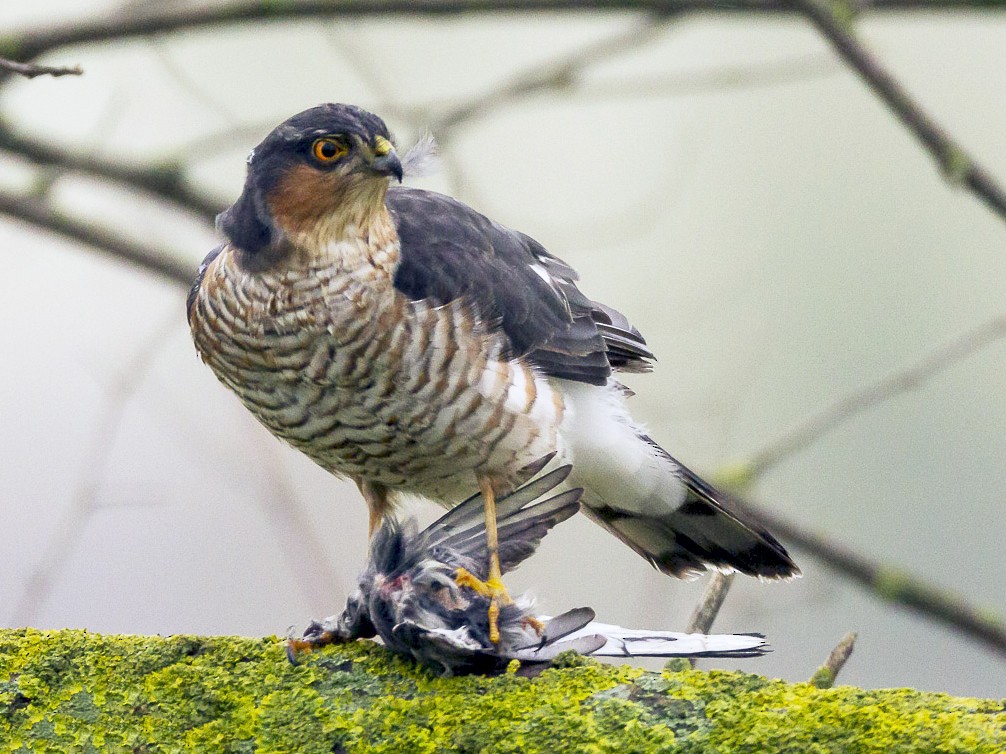
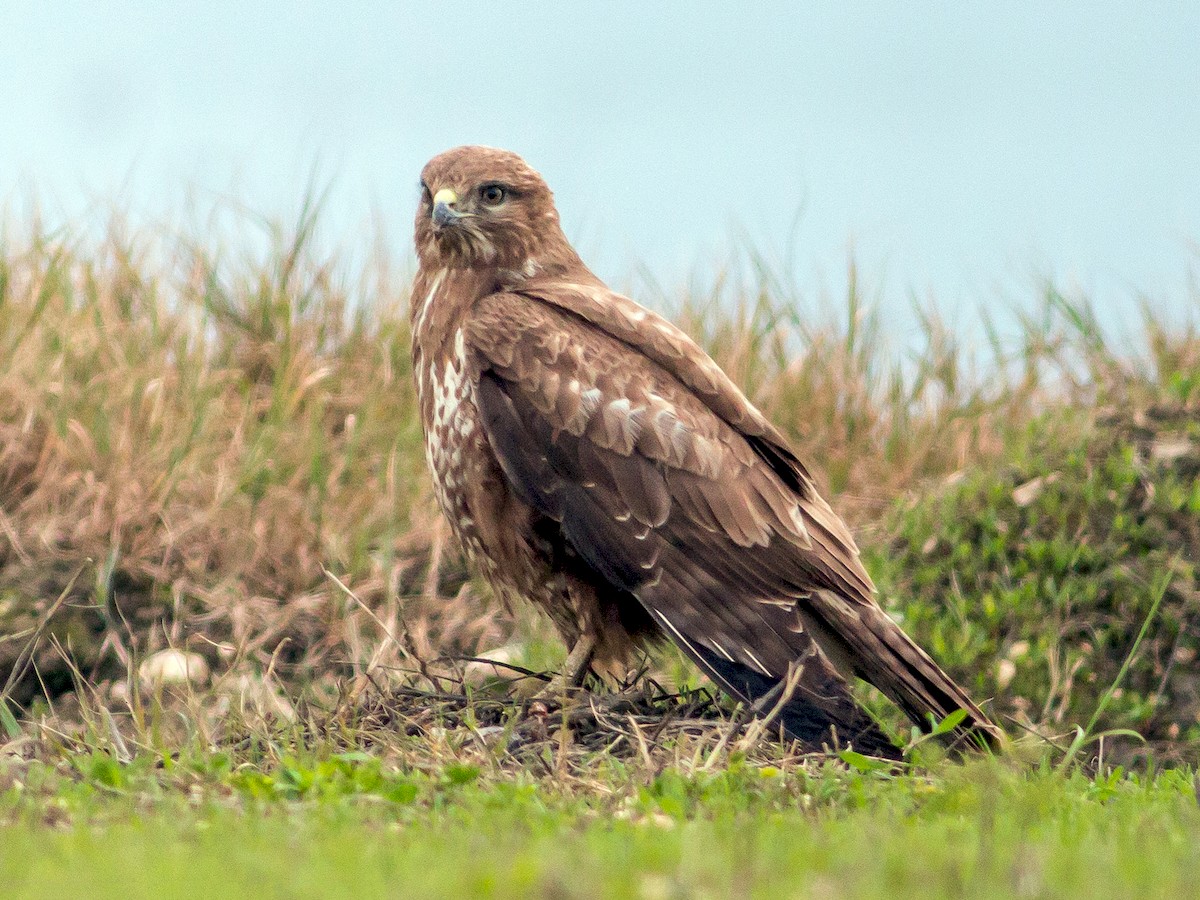
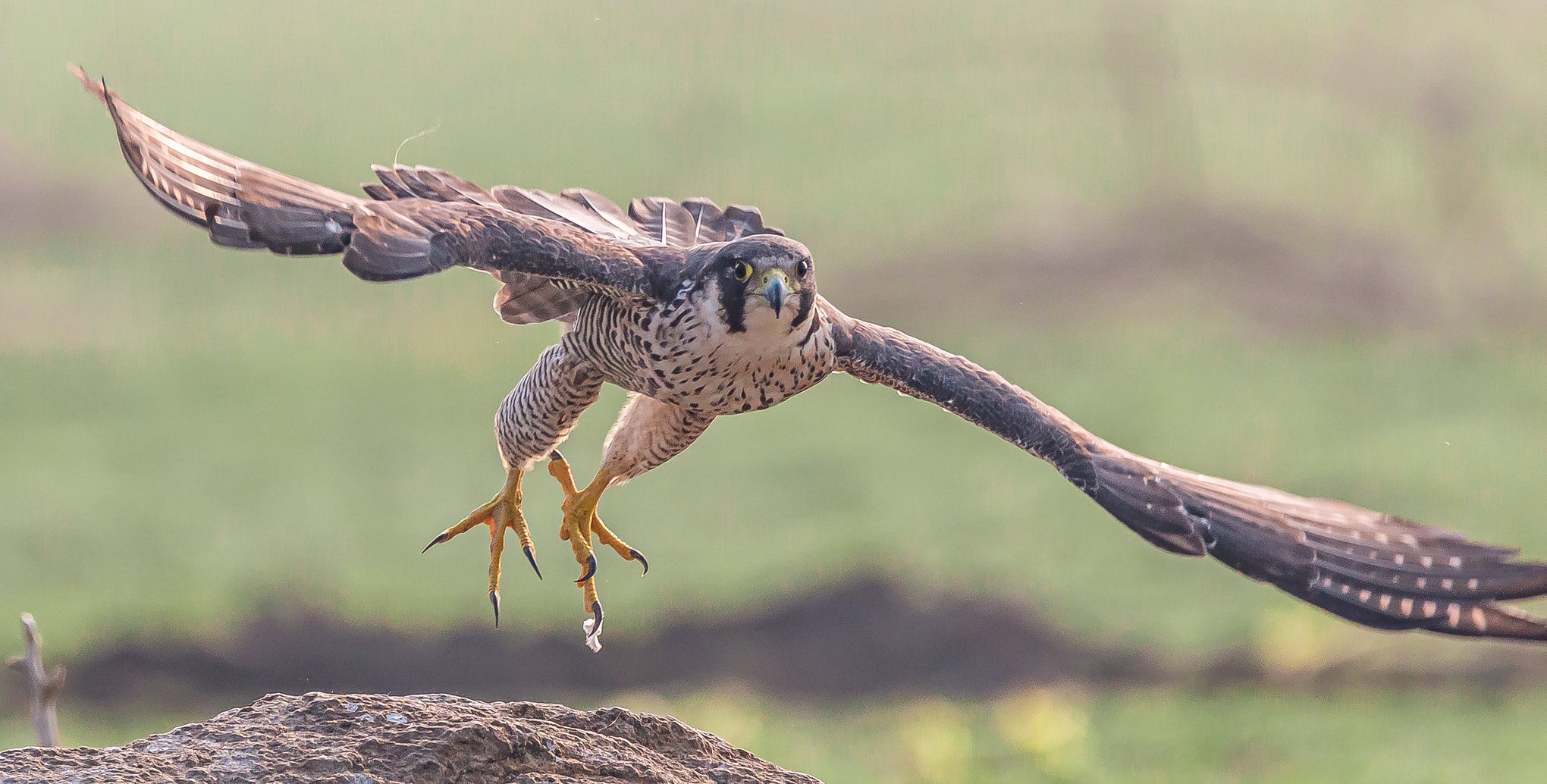
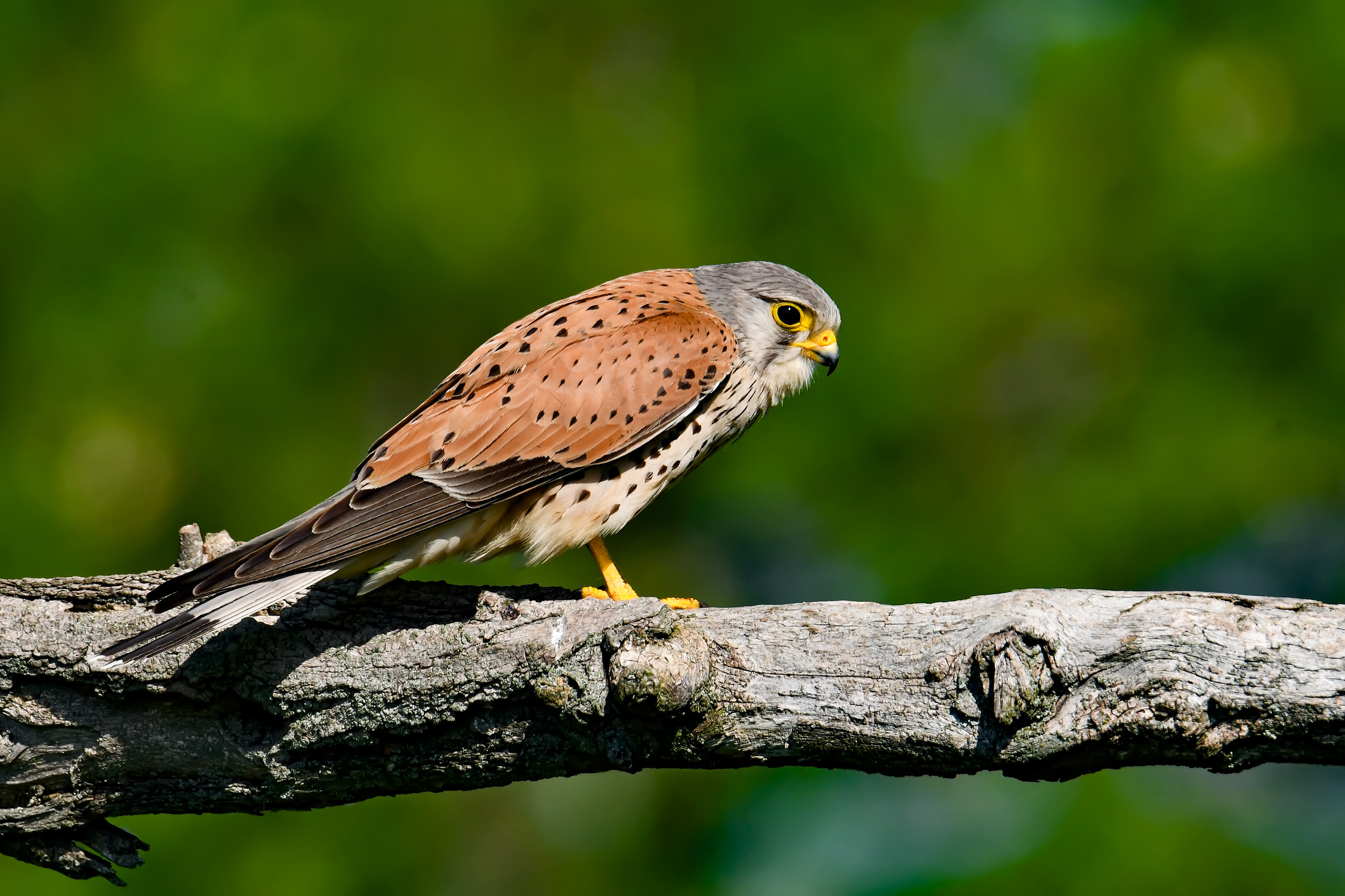
Hovering, stooping, ambushing
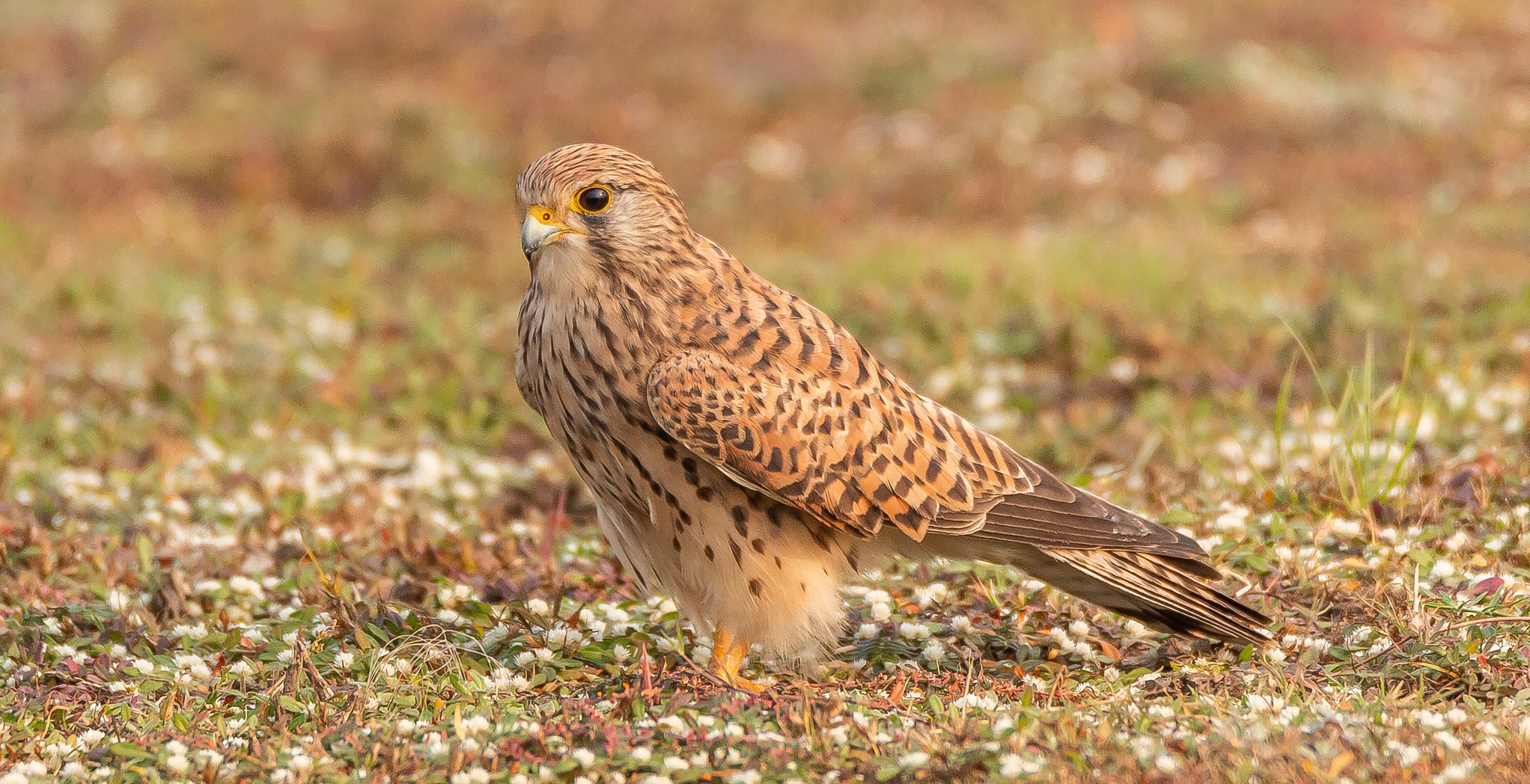
Beside a motorway, a small falcon holding still in the wind 10 to 20 metres up is a Kestrel; an old country name for it was windhover. Road verges are full of voles, which explains why you see so many kestrels there.
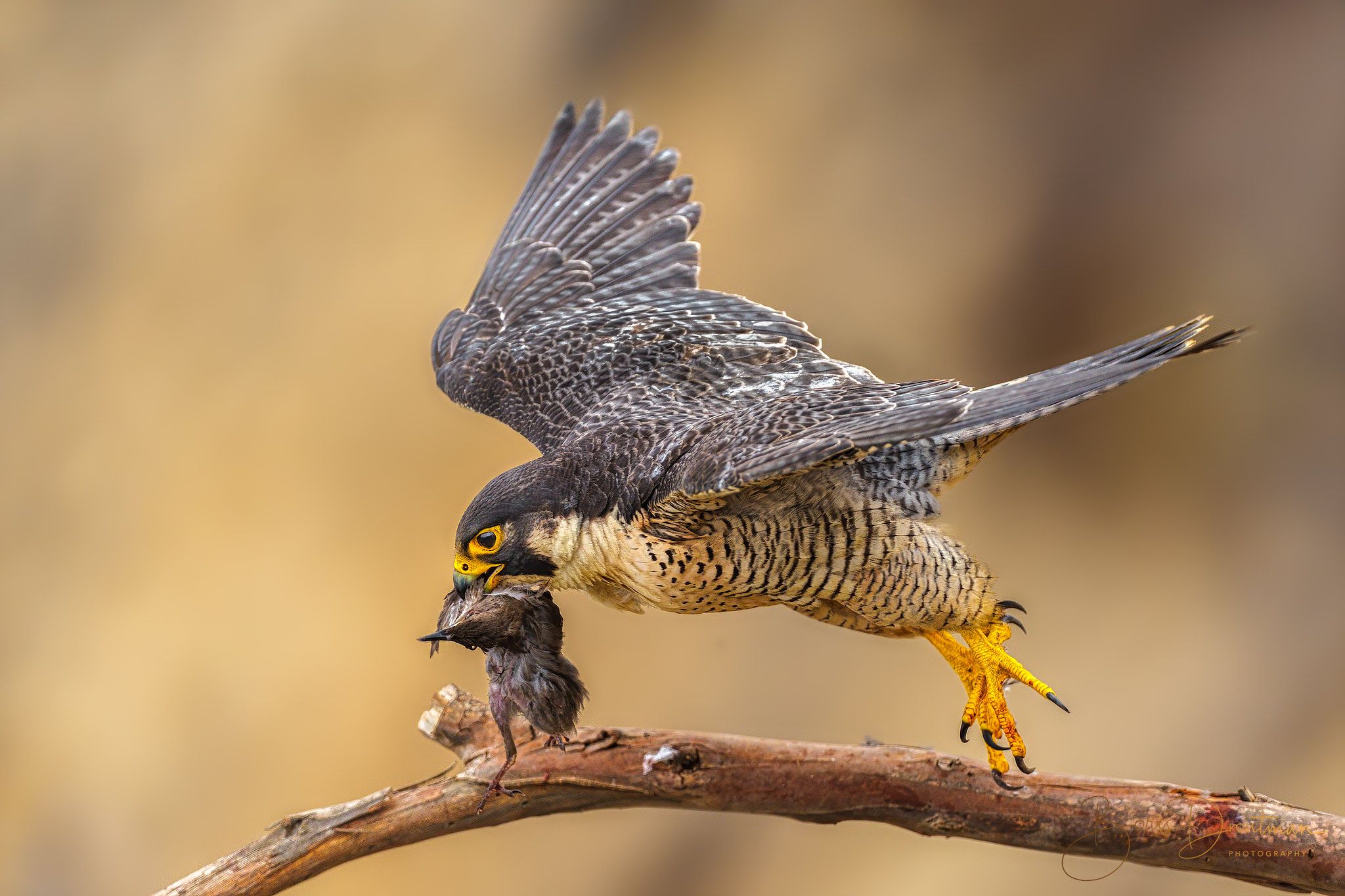
The Peregrine hunts by climbing high and then stooping at great speed onto pigeons and ducks. Tall buildings now stand in for cliffs, and numbers recovered after DDT was banned in the early 1970s. The Sparrowhawk instead works low through gardens: the female is up to a quarter bigger than the male and takes thrushes and starlings, while he goes for tits and finches. The falcon family page compares the falcons in more detail.
Owls after dark
The Tawny Owl is the woodland owl of Britain but is missing from Ireland, probably because the long-eared owl competes with it there. Cemeteries, parks and gardens have let it move into towns, central London included. It never migrates, and young birds that cannot find a free territory often starve.
A Barn Owl does not hoot; it gives a long, eerie shriek, which is why many people in the UK call it the screech owl. In Britain it often hunts by day as well, pinpointing small mammals on the ground by ear.