
You will rarely need to travel for a Wren. Across Europe it is nearly as familiar as the garden Robin, and it turns up anywhere from the shoreline to the highest moors. Finding one is easy; seeing it well takes patience, because it slips through cover like a mouse.
Brambles, reedbeds and sea cliffs: life in low cover
What a Wren needs is bushes and thick ground cover, farmed or wild. That means hedgerows, gardens, woodland, thickets and plantations, but also reedbeds, rough pasture and slopes littered with boulders.
Open country works too, provided there are clumps of gorse or bramble to duck into. On rocky shores and sea cliffs around the coast it is just as much at home. In the British uplands it is as plentiful in dense woods and reedbeds as it is around farms and gardens.
Scotland’s islands have their own forms. The St Kilda Wren is greyer above and whiter below, with heavier barring on the back, while Shetland and Fair Isle birds are darker. The Outer Hebrides have a race of their own, and indigenus covers mainland Britain, Ireland, Orkney and the Inner Hebrides.
How to get a proper look at a Wren
Work slowly along the foot of a hedge or a bank. Wrens feed low in quick, jerky moves, poking into cracks, checking old walls and hopping over fallen logs, and they often shoot out from under an overhang as you pass.
Keep an eye on the base of tree trunks too, where one will sometimes hop upwards. In flight it goes fast and straight on whirring round wings, rarely carrying far.
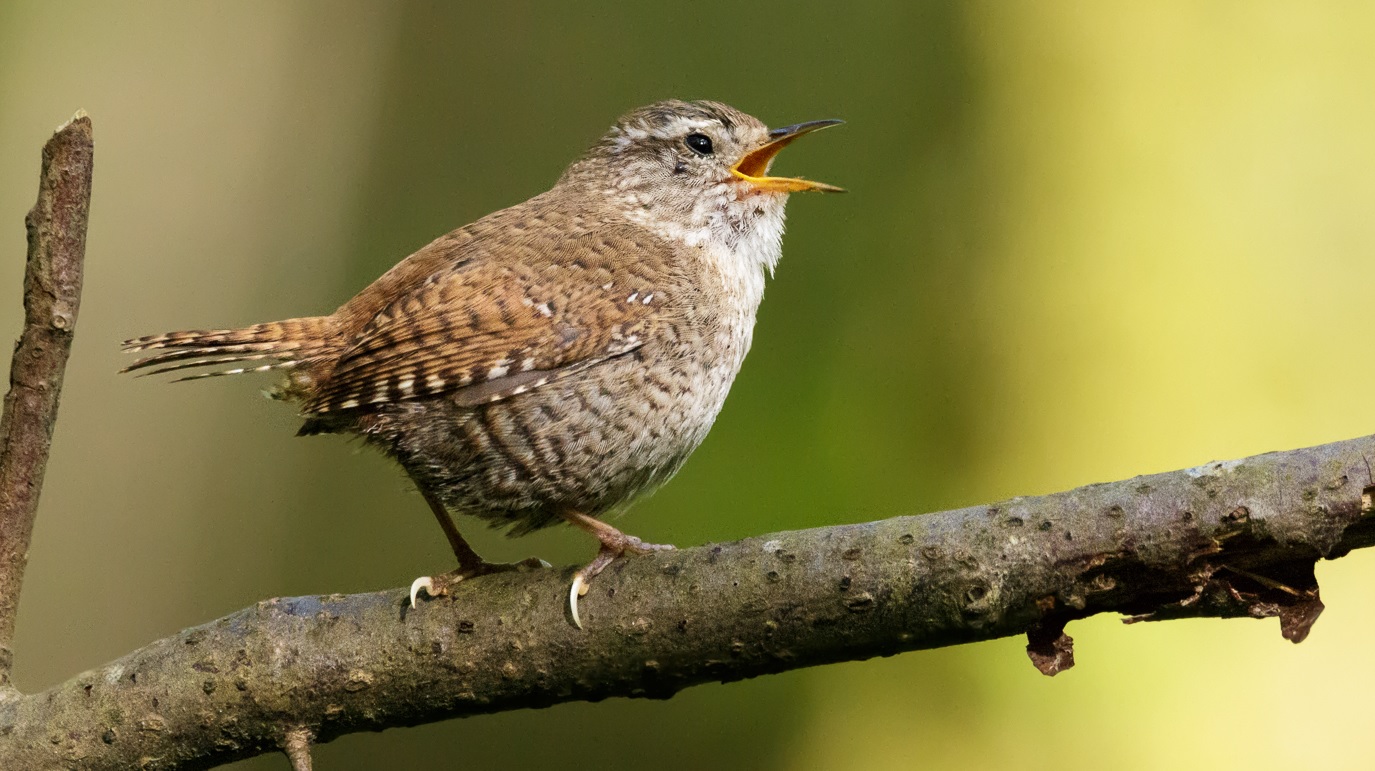
A singing male gives the best view. For all his skulking, he will often pick an exposed low perch, and his whole body shivers with the effort.
On winter nights Wrens tuck themselves into dark holes and old nests, and in harsh weather several share one roost. Each autumn birds thought to be Norwegian reach the east coast of Britain as far north as Shetland, after crossing over 500 km of open sea.
Why such a small bird sounds so loud
Gram for gram, a Wren is reckoned to be ten times as loud as a cockerel. The male’s song is long and intricate: a few opening notes, a trill that climbs a little, and a finish of clear notes or yet another trill. You can hear it in any month, though spring is when it stands out.
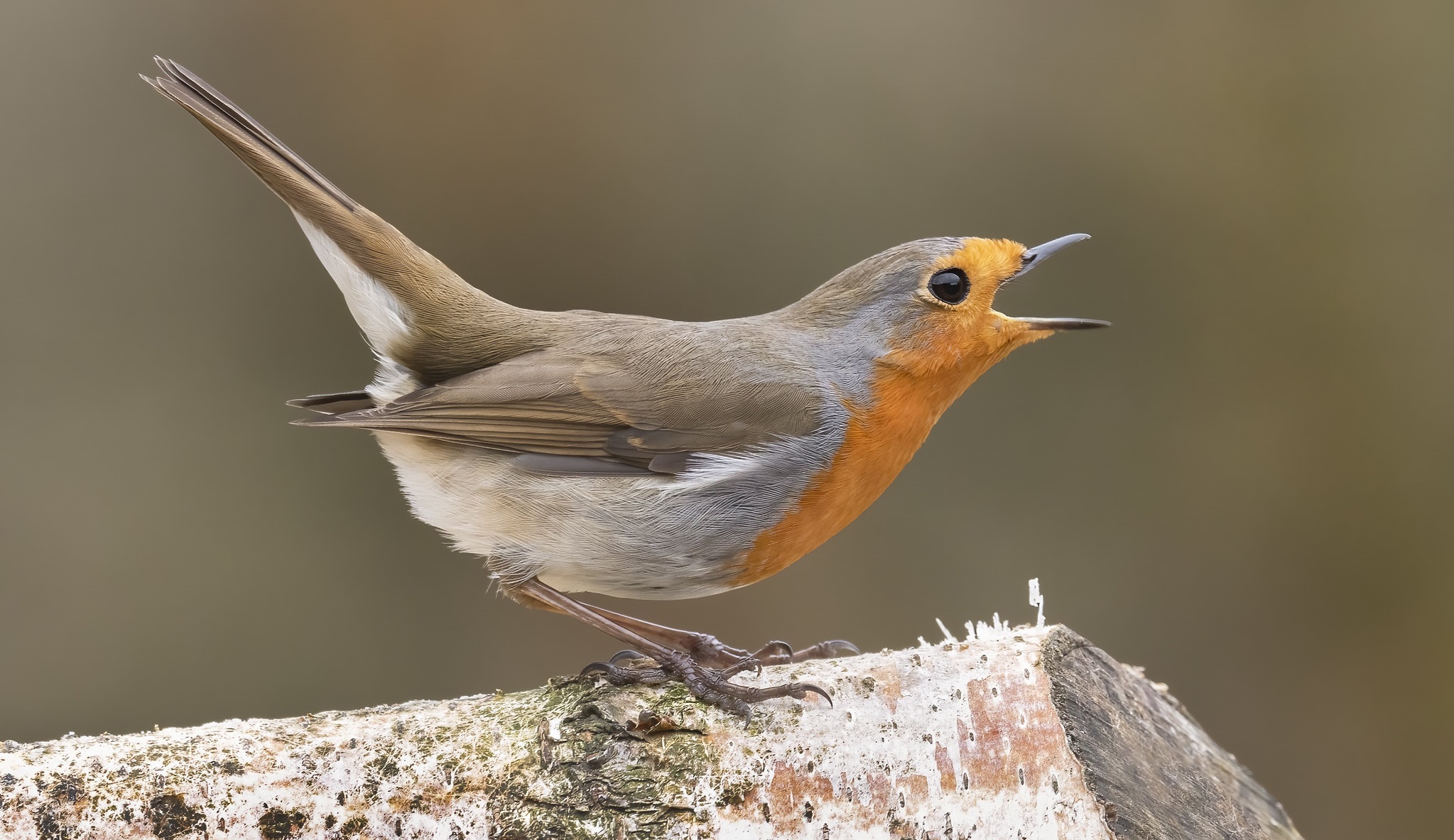
Its usual call is a sharp ‘tic’ repeated in a run, like a Robin’s but faster and less spaced. When the bird is cross or excited, the ticking turns into an emphatic churr, rather like a clockwork toy winding down.
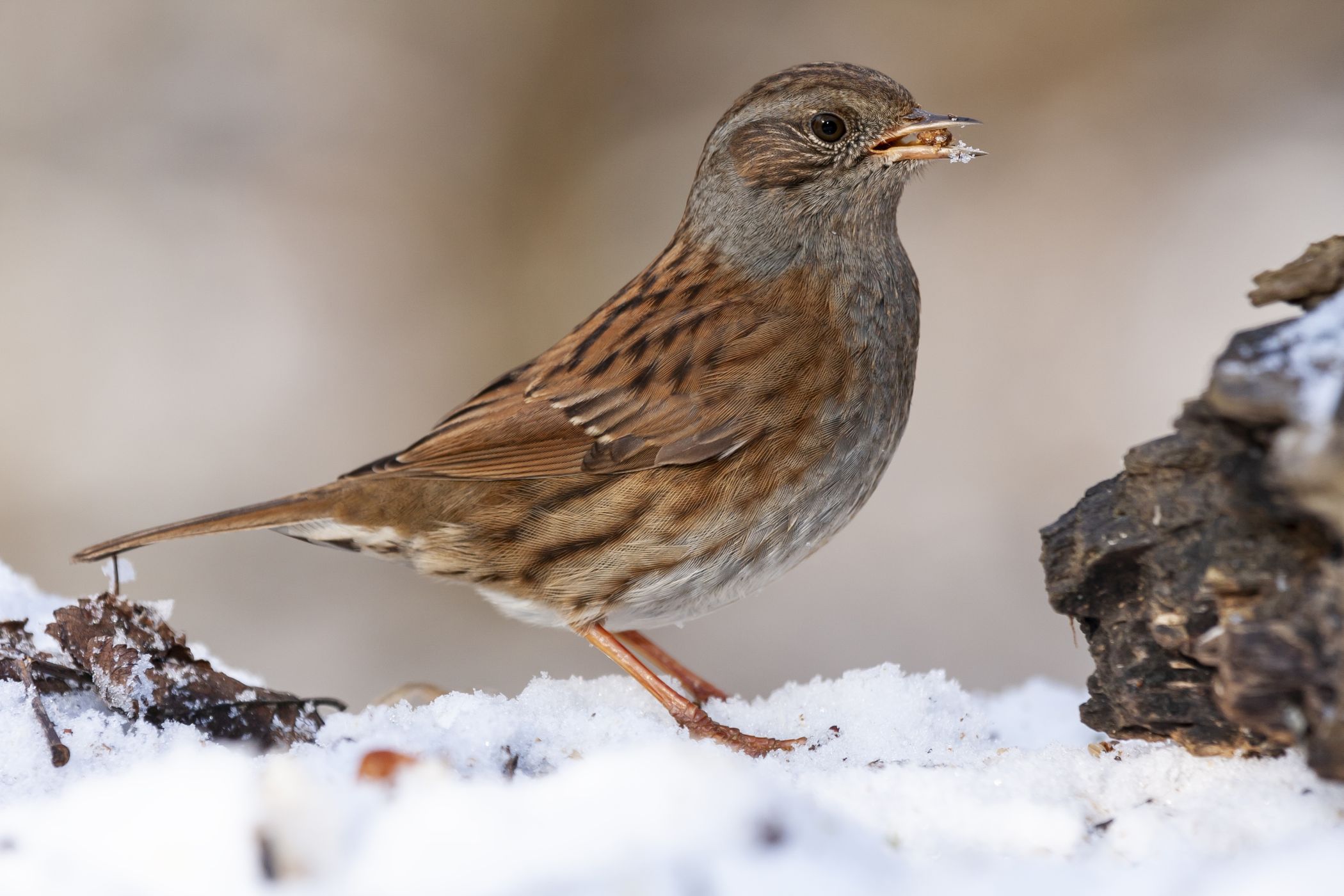
The Dunnock’s song is the usual source of confusion. Its phrases are briefer and feebler, without the repeated trills that run through a Wren’s.
Cocked tail, pale eyebrow, barred brown coat
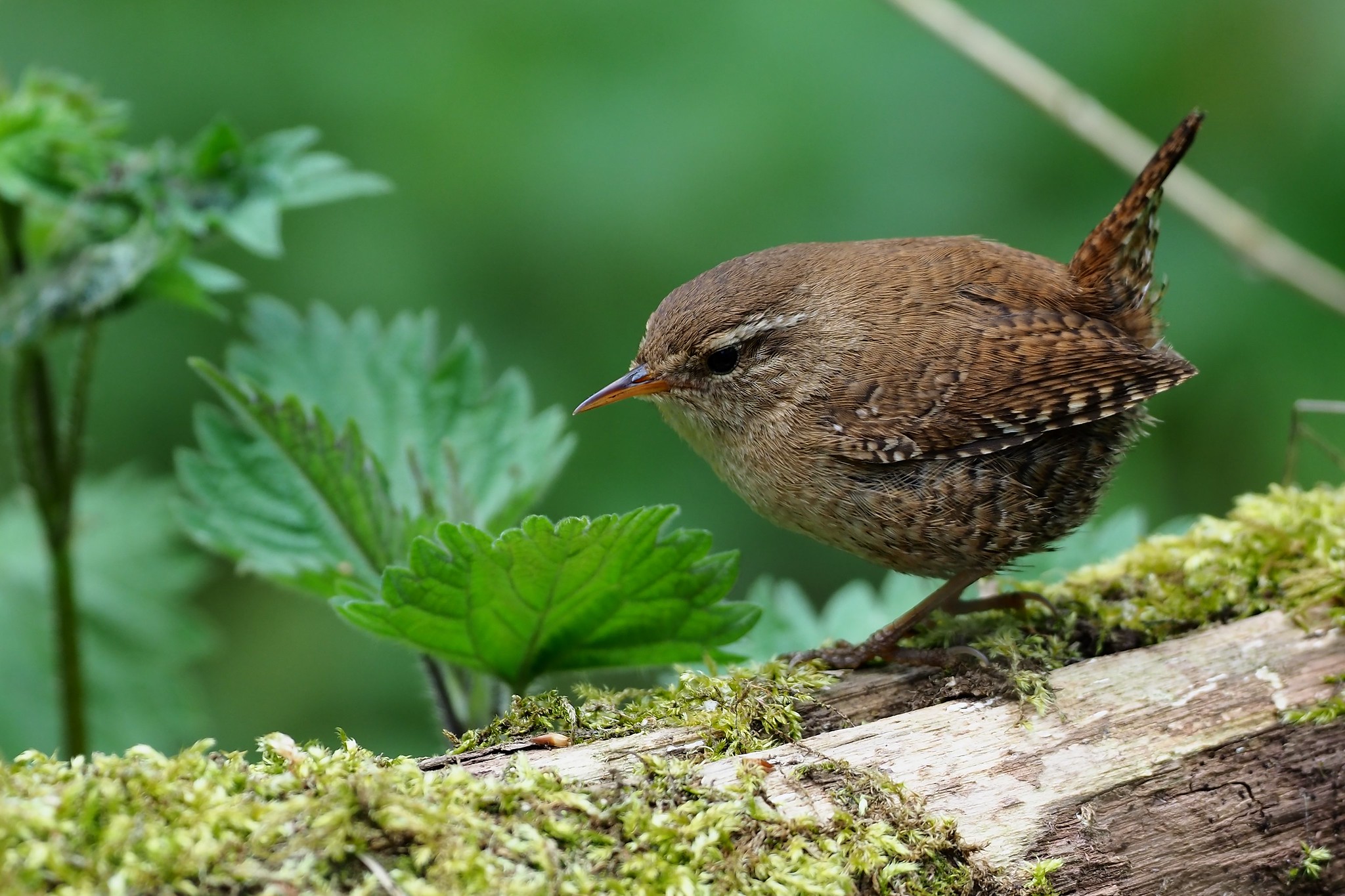
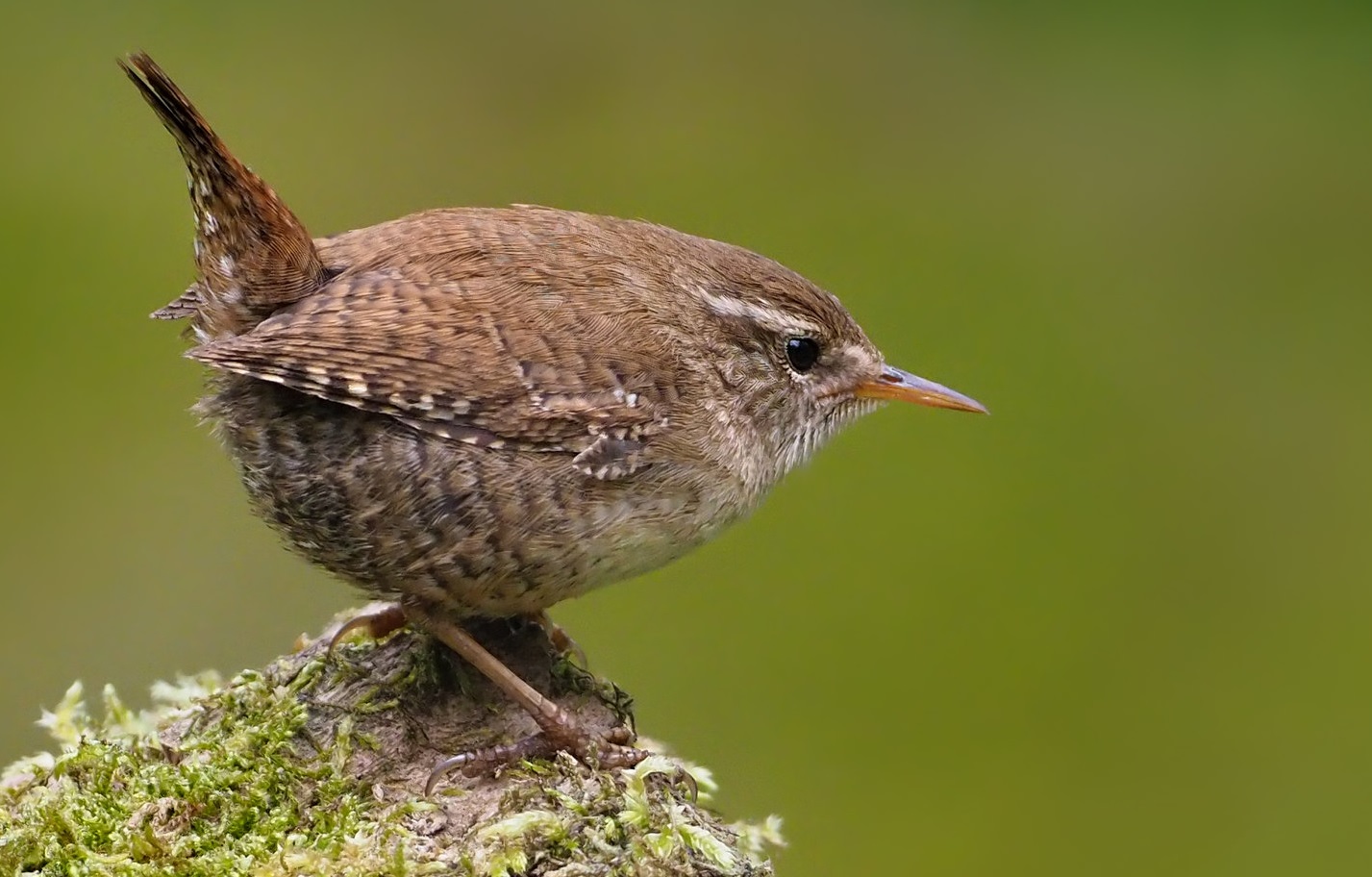
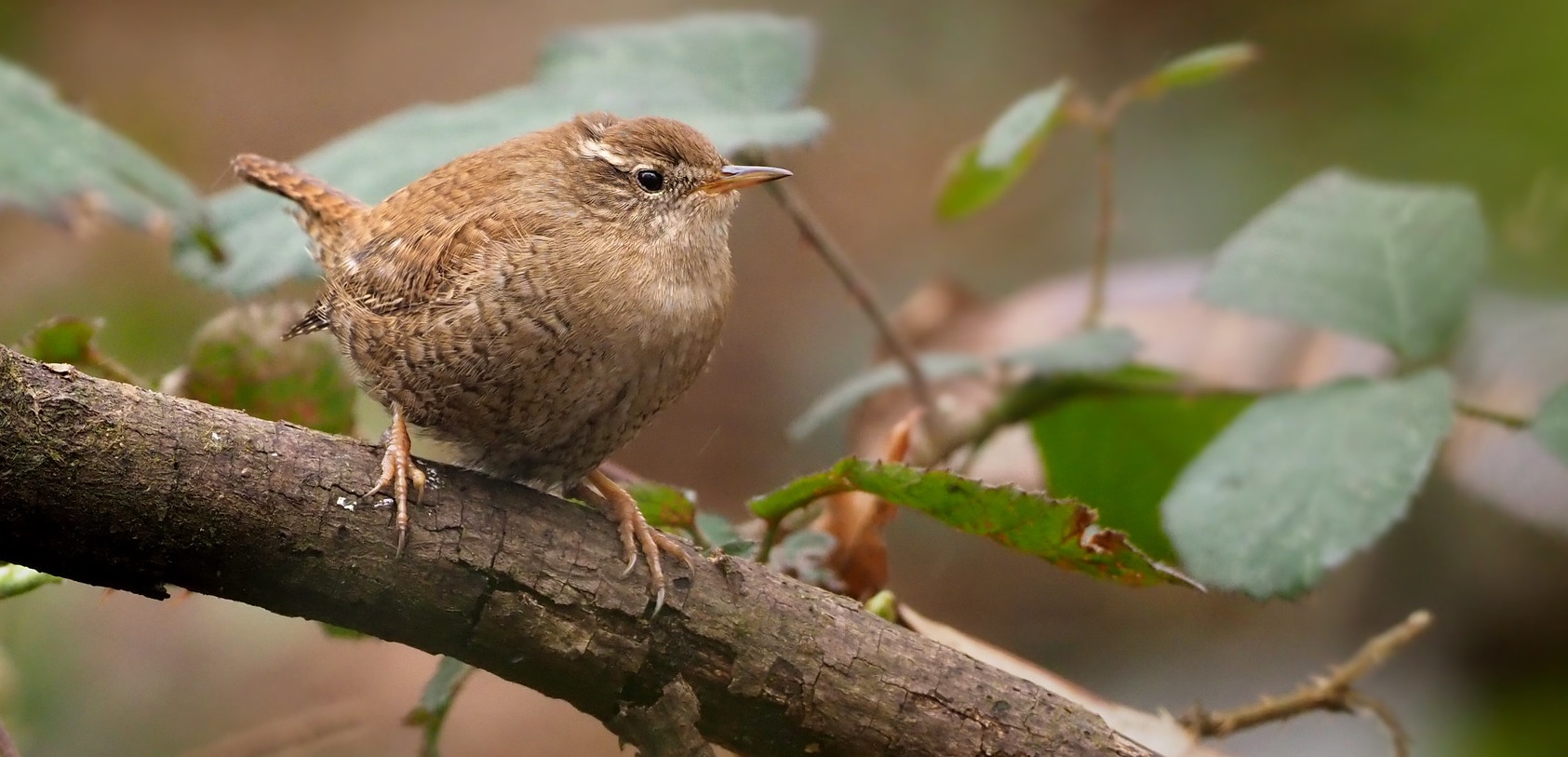
At 9–10 cm and around 10 g, this is a compact, solid little bird with round wings and a stubby tail, usually held cocked. Upperparts are rufous brown and the underside greyer, with faint darker barring that reaches even the wings and tail.
Look for the cream-buff stripe above the eye and the fairly long, slender bill. Males and females are alike. Young birds show weaker barring and mottled underparts.
Wren song through the months
Song is possible in every month; the chart rises in spring, when it is most noticeable and eggs are laid from April onwards.
Wren: photos to compare
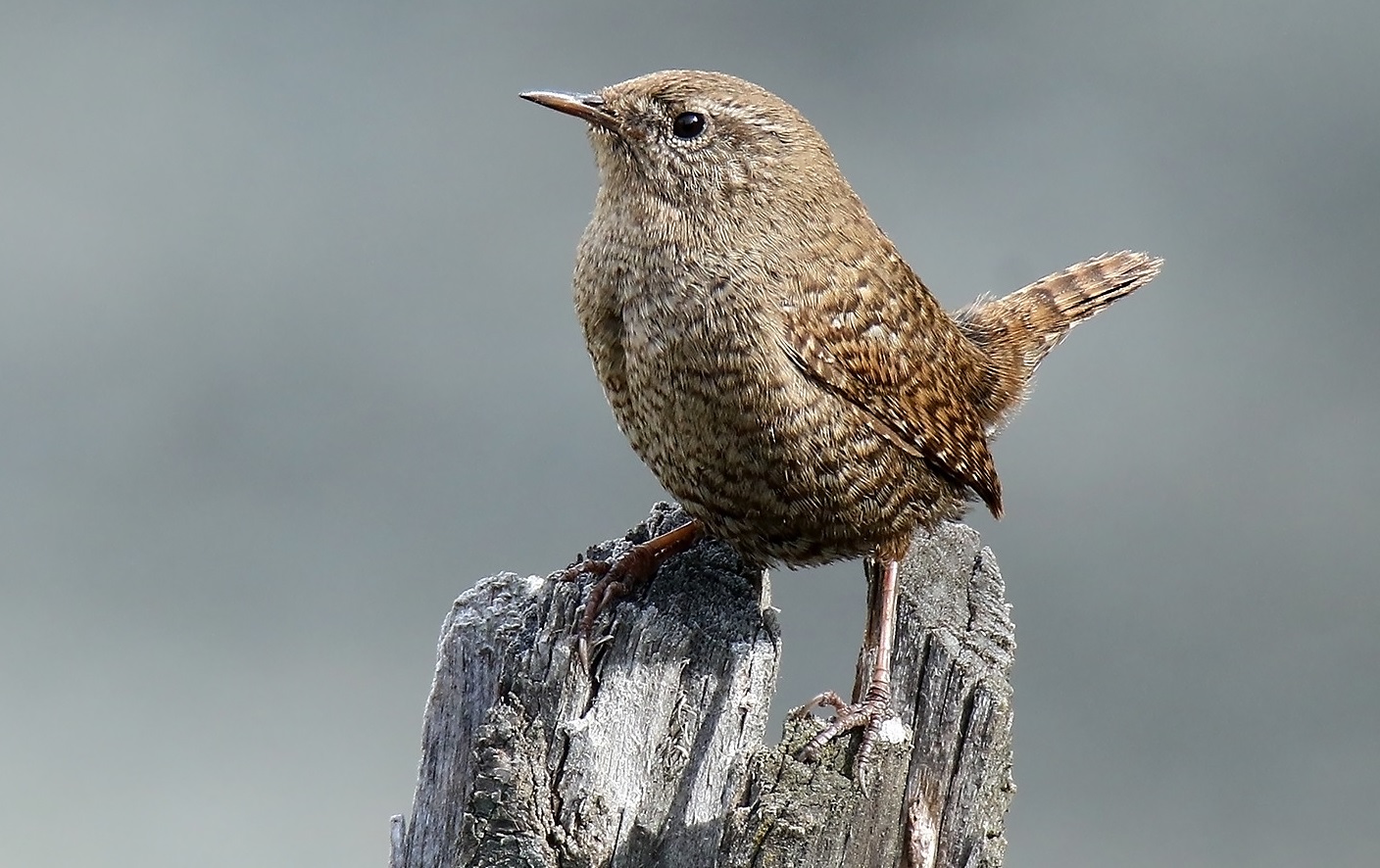
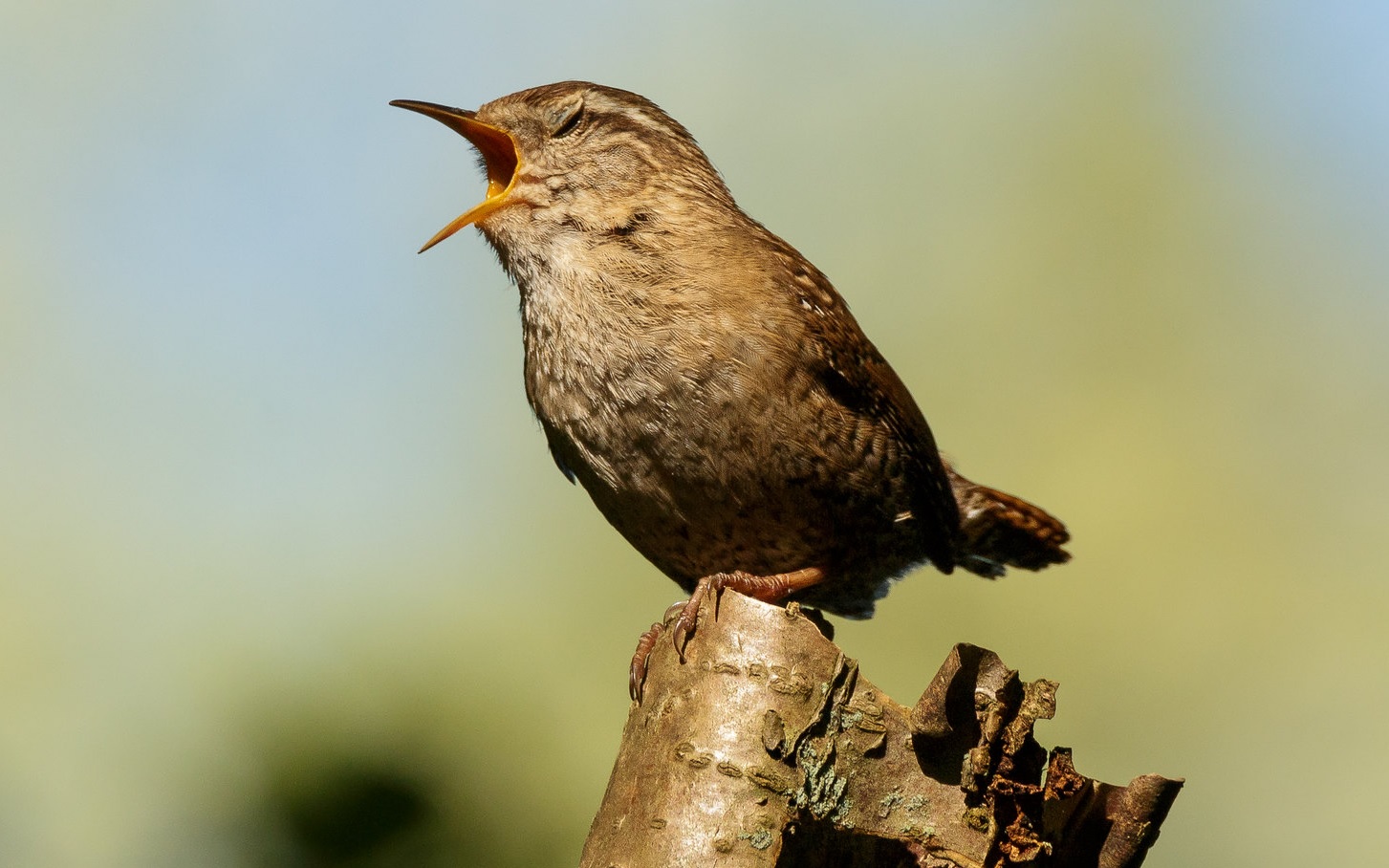
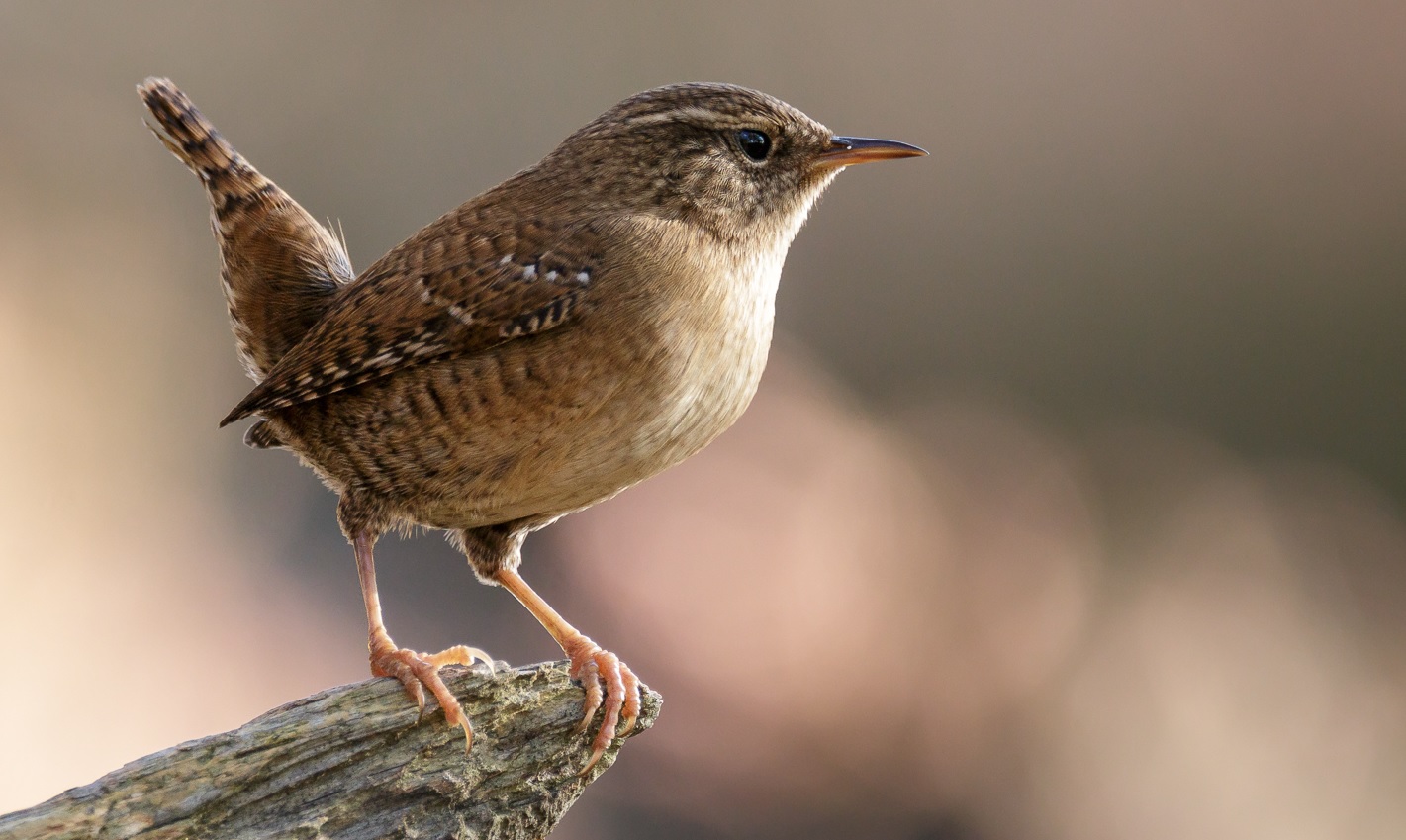
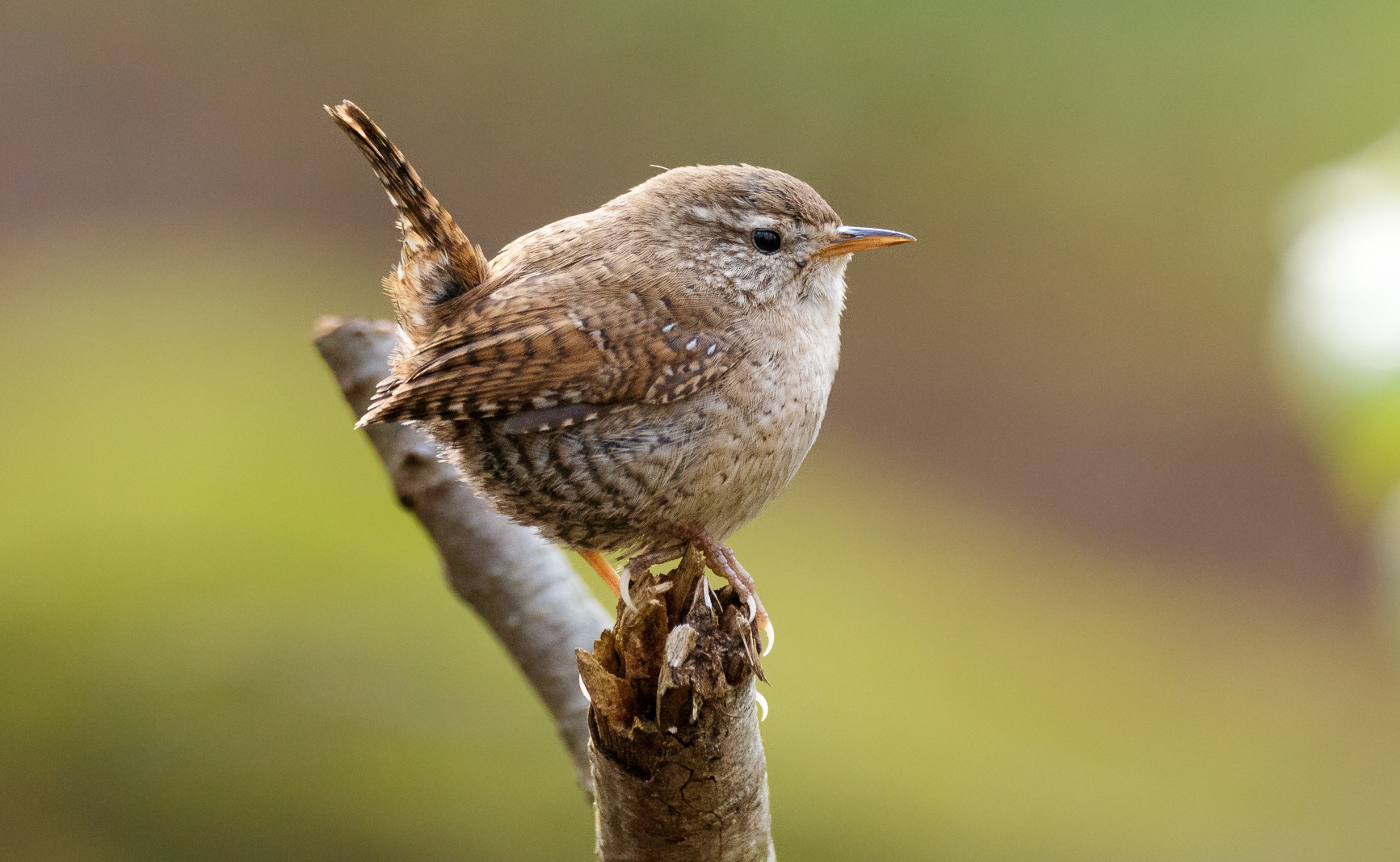
Other small brown birds near the ground
Size and the cocked tail settle most cases; the voice settles the rest.
Cock nests, caterpillars and a coin
Why does a male Wren build more than one nest?
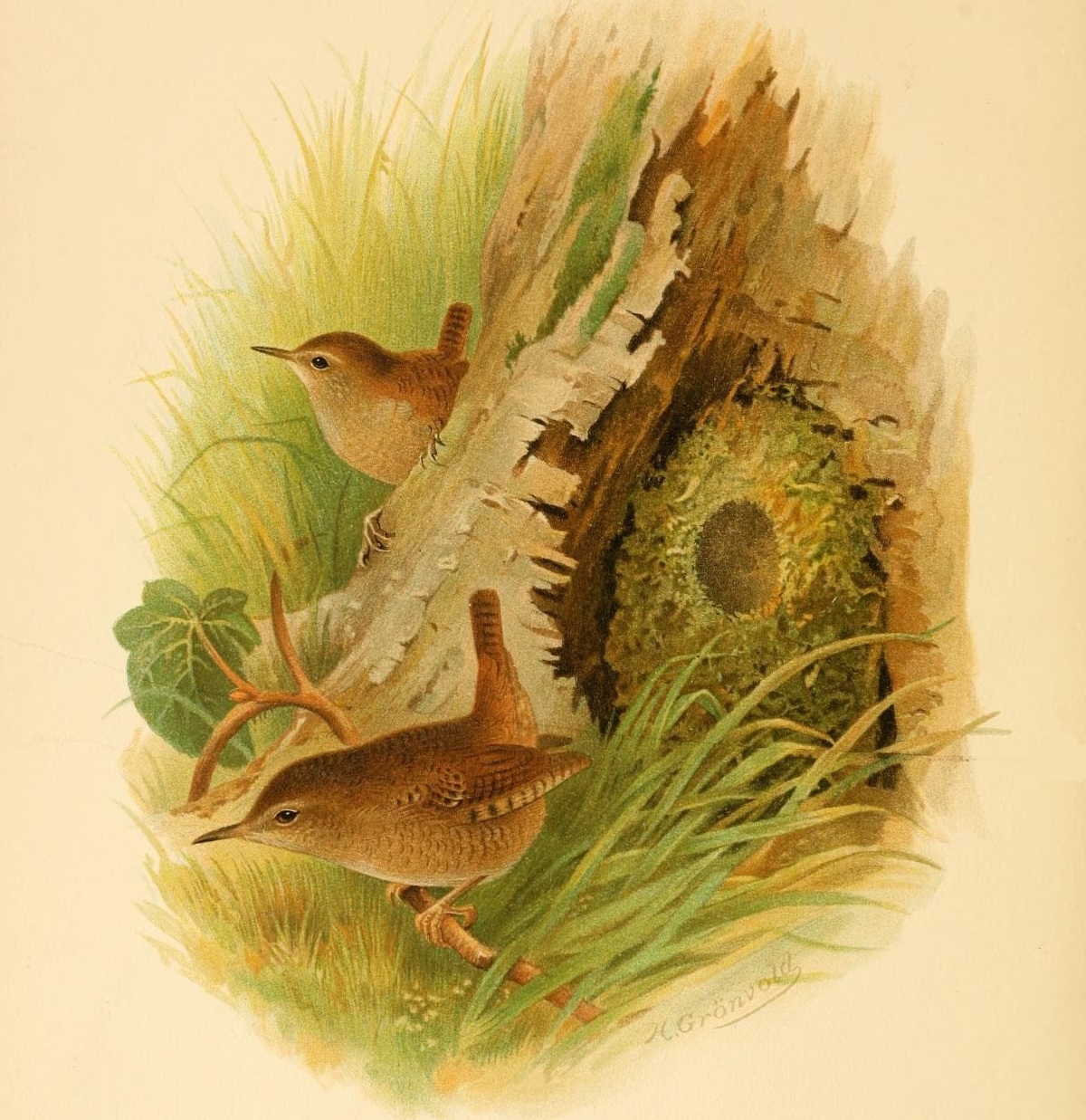
He makes several ‘cock nests’ around his territory and leaves them bare until a female chooses one and lines it with feathers. Females favour males with plenty on offer, and one male was recorded with four females nesting on his ground at once.
What do Wrens feed their young?
Mostly moth caterpillars, including those of the cabbage moth, plus crane fly larvae. Adults also eat beetle and fly larvae, aphids, spiders and a few seeds.
Was the Wren ever on a British coin?
Yes. The farthing showed a Wren on its reverse from 1937 to 1960, picked because people regarded it as Britain’s smallest bird.