
Birds of fields and hedgerows
Ordered by how often people look each one up. Tap a row to play its recording, then compare it with the bird below.
A song that can run for twenty minutes
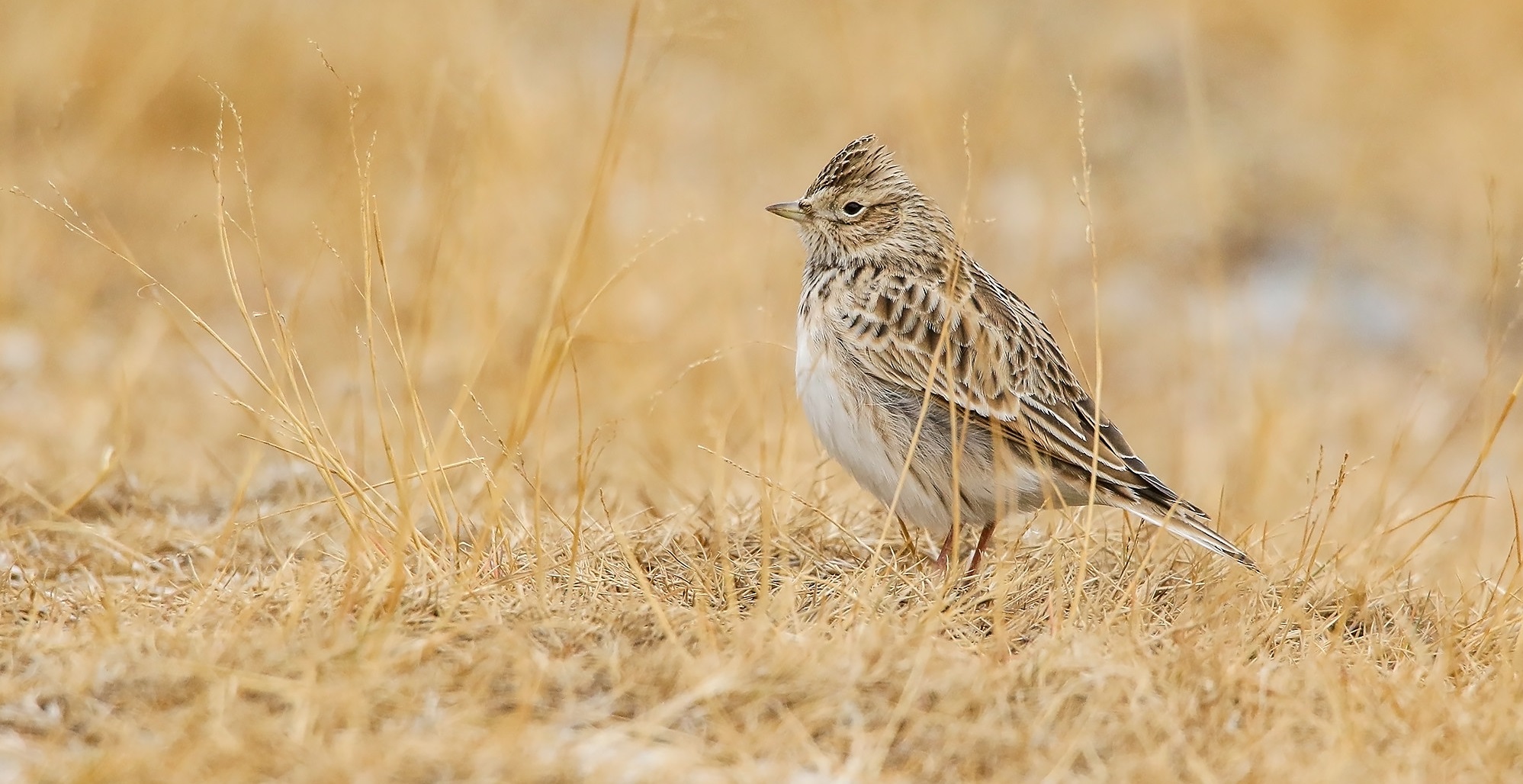
Listen upwards. The male Skylark sings while climbing, circling or hanging on the wind 50 to 100 metres up, often so high that only a speck is visible. A typical performance is two or three minutes of bubbling warble without a break. Later in the season one song can stretch past twenty minutes.
Neighbouring males share local turns of phrase, a kind of village accent that lets them tell residents from outsiders. The nest is a shallow scoop on bare ground, kept well away from hedges and trees. Chicks walk out of it after eight to ten days, long before they can fly.
Bread, cheese and a bunch of keys
Hedgerow buntings are easier to learn by rhythm than by tune. The Yellowhammer is the one people remember by ‘a little bit of bread and no cheese’, sung by a male with a bright yellow head. In winter yellowhammers gather in small flocks and feed on the ground.
The Corn Bunting has a duller tune: a metallic jingle, often compared to shaken keys, delivered from a fence post, bush or wire. It no longer breeds in Wales or Ireland. The Linnet sings faster, all trills and twitters, but British numbers fell 56% from 1968 to 1991 as herbicides and heavy hedge cutting took away its seeds.
Game birds along the field margin
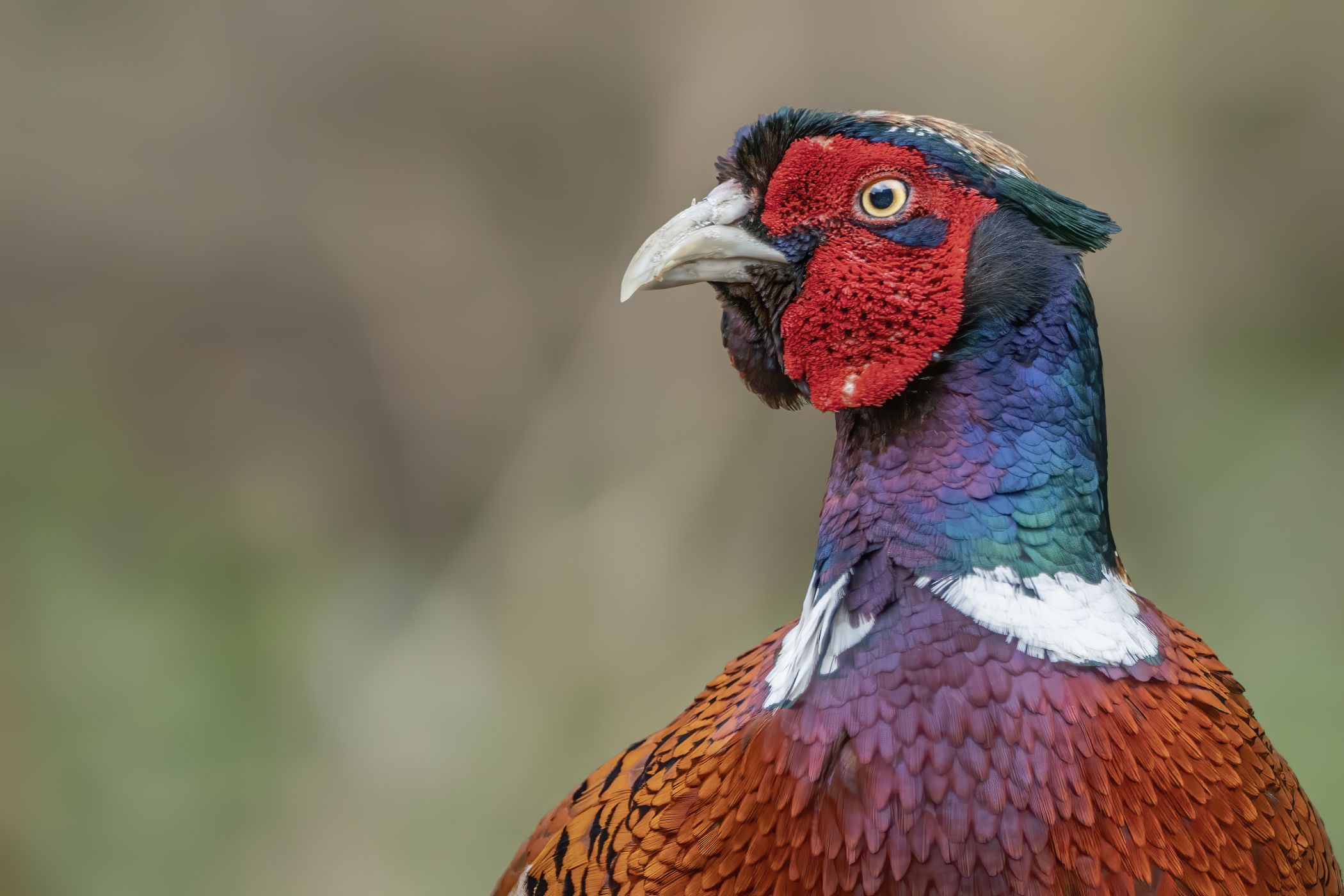
The Pheasant is not native here. It reached Europe in Roman times, and by 1950 it bred across the British Isles, though it stayed scarce in Ireland. Centuries of mixing between imported stocks mean most British cocks now show at least part of a neck ring beside the bottle-green head and red wattle.
The Grey Partridge takes more finding. Flushed birds whirr away low on rounded wings calling ‘rick rick rick’, while its song, harsh and high-pitched, is written ‘kieerr-ik’. In Ireland it survives almost only at Lough Boora in County Offaly, where conservation work has lifted the count to roughly 900.