
Falcons on Linnut
Kestrel and peregrine come first, as the two you are most likely to meet. The hobby and merlin follow.
Hovering hunter of the verges
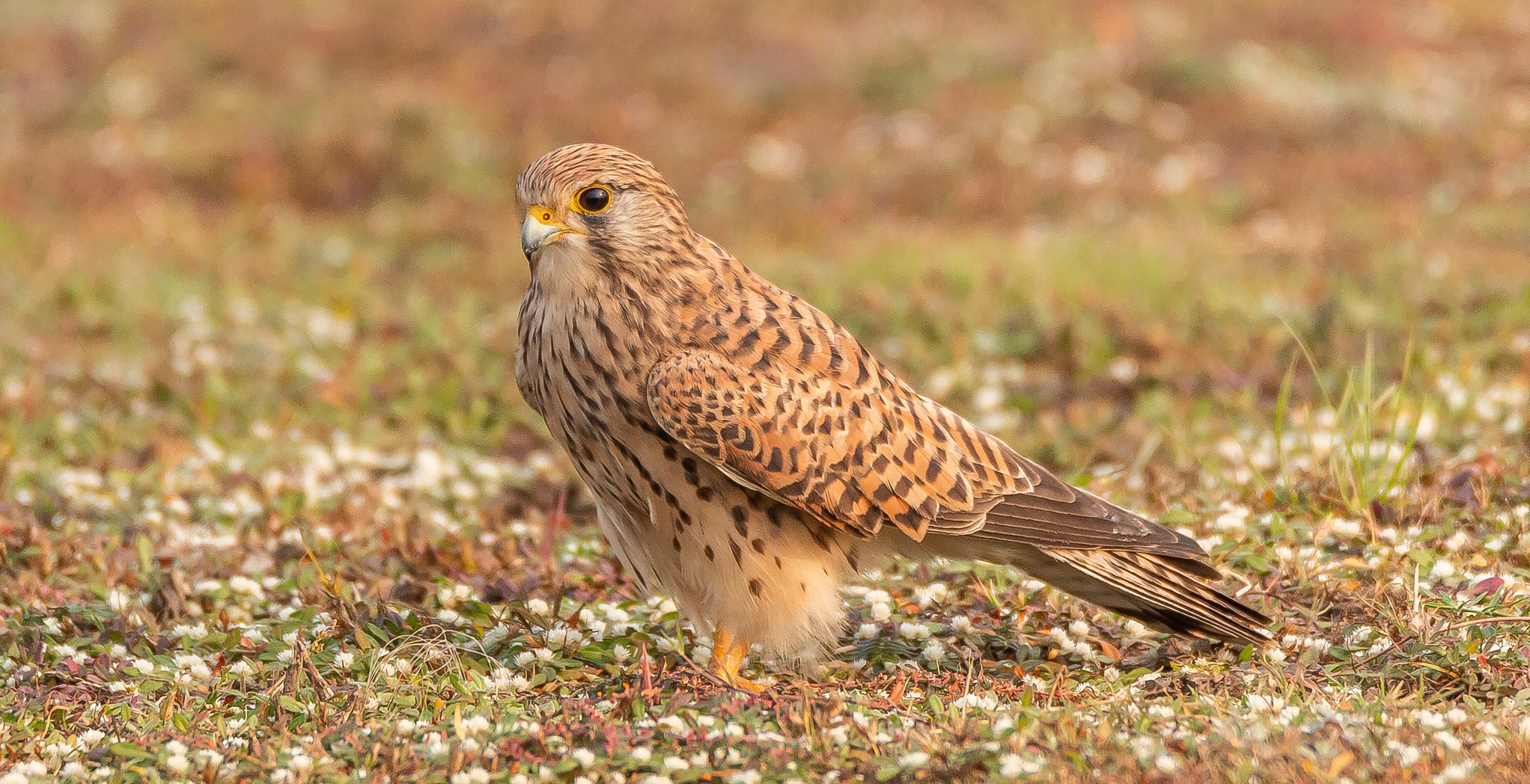
The Kestrel is the only kestrel that occurs commonly in the UK, so here it needs no first name. It hunts by hanging in the air 10 to 20 m up, facing into the wind or riding the lift off a ridge, and grassy road verges full of voles are favourite beats.
Kestrels do not need woodland, since rocks or buildings will do for perching and nesting. In towns they often take over old crows’ nests or holes in buildings. One nestling gets through three or four voles a day. Numbers have fallen recently in parts of western Europe, Ireland among them.
Stoops, sickle wings and fast chases
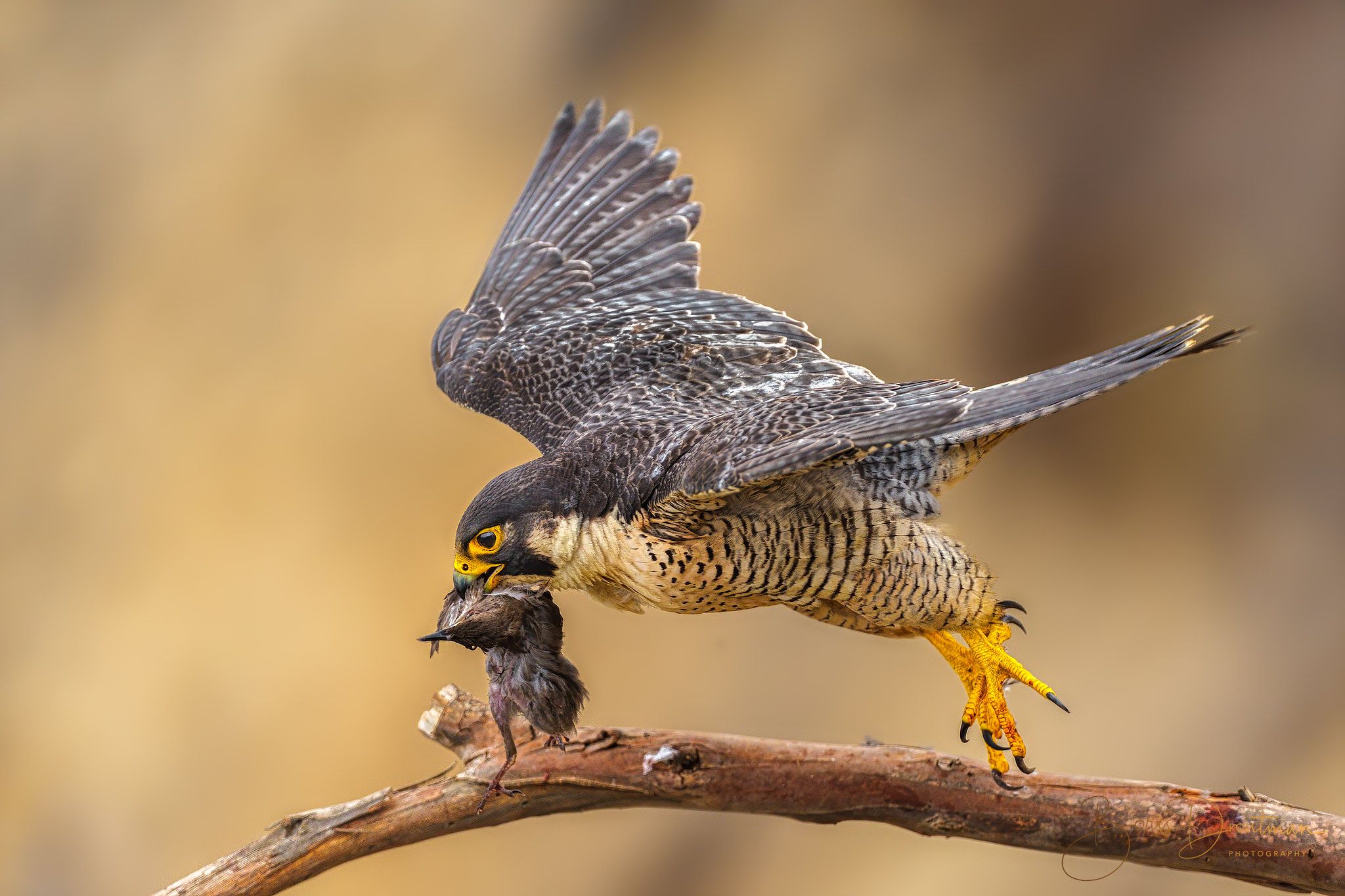
The Peregrine has a notch near the tip of the upper beak, which lets it kill by cutting through the spinal cord at the neck. It mates for life and lays in a bare scrape on a cliff ledge, or increasingly on a tall building. Pesticides, DDT above all, wiped it out from many areas; after the ban of the early 1970s, nest protection and releases brought numbers back, and feral pigeons now feed many city pairs.
The Hobby travels to Africa for the winter. With its long, sickle-shaped wings it can pass for a swift. Dragonflies are snatched in the air and passed from talons to beak as it circles slowly, and it is fast enough to catch swallows and swifts on the wing; swallows and house martins keep a special alarm call just for it.
The Merlin is a small, fast falcon that specialises in birds between sparrow and dove size, plus mid-sized waders. Its name reached English through French from old Germanic words for small, nimble birds of prey, and in the American colonies it was known as the pigeon hawk.