
Few British birds live by a calendar that people set as firmly as the Pheasant does. Tens of millions are reared and let out each summer, shooting them is legal from 1 October until 1 February, and the number left on farmland swings hugely through the year.
A July glut, a June shortage
The British Pheasant year turns on the summer release of captive-reared birds, about 50 million of them. Most are shot or die within a year, so numbers fall from around 50 million in July to under 5 million by the following June.
Beneath that churn, a smaller population breeds naturally in copses, on heaths and on commons. Nesting begins in April, and the chicks walk away from the ground nest within hours of hatching.
Autumn and winter belong to the flocks. Pheasants then gather in loose groups, and on shooting ground they turn timid once they link people with danger.
The sound you usually get is the take-off
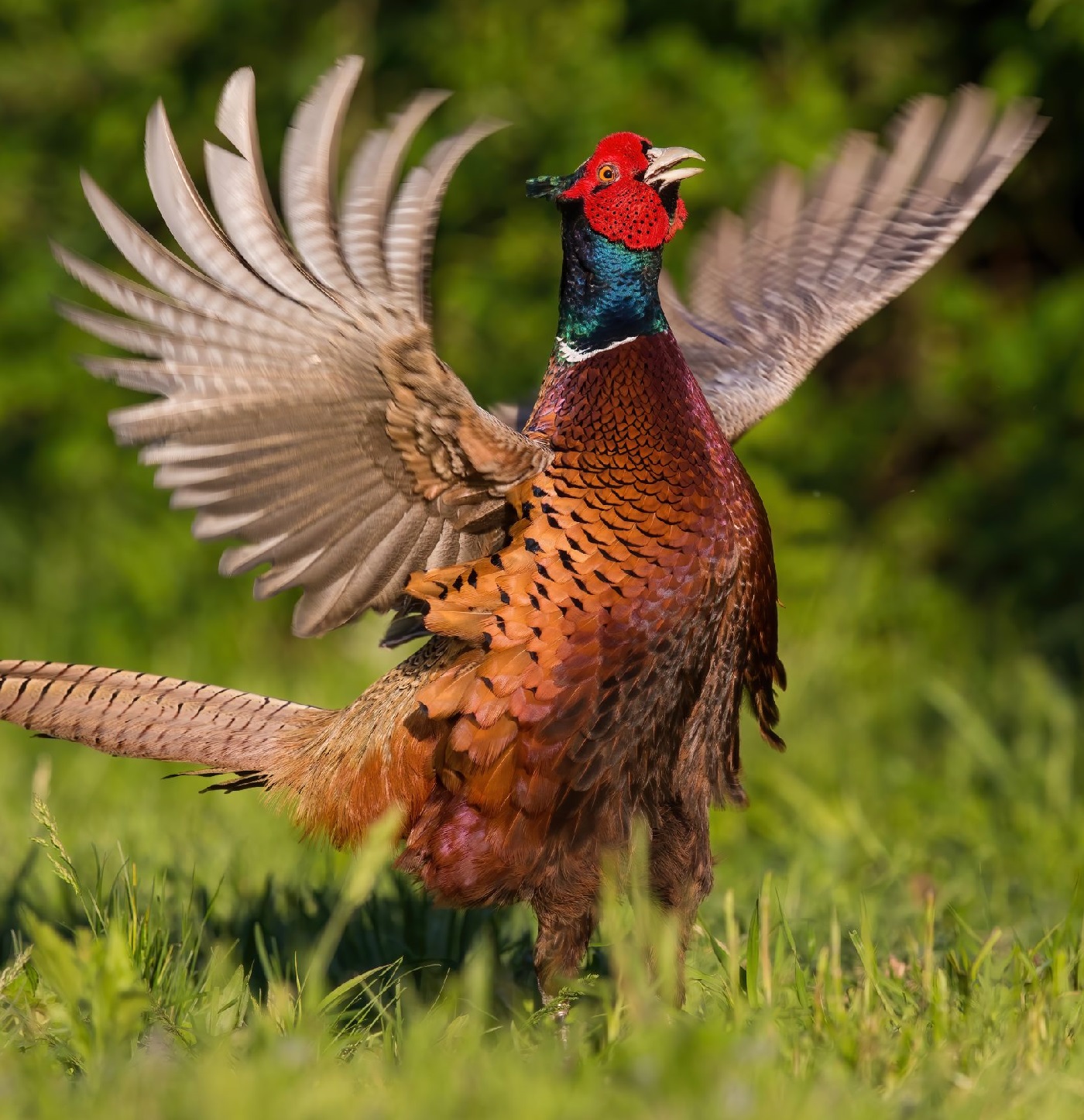
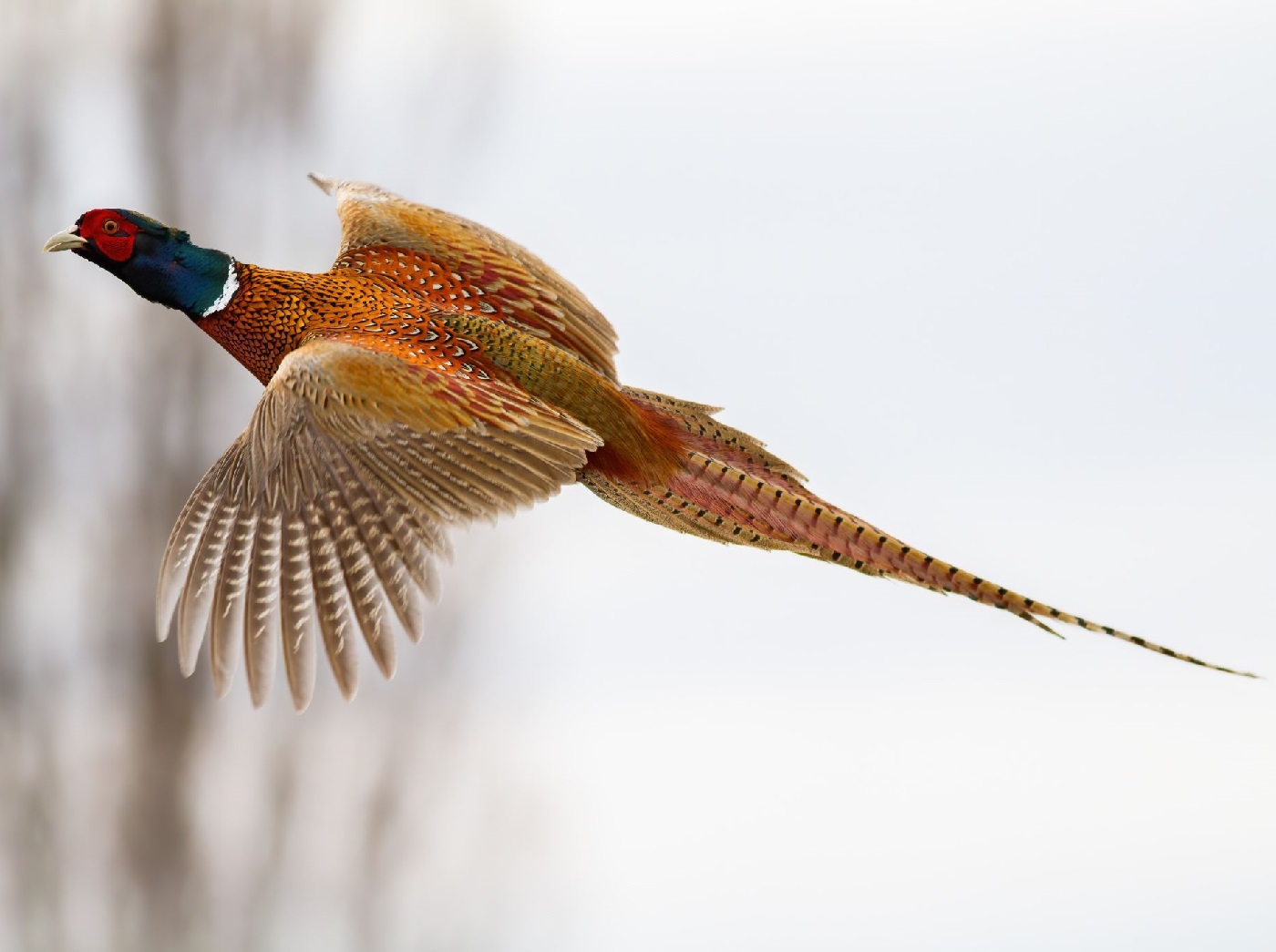
For all its size, the Pheasant would rather run than fly. Push it too close and it bursts upward at speed with a loud whirring of wings, often calling ‘kok kok kok’ to warn others nearby.
Once airborne it cruises at 43–61 km/h and can reach 90 km/h when chased, but flights are short. Expect a sudden clatter, a run of alarm notes, and a bird that drops back into cover not far off.
No migration, but a long history of imports
Pheasants do not migrate. In the colder months they feed in loose flocks by day and spend the night perched in sheltered trees, in woodland, farmland, scrub and wetland alike.
The bird is not native here. It has lived wild in Great Britain since about 1059, died out across most of the country in the early 17th century and was brought back in the 18th. It reached the Scottish Highlands only in the 1800s and stayed scarce in Ireland.
Copper cocks, mottled hens and odd colour forms
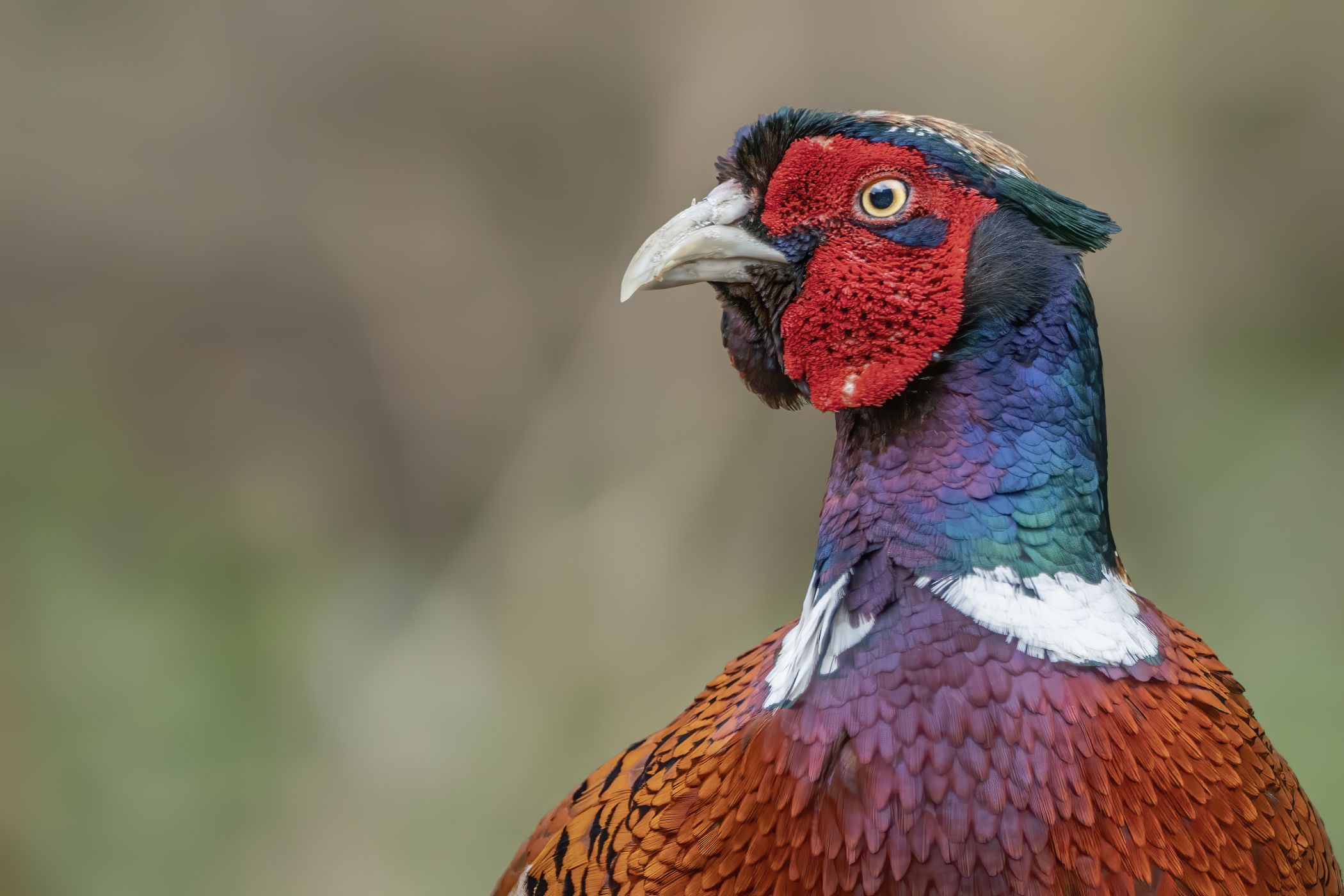
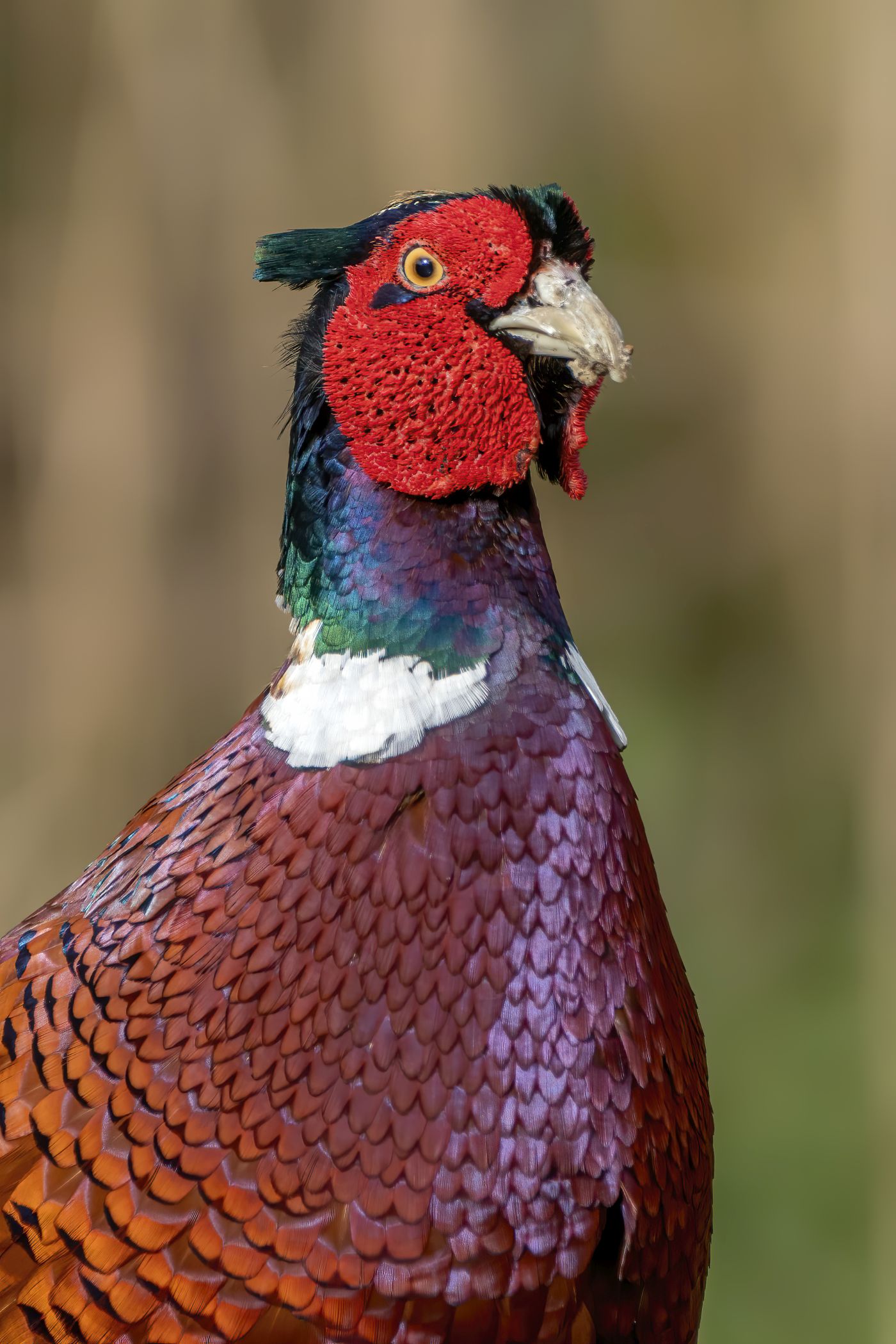
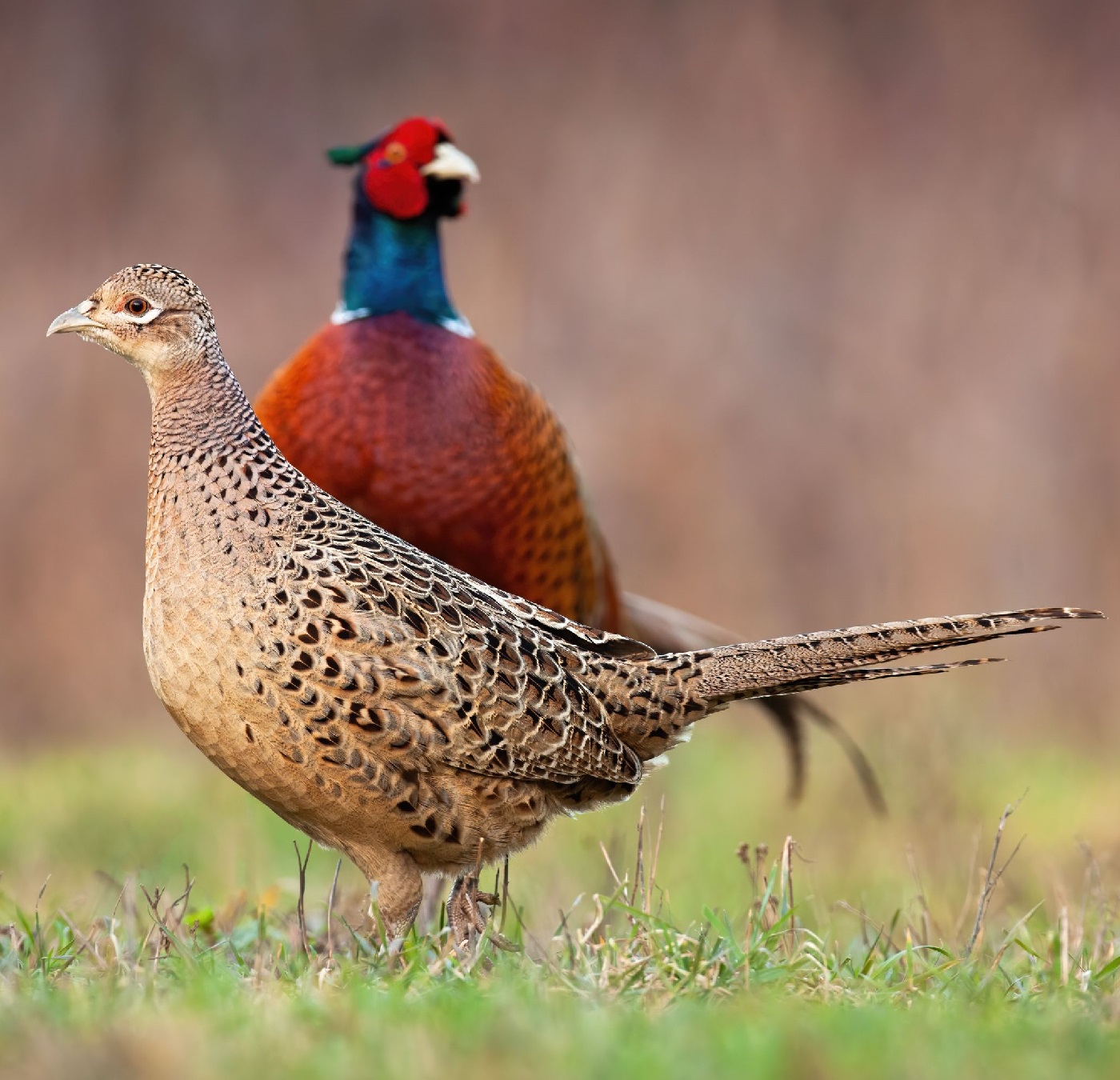
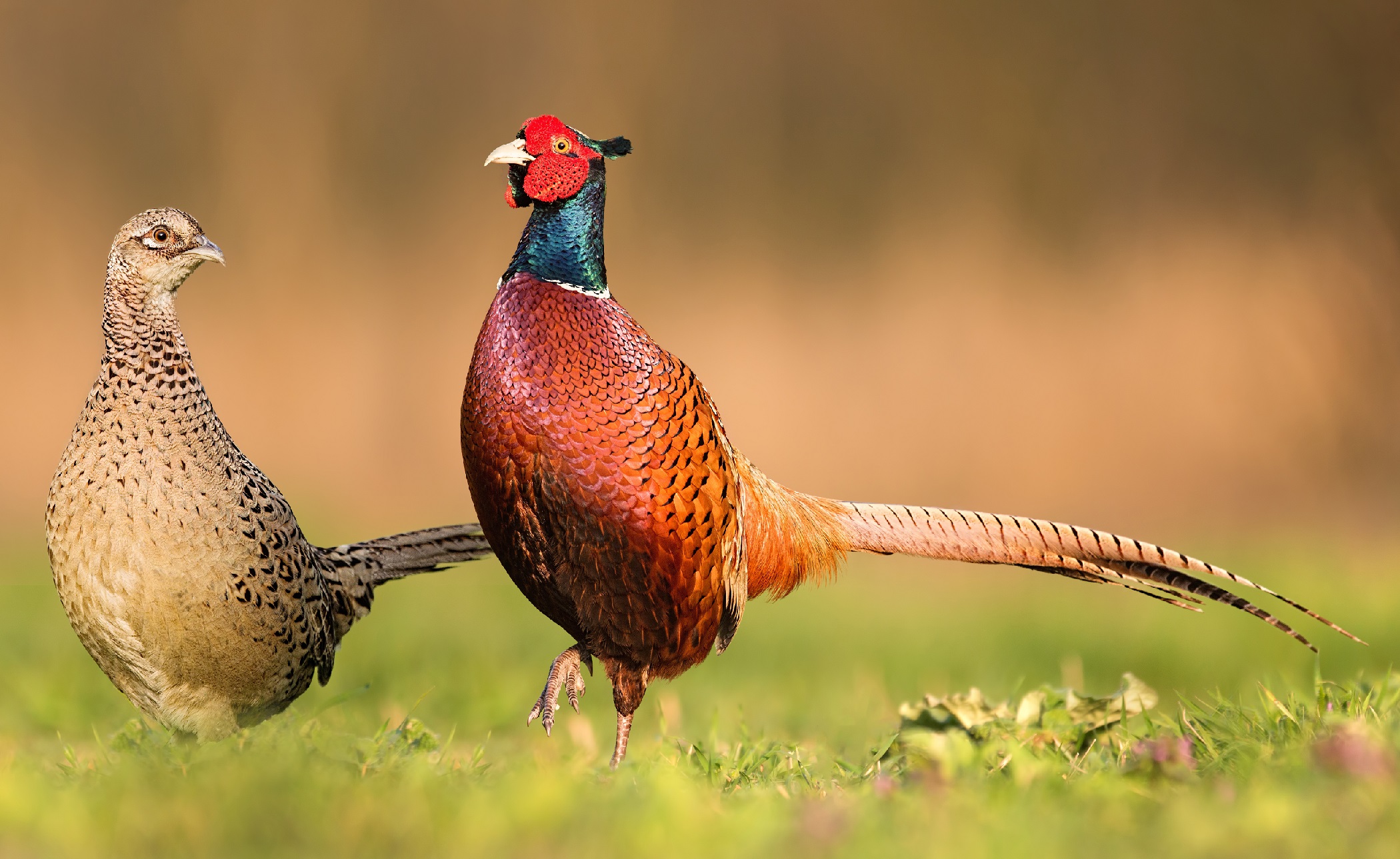
A cock is hard to overlook. Its body is barred gold or coppery red and chestnut with a green and purple sheen. The head is a deep bottle green, small-crested, with a red wattle and two ear tufts, and the barred tail can be almost 50 cm long. Most British cocks show at least part of a white neck ring, because they descend from several imported races and the green pheasant.
Hens are smaller and much plainer: mottled brown all over with a tail of about 20 cm. Young birds look like hens until the males start to grow bright feathers on breast, head and back about ten weeks after hatching.
Odd colours turn up regularly. Watch for near-black melanistic birds, released in some areas, and a cream variant known as the ‘Bohemian’ pheasant.
Grain, slugs, leatherjackets and the odd vole
Pheasants mix plant and animal food: grain, seeds, mast, berries, fruit and leaves on one side, slugs, earthworms, leatherjackets, wireworms, caterpillars, grasshoppers and ant eggs on the other. A lizard, a field vole or a small bird is taken now and then.
Insects matter to the Grey Partridge too, and studies tie high pheasant numbers to fewer partridges. Competition plays a part, and so does blackhead, a disease pheasants shrug off but partridges do not.
Release, shooting season, breeding
Pheasants are on the ground in every month, but numbers follow the shooting calendar: highest after the summer release, falling through the season from 1 October to 1 February, and lowest by early summer. Wild birds start nesting in April.
What the Pheasant looks like
Where it came from, and how many eggs
Is the pheasant a native British bird?
No. Its natural range runs from the Black Sea and the Caspian across Asia to Korea and Taiwan. Europe got it through people in Roman times, when Apicius was already writing recipes for it.
Where does the name colchicus come from?
It means ‘of Colchis’, the ancient name for western Georgia on the Black Sea. The Greeks knew it as the bird of the river Phasis, which gave the genus name.
How many eggs does a hen pheasant lay?
Eight to fifteen, olive-brown, in a ground hollow the hen lines with leaves and grass, often beneath a hedge or thick cover. The young fly at 12–14 days and look like adults by 15 weeks.