
Every tit species on Linnut
Garden species first, then the birds of conifers and old woodland. Each one has its own recording, so you can check a call against its neighbours.
Forty calls from one Great Tit
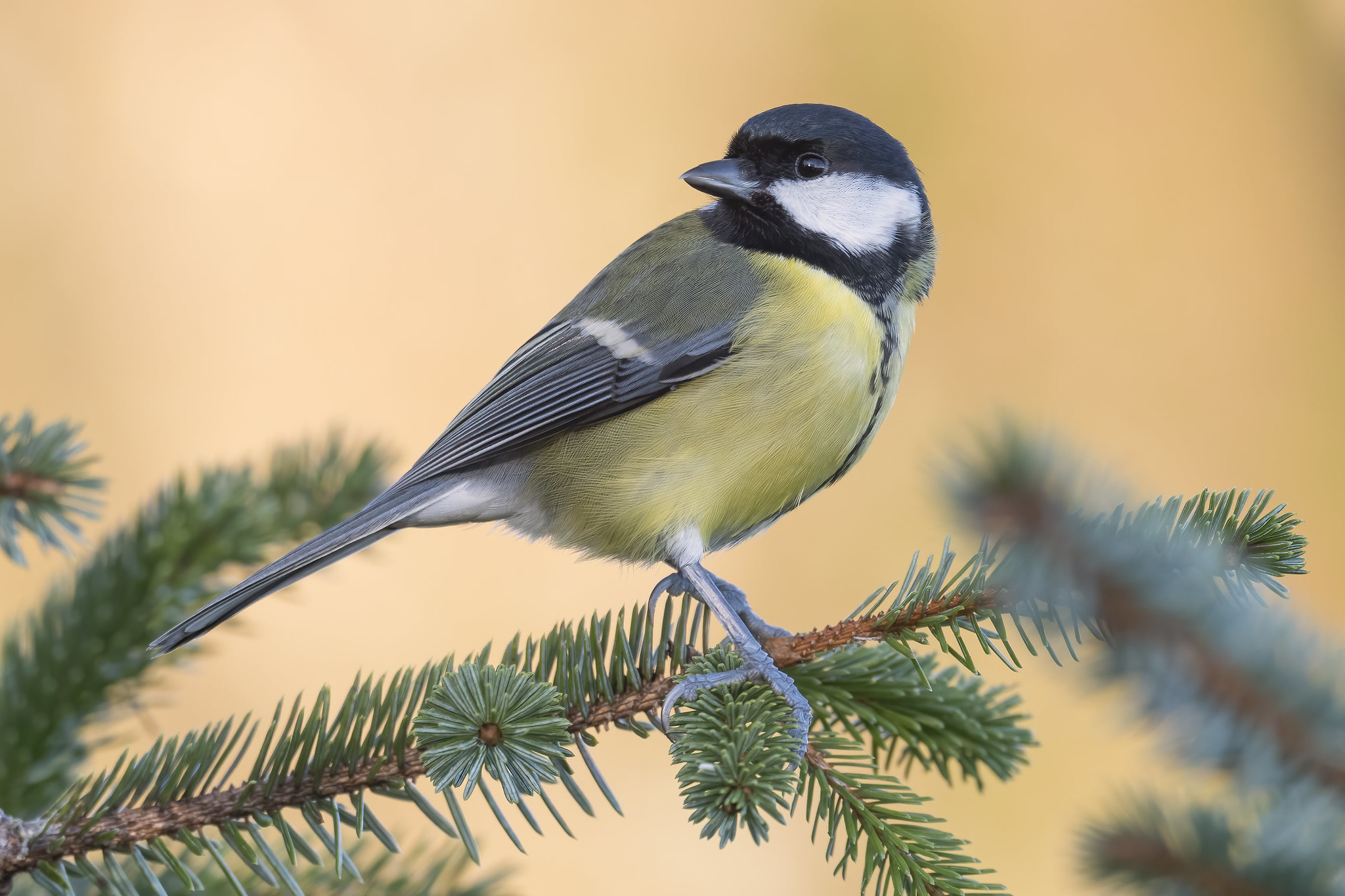
The Great Tit is the biggest of the family here, measuring 12.5 to 14 cm, and one of the most talkative birds in any garden, with up to 40 call and song types. The best known is a squeaky ‘teacher, teacher’ that announces a territory; people liken it to a wheelbarrow in need of oil. Males do nearly all the calling.
Check the black stripe down the yellow belly: on the female it is narrower and sometimes broken. In winter great tits widen their menu, and they have even been recorded eating small hibernating bats. A pair raises about a dozen eggs in a tree hole or nest box.
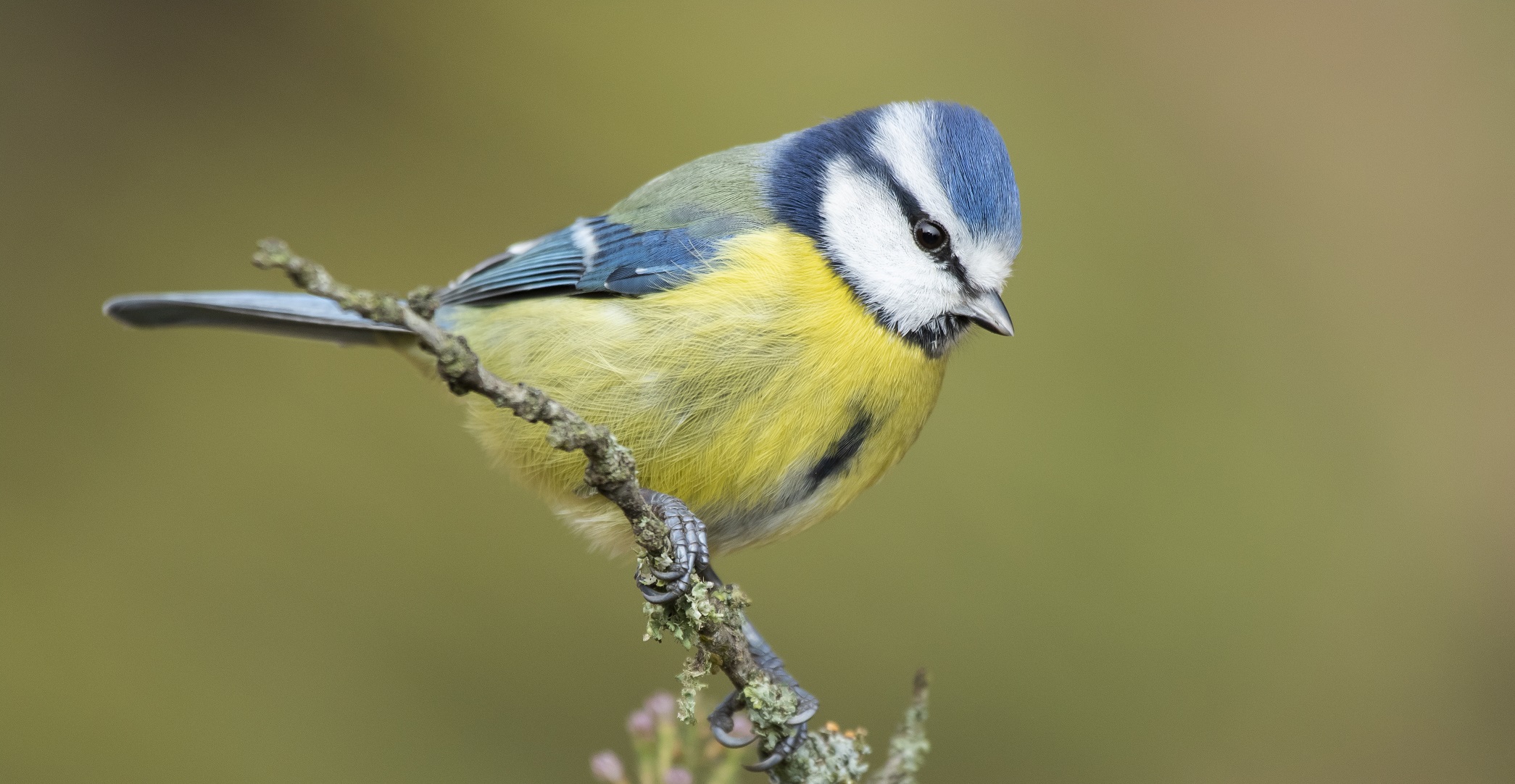
Blue Tits see a difference you cannot
To us, male and female Blue Tits look identical, but under ultraviolet light the male’s crown is a brighter blue, and the birds themselves can see that range. Each weighs about 11 g. The depth of yellow on the underparts reflects how many green caterpillars the bird has eaten.
A full clutch can weigh one and a half times as much as the female who laid it. Blue tits also act as lookouts: their alarm whistle warns robins, great tits and other neighbours that a sparrowhawk or buzzard is about.
The tits you have to work for
The Coal Tit is the conifer specialist, picked out by a white patch on the back of its black head. The Marsh Tit and Willow Tit look so alike in Britain that they were accepted as two species only in 1897. Marsh tit numbers in the UK have more than halved since the 1970s.
The Crested Tit is a Scottish speciality. It keeps mainly to the old pinewoods of Inverness and Strathspey, rarely strays from them, and has turned up in England only a handful of times.