
Stand in an open field in spring and the sound seems to fall from nowhere. A male Skylark sings while climbing, circling or hanging in the air, often so high that you see only a speck. In English, “lark” on its own usually means this bird. It is one of the farmland birds losing ground in the UK since the 1970s.
Minutes of unbroken song from a speck in the sky
Expect a clear, bubbling warble with no gaps in it. A normal performance lasts two or three minutes, but later in the breeding season some flights go on for 20 minutes or more.
Females seem to favour the longest singing and hovering displays, and that may be why males have broader wings, a shape that makes hovering cheaper.
Listen for local accents. Neighbouring males share patterns that work as a group signature, marking out residents from strangers. Near wind turbines, males have been found singing at a higher pitch.
Plain brown on the ground, white edges in the air
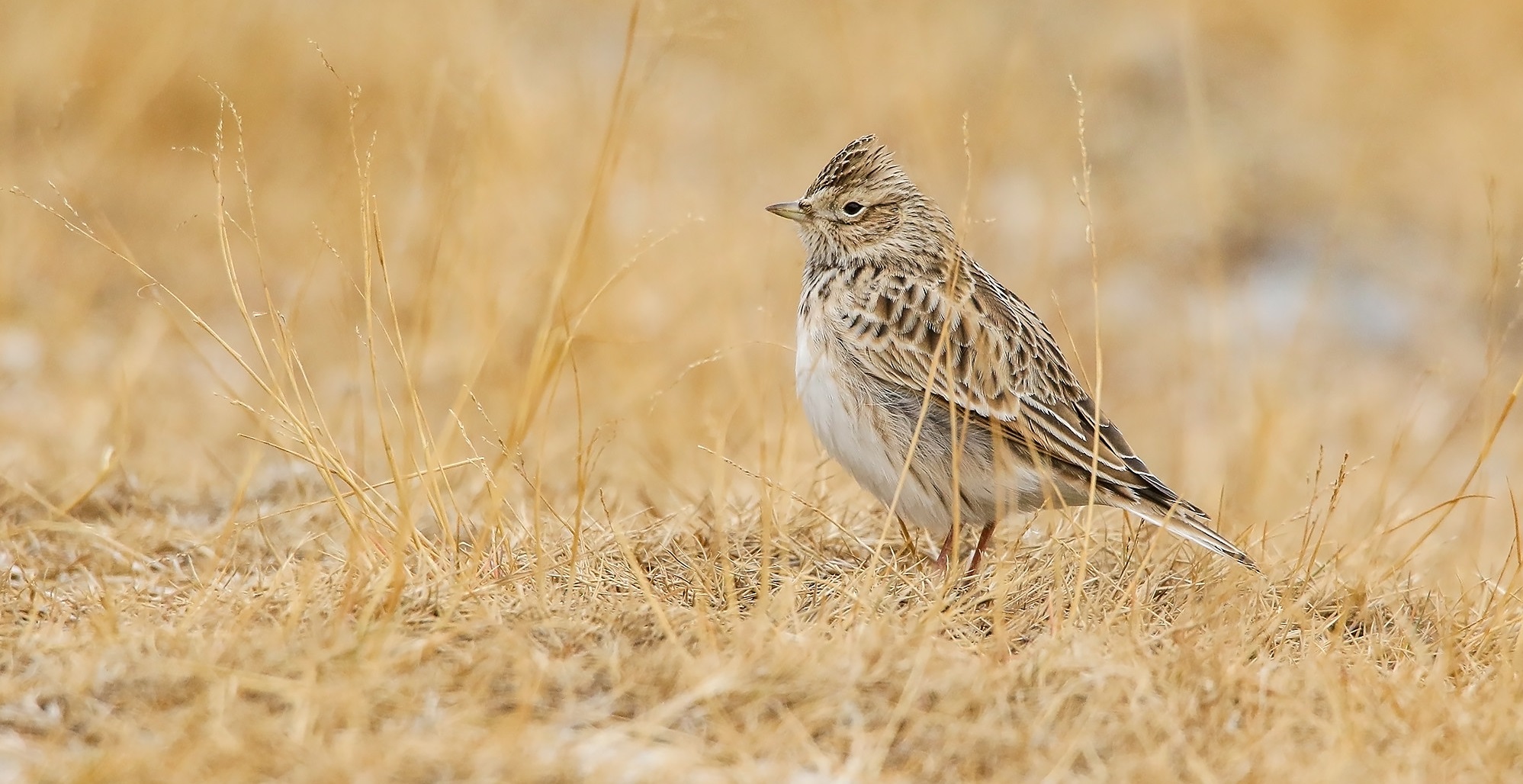
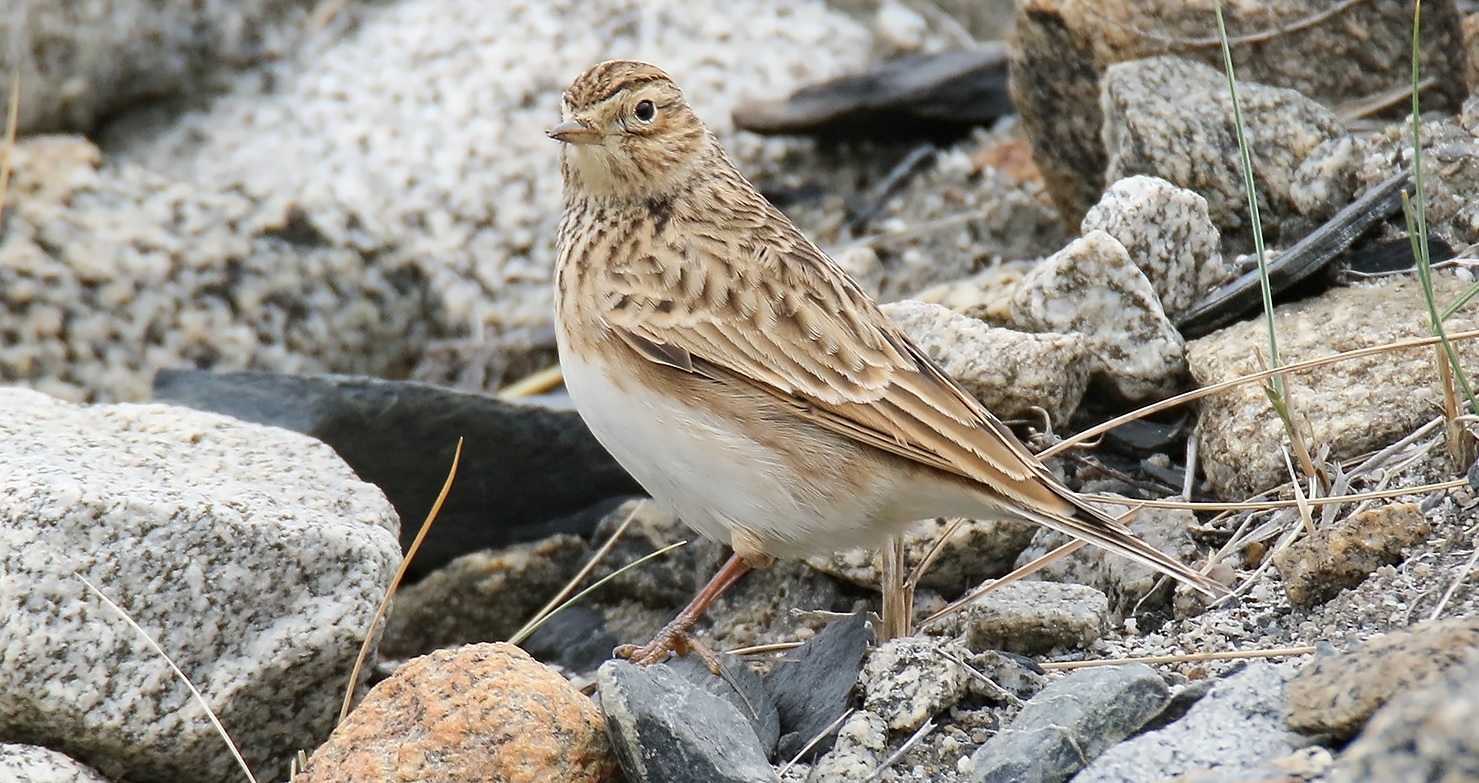
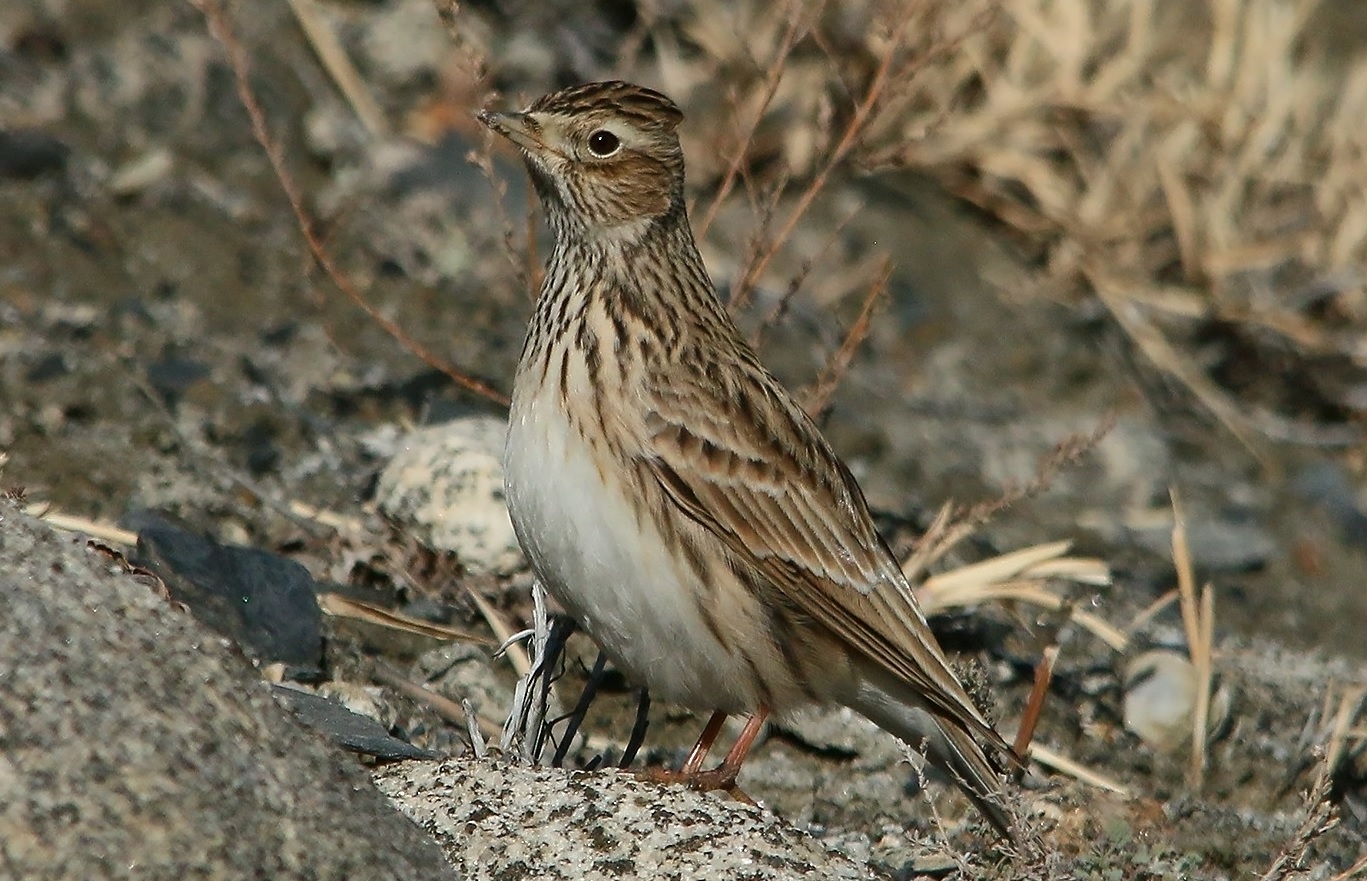
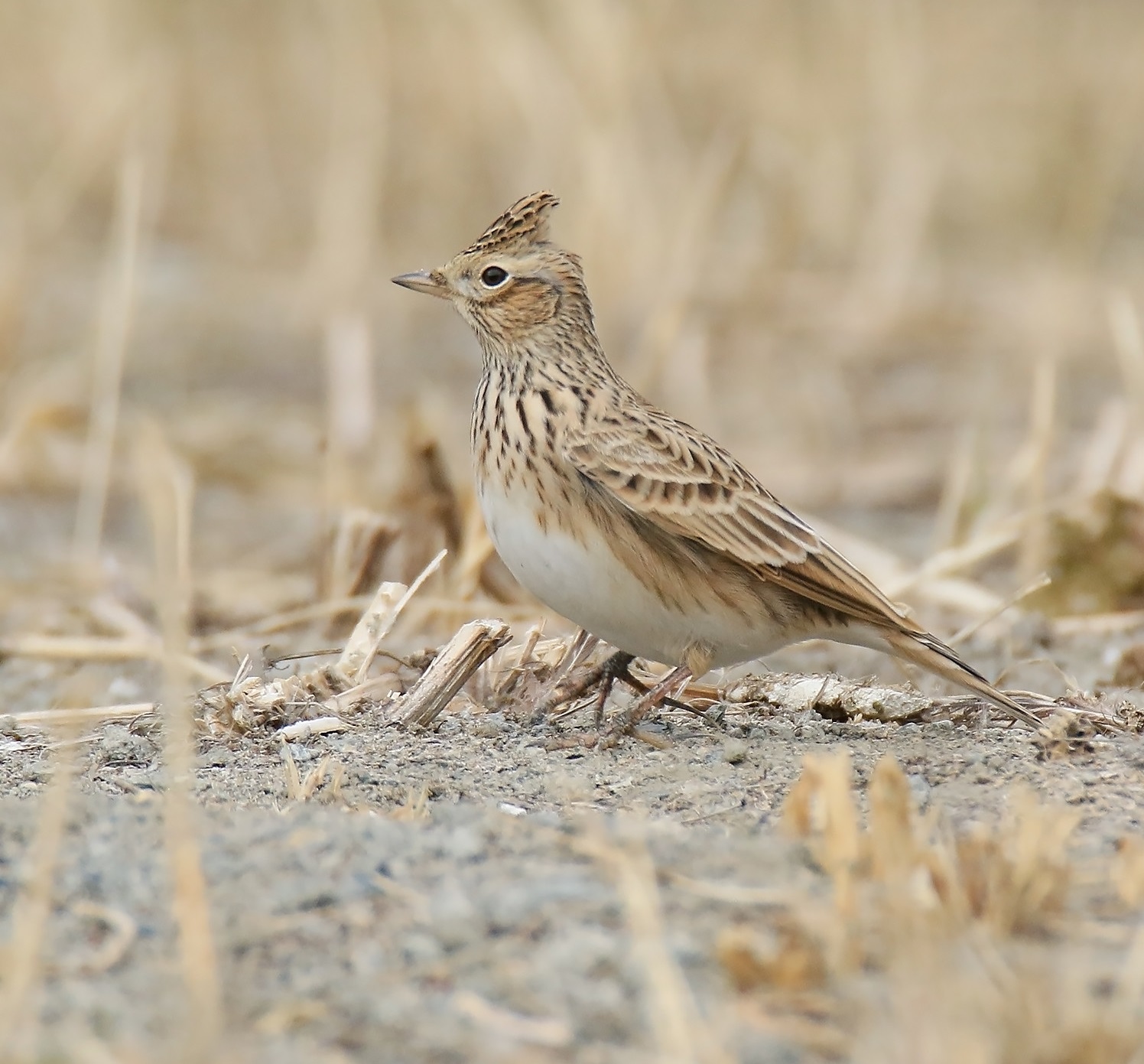
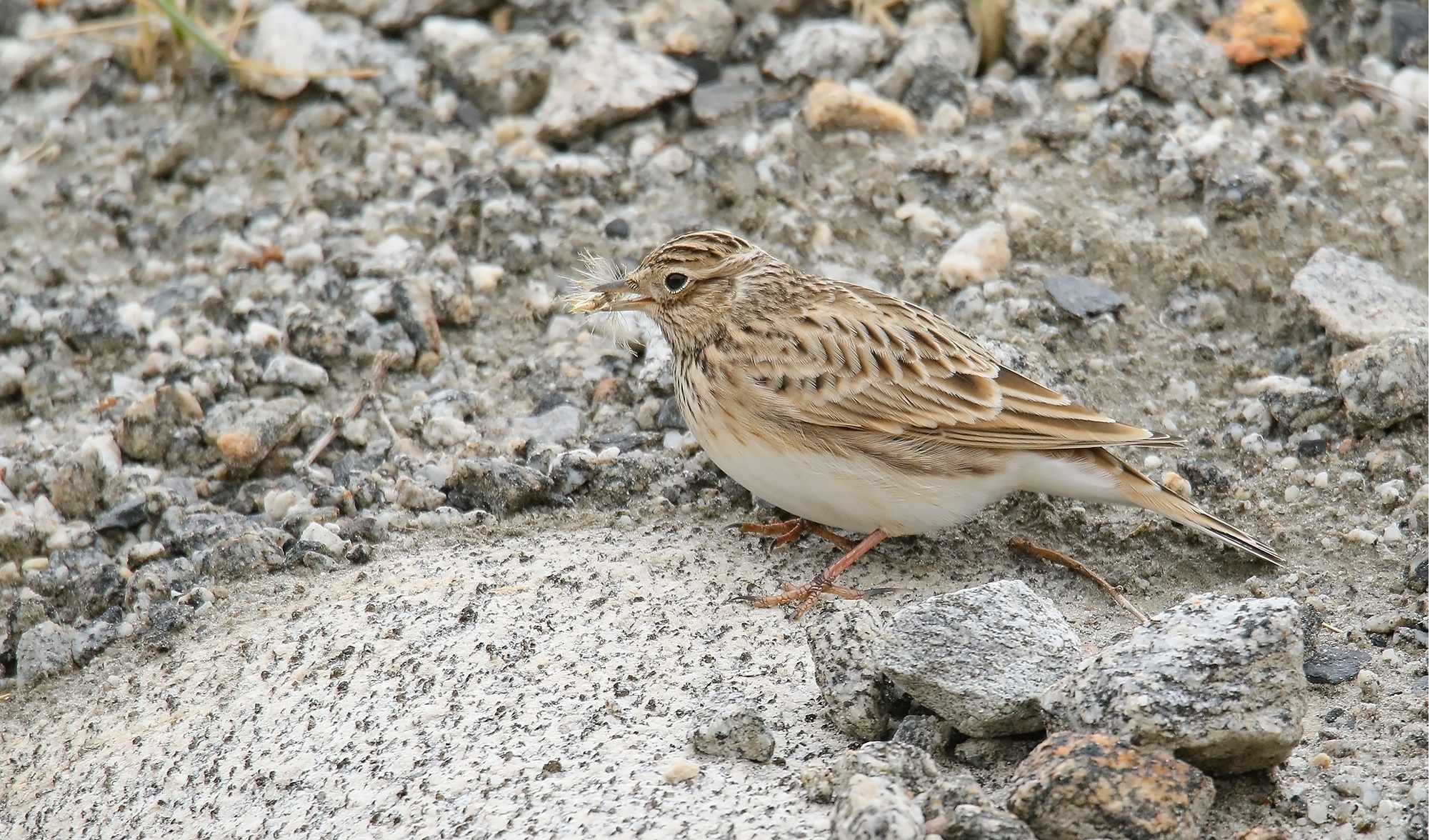
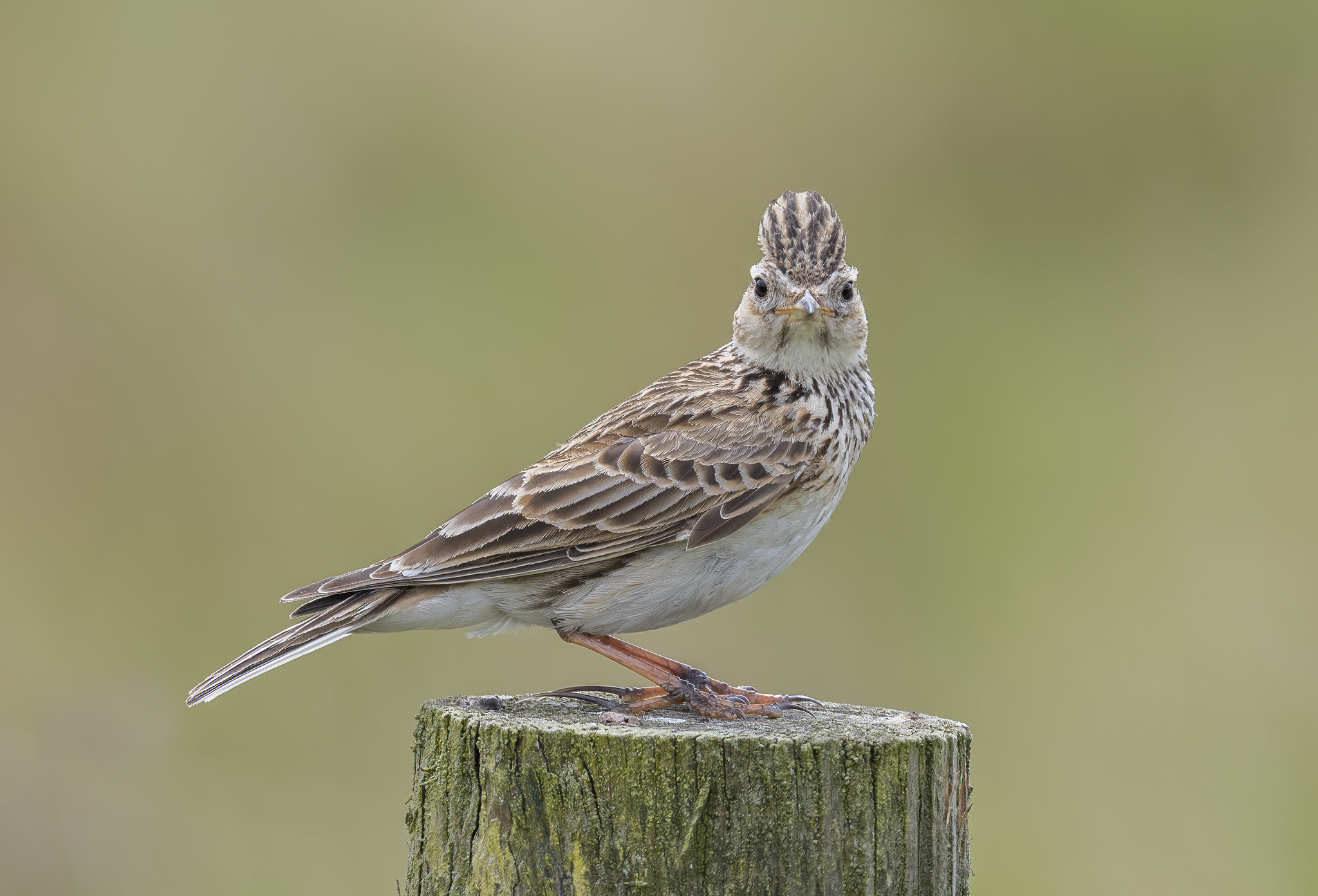
Down in the grass it is a modest bird, 18 to 19 cm long. The upperparts and breast are streaked greyish brown and the belly is buff-white. A short, blunt crest can be lifted or laid flat, and the sexes look alike.
Flight is when it shows itself. The tail is short and the wings short and broad, with white along the tail sides and the trailing edge of each wing. That white shows as the bird flies away, not as it heads towards you. The shorter Woodlark has no such edges.
Open fields and heath, far from hedges
Skylarks need space. They breed on open farmland and heath, nesting far from any tree, bush or hedgerow. The range spans much of Europe and Asia, plus north African mountains.
Western birds mostly stay put through the year, while eastern populations head south. Many western birds still shift to lowland fields and the coast for the cold months, as the Meadow Pipit does.
Walking the field for seeds and insects
It feeds on foot, walking across the ground and picking from the soil surface. Plant food means seeds and young leaves, and unlike a finch it swallows seeds husk and all. In summer, insects matter most.
This is where modern farming bites. Cereals were once sown in spring and cut in early autumn; now most go in during autumn and are harvested in early summer. By then the crop is too dense for a Skylark to run between the stems. The RSPB blames this change, more than pesticides, for the decline.
English farmers can now be paid to help through Natural England's Environmental Stewardship Scheme. One option is to sow a spring cereal and leave the stubble unsprayed over winter. The BTO calls such stubbles “giant bird tables”.
Chicks that leave home before they can fly
Birds breed from their first year, and nests appear from late March. Each is a shallow, grass-lined scrape, probably made by the female alone. Into it go three to five grey-white or greenish eggs marked with brown or olive.
Only the female incubates, starting when laying is complete, and all the chicks emerge on the same day about 11 days later. For the first week both parents feed the chicks almost wholly on insects.
At eight to ten days the young walk off and hide in the vegetation, fed by the adults until they are flying at 18–20 days old. Larger birds and small mammals rob many nests, which is one reason a pair may attempt up to four broods.
Skylark song from early spring to high summer
Birds remain all year, many moving to lowland fields and the coast in winter. Song builds from early spring, nesting starts in late March or April, and with several broods it carries on well into summer.
What the Skylark looks like
Skylark names and numbers
What is an exaltation of Skylarks?
A collective noun for a group. The Oxford English Dictionary calls the usage fanciful but traces it to John Lydgate, around 1430. The verb “to skylark”, meaning to fool about, began with sailors.
By how much have Skylarks declined in the UK?
Estimates from 2017 put the fall at 4–10 % over the previous ten years and 6–28 % over 22–25 years. The figures rest on the Common Bird Census that the British Trust for Ornithology began in the early 1960s.