
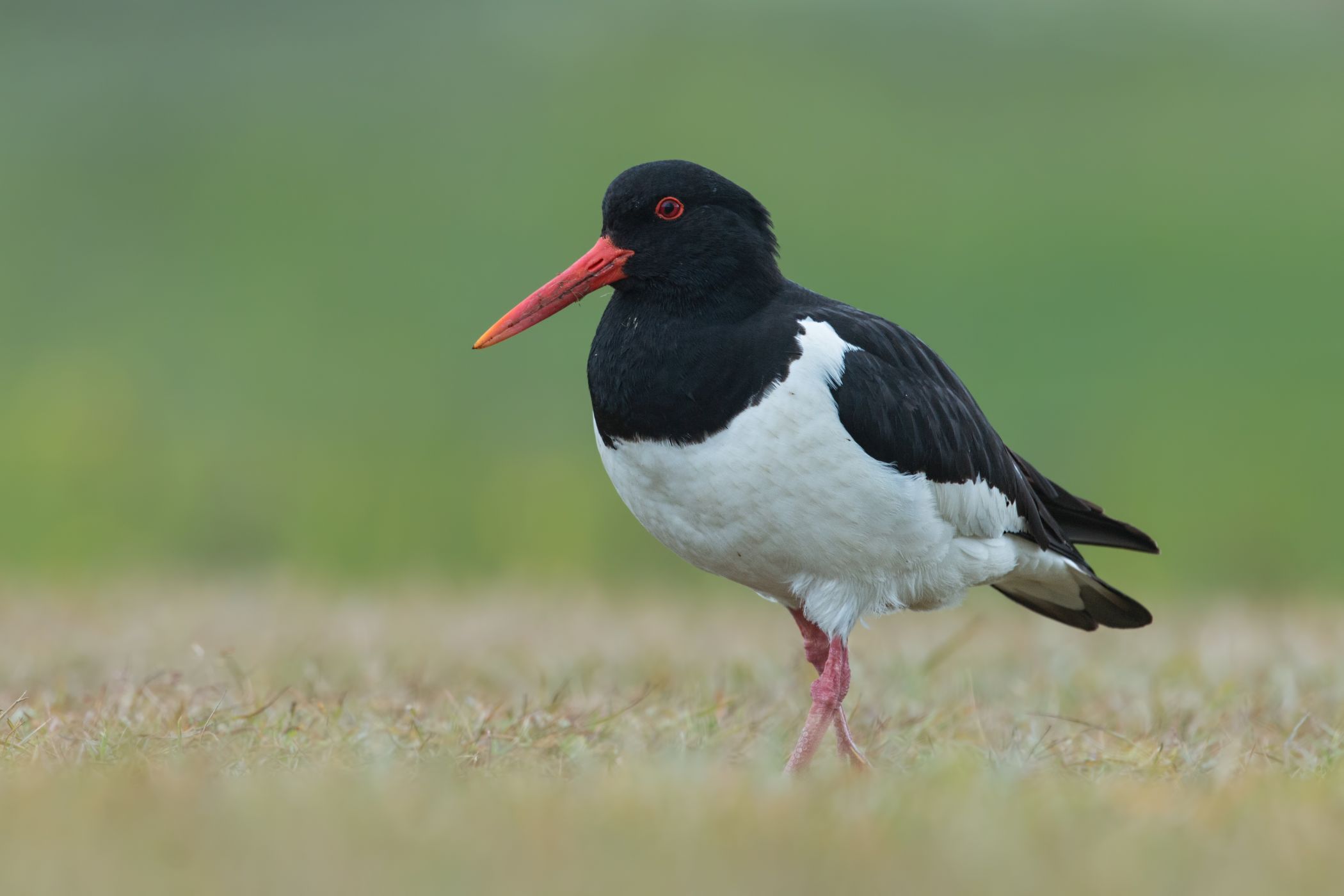
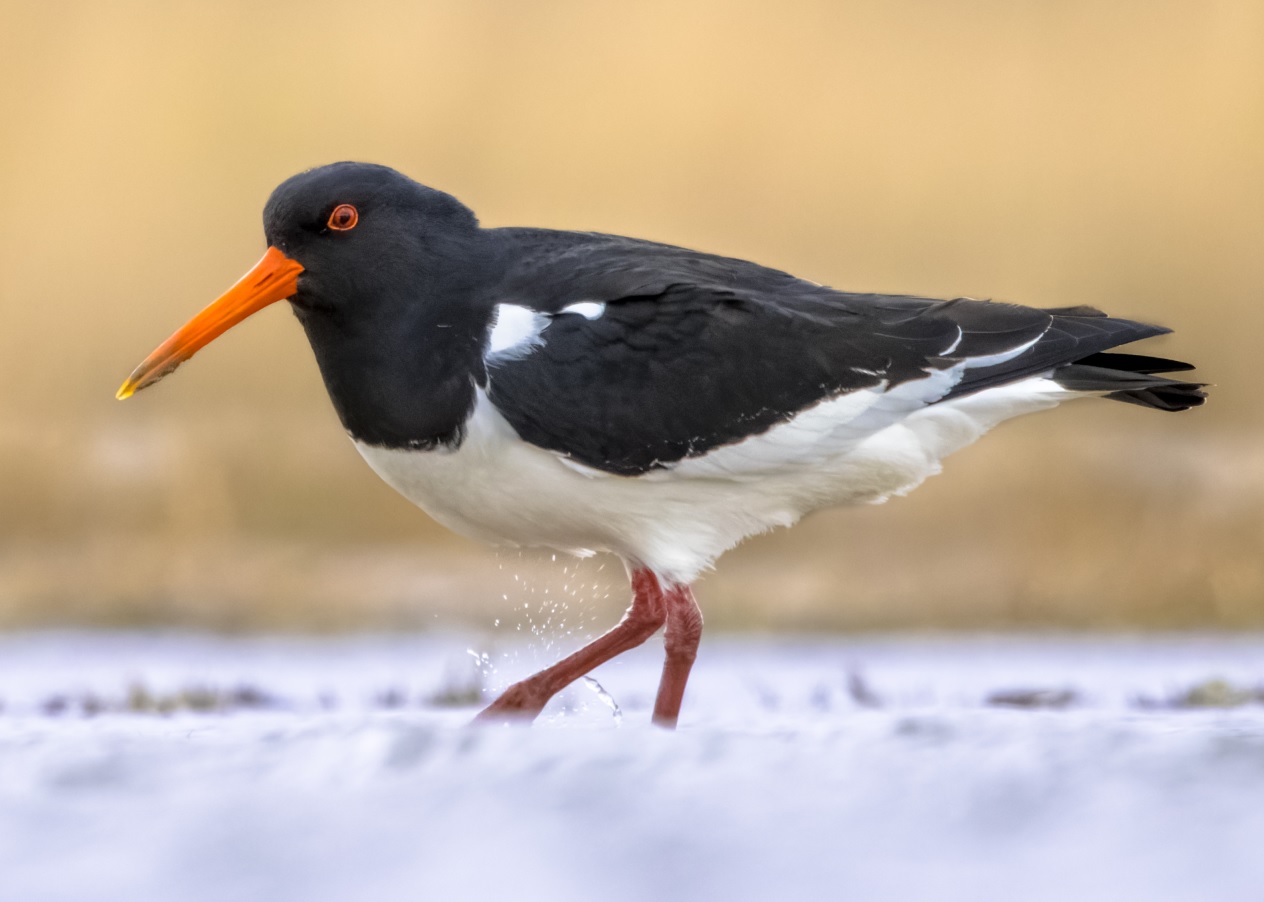
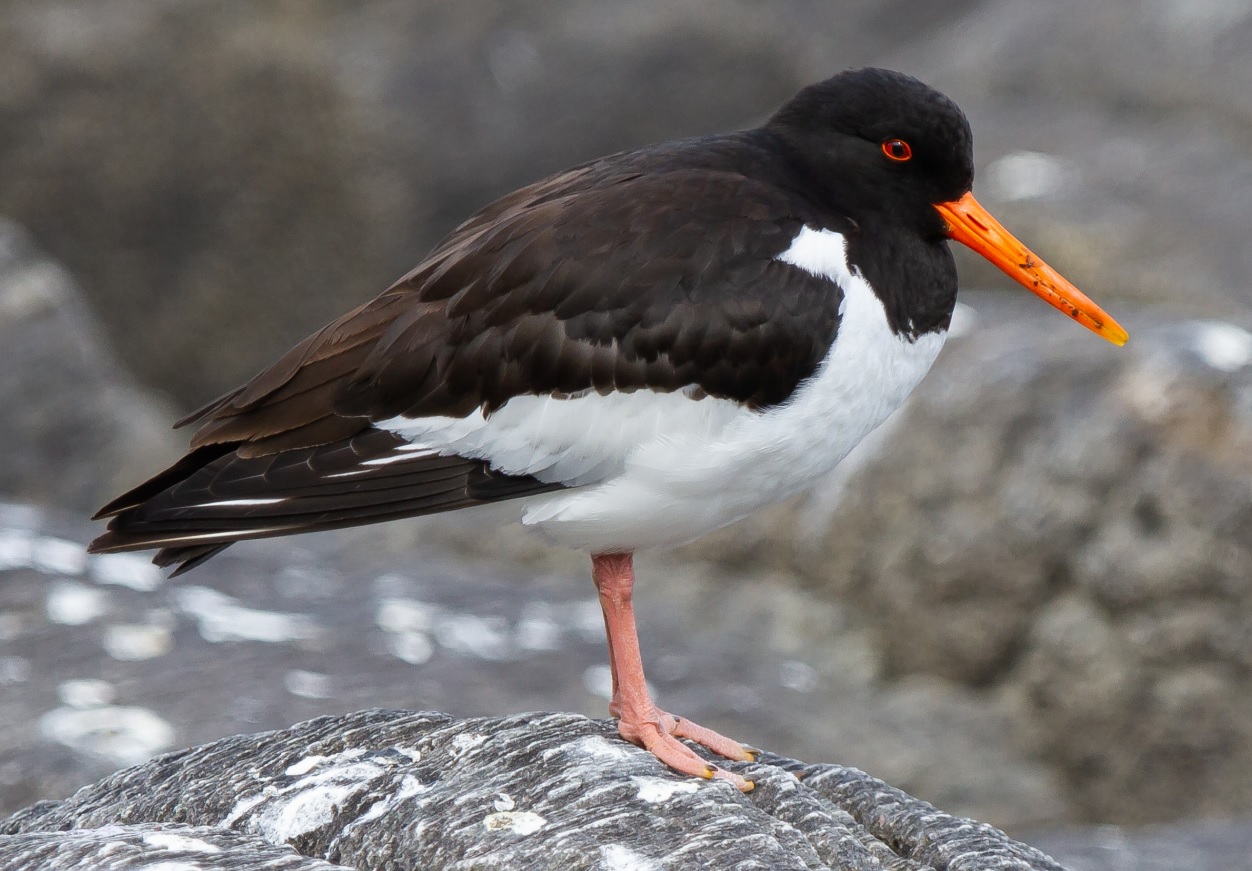
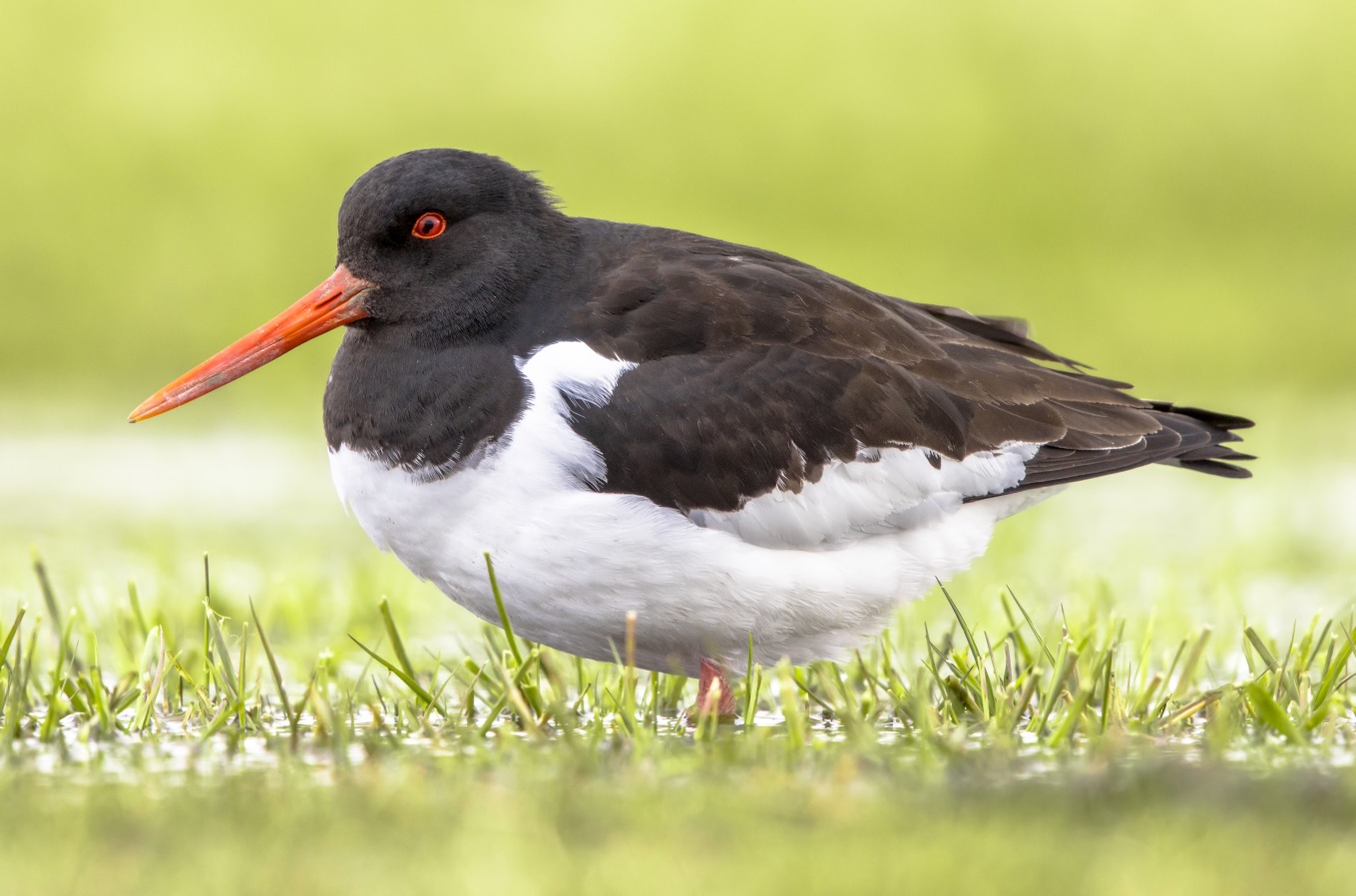
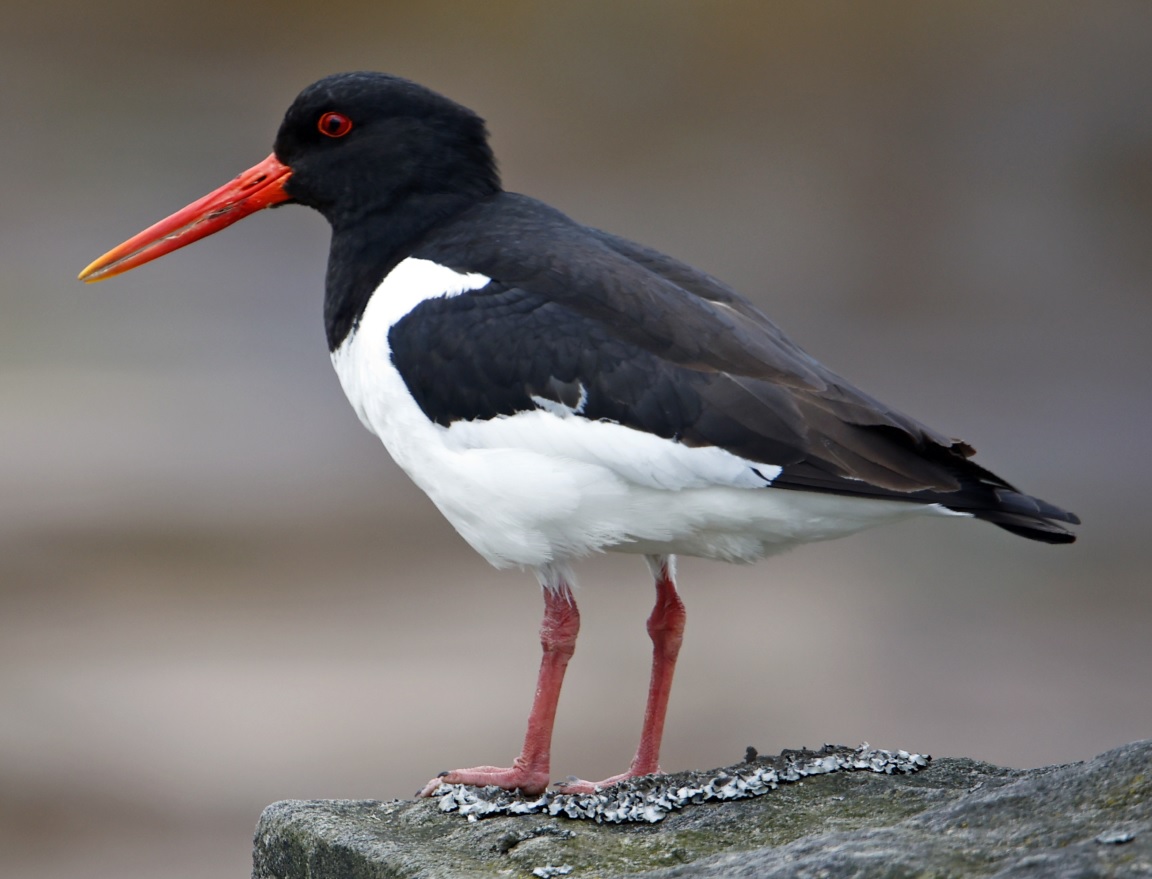
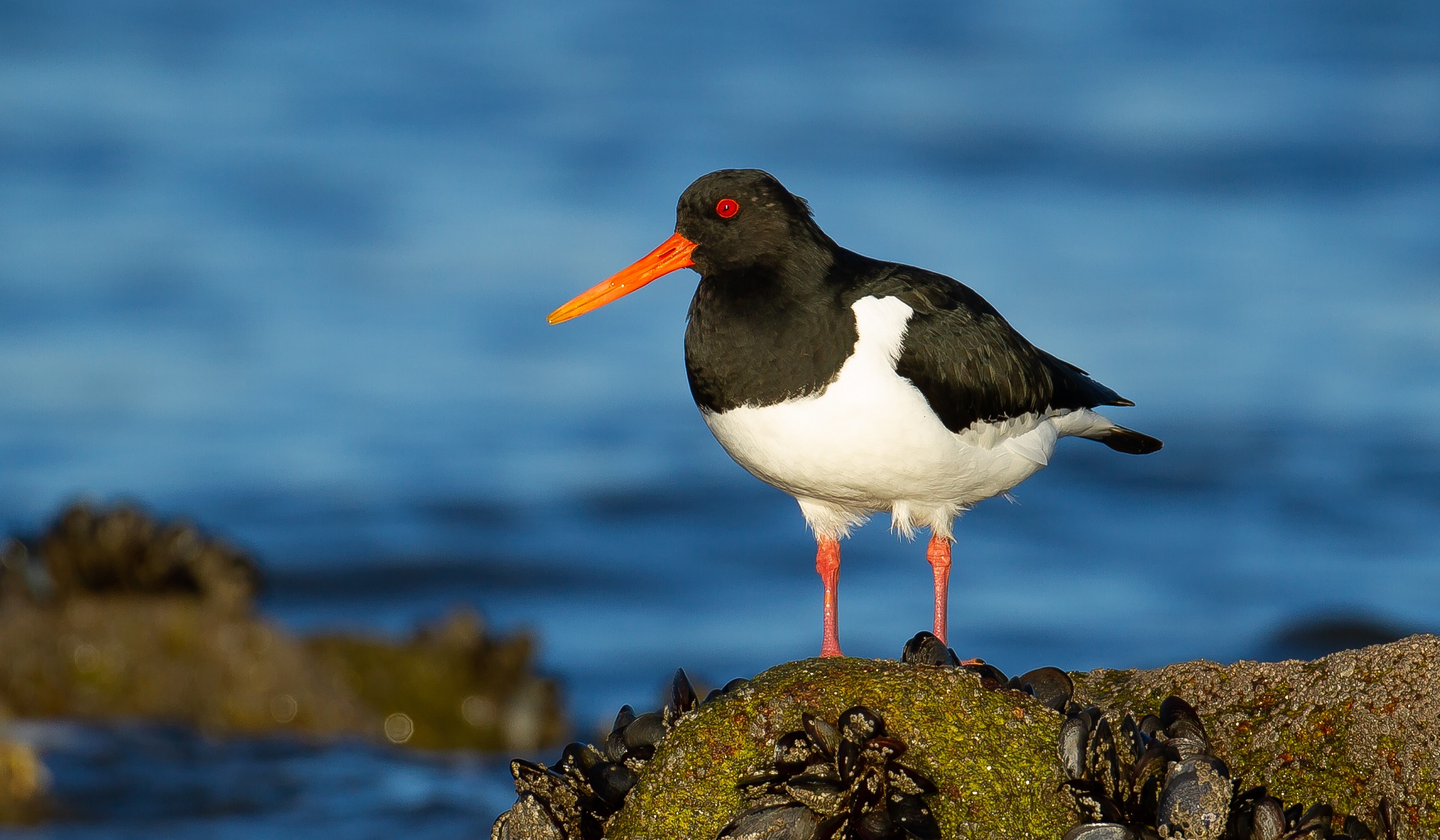
Black above, white below, with a long orange-red bill and red eyes, the Oystercatcher ranks among the biggest waders on the shores of Britain and Ireland. In spite of the name, oysters make up only a small part of what it eats.
Sociable in winter, combative on the nest
Once nesting is over, this becomes a very gregarious bird. The big winter flocks on south-west English estuaries are mostly birds that nest in northern England or Scotland, so even a species present all year is on the move.
A pair usually stays together for many years, and the bond is monogamous. When a pair is nesting, the male tends to stand guard while not feeding, and he is normally the first and fiercest to react, though the female will leave the eggs to join in.
Danger from the air, such as a passing Raven, is attacked in flight. Danger on foot gets a performance: noisy calling, short low distraction flights, sometimes a faked injury. Birds that meet the same walker often grow used to them.
A piping that carries across the mud
Its voice comes down to one sound worth learning: a loud, distinctive piping, from a bird that is noisy as well as conspicuous.
The piping grows most insistent around a nest. Both parents call repeatedly to coax an intruder into following them away, so a pair circling and calling around you is your cue to step back.
Hammerers, prisers and worm-diggers
Oysters barely figure in its diet, yet few if any other waders could open one. The strong, broad bill smashes or levers apart shellfish such as mussels, and it also digs out earthworms.
Each bird specialises. Those with broad, blunt bill tips hammer through or prise open shells, while birds with pointed tips probe for worms. The shape comes largely from wear, and young birds learn their method from their parents.
A bare scrape and chicks that walk within a day
Oystercatchers do not breed until they are three to five years old. The nest is nothing more than a scrape on pebbles, holding two to four buff-yellow eggs streaked and blotched with black-brown.
Both parents incubate, starting once the last egg is laid, so the clutch hatches together after 24–27 days. The chicks leave the nest after a day or two and are brooded and fed by both adults. One brood a year is the rule. Eggs and chicks are so well camouflaged that the parents' alarm is usually your best clue.
Pied plumage, red eye, pink legs
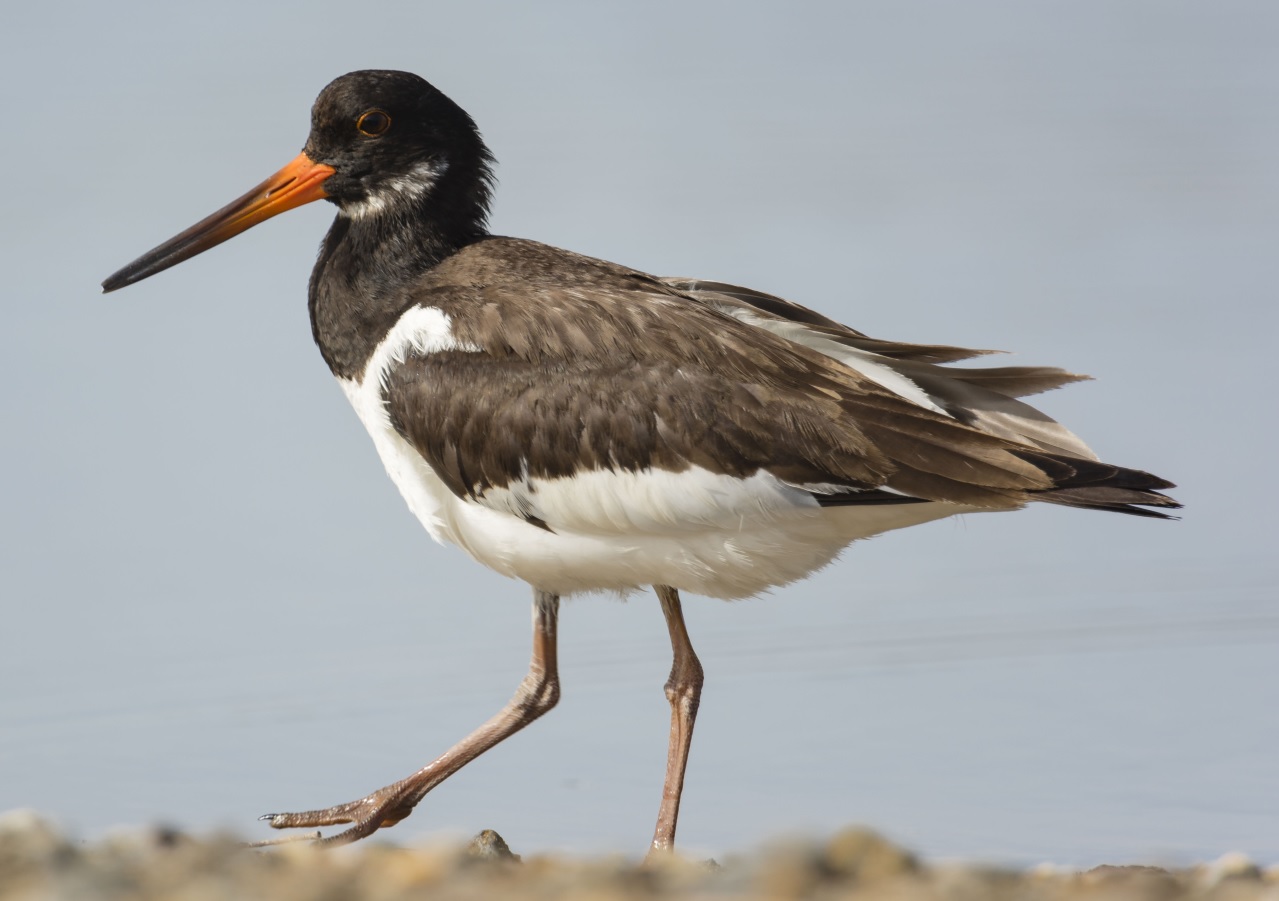
The upperparts are black, the underparts white, the bill long, straight and orange-red, and the fairly short legs a dull pink. In flight it is unmistakable, showing white on both wings and tail against a black back.
In winter plumage an adult briefly shows a white collar across the throat. Immature birds keep it longer and are browner, with a duller bill.
The old name was sea pie, ‘pie’ being the traditional word for the black-and-white Magpie. ‘Oyster catcher’ was coined in 1731 for an American species and made standard by William Yarrell in 1843.
On the coast in every month
Oystercatchers are present in Britain and Ireland all year. In the breeding season pairs spread out to defend their nests; outside it they gather in large, noisy flocks, notably on estuaries in the south-west of England in winter.
What the Oystercatcher looks like
The other black-and-white bird
Its pattern is shared with one common bird, which lives somewhere quite different.
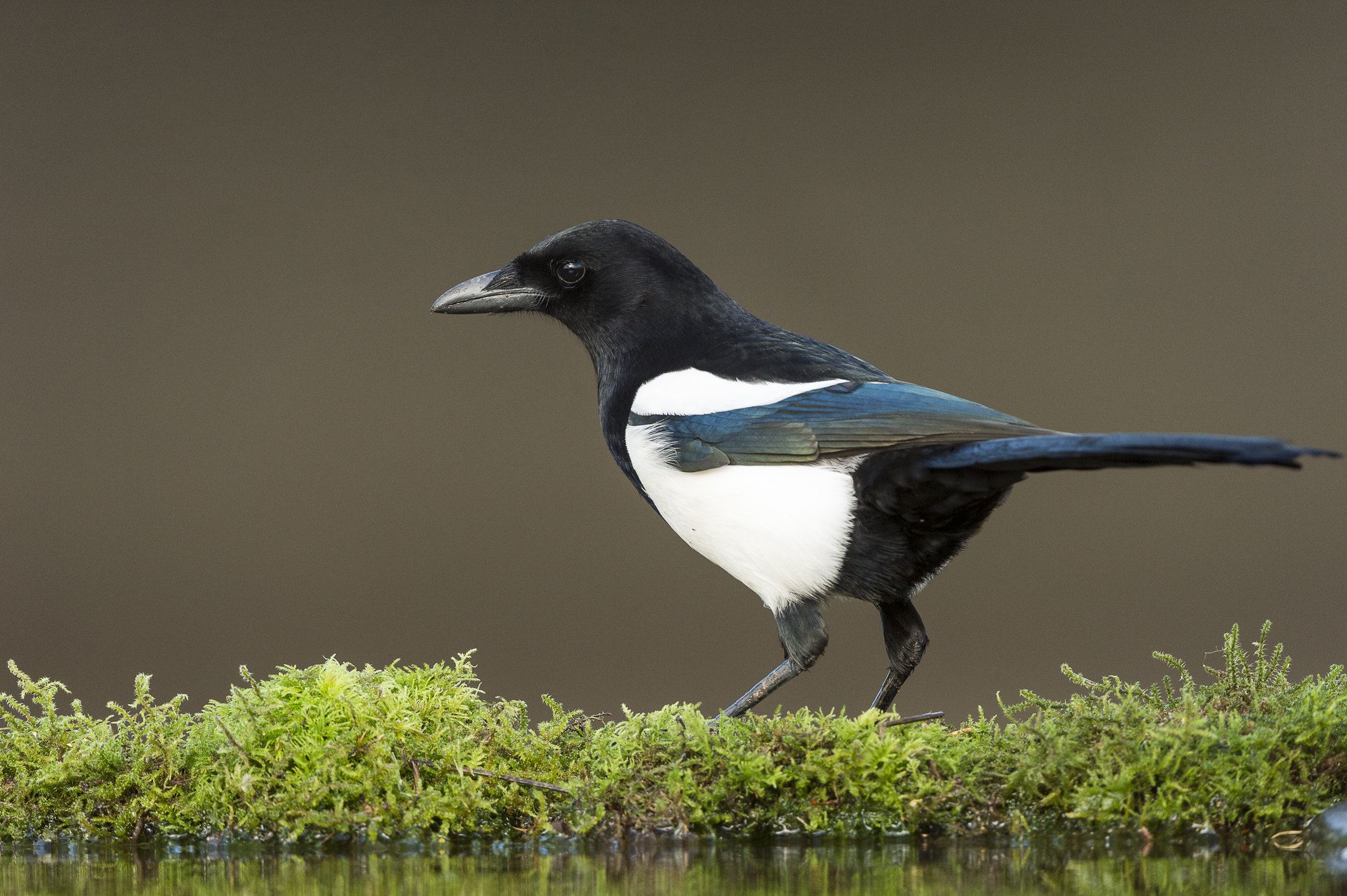
Magpie
A long-tailed corvid of trees, gardens and hedges with a black bill and black legs. The Oystercatcher has a short tail, an orange-red bill and pink legs.
Age records, inland nests and science
Why have scientists studied oystercatchers so closely?
They are numerous and their behaviour is easy to read, which makes them a good gauge of an estuary's health. Decades of feeding studies in the Netherlands, northern Germany and above all on the Exe estuary in the south-west of England helped lay the ground for behavioural ecology.
Do oystercatchers nest inland?
Yes. Besides the coast they use gravelly islands inland, and they favour flat, low-lying ground under 200 m with short vegetation close to water.
What is the age record for an oystercatcher?
A bird ringed as an adult in England in 1982 was caught again in 2025, 43 years later. As it was at least three when ringed, it had reached 46 or more.