
Great Tits make themselves heard early in the year. Pairs claim territory in late January, and the males do nearly all the calling. Measuring 12.5–14 cm, it is a big bird for a member of the tit family. It has also taken to parks and gardens: Sheffield alone was thought to hold some 17,000.
Late January to September: the Great Tit calendar
Defence of those territories begins as winter turns to spring. Most are reoccupied the next year, even after one partner has died, provided the brood came off.
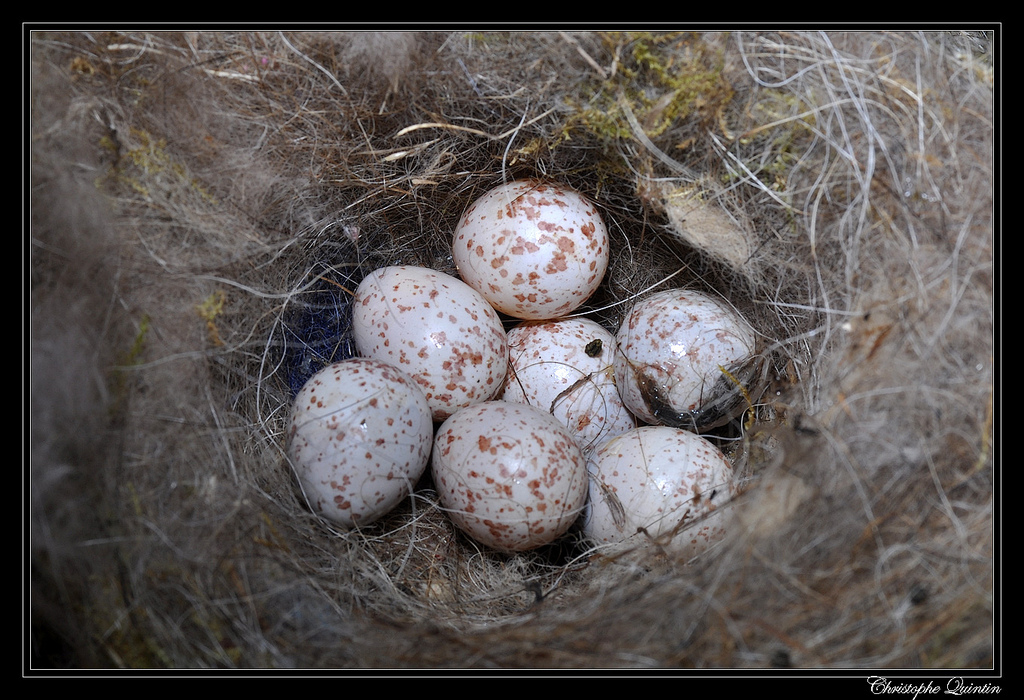
In Europe, laying usually begins after March, timed to the caterpillar peak, which itself follows the temperature. Older females start first. Most years bring two broods, and breeding can last into September.
From autumn, with insects scarce, they roam in mixed flocks alongside Blue Tits and other relatives.
Forty sounds, and a theory for why
Expect to be fooled. One bird can produce up to 40 kinds of call and song, and the squeaky ‘teacher, teacher’ is just the best known, a claim on the territory. English folk once took a rasping ‘saw-sharpening’ call as a forecast of rain.
Why so many? The Beau Geste idea, named after a novel whose hero props dead soldiers along a fort's walls, says a varied repertoire makes a territory sound more crowded. Whatever the reason, males with large vocabularies tend to dominate and breed better.
Towns change the tune: under constant low-pitched noise, Great Tits sing higher than birds in quiet places.
Staying put when the weather turns hard
This is not a migrant. Pairs keep to their territory all year, and young birds settle close to home. In a harsh winter, though, flocks of up to a thousand may surge out of northern Europe towards the Baltic, the Netherlands and Britain.
Cold is handled from the inside. Before winter its blood gets better at making heat. When food runs short it narrows the vessels in its bill and legs, letting those bare parts cool so less warmth escapes.
Reading the black stripe on a yellow breast
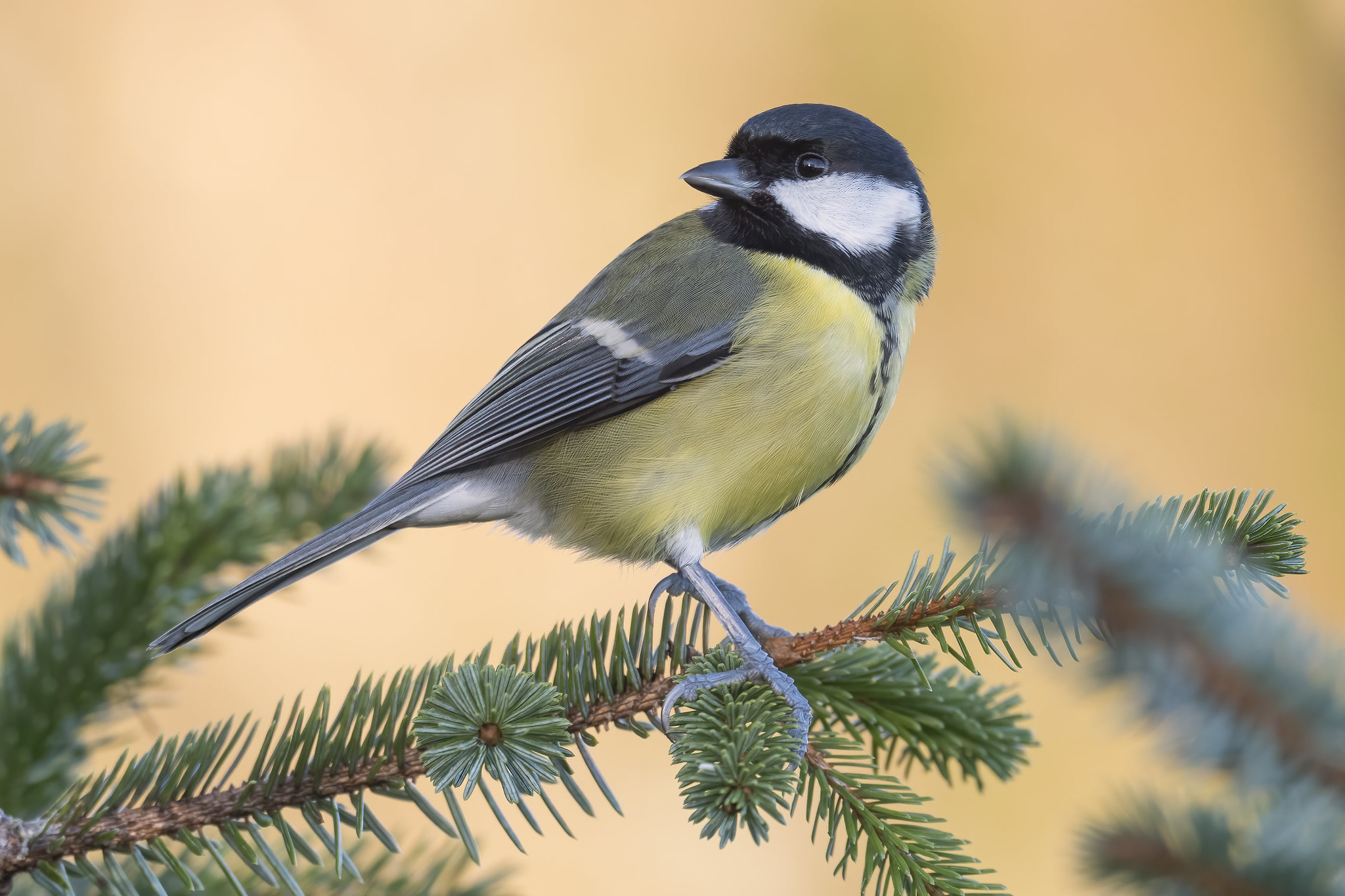
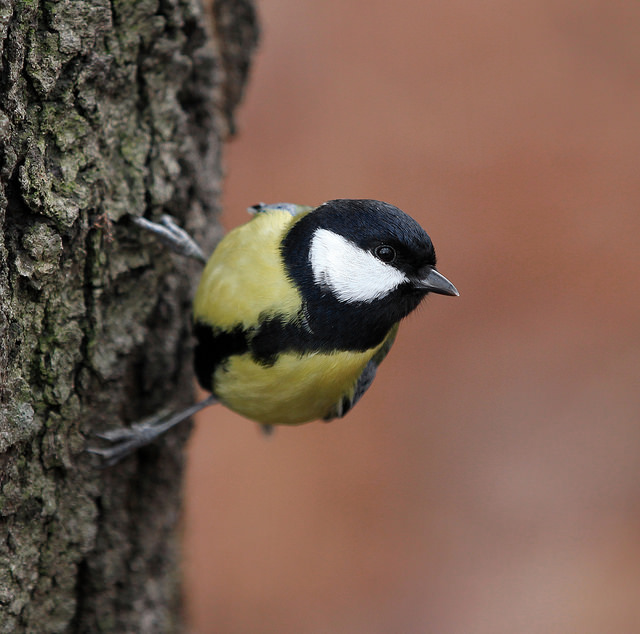
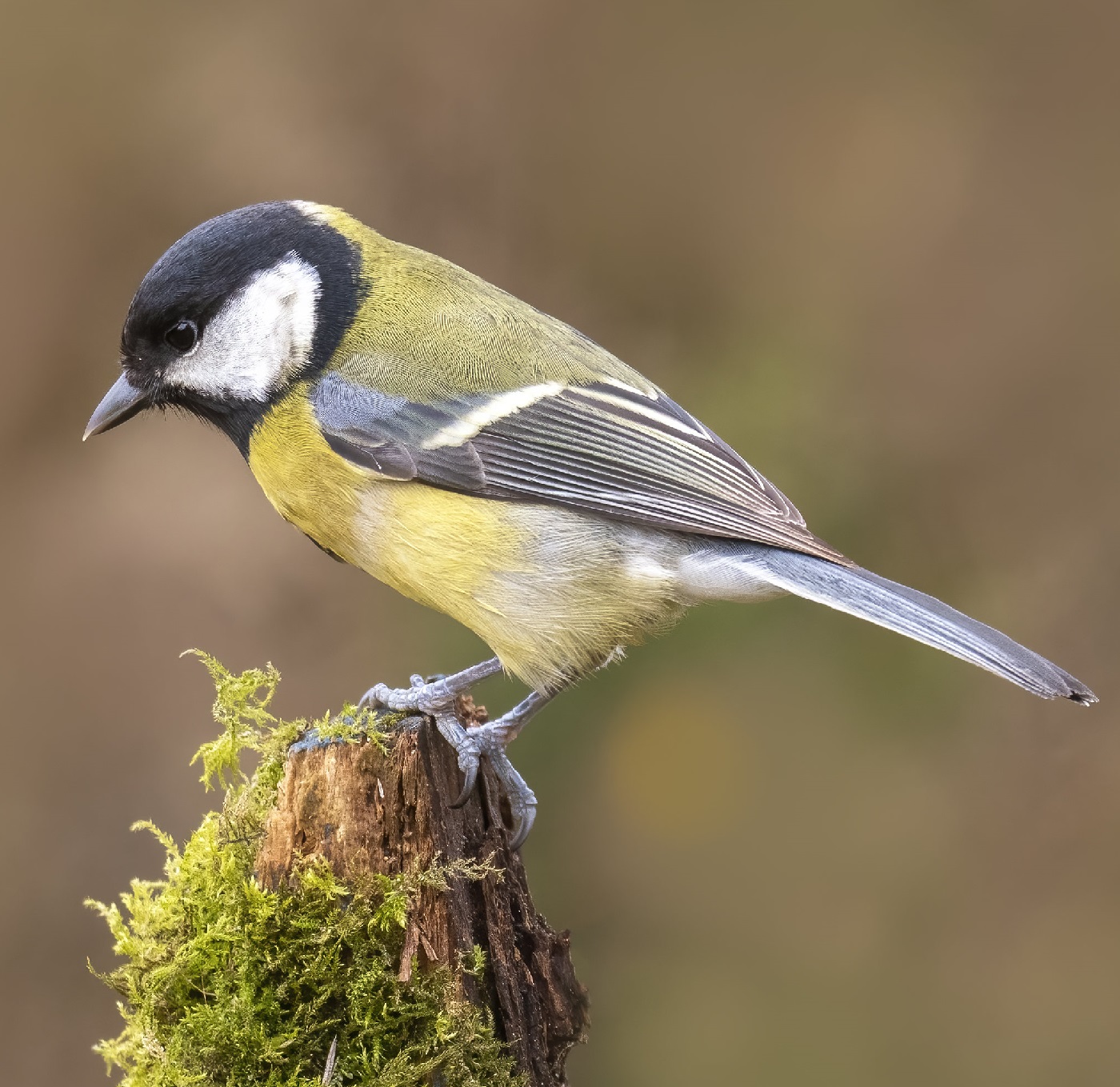
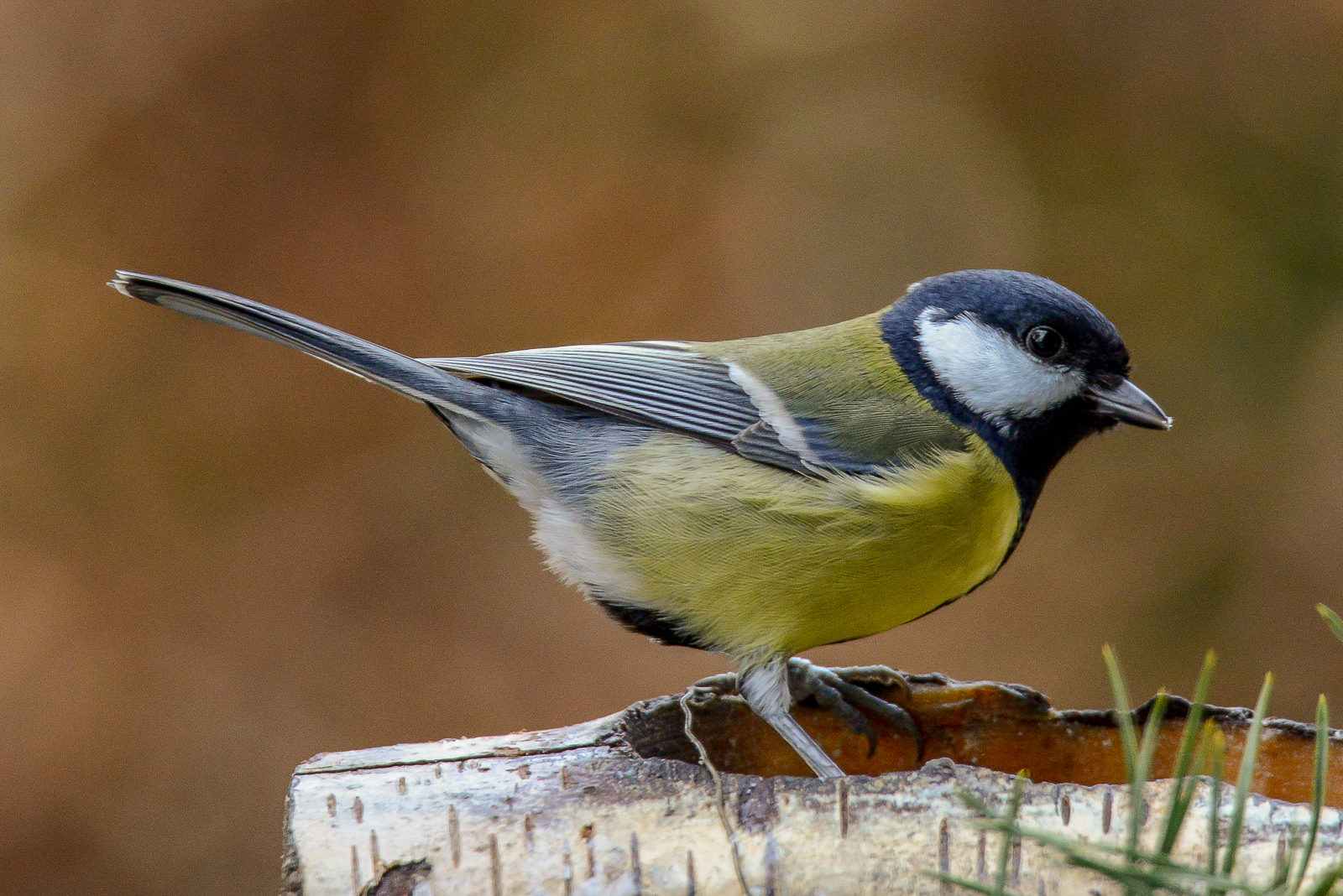
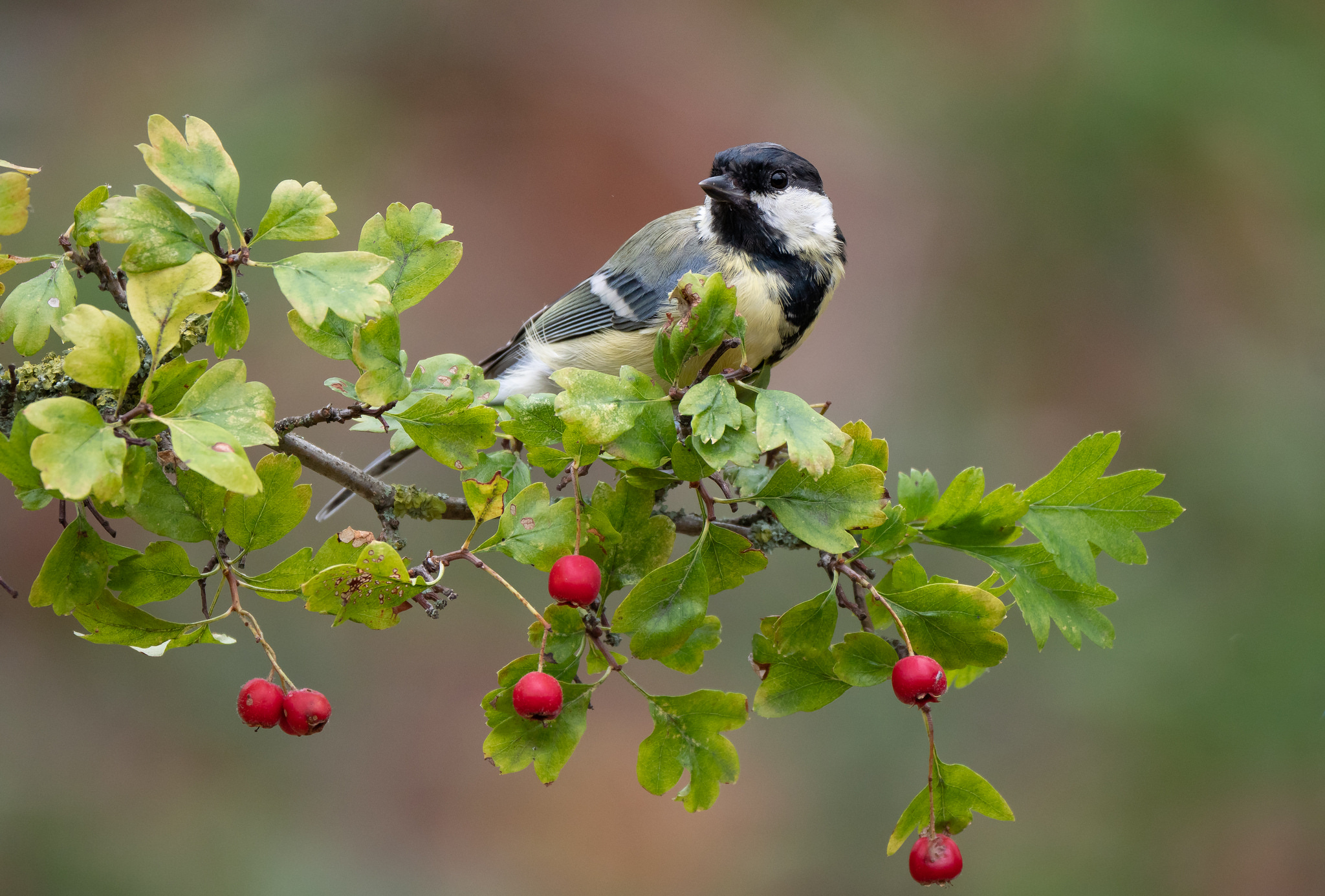
The head, throat and bib are black, the crown with a blue gloss, around clean white cheeks. A broad black band runs from the bib down the lemon-yellow underside to the vent. The back is olive green and the blue-grey wing has a white bar.
Use that band to sex them. On a female it is narrower and sometimes broken, and she looks duller overall. Females favour males with a wide stripe, and a deep yellow shows a male who feeds well, since the pigment has to come from his diet.
British and Irish birds are the subspecies newtoni, slightly longer-billed and with less white in the tail than continental birds.
From caterpillars to hazelnuts and sleeping bats
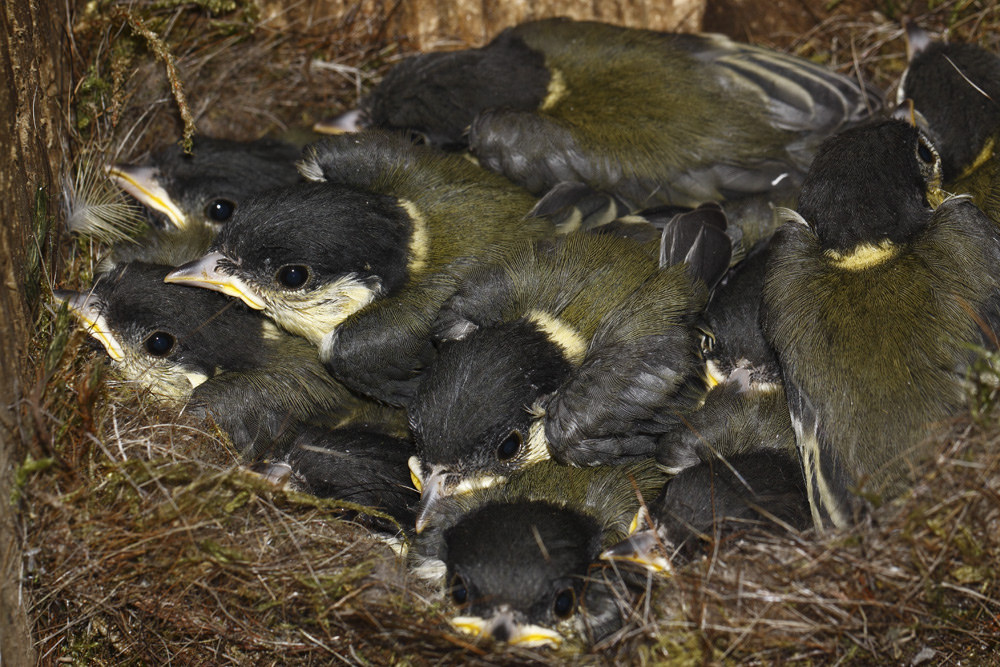
Summer food is mostly insects and spiders gleaned from leaves. Chicks get caterpillars with the gut removed, so its tannins do not slow their growth. In apple orchards, Great Tits have cut caterpillar damage by up to half.
Later, berries and seeds such as beech and hazel take over, and after a heavy beech mast you will often find them on the ground. A big item is clamped under the feet and struck with the bill; a hazelnut takes around twenty minutes.
They are quick learners. In 2009 Great Tits were found killing hibernating pipistrelle bats, and one used a conifer needle to prise larvae from a tree.
From January song to autumn flocks
Song rises from late January as territories form and stays strong through spring. Summer is busier with feeding than singing, and from autumn the birds travel in mixed flocks with other tits.
Great Tit up close
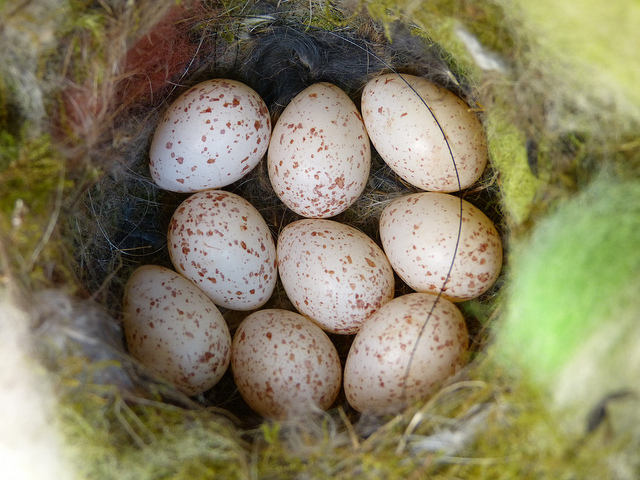
Smaller cousins with a similar pattern
Both share gardens and winter flocks with it.
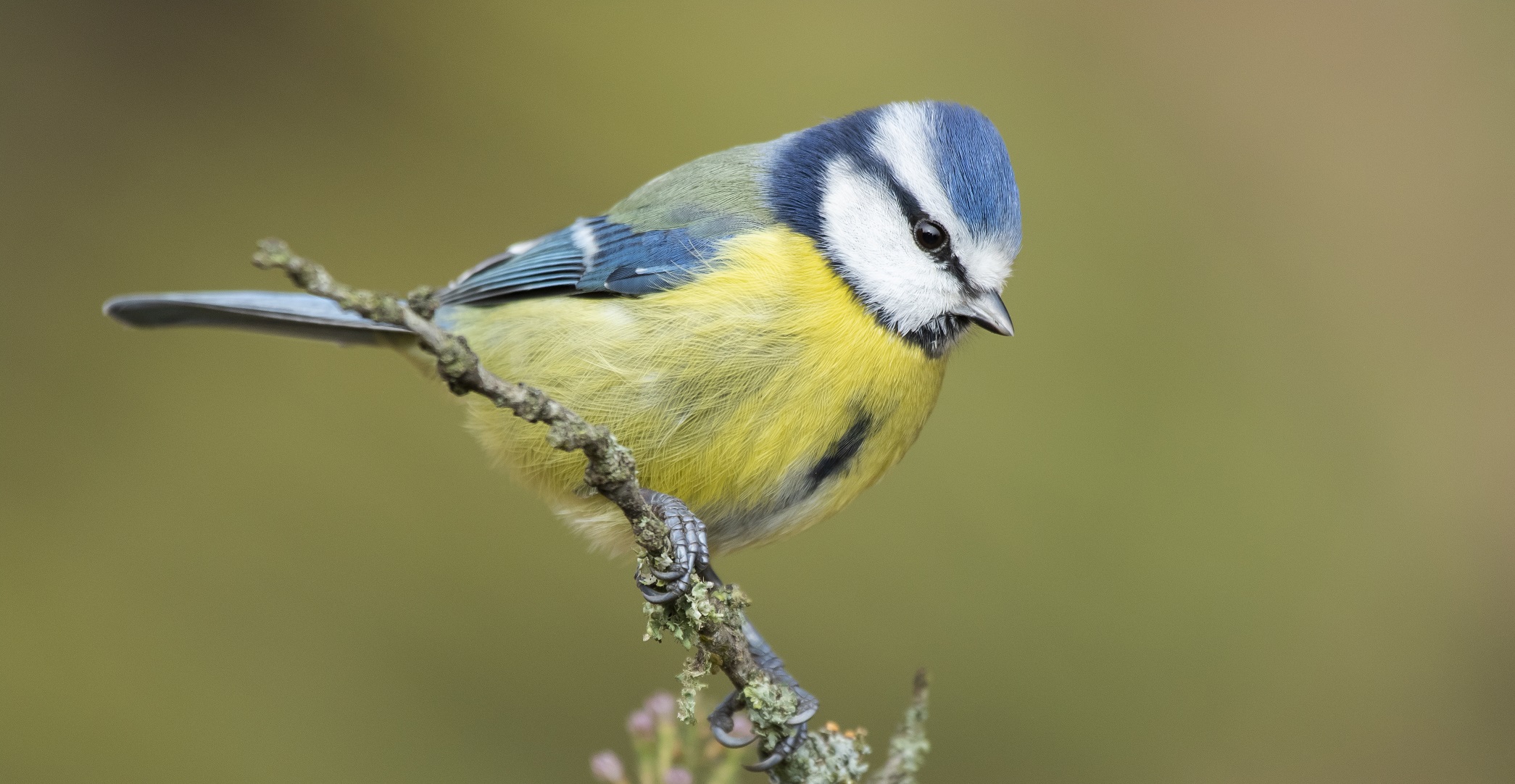
Blue Tit
Smaller, with a blue cap instead of a black head, a dark line through the eye round white cheeks, and no broad black band down the front.
Great Tits, flycatchers and numbers
Why do Great Tits fight with Pied Flycatchers?
They want the same nest boxes. Great Tits can kill prospecting male Pied Flycatchers, and the fights grow commoner as climate change makes the two species nest at the same time.
How many Great Tits are there in the world?
As of 2016, somewhere from 300 to 1,100 million across 32.4 million square kilometres. The range has crept north into Scotland and Scandinavia, and the species is rated least concern.