
Black and white, long-tailed and seldom far from houses, the Magpie is the member of the crow family that will happily raise a family in a suburban park. It is also the bird behind ‘One for Sorrow’, a counting rhyme with so many local versions across Britain and Ireland that nobody can say which came first.
Black, white and a tail longer than the body
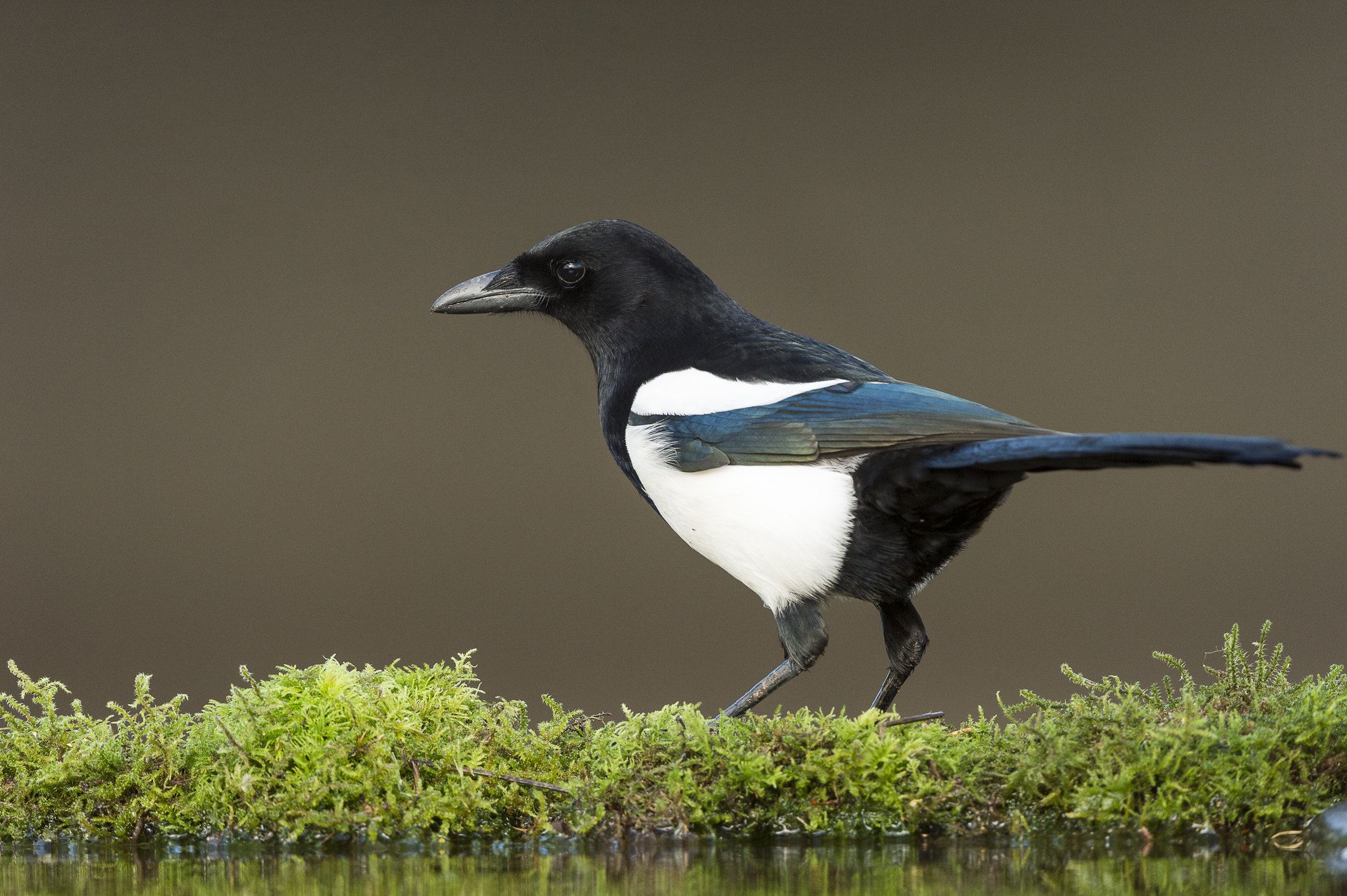
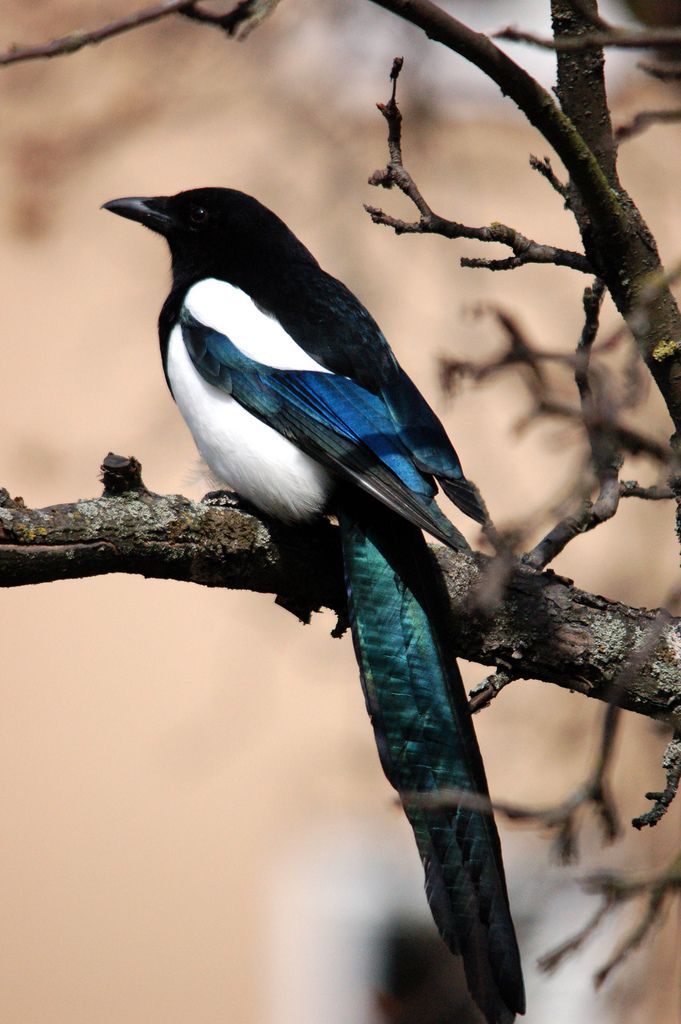
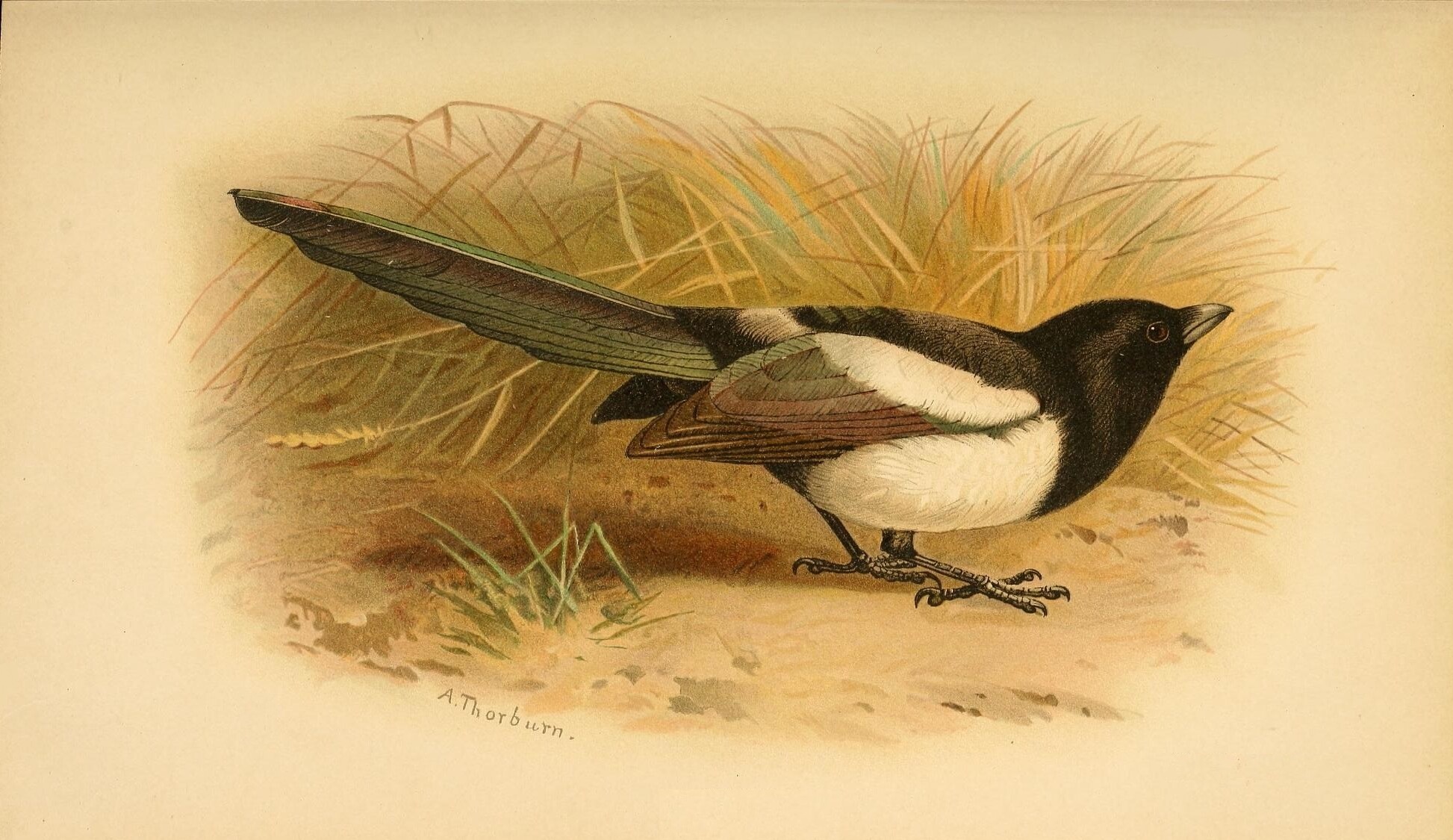
Start with the shape. A male measures 44 to 46 cm, and the graduated tail makes up more than half of it. White is confined to the belly and a block on each shoulder; the rest is black.
In good light that black shines green and violet, and the tail glints green and reddish purple. Open wings flash white inner webs on the primaries.
Females are a little smaller but otherwise identical. A recently fledged bird has no gloss, a shorter tail, a pinkish patch at the base of the bill and rather pale eyes.
Ruling out the other pied birds
There is no second magpie to worry about here: Europe's only other species, the Iberian magpie, is confined to Spain and Portugal.
The word ‘pied’, first written down in 1552, was borrowed from this bird for anything black and white, and the Oystercatcher was once called the sea pie. On the shore, its long orange-red bill and pink legs end any doubt.
Among garden corvids, the one you may see squabbling with magpies is the Jackdaw, which sometimes gangs up to chase them away. It is smaller and short-tailed, dark apart from a grey nape, with a pale eye.
Chatter, yaps and a hiss you will barely catch
The standard call is a choking chatter, either a brisk ‘chac-chac’ or a longer burst of the same note. The ‘mag’ in the name probably comes from Margaret, once a byword for any woman, because the call was likened to idle gossip.
Juveniles rattle too, but they also have a piercing ‘uik uik’ that recalls a small dog. Adults and young can hiss as well. You will hardly notice it.
Spring brings something gentler. A displaying male flicks his crown feathers, fans his tail and calls in soft tones.
Scattered trees, rooftops and the edge of town
Open country with trees dotted through it suits the Magpie best; bare treeless land and dense forest do not. Parks and suburban gardens can hold many breeding pairs, and birds often turn up close to city centres.
This is a sedentary bird that stays near its nesting territory through winter. Only magpies at the northern edge of the range, in Scandinavia and Russia, shift south in harsh weather. On winter evenings they gather to roost in groups, sometimes beside starlings, thrushes, pigeons and jackdaws.
A domed nest of thorny sticks
Pairs are monogamous and tend to keep one territory year after year. The nest is wedged into a fork high in a tall tree: sticks set in mud and clay, lined with fine roots and roofed with a loose dome of prickly twigs. After leaf fall these bulky domes are easy to spot.
Eggs go down in April, usually five or six, one each morning. Only the female incubates, fed on the nest by her mate, and the chicks leave at roughly 27 days.
Hunger kills more nestlings than predators do. The eggs hatch at different times, so in a lean year the last chick rarely makes it.
On territory all year, busiest in spring
Magpies stay put through every month. Courtship and nest building fill early spring and the eggs follow in April. After breeding, adults replace every feather between June or July and September or October; the long flight feathers alone take three months.
What the Magpie looks like
Magpie or something else?
Few birds here share its pattern or its habit of hanging about houses. One check usually settles it.
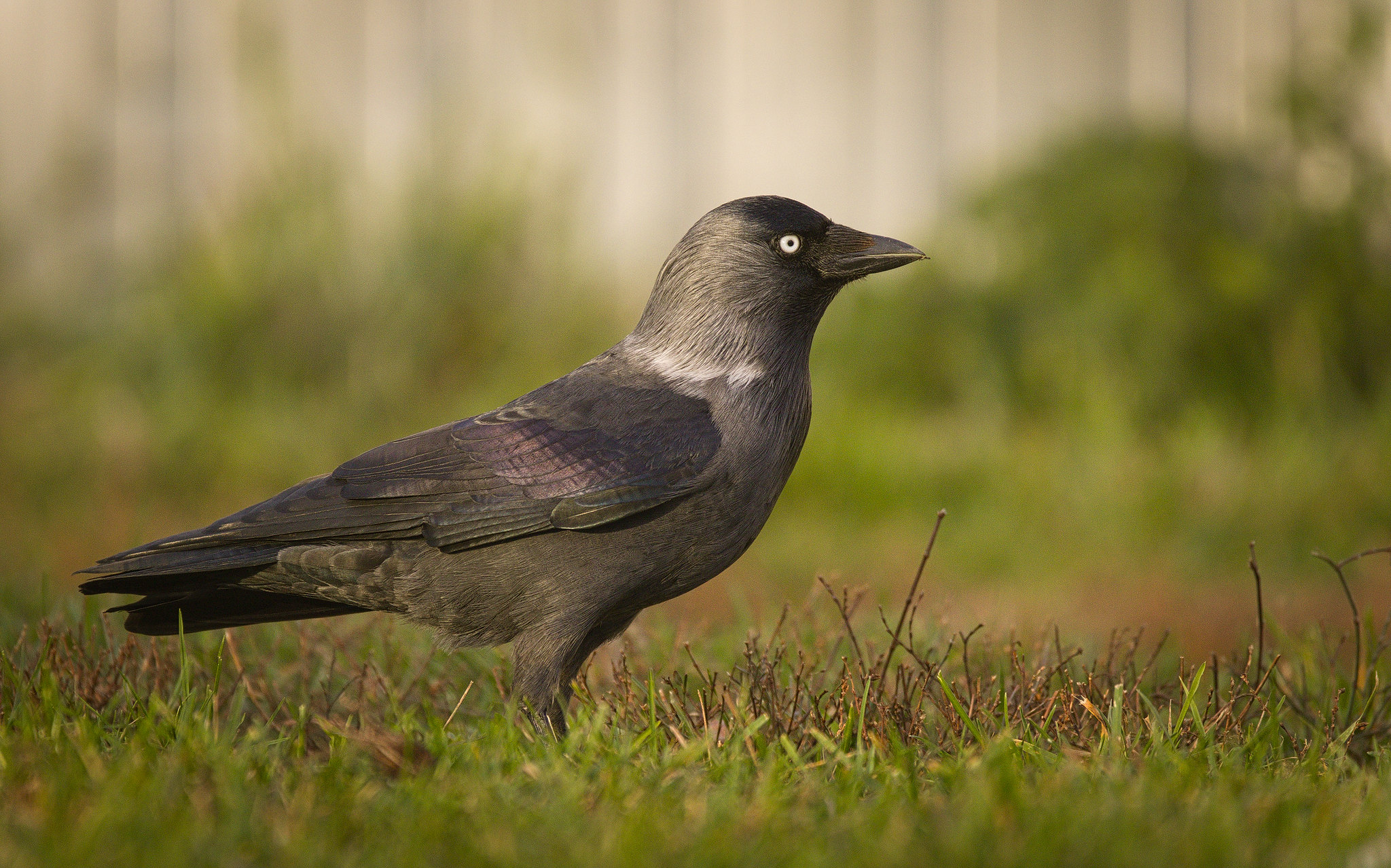
Jackdaw
Smaller and short-tailed, dark with a paler grey nape and a whitish eye. It has no white on the wings or belly.
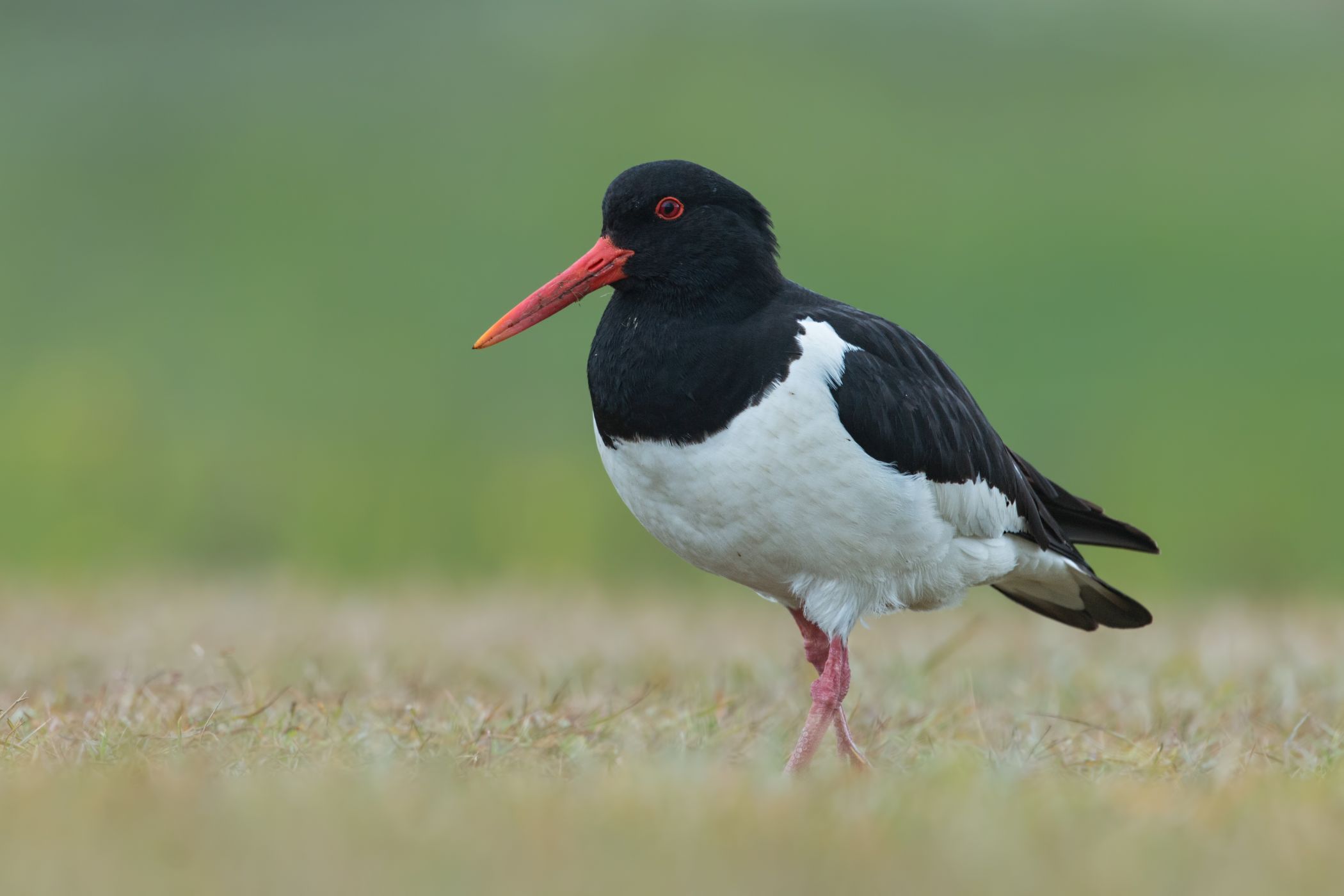
Oystercatcher
A shore wader with a long orange-red bill and pink legs. The tail is short, and white patches show on the wings in flight.
What people ask about the Magpie
Do magpies really steal shiny things?
Folklore in Italy, Britain and France says so, and Rossini's opera La gazza ladra rests on the idea. A recent study found little to support it.
How many young magpies survive their first year?
Few. Colour-ringing near Sheffield showed just 22% of fledglings alive a year on. After that, adults survived at 69% a year, giving an average total lifespan of 3.7 years for birds that got through their first year.