
A Dunnock spends much of its life shuffling about under bushes, easy to dismiss as just another small brown bird. Watch it for a minute and the behaviour gives it away: the wings flick, rivals squabble, and its family life turns out to be anything but plain for a garden bird in Britain.
Wing-flicking, rivals and shared territories
No other European small brown bird of this size flicks its wings the way a Dunnock does. It happens most during boundary disputes and when males compete to mate, which earned the bird the old nickname “shufflewing”.
Females keep ranges that hardly ever overlap. Males are another matter: two or more sometimes defend one patch together under a strict pecking order, with older birds on top and first-years below. Close male relatives almost never team up.
Food decides who has the upper hand. Where it lies in dense patches, female ranges shrink and one male can guard a female for himself; when it is scarce, the females spread out and the advantage passes to them.
A thin warble that gives a quiet bird away
For a bird that keeps so low a profile, the Dunnock is surprisingly easy to place by ear. Its main call is a high, insistent ‘tseep’, often paired with a weak little trill.
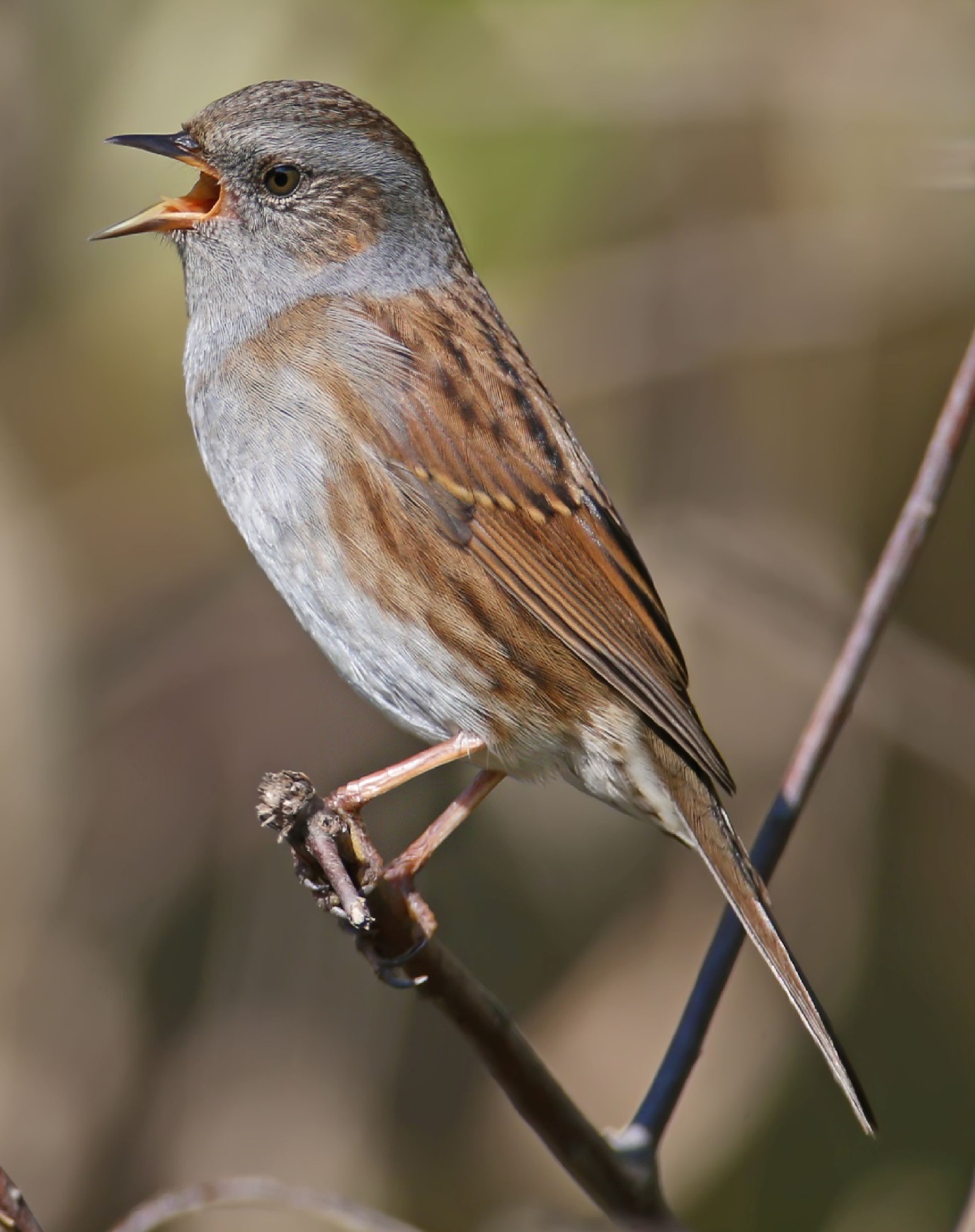
The song itself is quick, thin and tinkling. Beginners mix it up with the Wren’s louder, longer song, but the Dunnock’s is shorter and weaker and never repeats a trill partway through.
Ground feeder with a winter taste for seeds
Dunnocks forage on the ground through woodland, shrubberies, gardens and hedgerows. Much of what they pick up is small creatures that live on decaying matter, and in winter seeds make up a larger share.
In cold months, scatter seed on the ground beneath a shrub rather than on a high table. That is where this bird prefers to eat.
One female, two males and a shared nest
The commonest arrangement in the wild is polyandry: a female pairing with several males at the same time, something few birds do. DNA fingerprinting shows that chicks in one brood often have different fathers. Mating takes about a tenth of a second and can be repeated over 100 times in a single day.
Each male feeds the young roughly in line with his share of the mating, so you may see two males and a female carrying food to the same nest. Other set-ups occur as well, from simple pairs to two males sharing several females.
Give a garden plenty of food and the balance shifts. Female territories shrink sharply, and males find it easier to keep a female to themselves.
The nest is placed low down in a bush or small conifer, built mainly of twigs and moss, with a soft wool or feather lining. Three to five eggs are laid, plain blue without any spots.
Grey head, streaked back, needle-fine bill
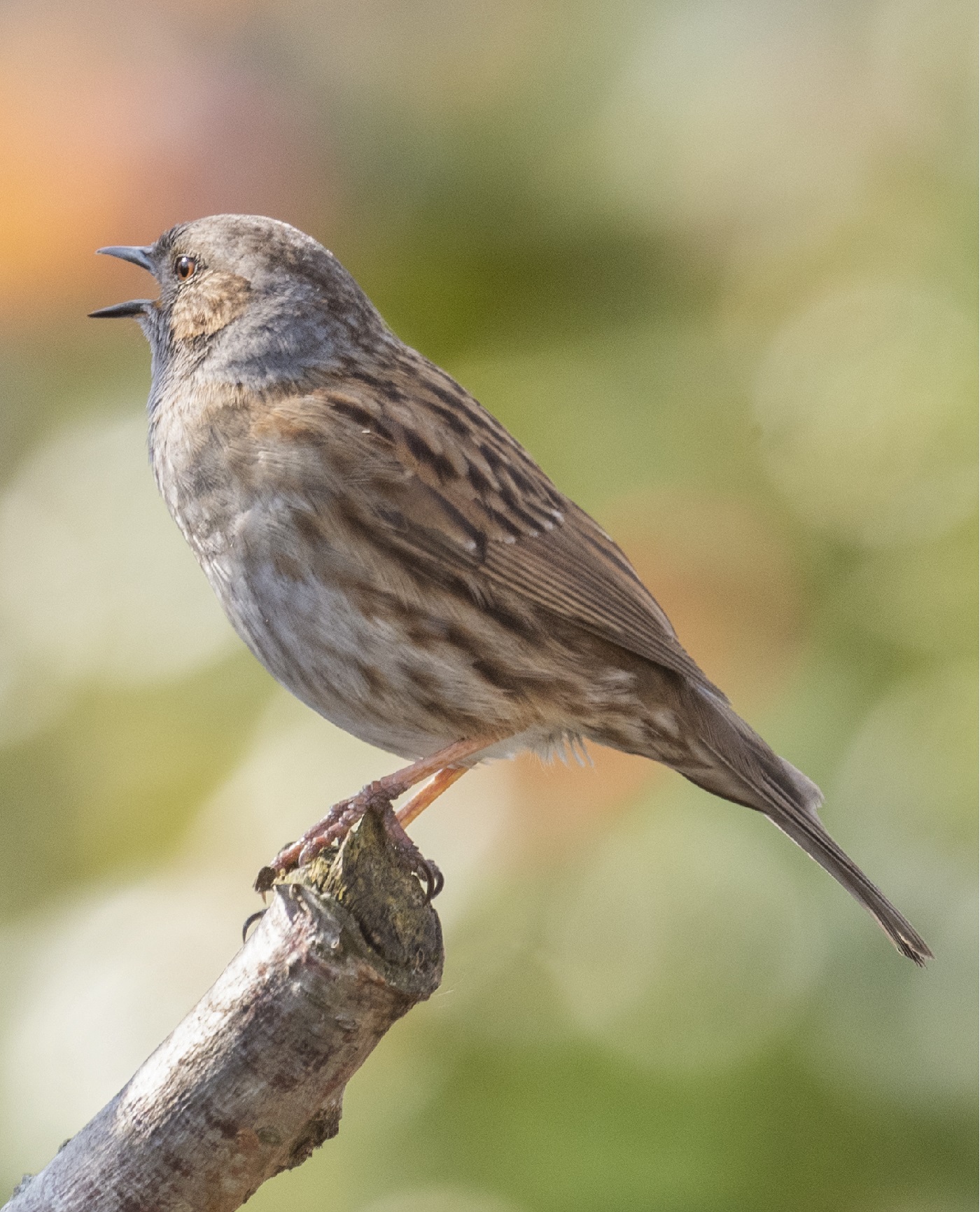
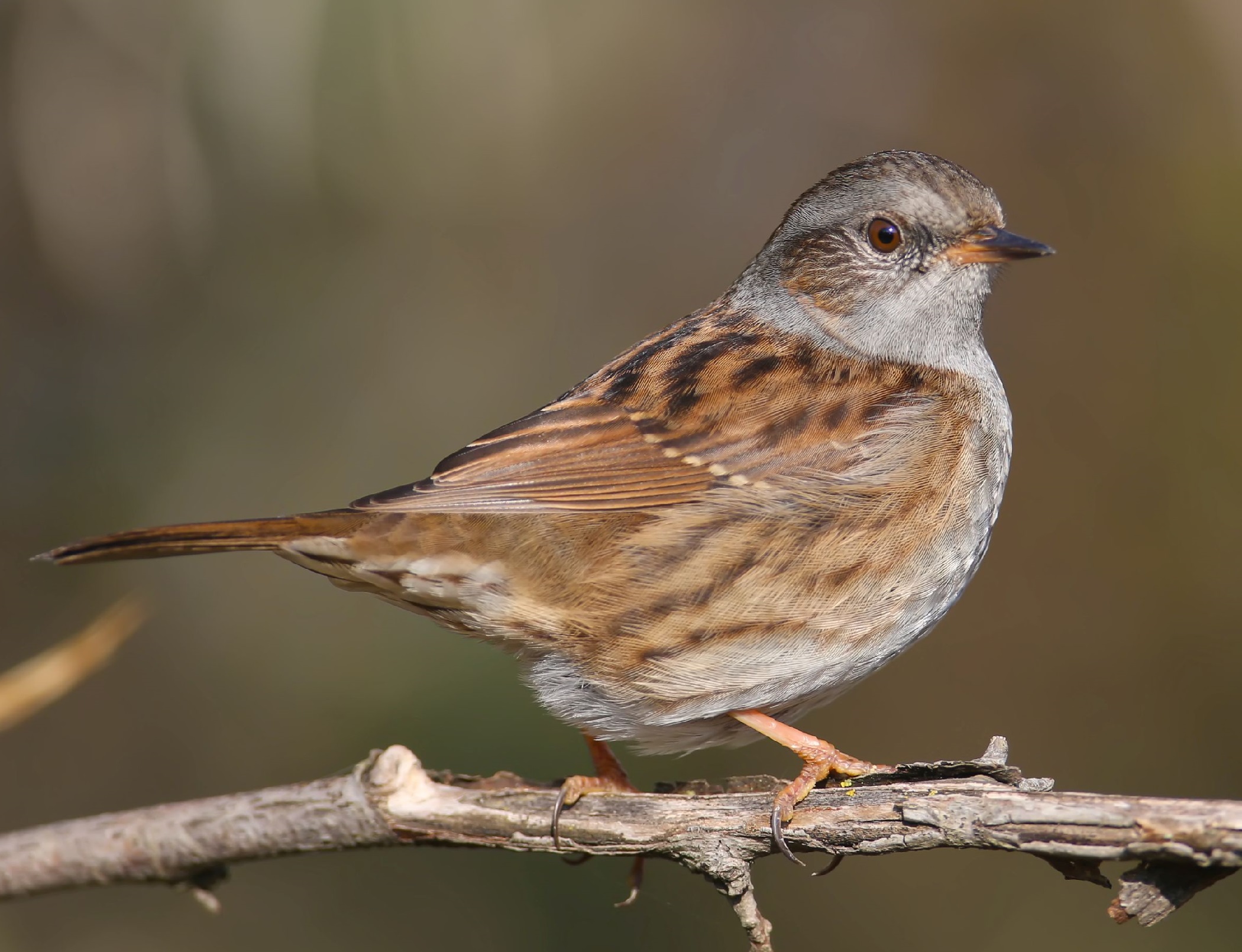
At 13–14.5 cm a Dunnock matches a Robin for size, but the colours are muted. The back is brown with blackish streaks, the underside brownish and the head a dull grey. Both sexes look alike.
That streaky back recalls a small House Sparrow, and the old names hedge sparrow and hedge warbler did not help. Check the bill: a Dunnock’s is fine and pointed. Young birds have browner heads, fluffier feathering and heavier streaks.
Dunnock presence through the year
Our source gives no singing season, so the chart shows presence. Britain and Ireland have their own subspecies, and seeds matter more to the diet in winter.
Field photos of the Dunnock
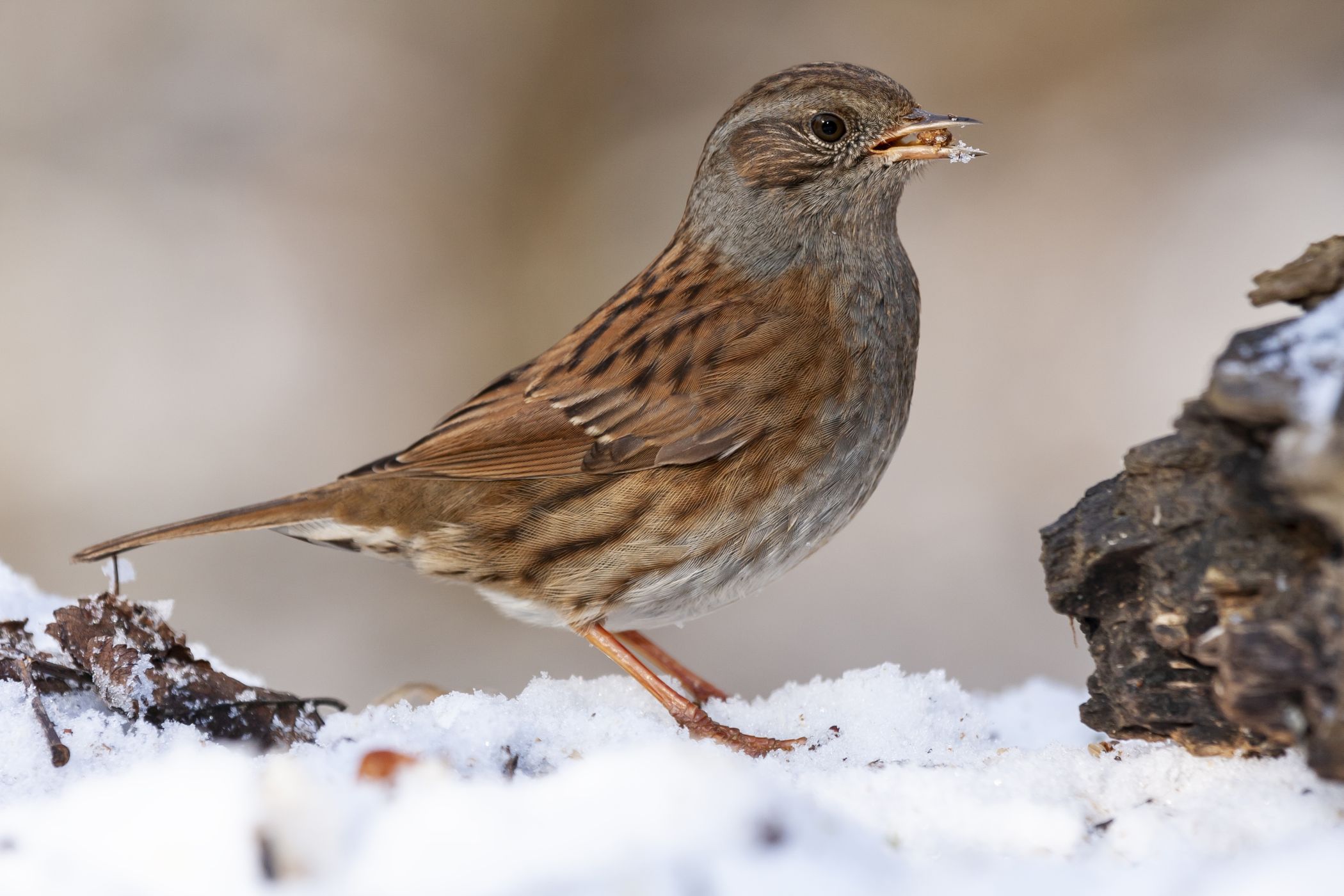
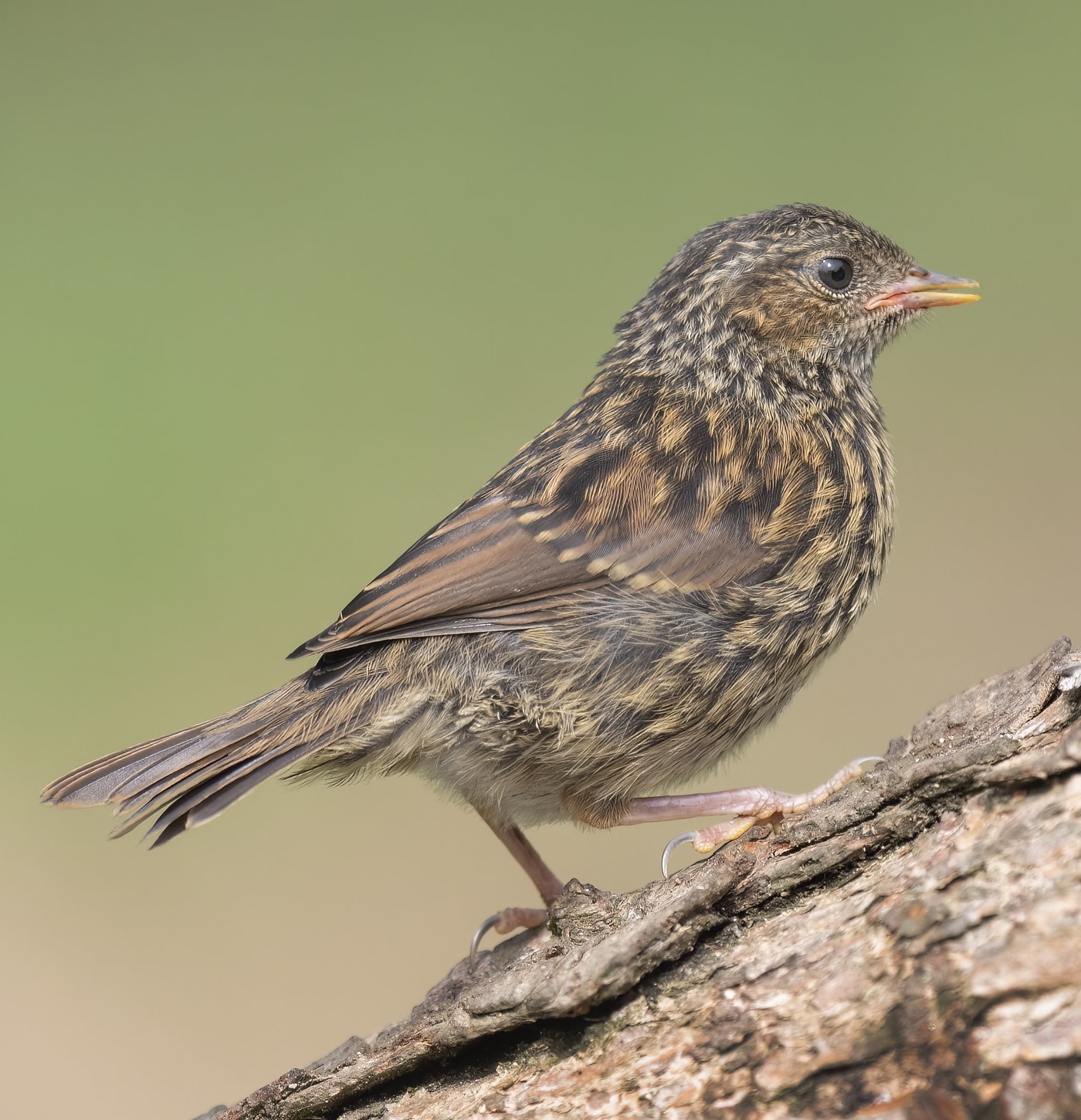
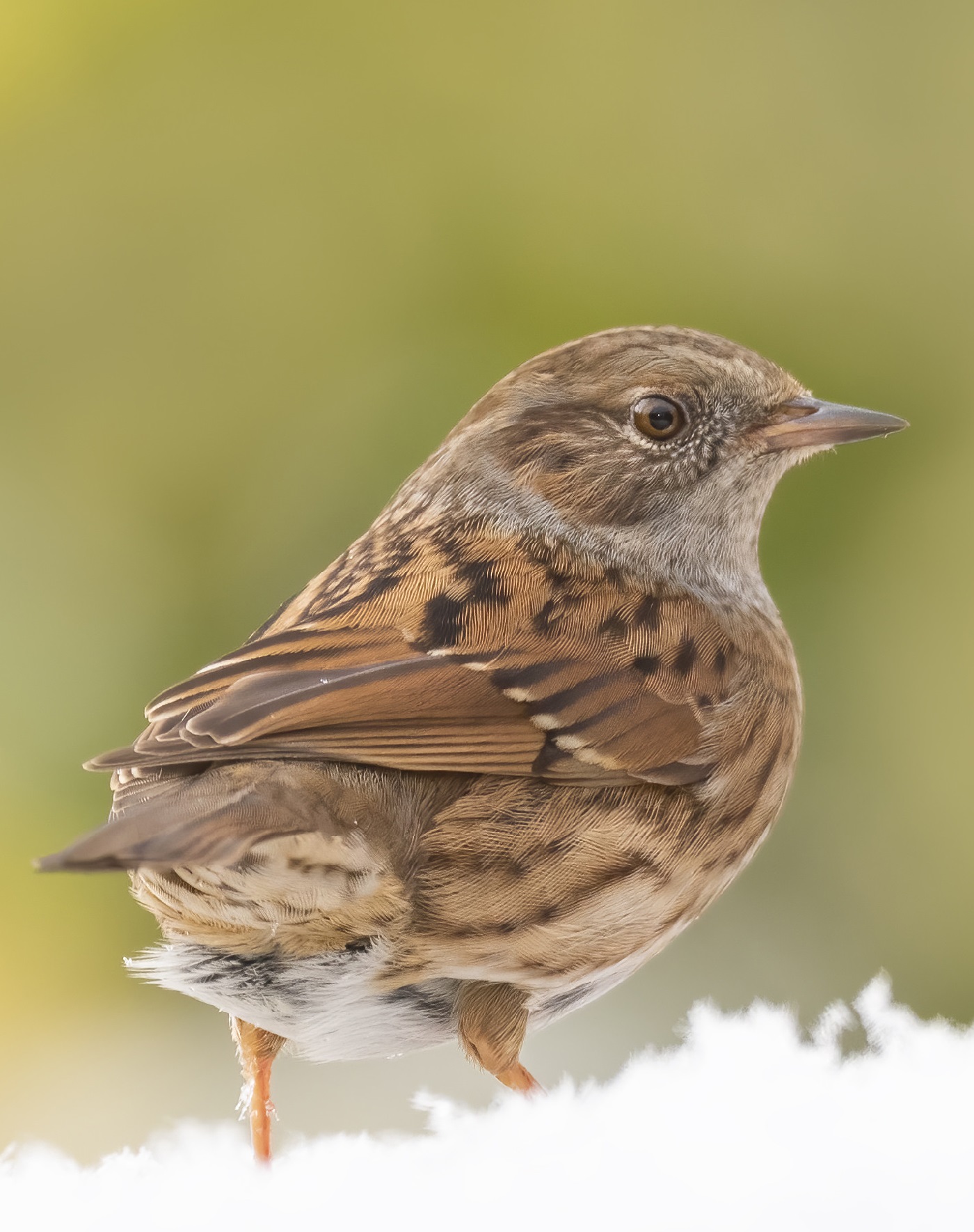
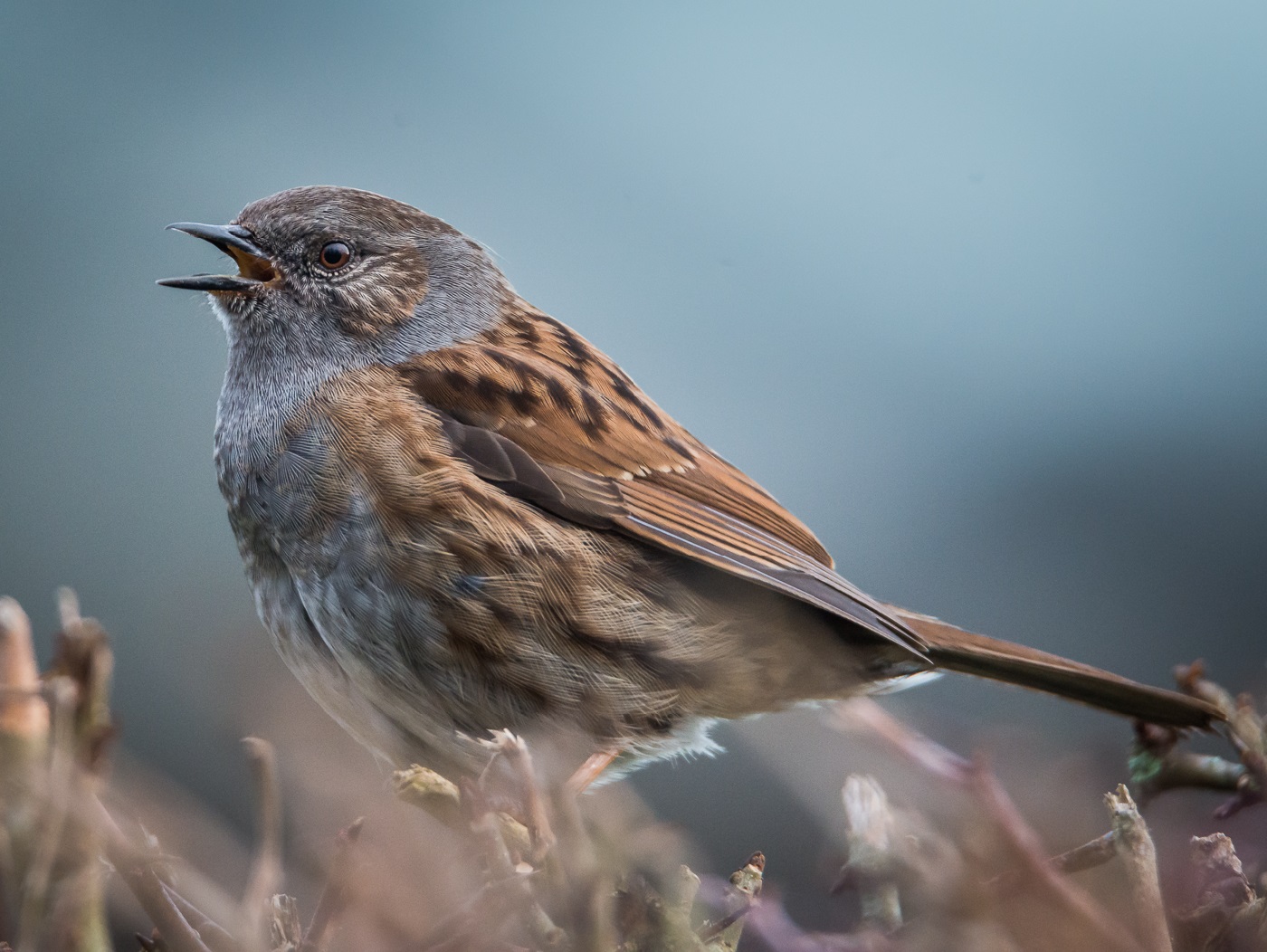
Streaky brown birds that share the hedge
Bill shape and the restless wings are the quickest checks.
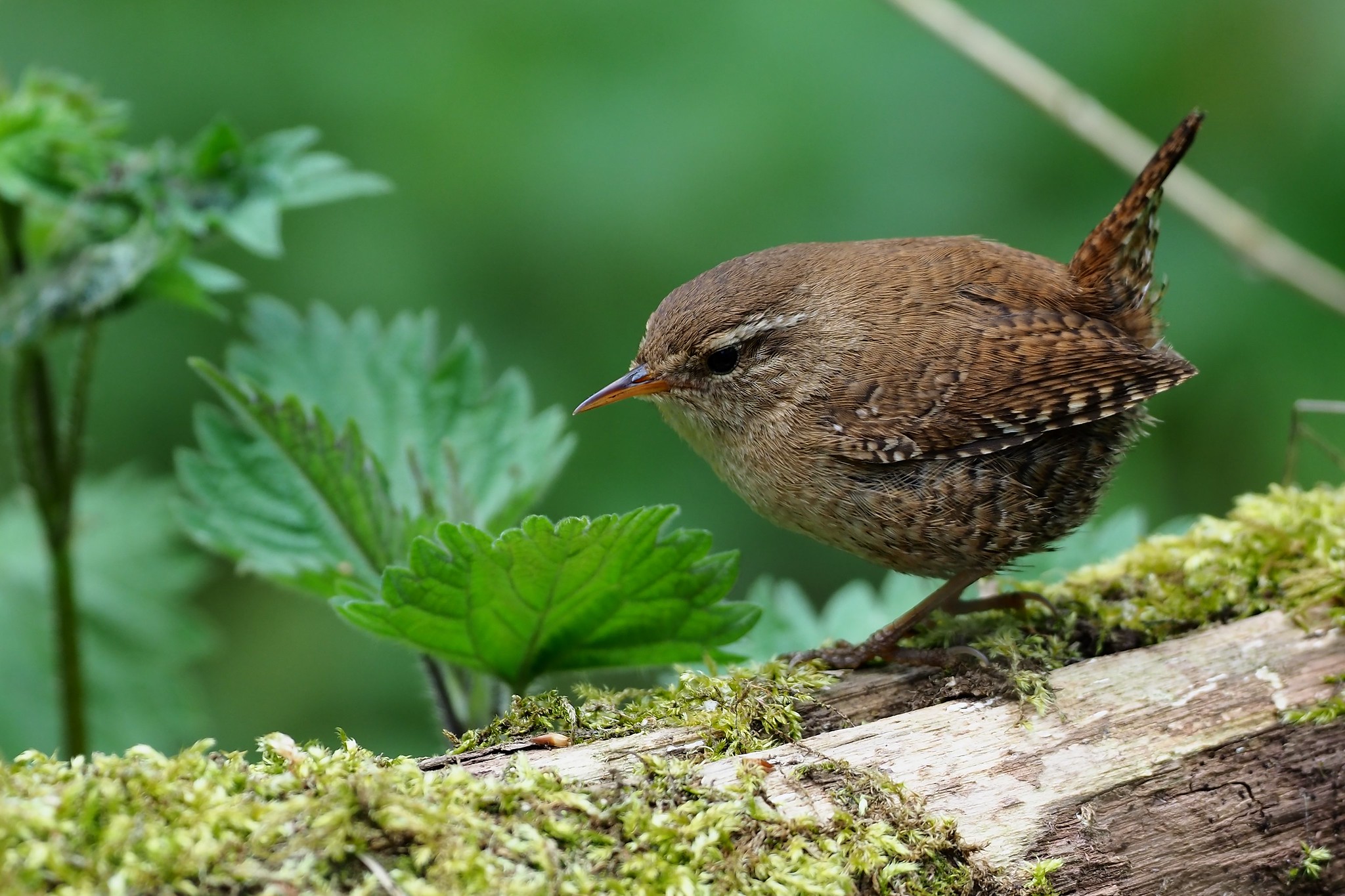
Wren
Tiny by comparison and stub-tailed; its song is louder and longer, packed with repeated trills.
A dull name, a wide family, a long journey
Where does the name Dunnock come from?
It joins the old English word dun, a dingy dark brown, to the diminutive ending ‘ock’, so it amounts to ‘little brown bird’. The Latin modularis means modulating or singing.
Is the Dunnock a kind of sparrow?
No. It belongs to the accentors and is the most widespread of them; most of its relatives keep to mountains. In temperate lowlands it is the only accentor you are likely to meet.
Do Dunnocks live outside Europe?
Yes. Their native range reaches into southwest Asia as far as the Caucasus and northern Iran, and in the 19th century they were deliberately introduced to New Zealand, where they are now widespread.