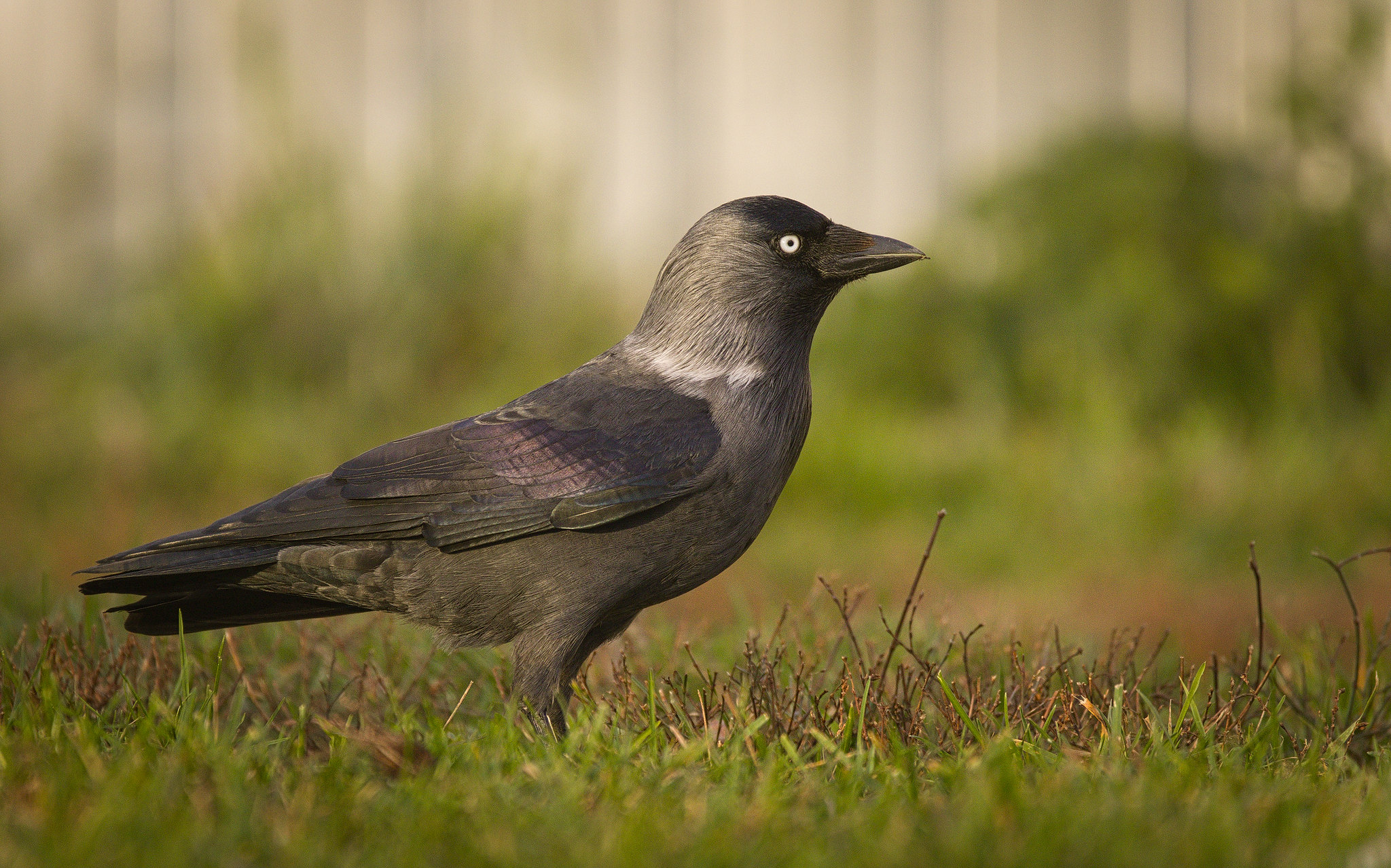
Chimney pots, church towers, sea cliffs, old trees with holes in them: wherever a sheltered cavity sits next to open ground, Jackdaws are likely to move in. Smaller than the other black members of the crow tribe, this one is highly sociable, and you will seldom see it without company.
Holes for nesting, open ground for feeding
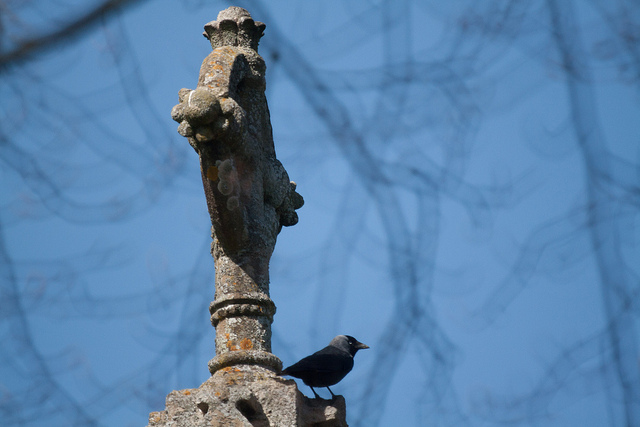
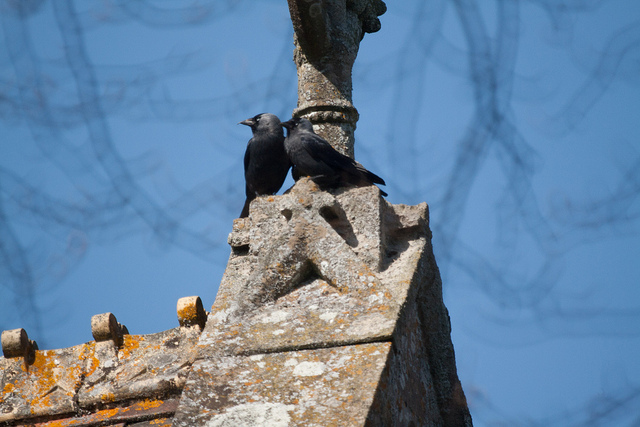
What a colony needs above all is a sheltered hole. Tree cavities, cliff crevices, ruins, houses, chimneys and church steeples all qualify, and the supply of such sites decides whether jackdaws settle at all.
Around the nest they want a mix of big trees, buildings and open land such as pasture or arable fields. The species gains wherever woodland is cleared for farming. Wide-open fields it leaves mostly to the Rook, and thicker woods to the Jay.
British numbers have climbed: from an estimated 780,000 birds in 1970 to about 2.5 million in 1998, with upland counts still rising in 2010.
Best at first light and at the evening roost
Get out early. Jackdaws work streets, bins, gardens and tips mostly in the first hours of the morning, while few people are about. Town birds are far tamer than country ones, which keep their distance in farmland and woods.
Then watch them feed. They strut briskly on short legs, head down, flicking over clods and probing the soil. Some even perch on sheep to pick off ticks or pull out wool for the nest. In north-west England they have been seen foraging beside starlings, gulls and Lapwings.
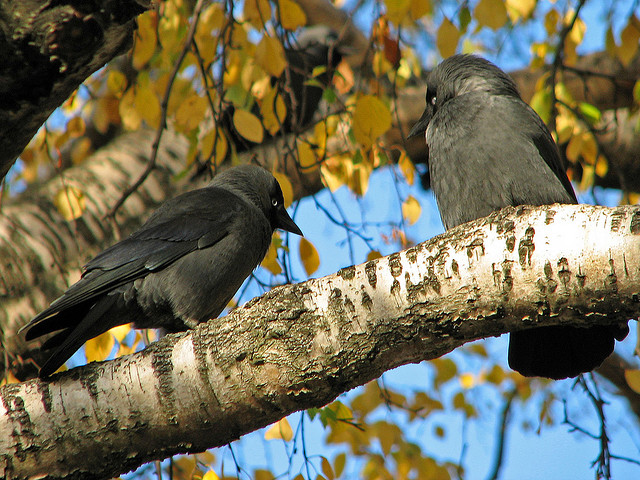
Autumn brings the big numbers. Flocks swell and gather at dusk to roost together, sometimes several thousand at one site, with mated pairs sitting side by side. Rooks often join them.
Stay with one flock and the pecking order shows. A bird squaring up lowers its bill and raises its nape; mates groom one another's heads.
Why the old names sound like the call
The everyday note is a metallic, squeaky ‘chyak’ or ‘kak’, usually doubled and often given on the wing. ‘Daw’, the native English name, is thought to imitate one of the commonest calls, and ‘jack’ may echo the same sound.
Nesting brings more notes. A male handing food to his mate, or a parent calling its young, gives a ‘kiaw’; the begging female replies with a longer ‘kyaay’. The alarm is a rasping ‘arrrrr’, and it brings other jackdaws in to mob the intruder as a group.
Perched birds often chatter to each other, and tame ones can be taught to copy human speech.
Grey shawl, pale eye, short bill
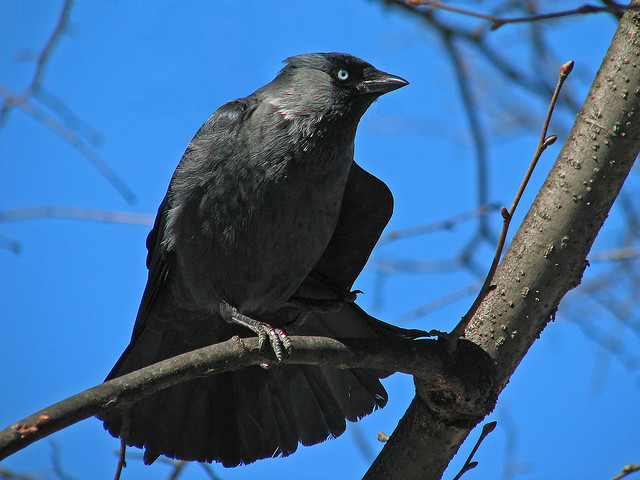
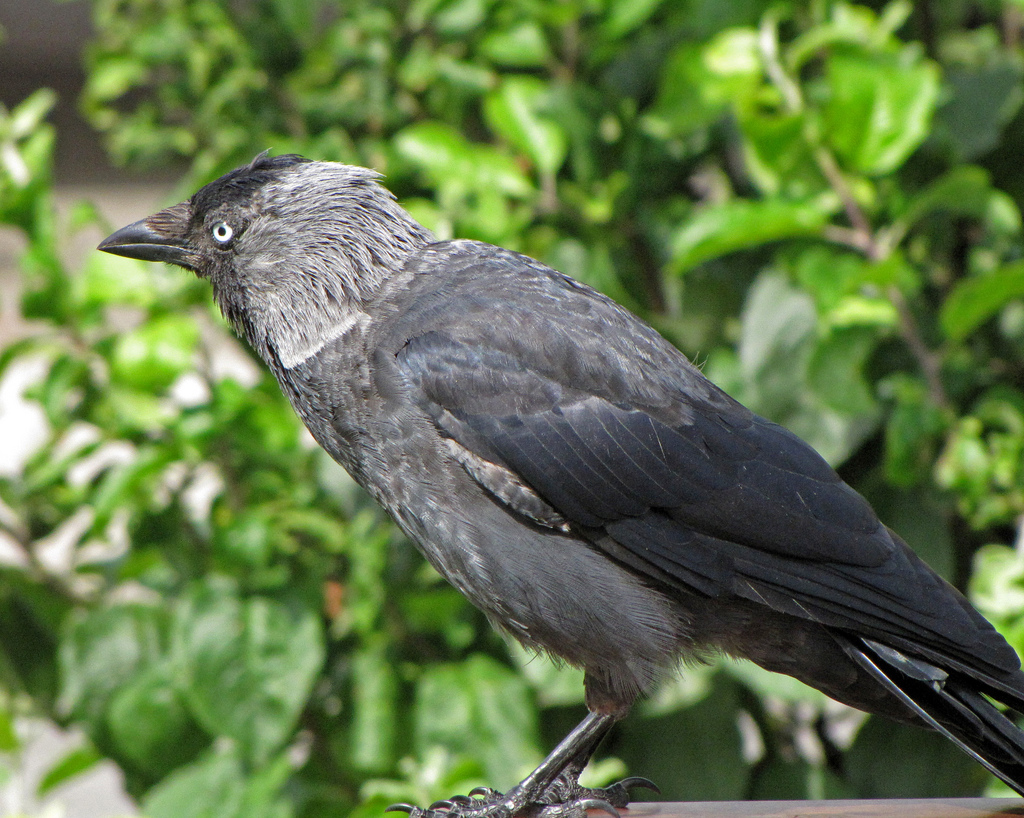
Seen well, a Jackdaw is hard to mistake. It is glossy black with a purple sheen on the crown, light grey to silvery cheeks and nape, slate-grey underparts and a short, stout black bill. The pale, silvery eye gives it away.
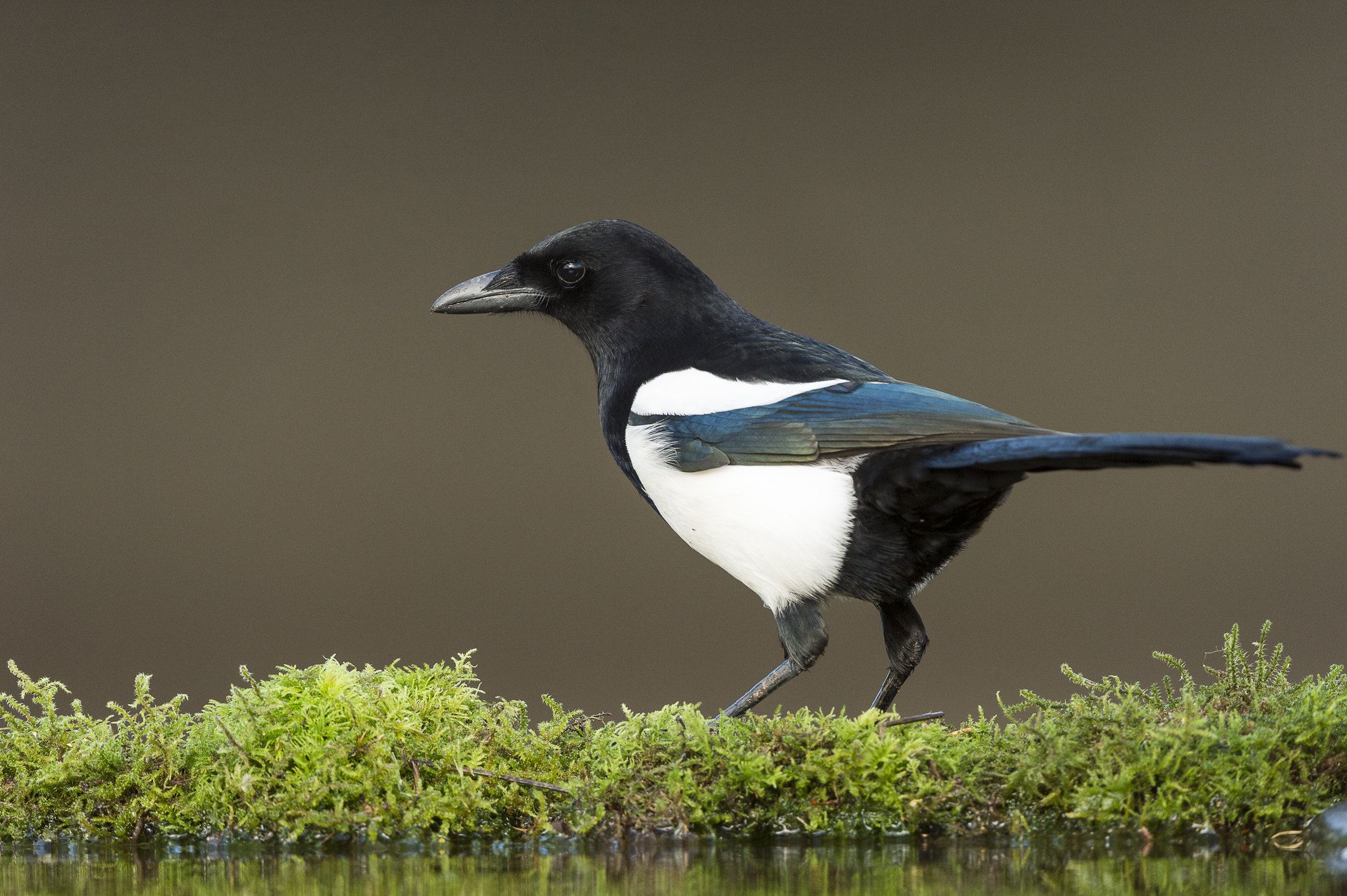
At range the problem is a Rook, or in flight a pigeon or a Chough. Compared with other crows, look for the smaller size, quicker and deeper wingbeats, narrower wing tips with less obvious fingers, a short thick neck and tight flocks. Choughs have red bills and legs; a Jackdaw's are black, and its underwing is evenly grey.
Colonies in spring, big roosts in autumn
Most British and Irish jackdaws stay all year. The full moult runs from June to September, flocks grow through autumn, and now and then a bird of the paler Nordic race spends the winter in England.
Field photos of the Jackdaw
Small crow, three possible mix-ups
When the birds are far off, size and wing action help more than colour.
Chimneys, partners and a Latin name
Why do jackdaws block chimneys?
A pair builds by dropping sticks into a crevice until they jam into a platform, then makes the nest on top. In a chimney that pile can grow until it stops the flue, and some nests have crashed down into the fireplace with a bird still on them.
Do jackdaws pair for life?
Almost always. Genetic tests found no sign of cheating, and pairings that last beyond six months tend to end only with a death. A widowed bird often loses its nest site and struggles to raise young alone.
Does the name monedula have to do with money?
Yes. Linnaeus took it from moneta, Latin for money, because jackdaws were said to pick up coins. An old word for a flock of them is a ‘clattering’.