
The peregrine is a crow-sized falcon with a blue-grey back and a black hood, best known for its dive. In Britain it breeds on sea cliffs and upland crags, above all in the north and west, but it has also moved onto cathedrals and tower blocks, so a city centre can be the easiest place to find one.
February to midsummer on the nest ledge
Egg-laying in the northern hemisphere falls between February and March, so late winter is when a pair settles on its ledge. Courtship is the most watchable part of the year: the birds spiral and dive together, and the male passes food to the female in mid-air while she flips upside down to take it from his feet.
Incubation of the 3–4 eggs runs 29–33 days. The chicks leave the ledge 42–46 days after hatching, which puts first flights in early summer, and they are fed by the adults for as long as two months afterwards.
Partners pair for life and come back to one site year after year. Many urban nests carry webcams, so you can follow a brood without disturbing it.
Learn the calls by ear, because descriptions are thin
Accounts of the peregrine dwell on speed and hunting and say little about its voice. Fix the sound from the recording above, then watch.
Spring is the time to be near a nest site, while the pair defends its ledge. Rival peregrines are seen off, and so, often, are Ravens and eagles that come too near.
Winter nights under the street lights
Most European peregrines stay near home through the winter, and adult males in particular often never leave the breeding territory. Long journeys are mainly made by Arctic breeders.
Artificial light has opened a new niche. City falcons keep hunting into dusk and after dark, and in the UK their catches now include Redwings, Fieldfares, Woodcocks and Starlings passing over at night.
J. A. Baker's The Peregrine is a diary of one such winter, October to April, near Chelmsford in Essex.
Black hood, white throat and a finely barred chest
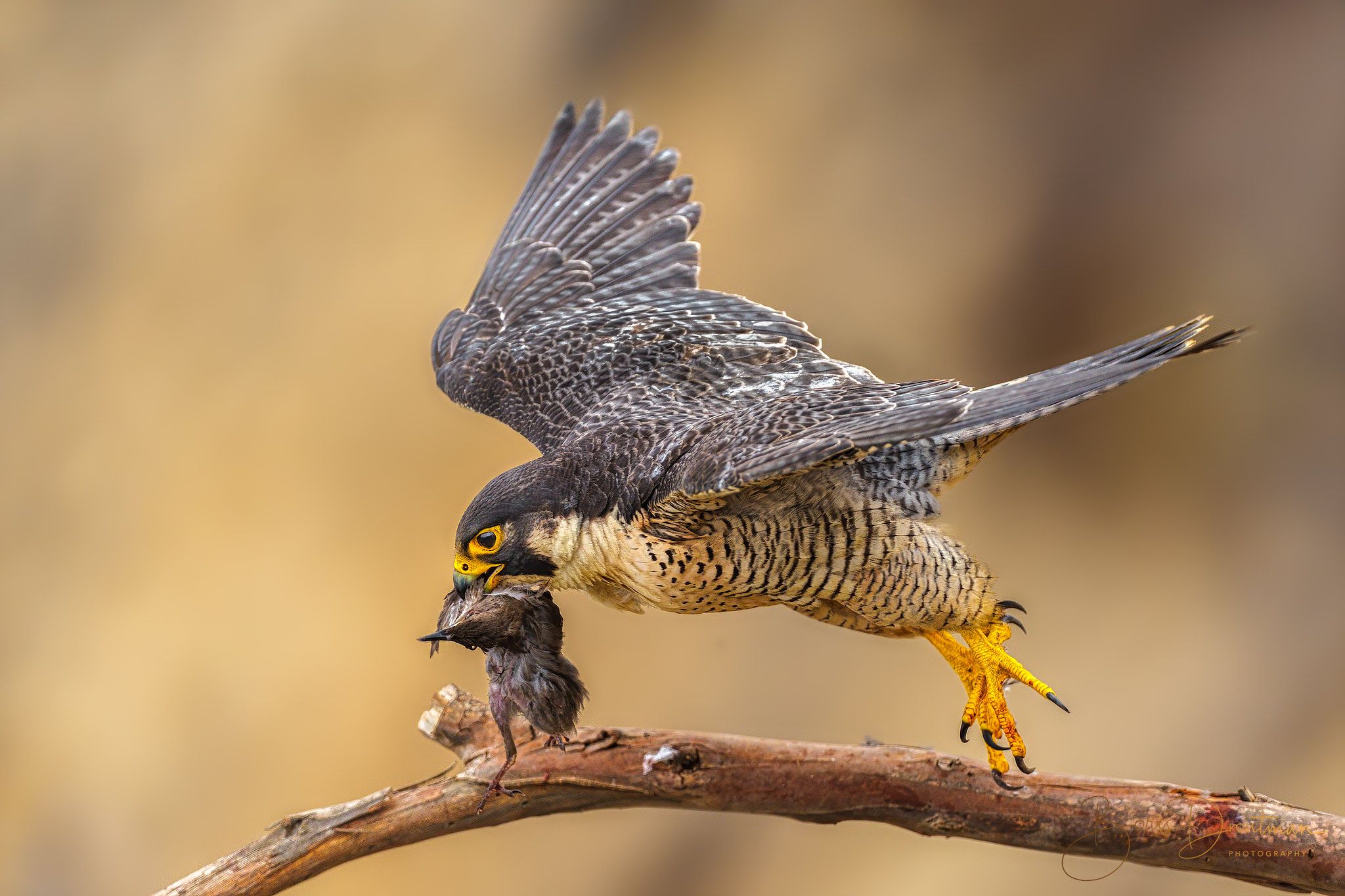
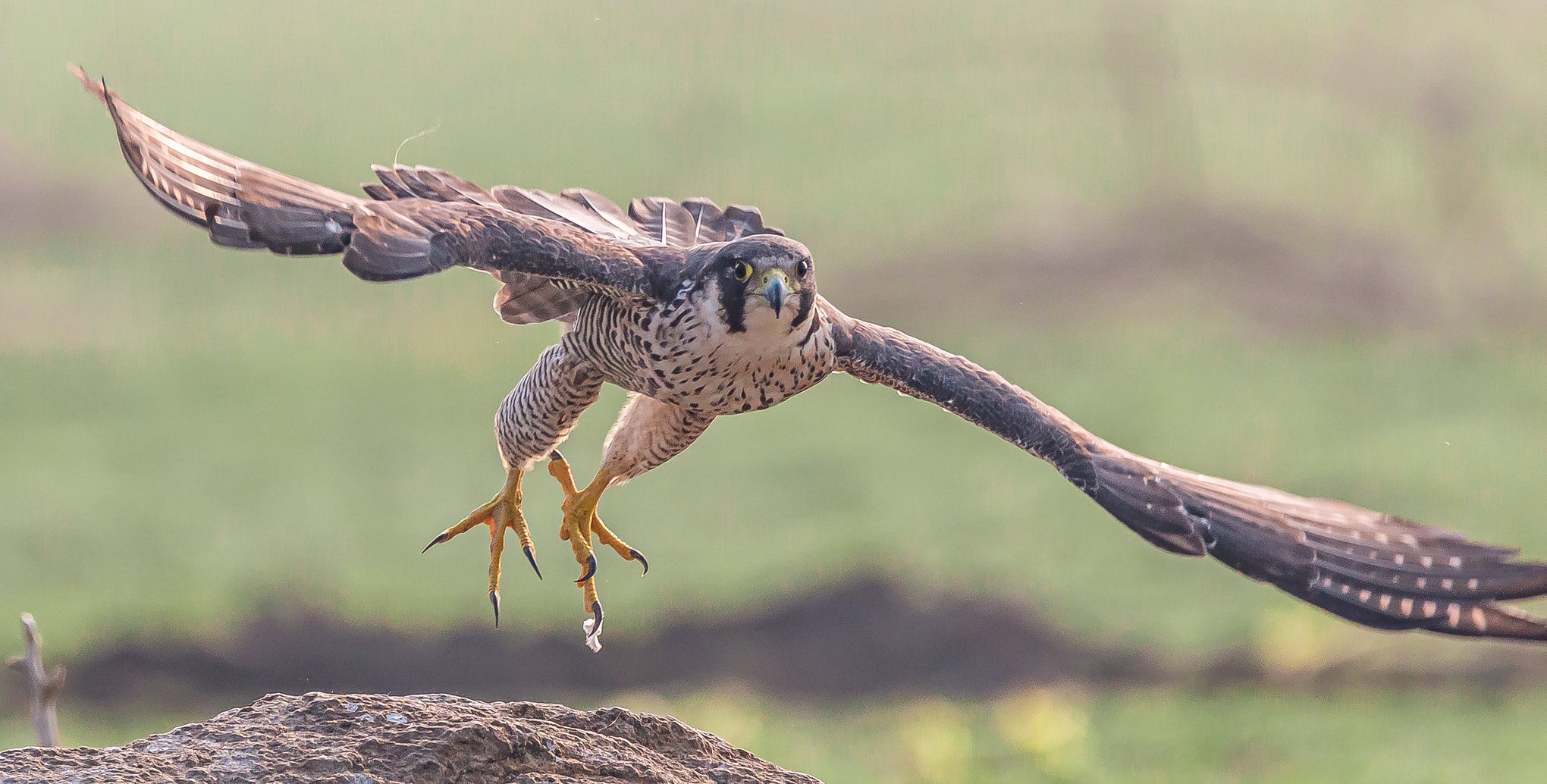
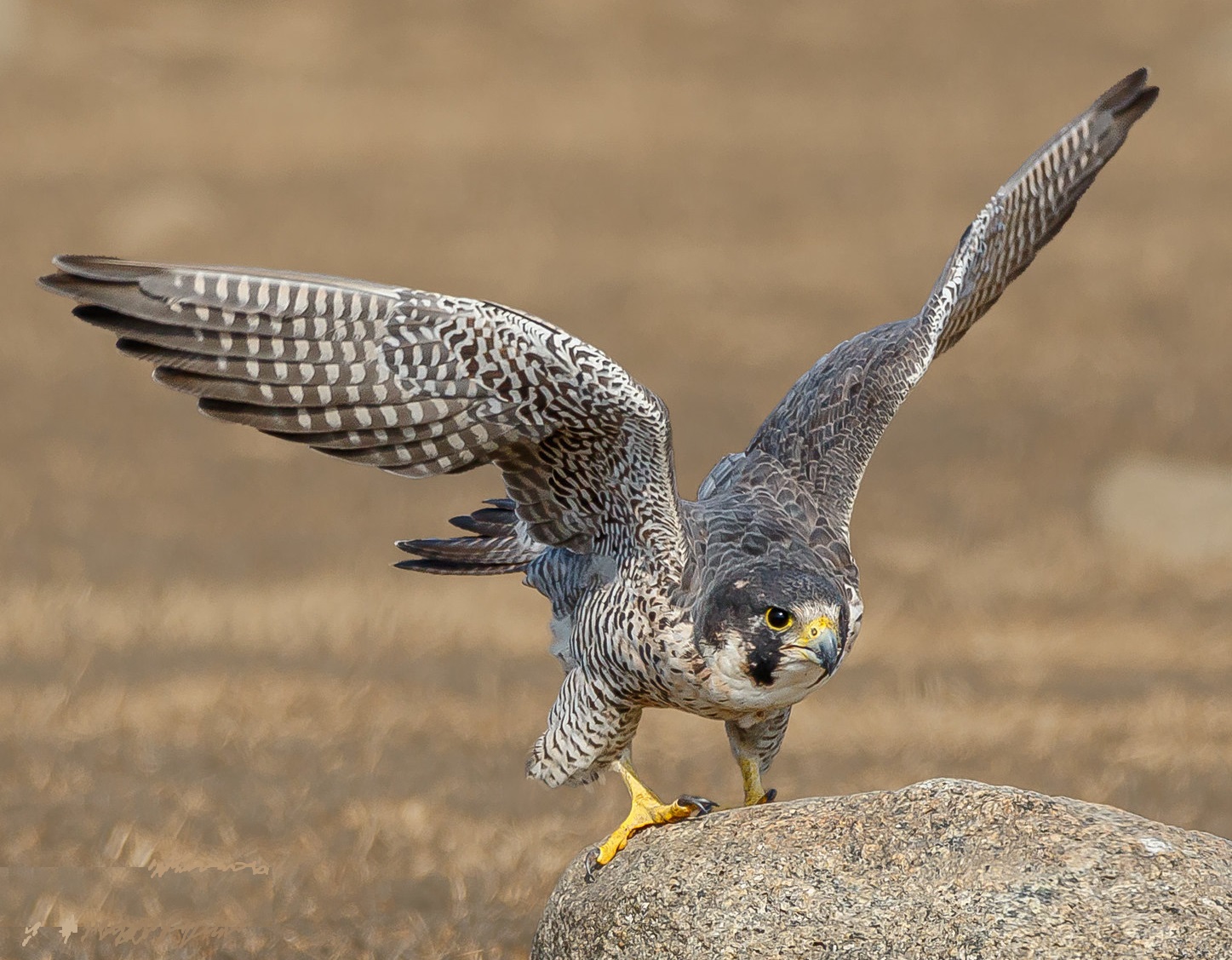
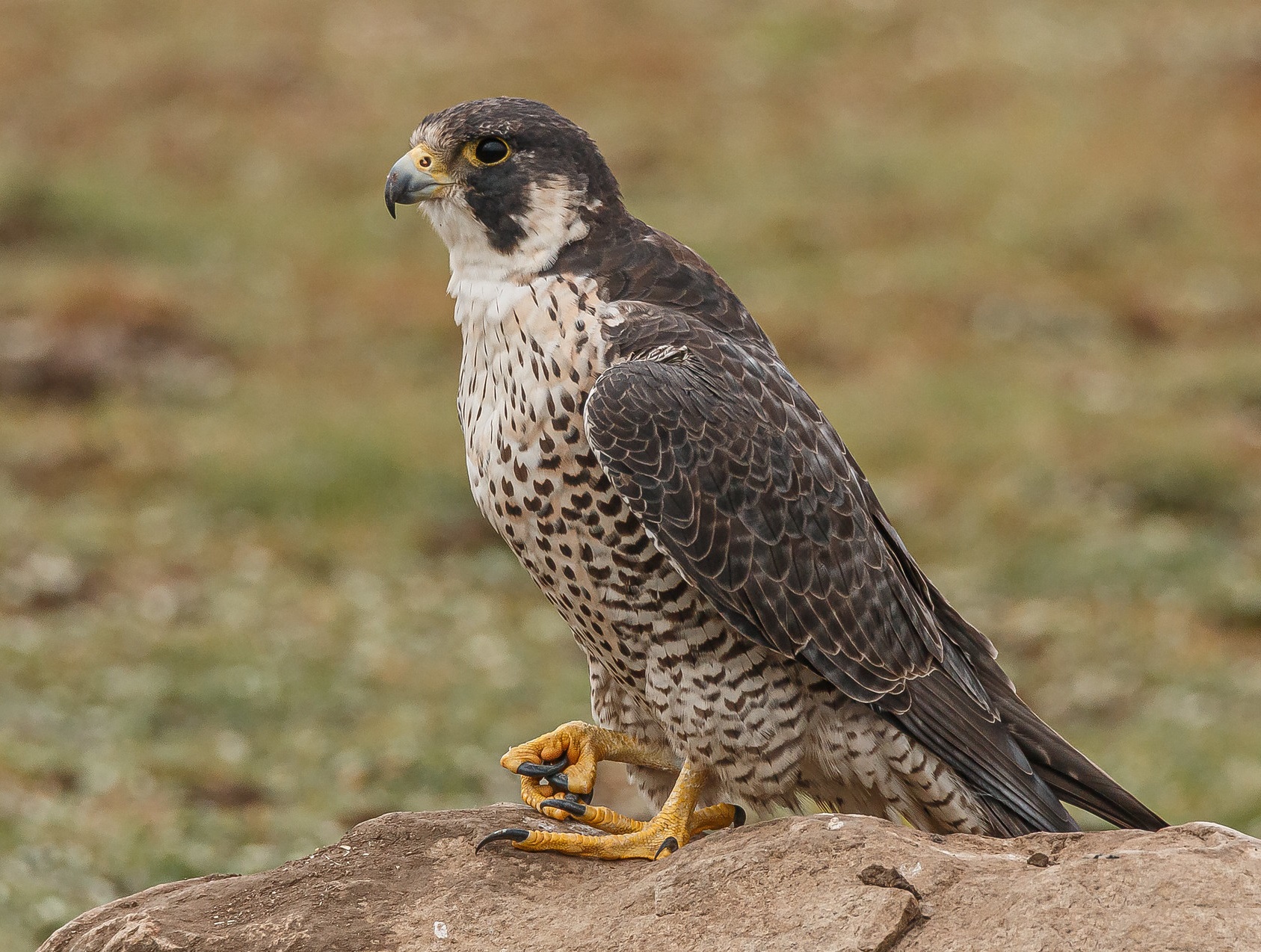
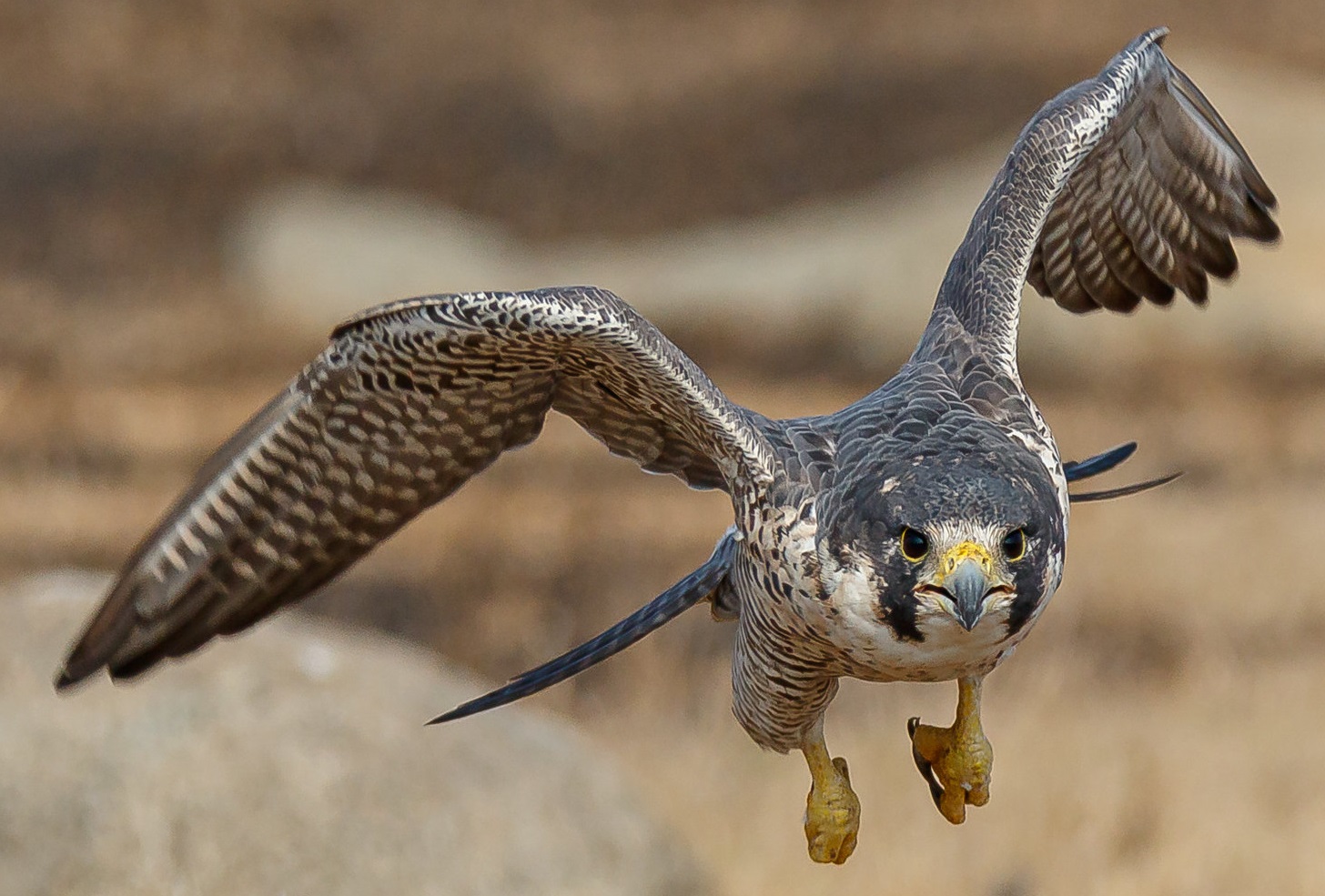
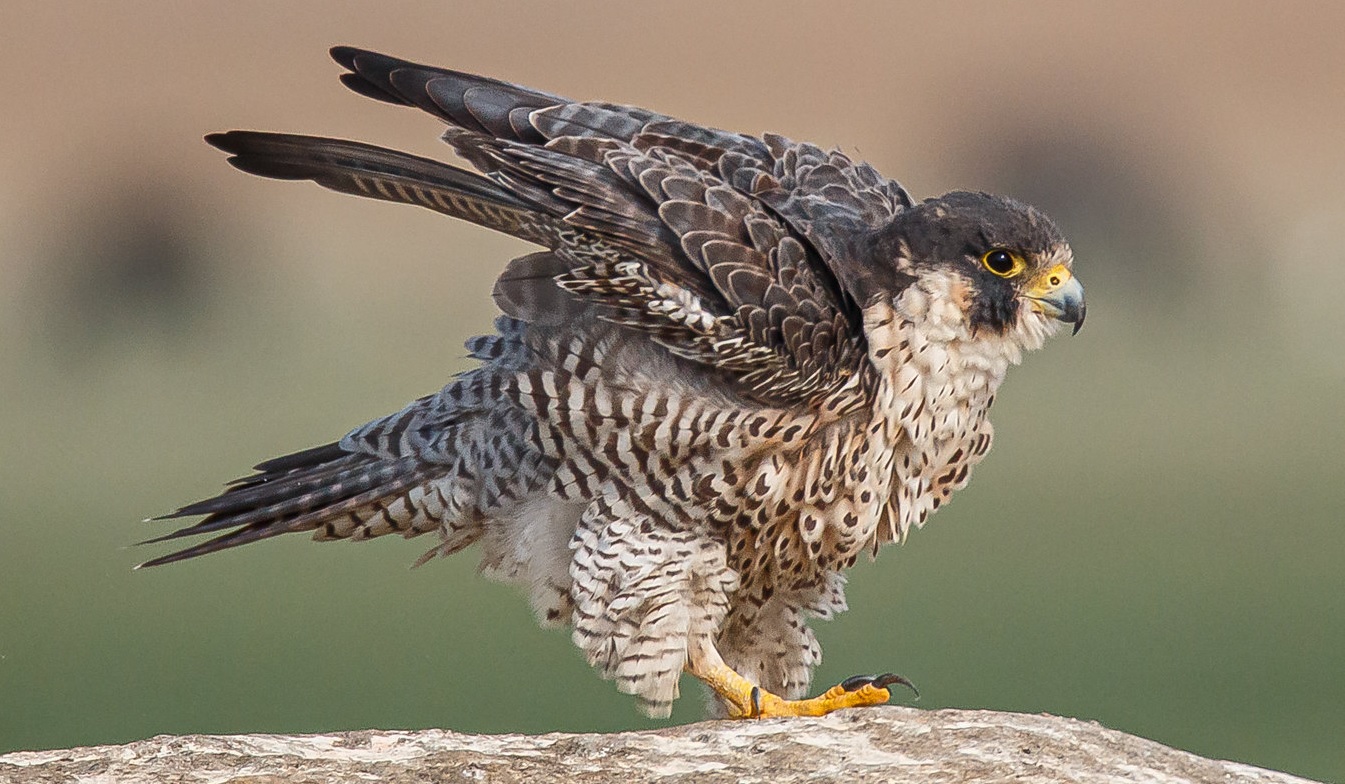
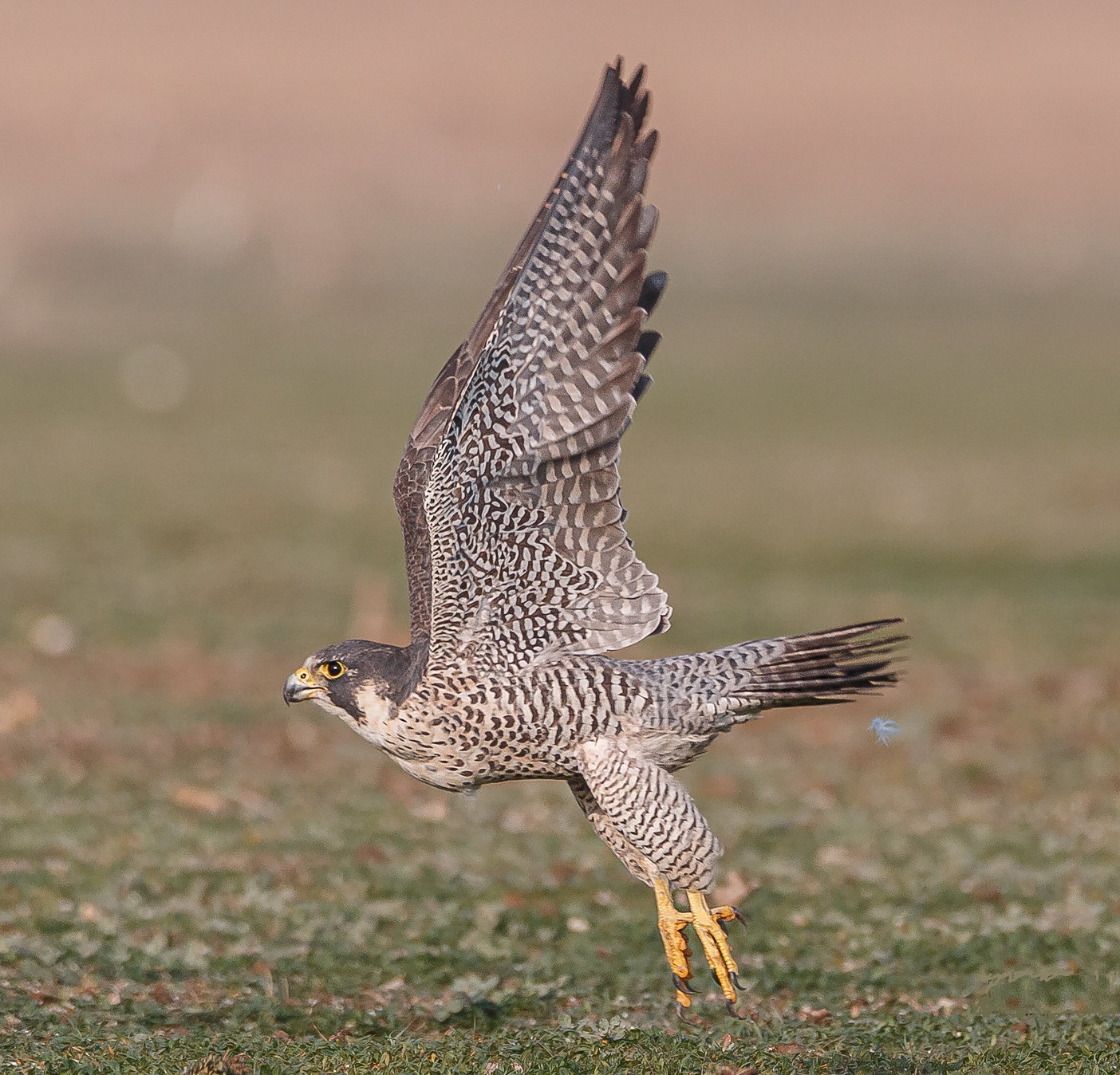
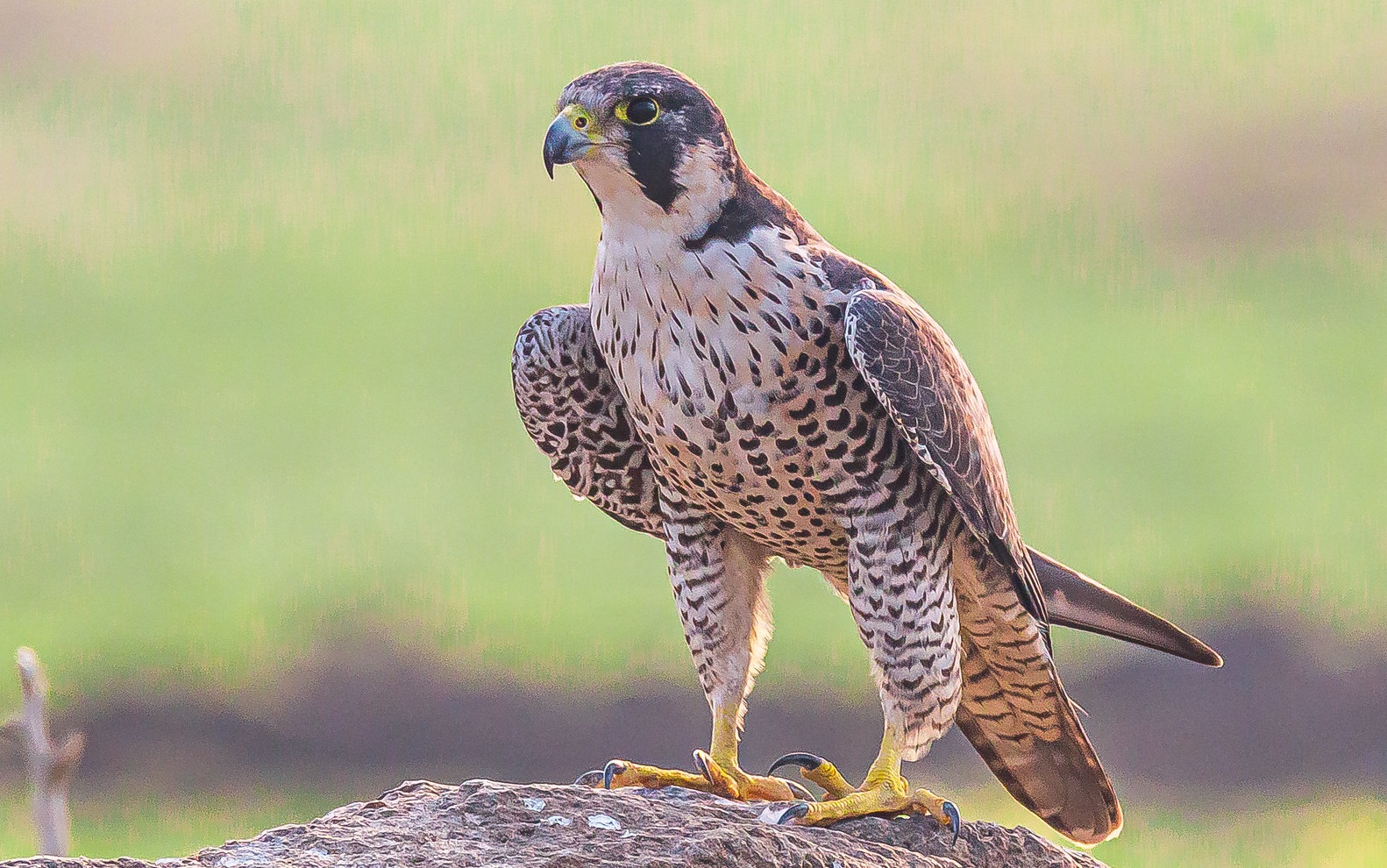
Adults are slate-grey to bluish-black on the back and on the long, pointed wings, which end in black tips. The crown and a heavy moustache are black, set hard against a white throat and pale neck sides. Below, white to rusty underparts carry thin dark bars.
The long, narrow tail is rounded at the end and finished with a black band and white tip. Feet and cere are yellow, the bill black. Young birds are browner and streaked underneath rather than barred.
As in many birds of prey, the sexes differ in size, with females up to 30% bigger than their mates.
Pigeons in town, almost any bird elsewhere
In cities the diet is mostly pigeons, and feral pigeons can make up 80% or more of what urban peregrines eat. Wood pigeons, collared doves, swifts, starlings, blackbirds and crows are taken as well.
Across its world range it takes roughly one bird species in five. Hunting peaks at dawn and dusk, over open water, marshes, valleys and fields. The falcon climbs, folds its wings and tail, and drops, hitting its target with a clenched foot before turning to catch it in the air.
Ledge activity from February, late hunting into winter
Laying in February and March opens the busiest stretch, which lasts until the young are independent in summer. From autumn, city birds hunt late into the evening under artificial light.
The Peregrine in different settings
Other raptors with grey backs
Wing shape and the way it attacks are the quickest checks.
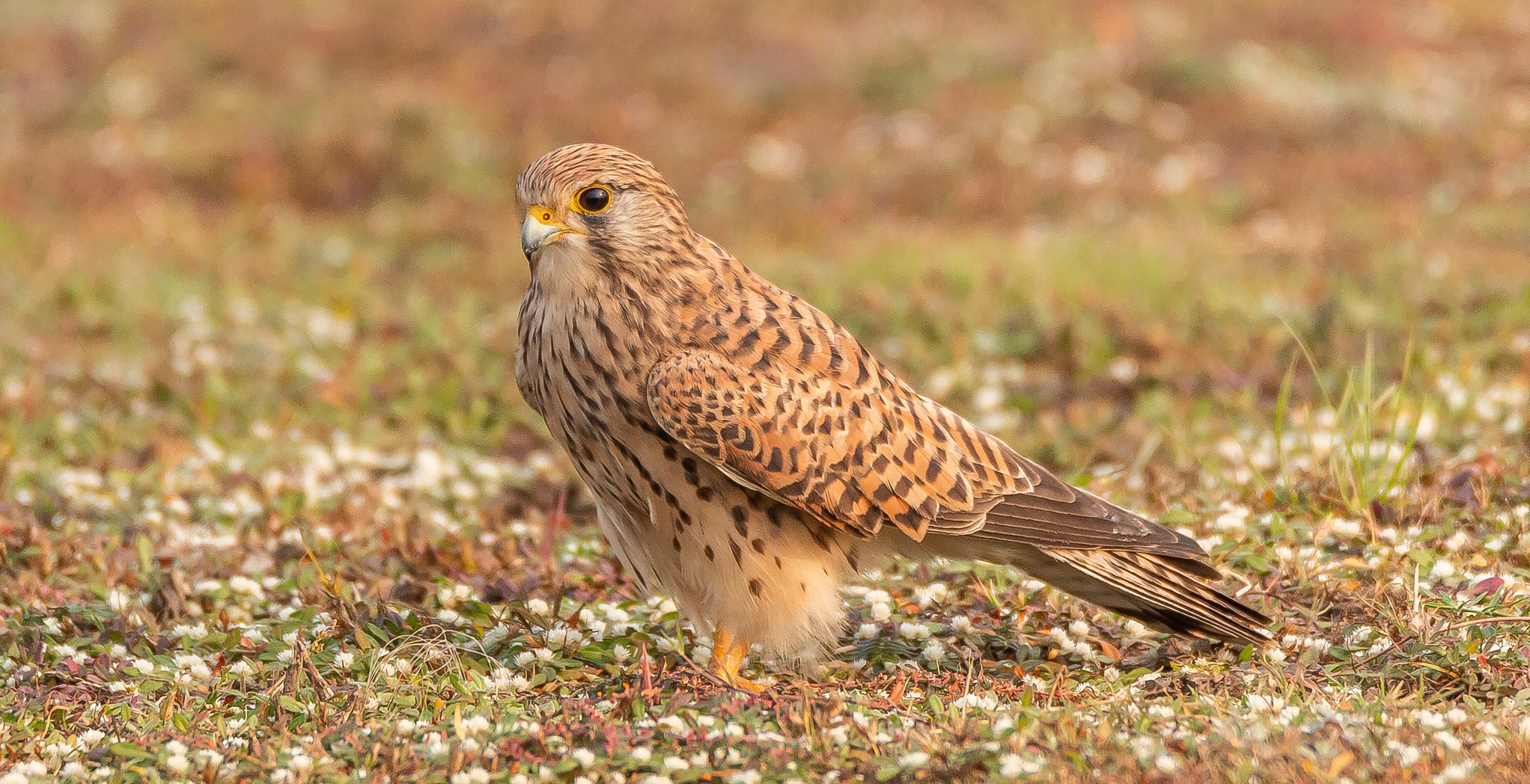
Kestrel
Much smaller and chestnut above with black spots; hovers and makes a short, steep drop instead of a long stoop.
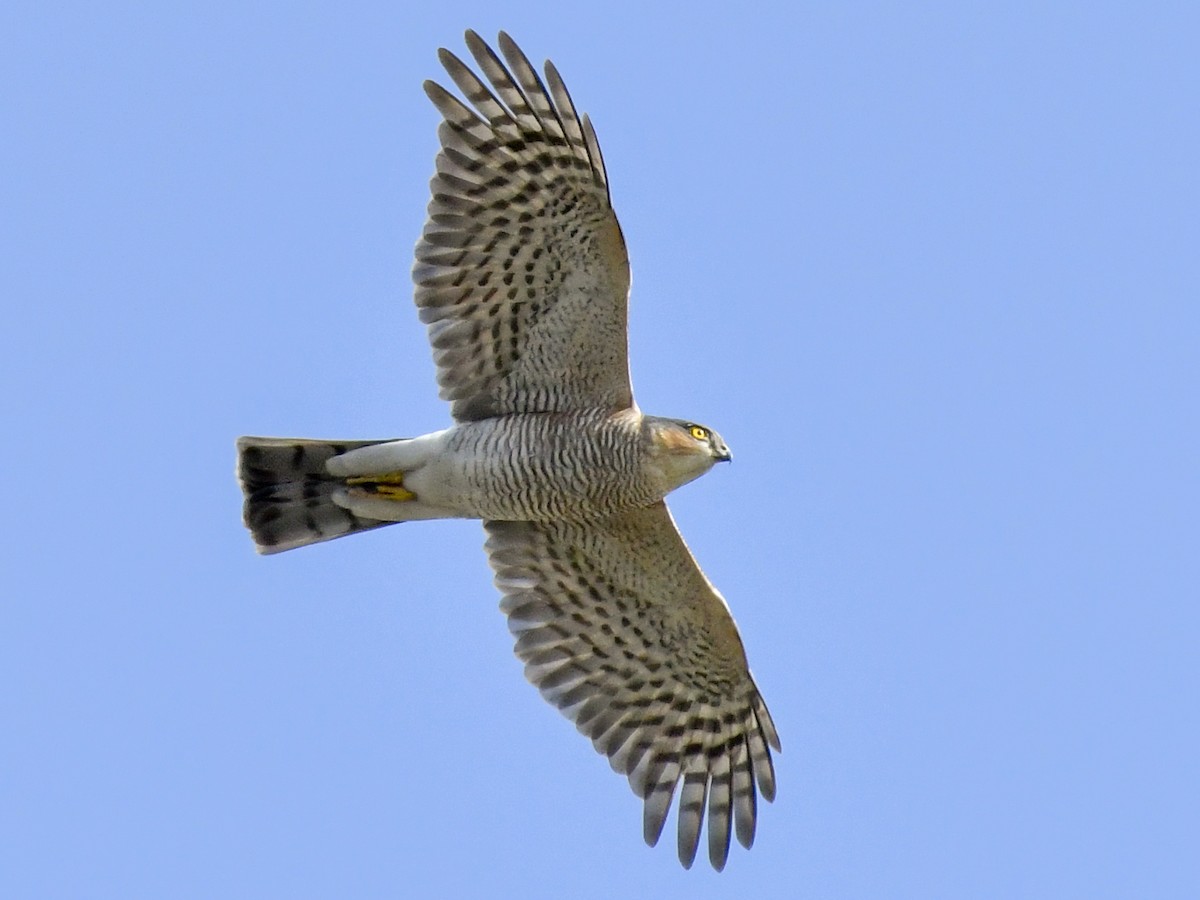
Sparrowhawk
The adult male is bluish above too, but has short, broad wings and a long tail, and ambushes from cover.
Peregrine speed, numbers and nest secrecy
How fast does a peregrine dive?
Claims of over 320 km/h are common, and a falcon filmed in 2005 was said to reach 389 km/h. Radar has never confirmed such figures; the highest reliable measurement is 184 km/h. Simulations from 2018 suggest the speed buys better control and precision in the strike.
How many peregrines breed in the UK?
The RSPB estimated 1,402 breeding pairs in 2011, after a recovery from the crash of the 1960s, when DDT and related pesticides thinned eggshells. The first pair known to nest on a British building used Swansea Guildhall in the 1980s.
Why are peregrine nest sites kept quiet?
Poachers still target eggs and chicks, so unprotected sites are normally not made public. In Southampton in 2013, a protected nest even held up repairs to a phone mast until the chicks had flown.