
In Britain, where no other kestrel species is regular, the bird goes simply by ‘kestrel’. You will know it by the way it hangs in the wind over fields, heaths and road verges, scanning the grass for a vole.
Grey head on him, barred tail on her
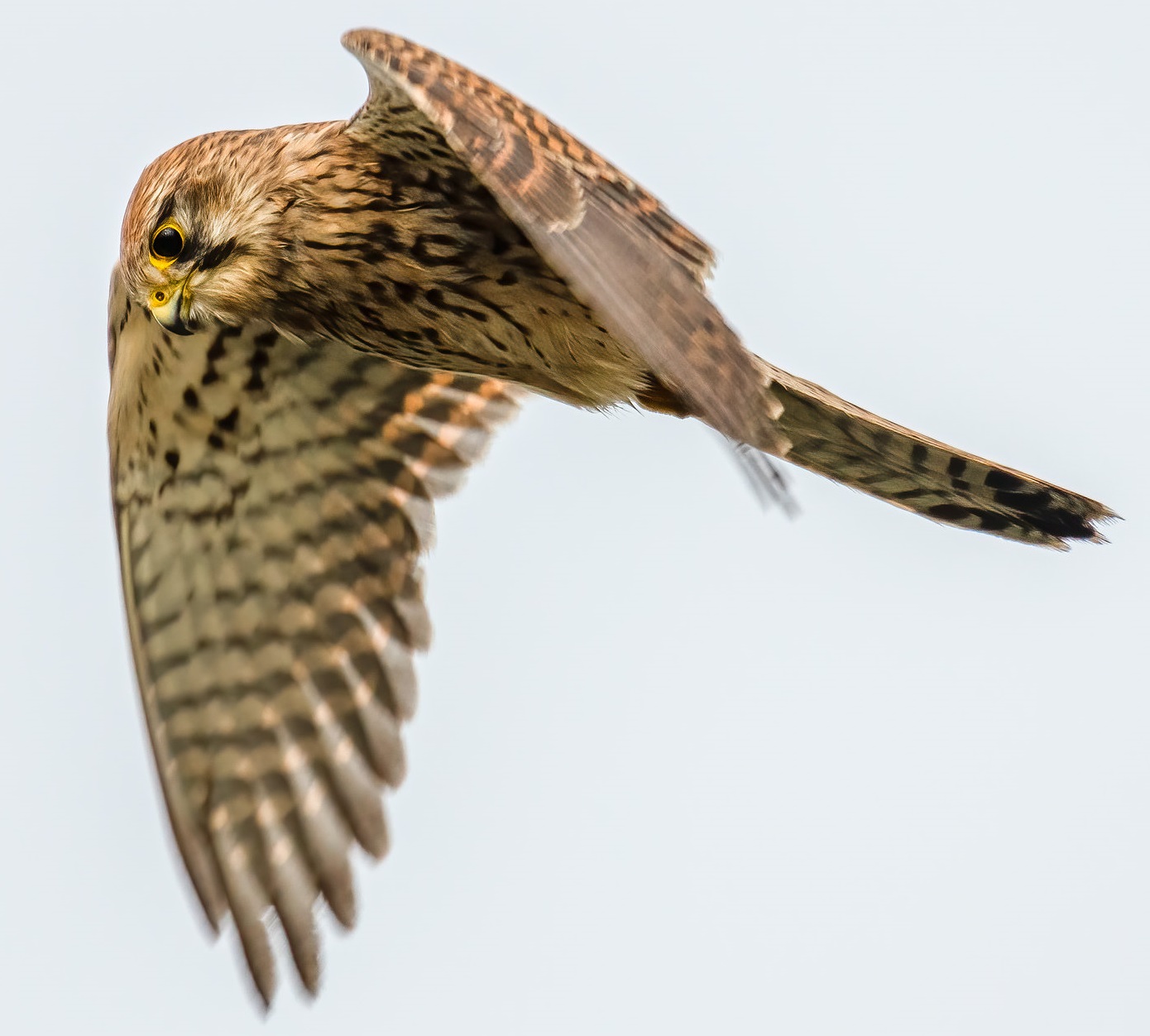
For a raptor it is small, 32–39 cm long with a 65–82 cm span. Like the other falcons it has long wings, and its tail is long as well.
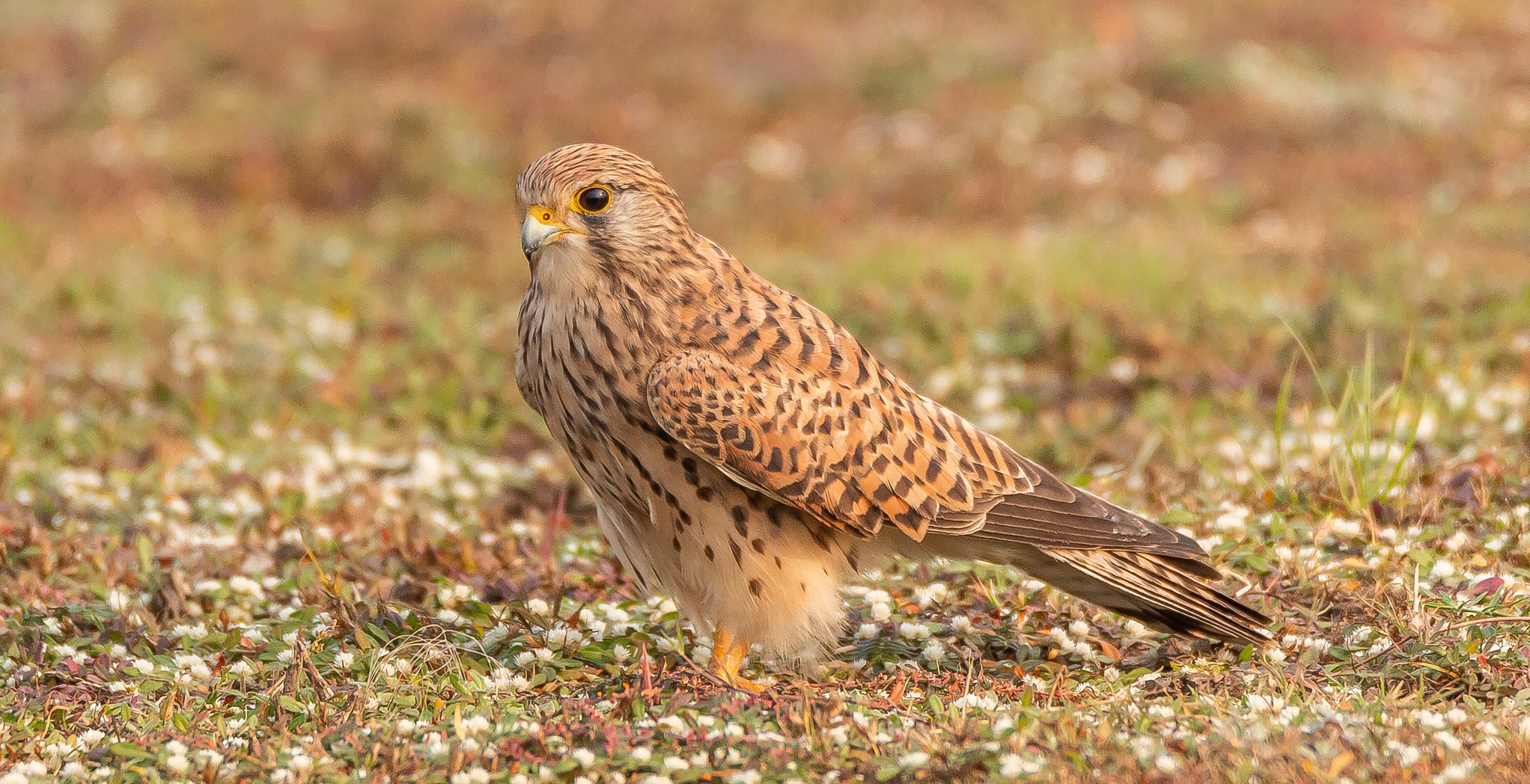
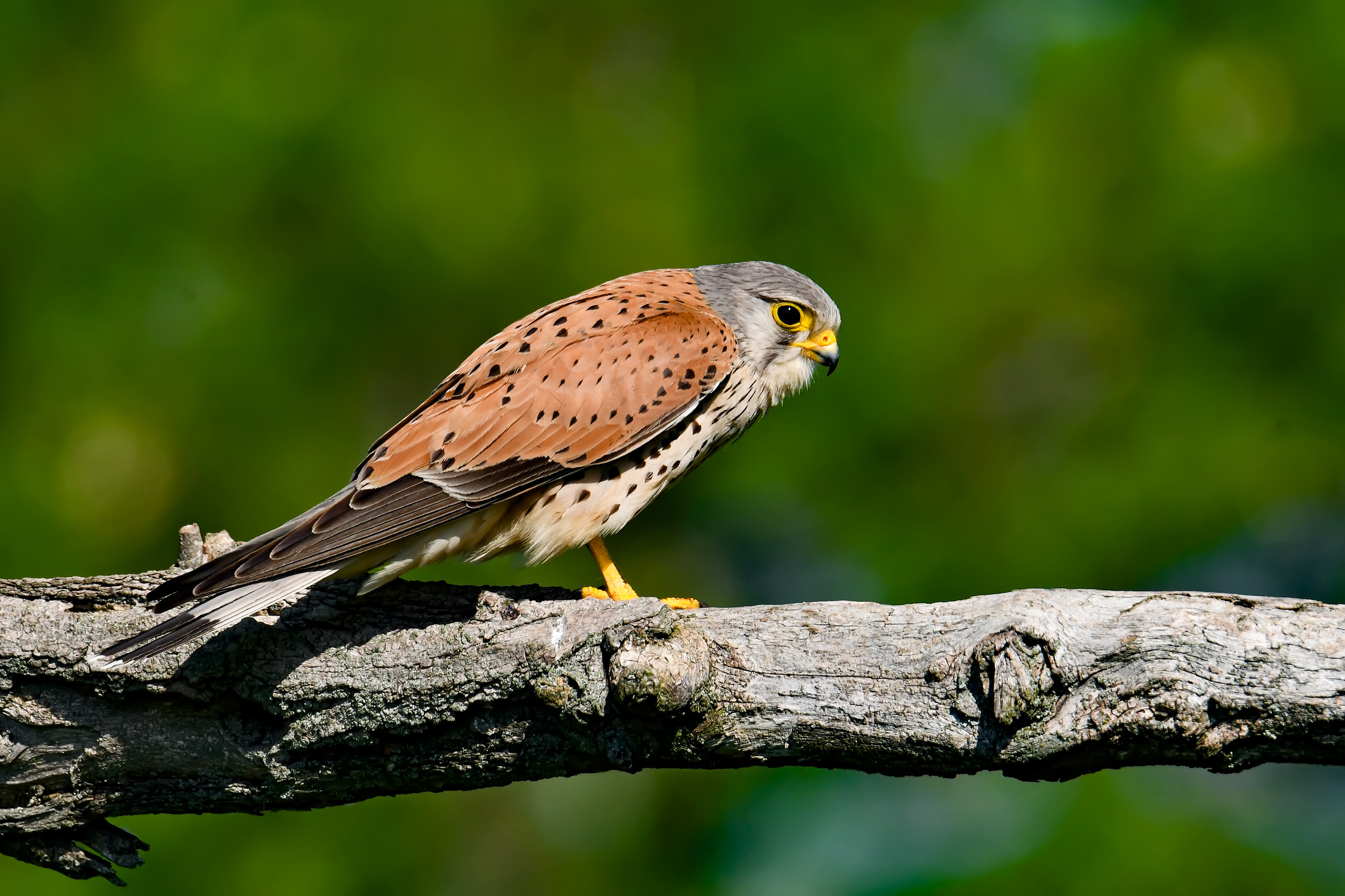
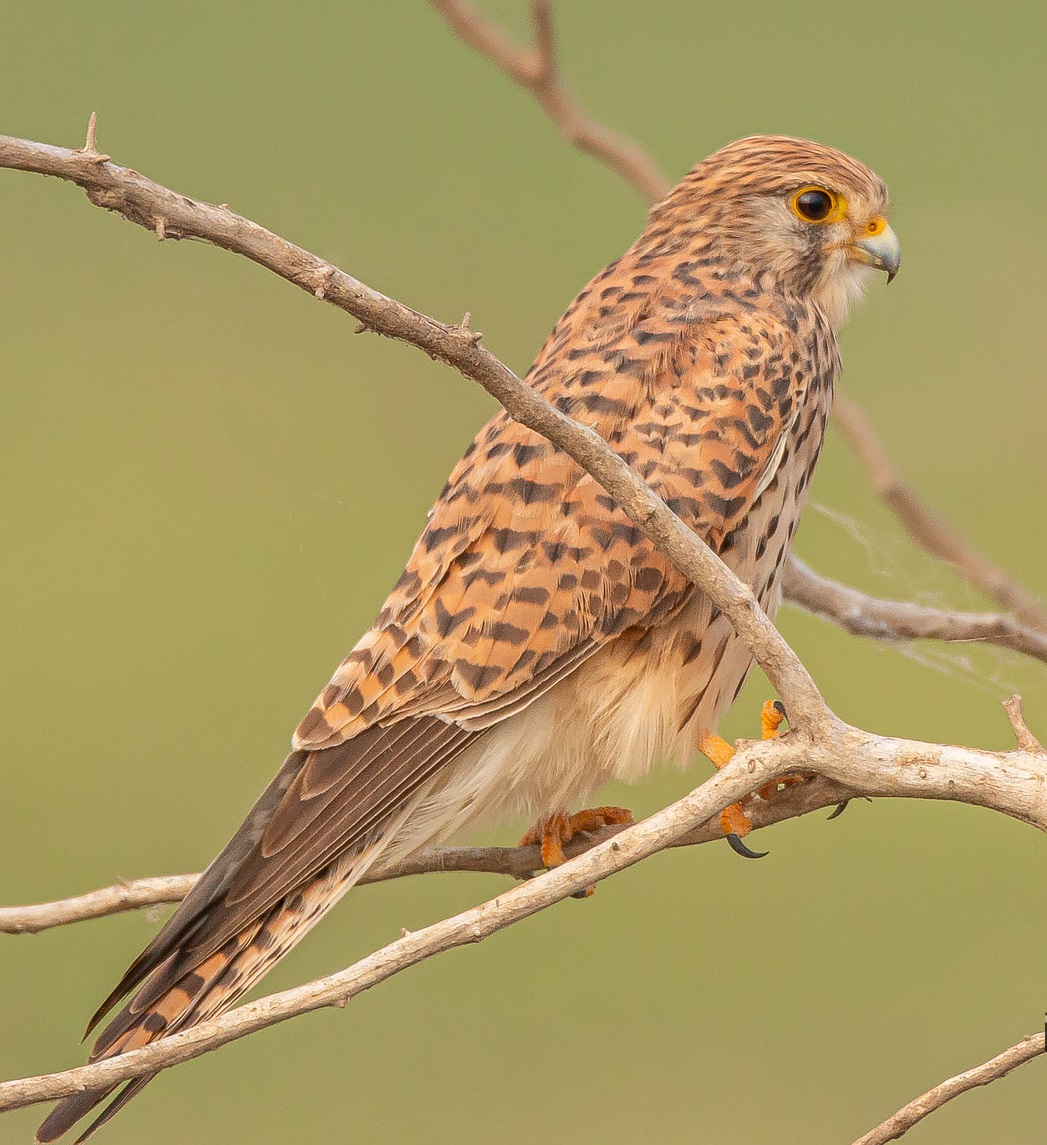
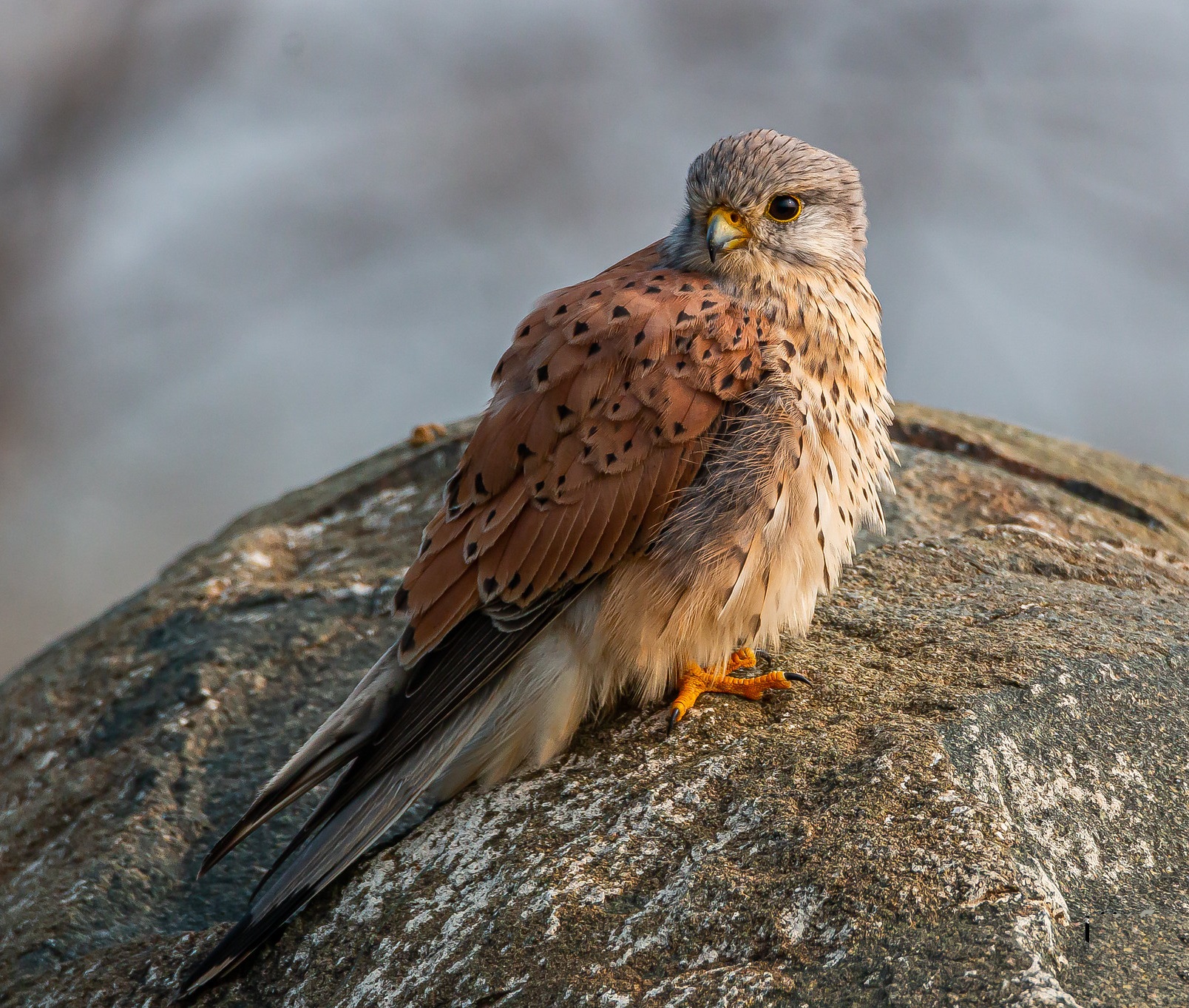
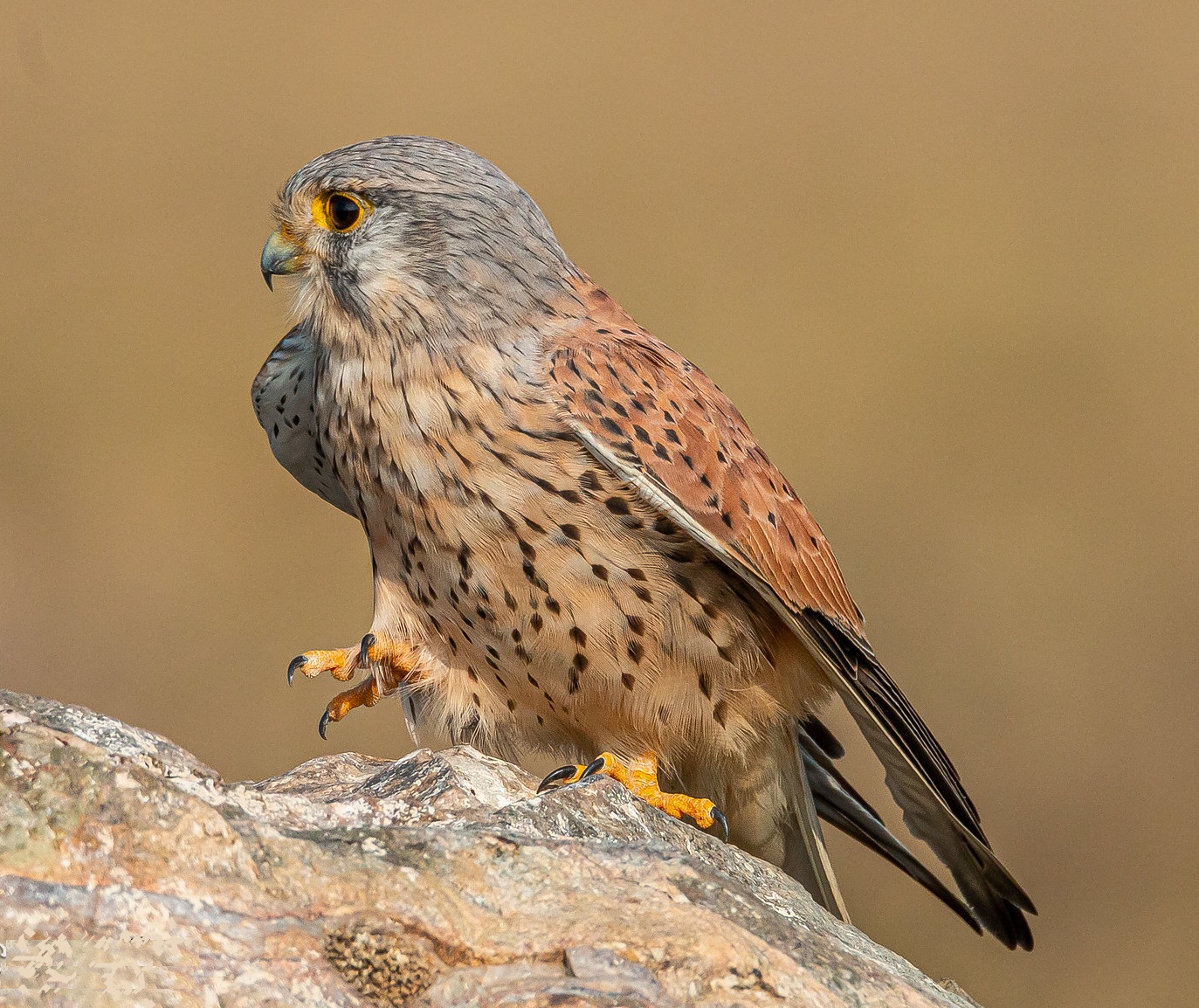
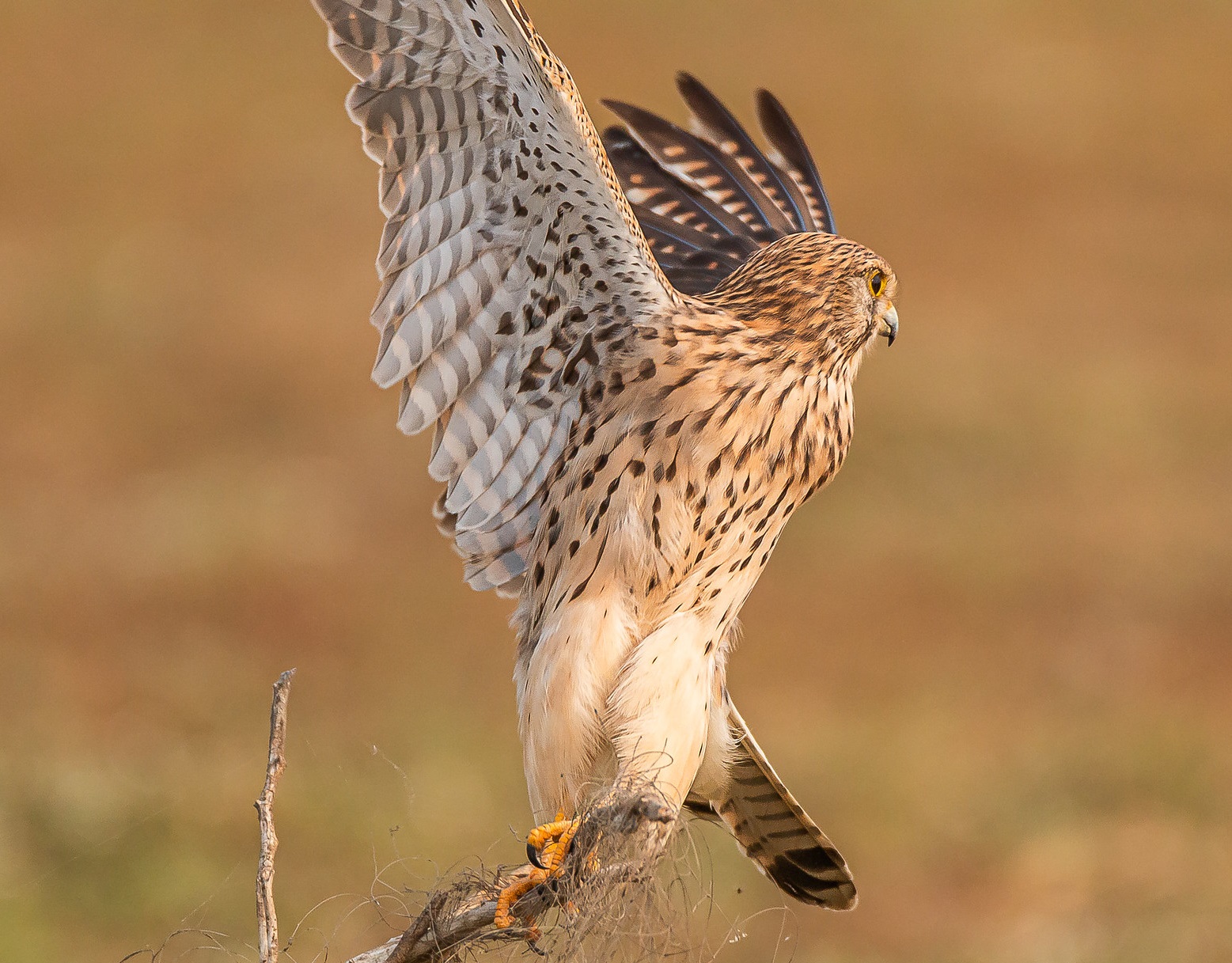
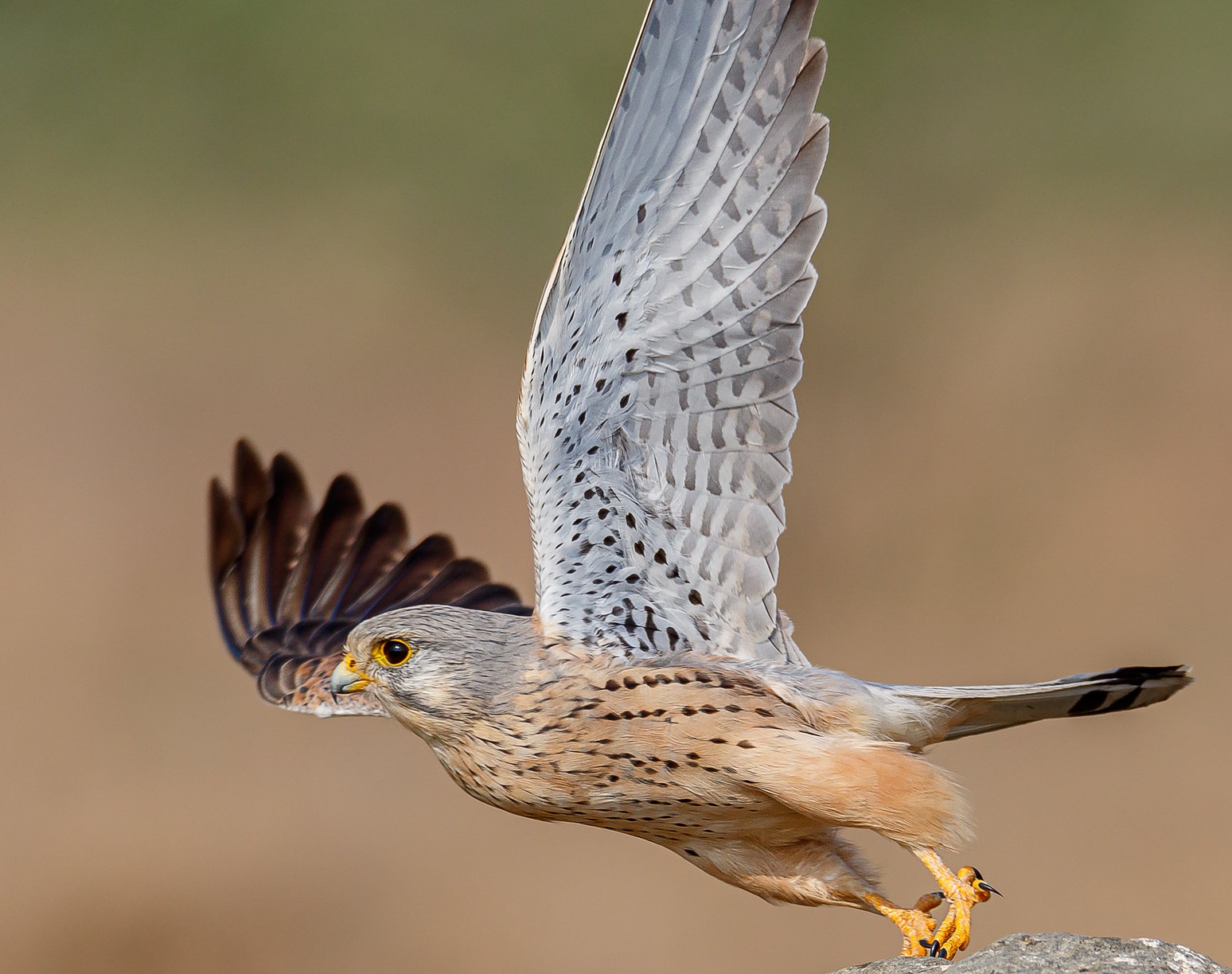
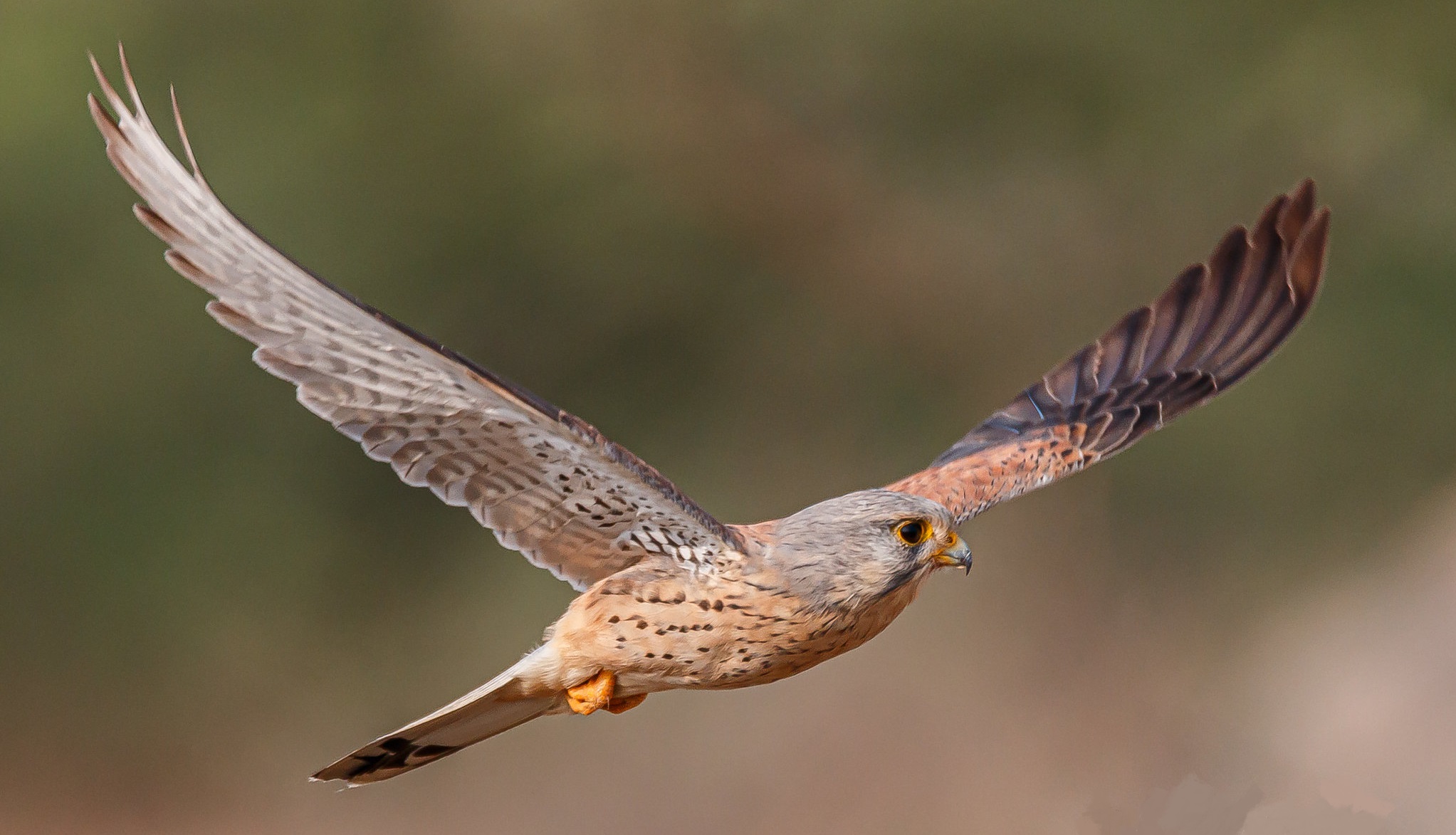
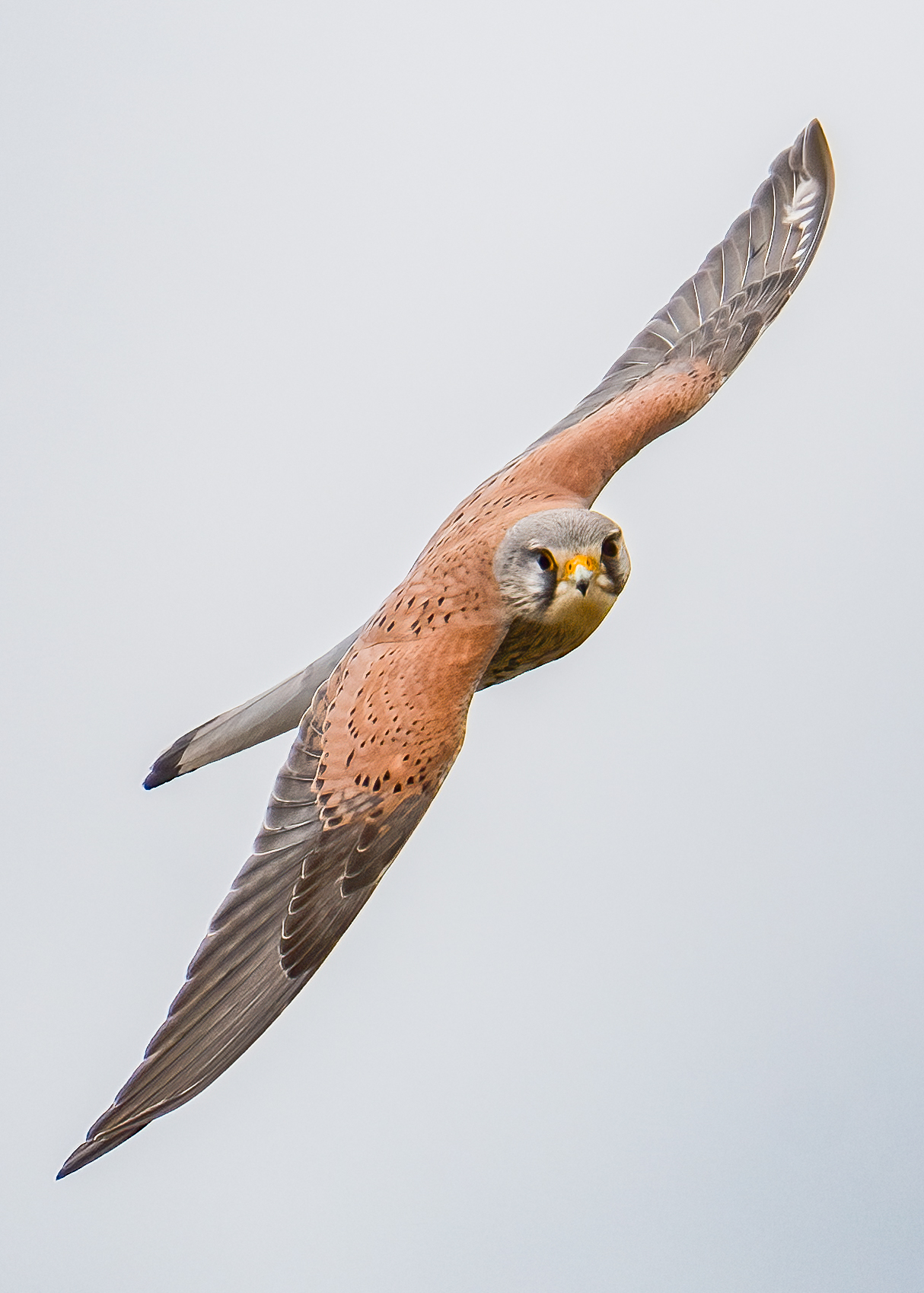
Both sexes are pale chestnut above with black spotting, buff below with fine dark streaks, and both wear a bold black moustache. The male is cleaner, with fewer spots and a blue-grey crown and tail; the female's brown tail is crossed with black bars.
Each tail ends in a black band with a narrow white edge. At close range the cere, feet and a thin eye-ring are bright yellow against a dark bill and eye. Juveniles resemble females but carry broader streaks below.
Wing shape separates it from the other small raptors
The Sparrowhawk can look similar at a glance, but it has short, broad wings built for weaving between trees and moves with a flap-flap-glide. The kestrel's wings are long and pointed, and it does its hunting over open ground.
A Peregrine is crow-sized, blue-grey on the back with a black head, and attacks from long, high dives. The kestrel's drop is short and steep, usually straight out of a hover. A hovering Buzzard is a far bulkier, broad-winged bird.
What the Latin name says about its voice
Little has been written about the calls themselves; the name says more. Tinnunculus is built on the Latin tinnulus, meaning shrill, and the Swiss naturalist Conrad Gessner was already using it in 1555.
The English word comes from the French crécerelle, a diminutive of crécelle, which also meant a bell carried by lepers. Learn the sound from the recording on this page.
Verges, heaths and field edges, with no woodland needed
This is a lowland bird of open country: farmland, heath, scrub and marsh. Woodland is optional so long as rocks or buildings supply perches and nest sites.
Road and motorway edges are worth scanning, since the verges hold plenty of small mammals. The hunter hangs 10–20 m up, flying into the wind or riding the lift off a slope.
Between hovers it may sit just above the grass watching for movement, or skim low to catch prey off guard. Voles, shrews and mice form the bulk of the diet, and one bird needs as much food each day as 4–8 voles provide.
Holes, ledges and second-hand crow nests
Kestrels breed in cavities, whether in a cliff, a tree or a building. Town birds often choose buildings, and they readily take over old nests left by members of the crow family.
In temperate Europe laying starts in April or May. The female produces 3–7 brown-blotched eggs at roughly two-day intervals, and the pair share incubation for about a month. Once the chicks hatch, only she feeds them, tearing prey into small pieces.
Young birds fly at 4–5 weeks and stay with the family for a few weeks more while they learn to hunt. Neighbours are usually tolerated, and now and then a few dozen pairs nest close together as a loose colony.
Busiest from spring laying to the family weeks of summer
Kestrels from cool-temperate regions move south in winter, while elsewhere they are sedentary and young birds may roam before settling. Nest sites fill from April, and families stay together into summer.
Field photos of the Kestrel
Three raptors to rule out
Wing shape and hunting method do most of the work.
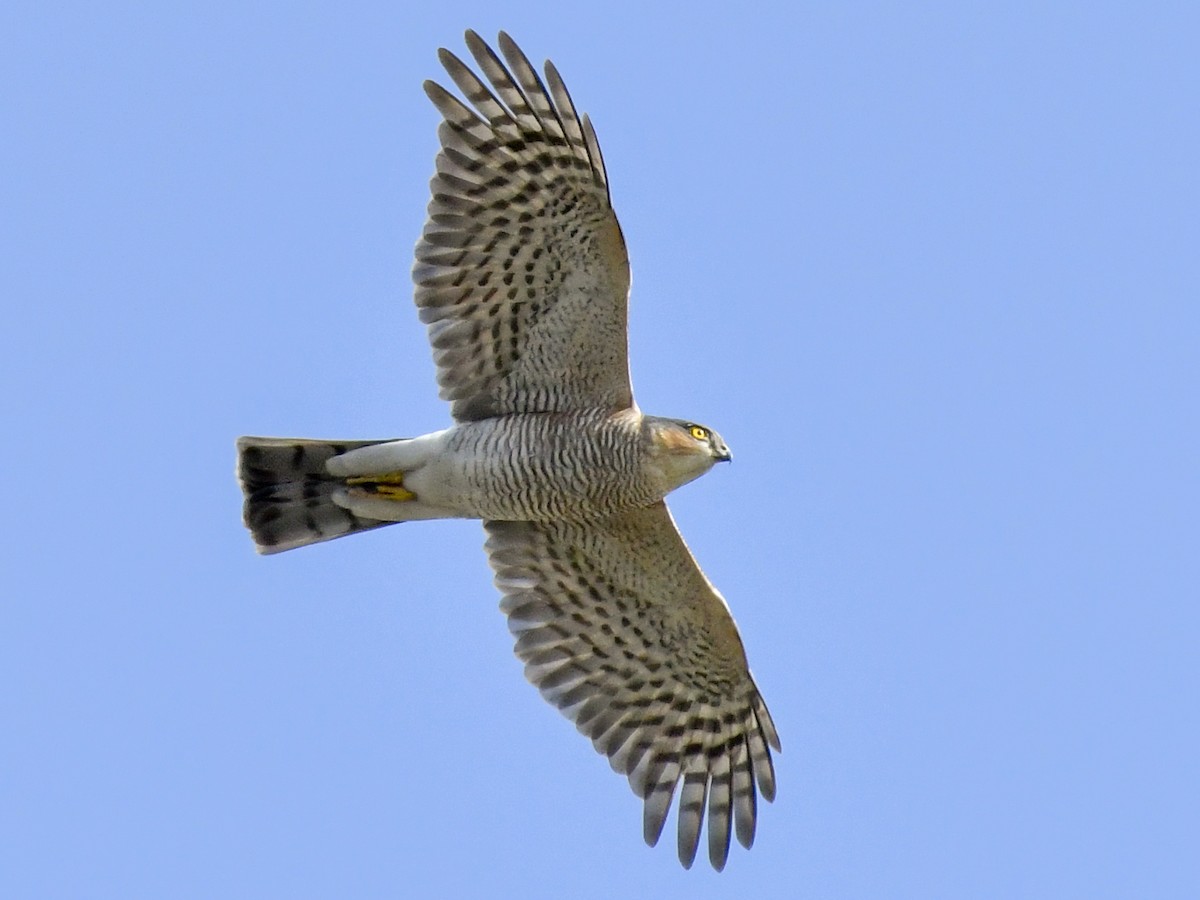
Sparrowhawk
Short, rounded wings and a flap-flap-glide among trees; it ambushes from cover rather than hovering over grass.
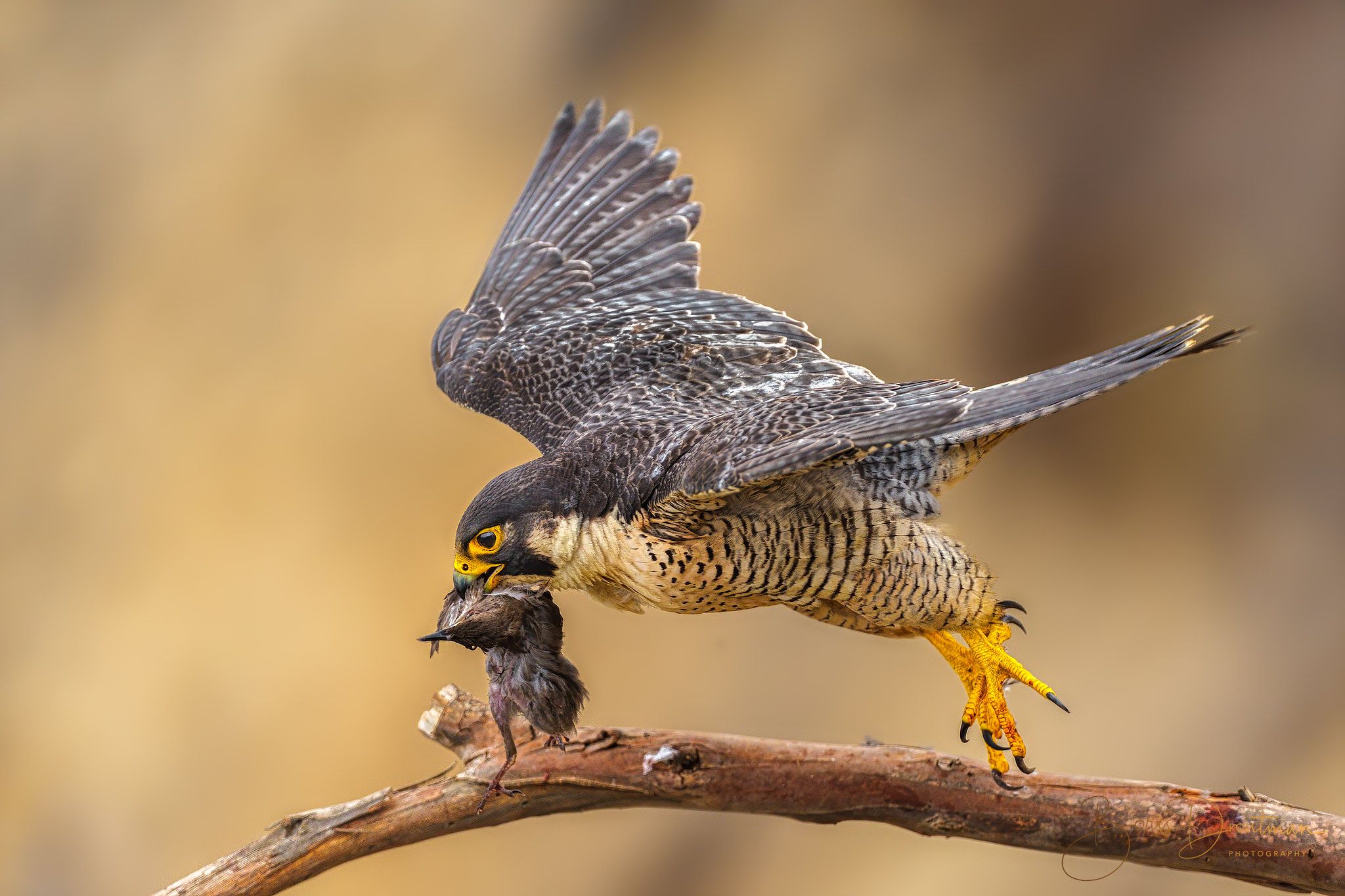
Peregrine
Crow-sized, blue-grey above with a black head; it hunts with long, high stoops, not a short drop from a hover.
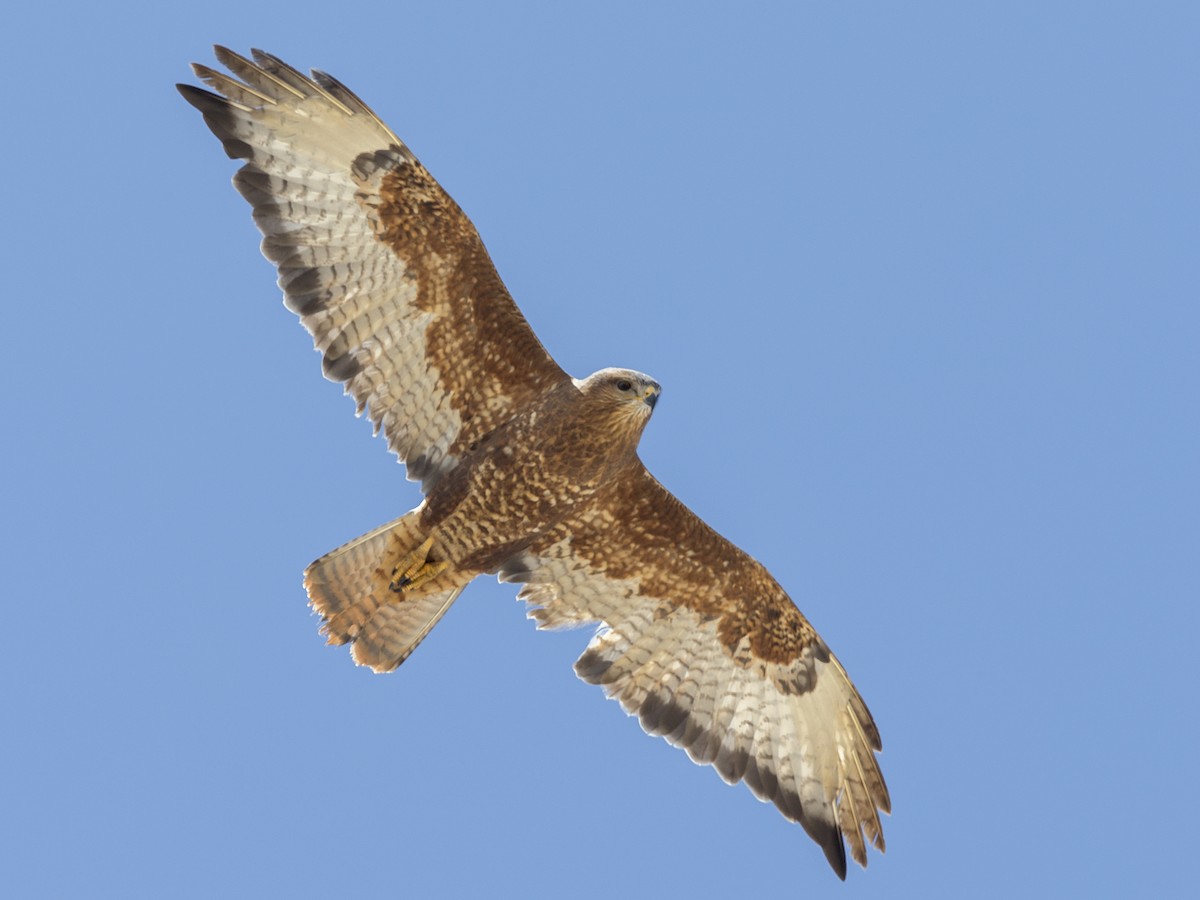
Buzzard
Much larger and broad-winged, with a 109–140 cm span; hovering is its least-used way of hunting.
Kestrel facts beyond the hover
Can kestrels see ultraviolet light?
They can see near-ultraviolet. This was once thought to let them follow the urine trails around vole burrows, but a later study judged that unlikely, given how few wavelengths the urine reflects and which ones the eye actually absorbs.
Are kestrels declining in Ireland?
Numbers have dropped recently in parts of western Europe, Ireland among them, though the species is not considered threatened worldwide. Mid-20th-century pesticides hurt it less than other raptors because it can breed fast when food is plentiful.
How many young does a kestrel pair raise?
British data give an average of 2–3 chicks per pair, pulled down by nests that fail outright; pairs that succeed seldom raise fewer than 3 or 4. Vole cycles weigh heavily, and up to 70% die before their first birthday.