
Goldfinches turn up where seed heads stand tall: thistles, teasels and cornflowers in open country, or a niger feeder in winter. Birds in Britain and Ireland form their own subspecies, britannica. It belongs to the finch family, and even its Latin name points to thistles, through the plant genus Carduus.
Open lowland with a scatter of trees
The Goldfinch lives in open, lightly wooded lowland countryside and comes readily into gardens with feeders. In the mild west of Europe it stays all year, whereas birds from colder regions migrate. Even residents move around locally to dodge bad weather.
Seed decides where it settles. Small seeds are the preferred food, above all from thistles, teasels and cornflowers, and insects are added mainly when there are chicks to feed.
That countryside has needed defending. In nineteenth-century Britain many thousands were caught every year for the cage-bird trade, and one of the first RSPB campaigns targeted it. Conservation work today still tries to limit trapping and protect the open spaces the species relies on.
Bring a winter flock in with niger and sunflower hearts
Feeders are the easy option. In winter Goldfinches come to them regularly, in flocks that reach 40 birds and occasionally more. Niger seed, sold as nyjer, is the classic bait: a tiny oily seed from an African annual, best offered in a polycarbonate feeder with narrow oval slots. Pale sunflower hearts are another favourite.
Watch the bill at work. It works like tweezers, teasing stubborn seeds out of a flower head. One bird in Armenia took 30 seeds from a sunflower in a single hour.
In spring, look higher. The female builds a tidy cup several metres up, out near the end of a branch that sways in the wind and hidden by leaves. Moss and lichen form the walls, thistle down the lining, and spider silk ties it to the twigs. She finishes in about a week while the male keeps her company without helping.
A silvery twitter built around one phrase
The song is a cheerful, silvery jingle of trills and twitters. Listen for the call stitched into it: the three-part ‘tickeLIT’, or a repeated ‘teLLIT-teLLIT-teLLIT’. Once that phrase is in your ear, you will notice it inside every song.
That voice is why Goldfinches are kept as cage birds worldwide. Housed with canaries, they tend to swap their own song and call for their companions', which owners count as a fault. Vivaldi had a flute imitate the bird in his concerto Il Gardellino.
Red mask, gold wing bar, forked black tail
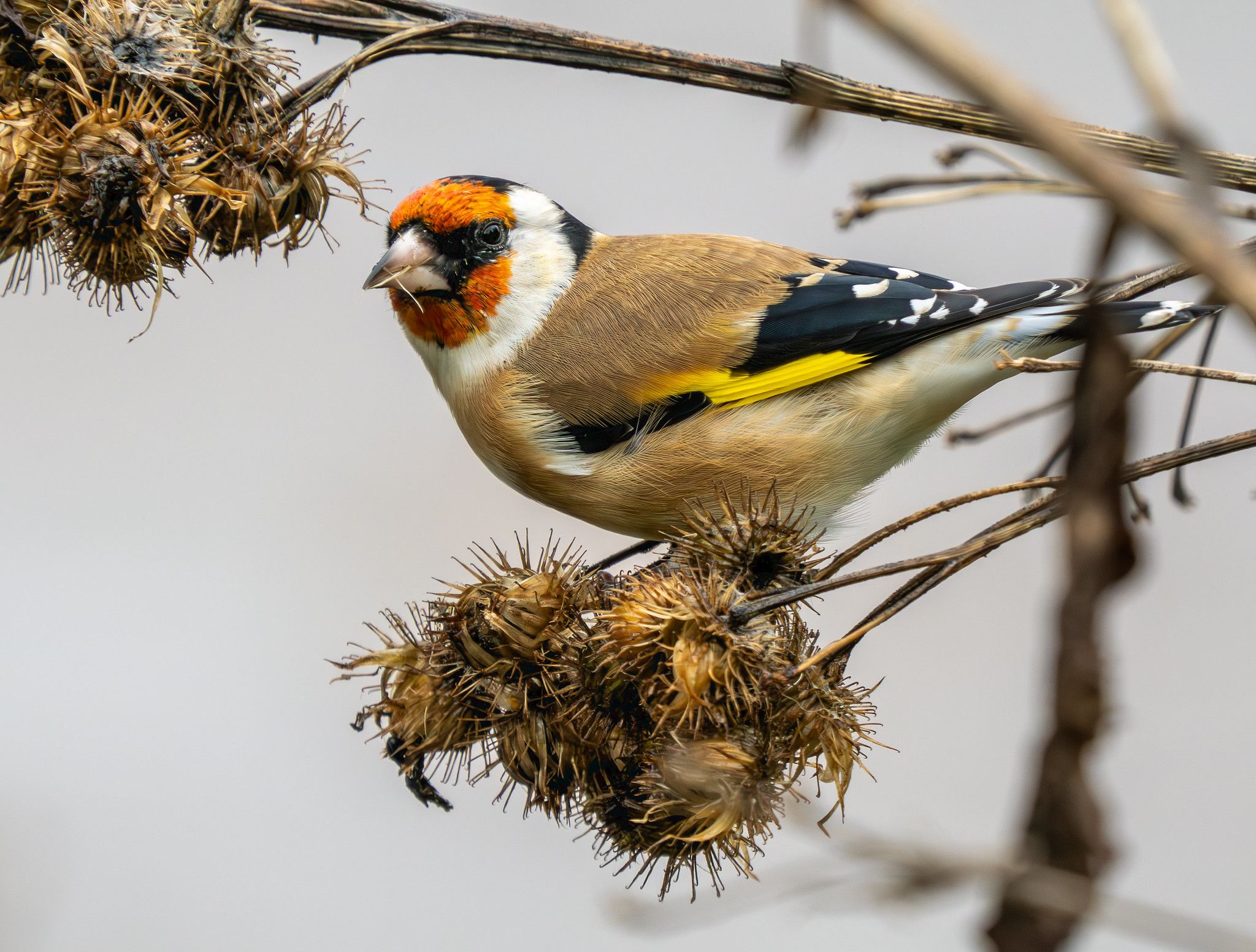
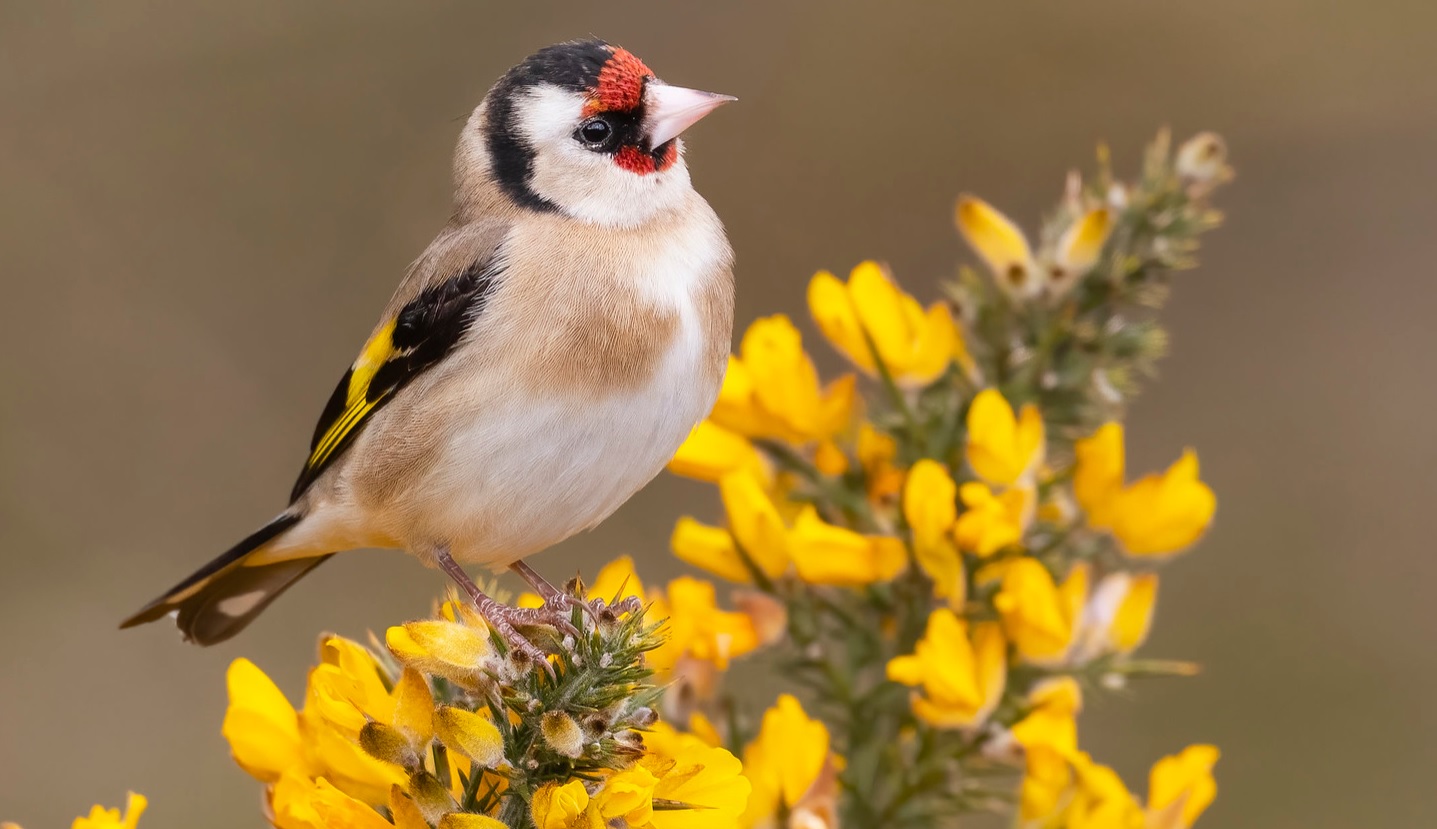
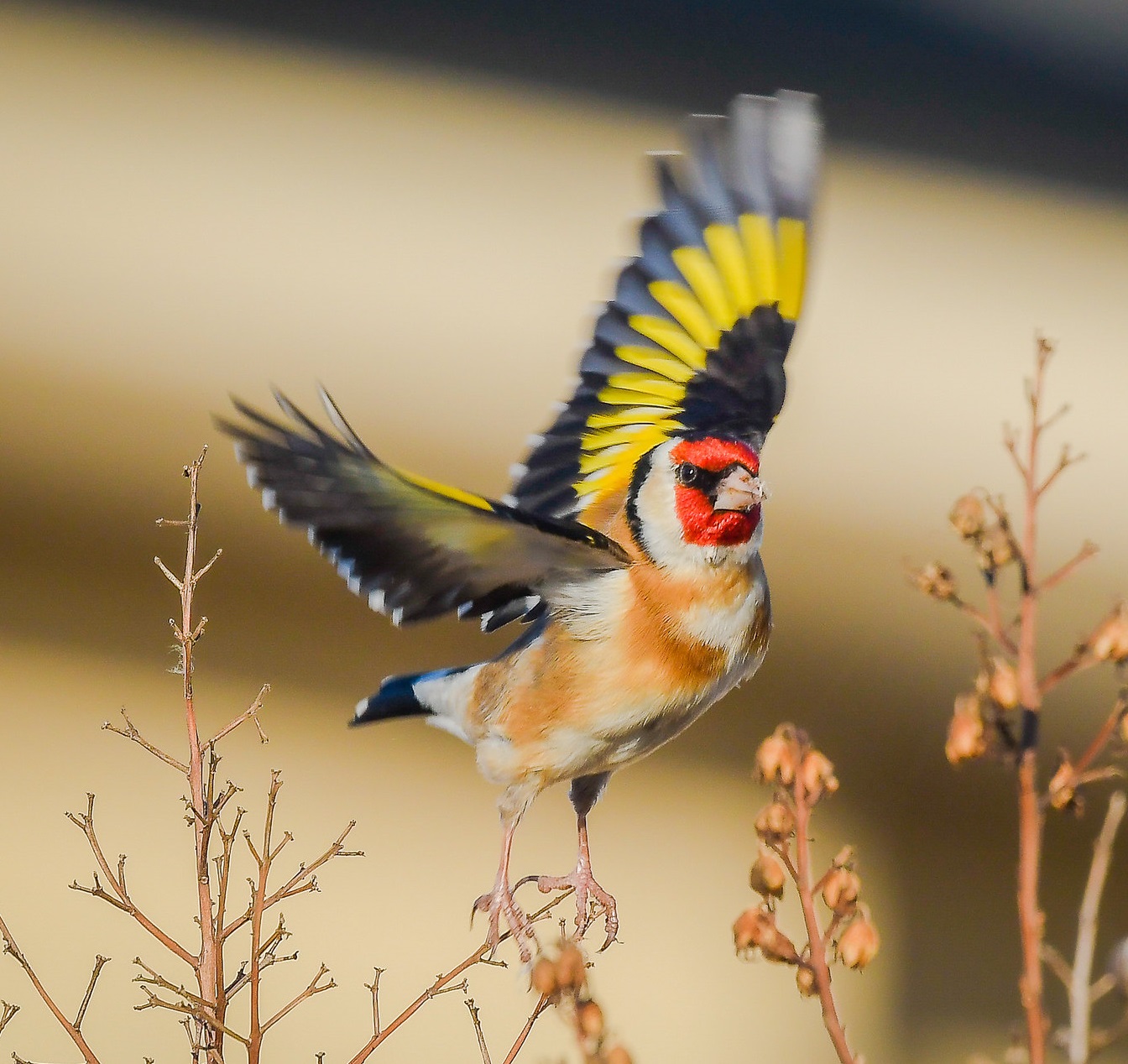
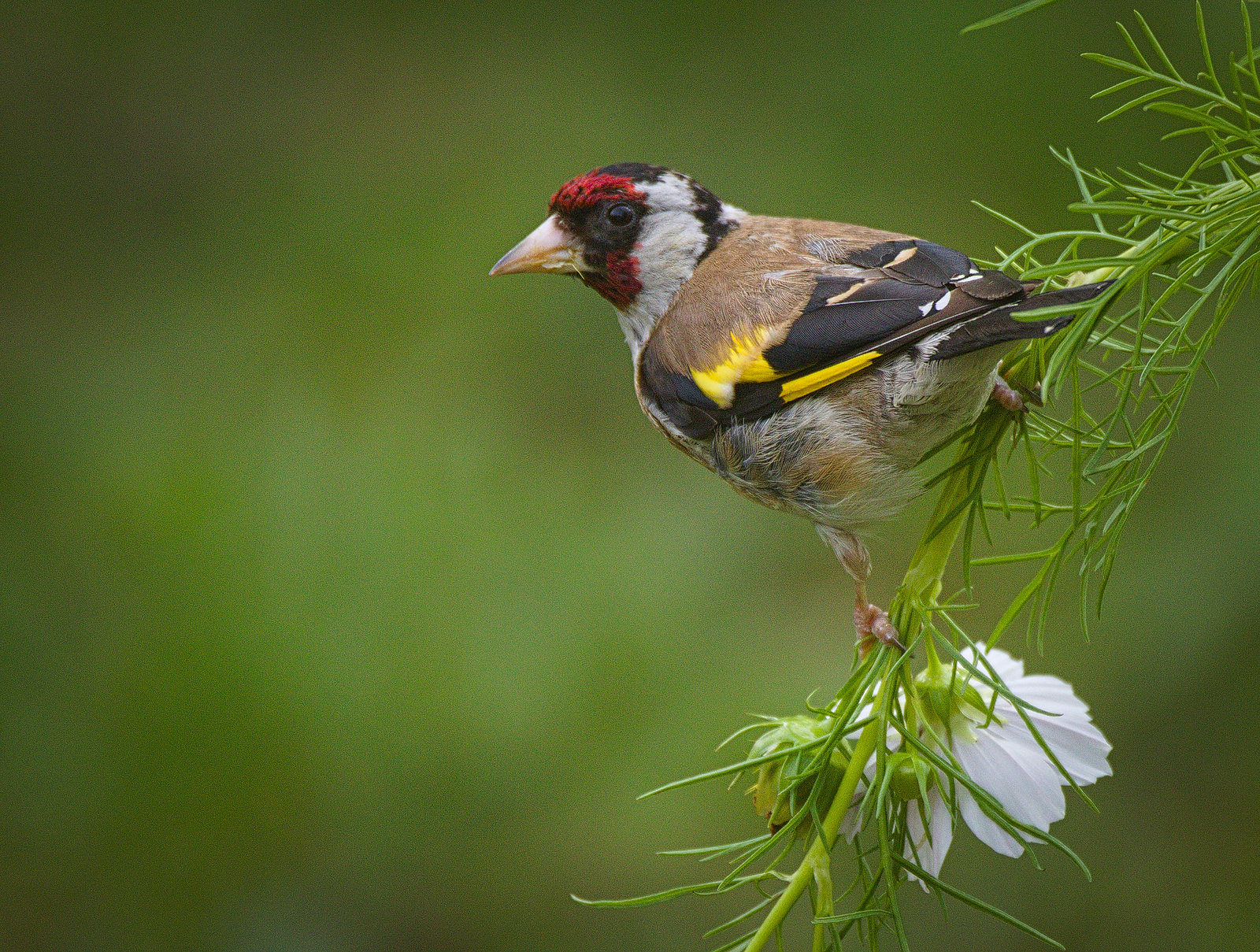
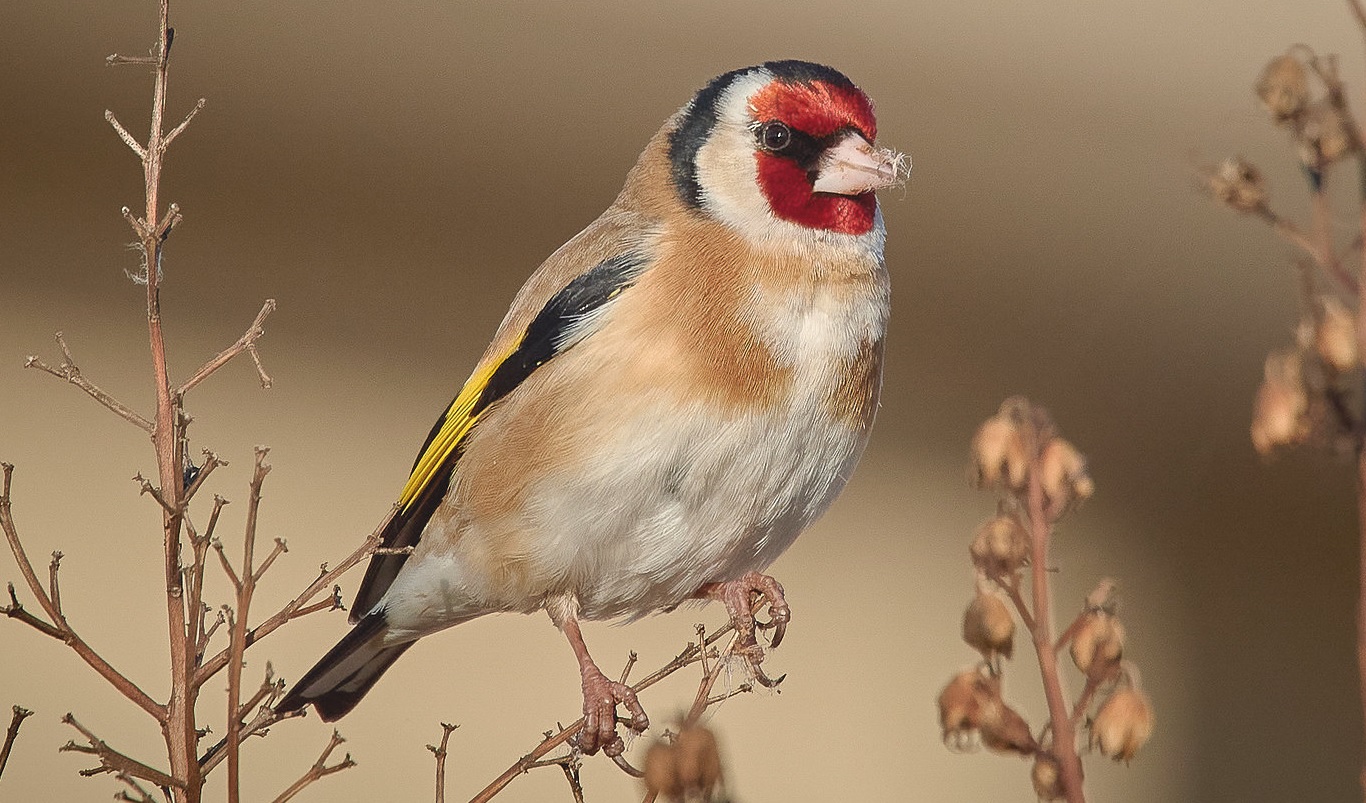
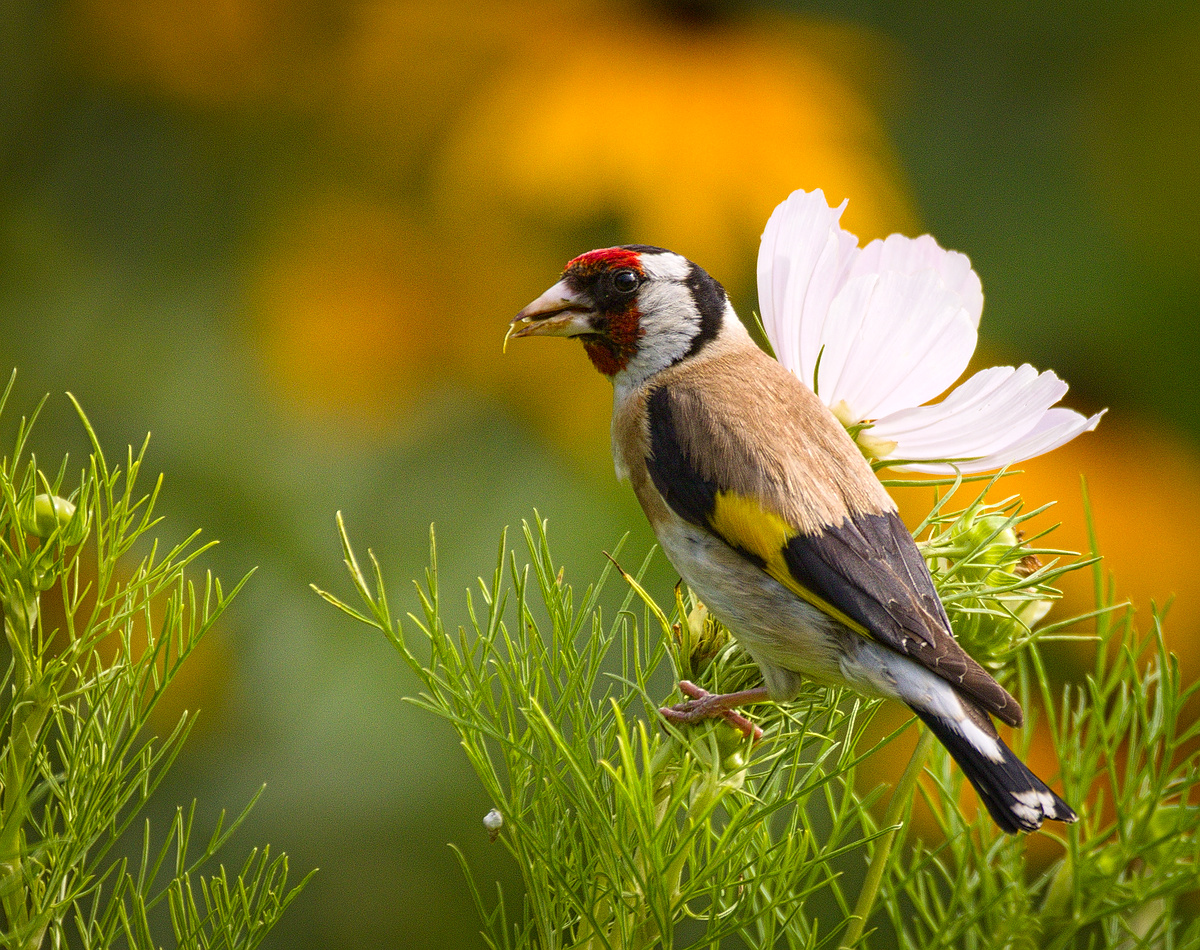
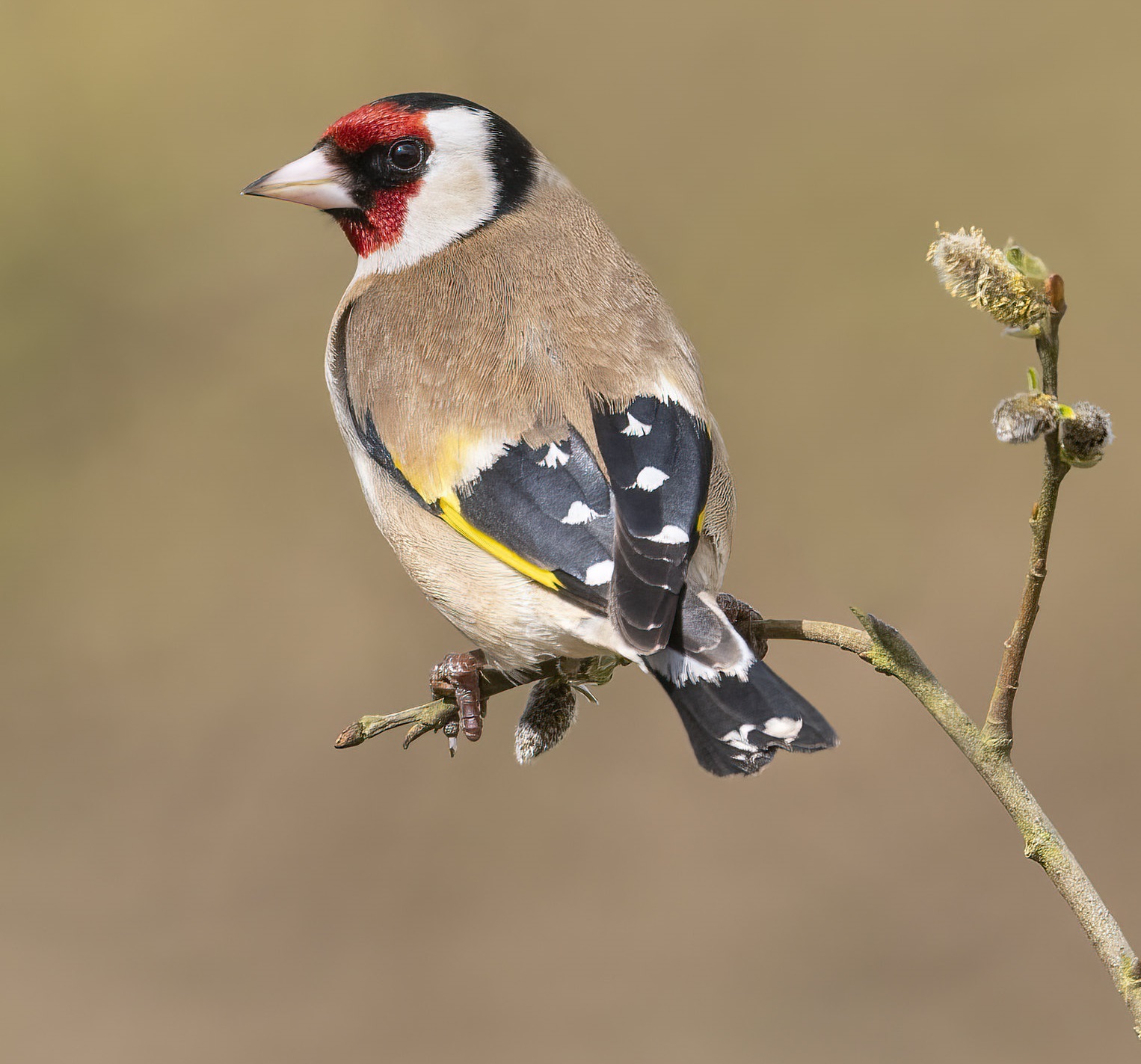
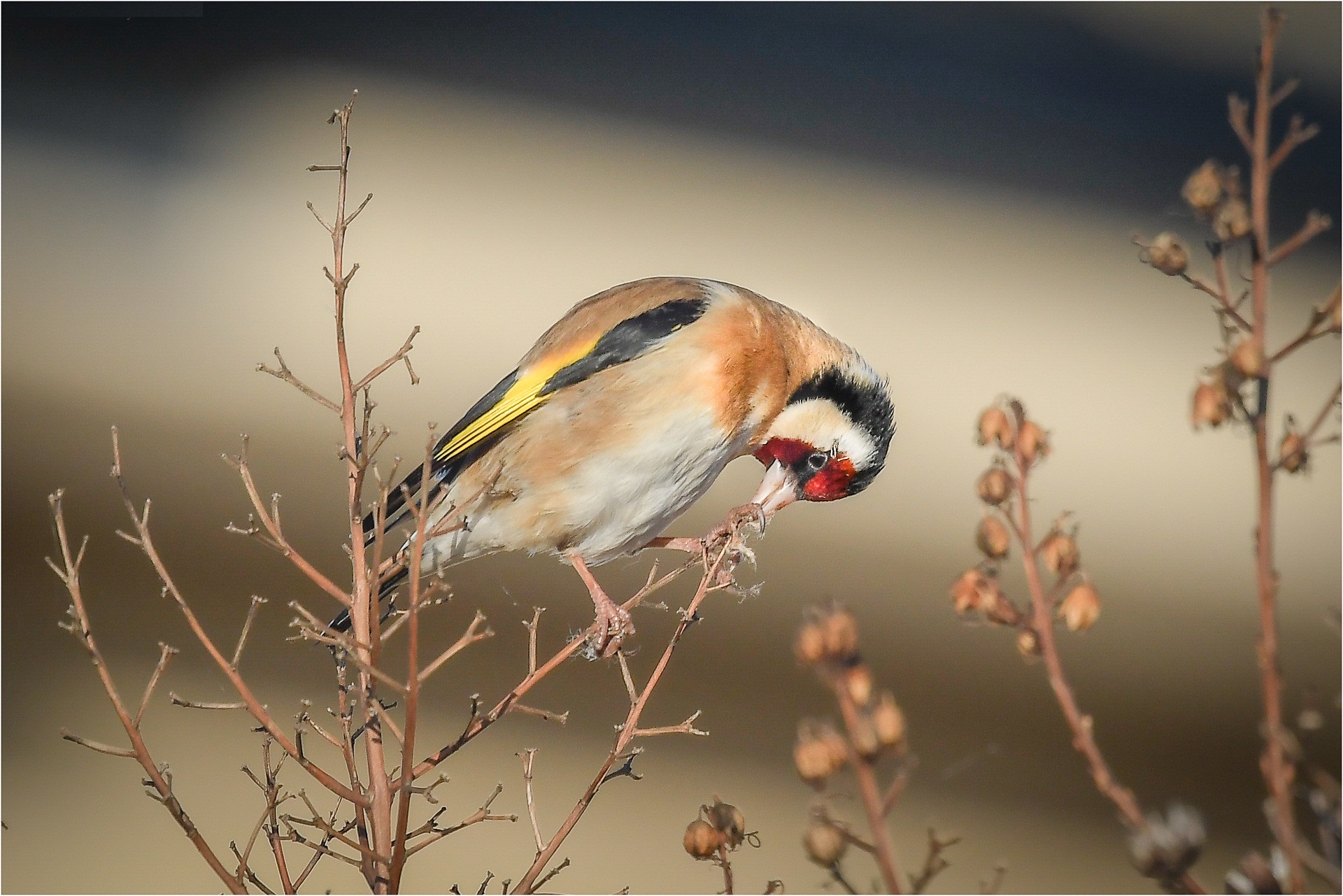
Both sexes show a red face on a head patterned black and white, with warm brown upperparts and white underparts with buff flanks. The black wings carry a broad yellow bar, the rump is white and the black tail is forked. The bill is long, pointed and ivory.
Sexing needs a close view. A male's red mask is larger and darker and reaches just behind the eye, and his shoulder feathers are black. On a female the red stops at the eye and the shoulders are brown.
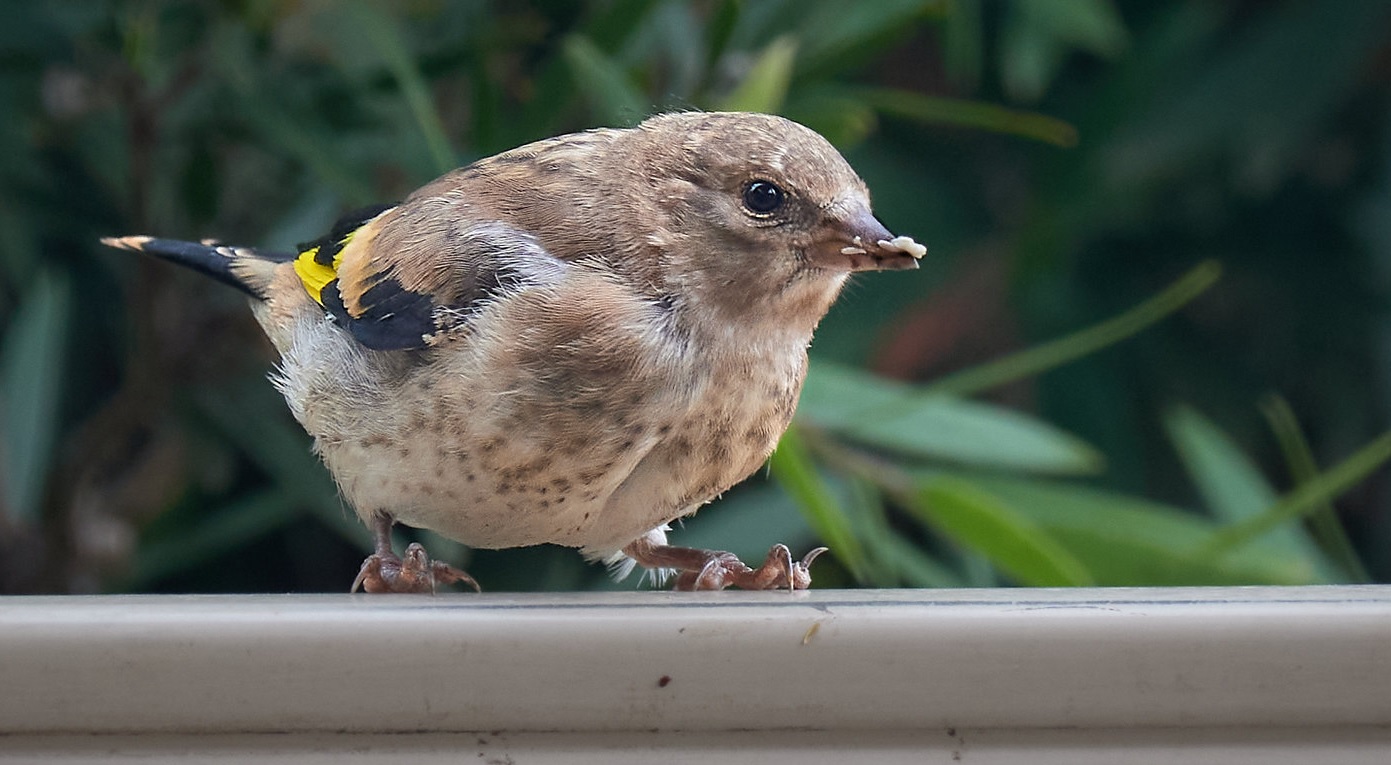
Juveniles have plain heads and greyer backs, yet the yellow wing stripe still names them, though a Siskin carries one too. Adults moult after breeding, some from July and others not until November, and look duller until the fresh feather tips wear away.
Goldfinch months: flocks, then broods
Present all year in Britain and Ireland. Winter brings flocks to feeders; from spring the birds sing, nest and raise two or three broods, then moult between July and November.
What the Goldfinch looks like
Goldfinch broods and old paintings
How many broods does a Goldfinch raise?
Usually four to six, whitish with reddish-brown speckles, laid early in the morning. The female sits for 11–13 days while her mate feeds her, and the chicks fly 13–18 days after hatching. Most pairs raise two families a year, occasionally three.
Why is the Goldfinch in so many Renaissance paintings?
Its taste for thistle seed linked it, in Christian symbolism, to the crown of thorns. Held by the Christ child, it hints at the Crucifixion to come, as in Raphael's Madonna del Cardellino of about 1505–6.