
The Blackbird keeps a calendar you can learn by ear. Young males try out their song in late winter, the full performance fills the spring, and by autumn the garden goes quiet. It belongs to the true thrushes, the same genus as the Song Thrush, and this page follows its year before turning to looks and food.
From late January to early July: the singing season
On a mild day in late January you may catch a first-year male rehearsing. He is staking a claim to territory, and the older males join in from late March.
The main run of song lasts from March to June, and the odd bird is still at it when July begins. Singers choose high points: trees, roofs and any other perch with a view.
Breeding can start in March, and gardens are the best nesting habitat of all, far richer than woodland. Through winter you may hear a soft, private version of the song. Only in September and October does it stop entirely.
‘Chink’, ‘pook’ and ‘seee’: what each call means
His song is a rich, slow warble, pitched low and fluted. Blackbirds also copy local sounds, from other birds to human whistling and car alarms.
A run of ‘pook-pook-pook’ is aimed at ground predators such as cats. For hawks the bird uses a thin, high ‘seee’ that fades quickly among leaves, so the caller is hard to pinpoint. The Sparrowhawk does take Blackbirds, so the warning has good reason.
Listen at dusk for a territorial male calling ‘chink-chink’. He is trying to stop other Blackbirds roosting on his patch overnight, and it rarely works.
Norwegian visitors and birds that stay put
In the west of the range, Britain and Ireland included, Blackbirds are mostly sedentary. While winter food lasts, a pair stays on its territory, each bird using its own part. Ringing on the Isle of May shows birds regularly coming from southern Norway to Scotland, some carrying on to Ireland.
Females from Scotland and northern England are more likely than males to winter in Ireland. Town males, helped by warmer streets and steady food, are more inclined to see out the cold than country ones, and they can start breeding earlier.
Migrants travel in small parties and spread out loosely to feed. Their flight mixes bursts of quick wingbeats with level or diving stretches, unlike the fast, nimble flight of a local bird.
Yellow bill, brown female, two-tone young male
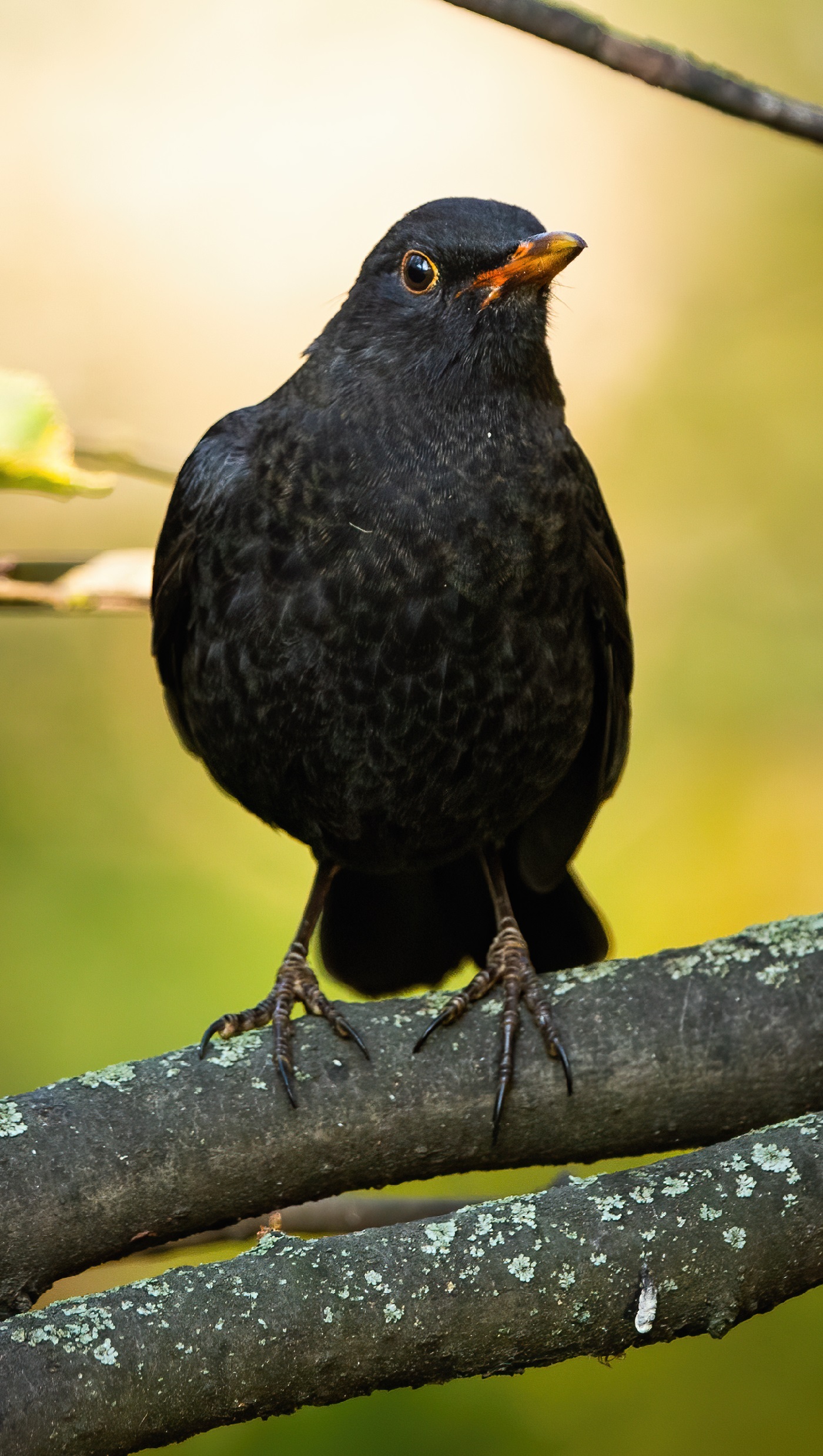
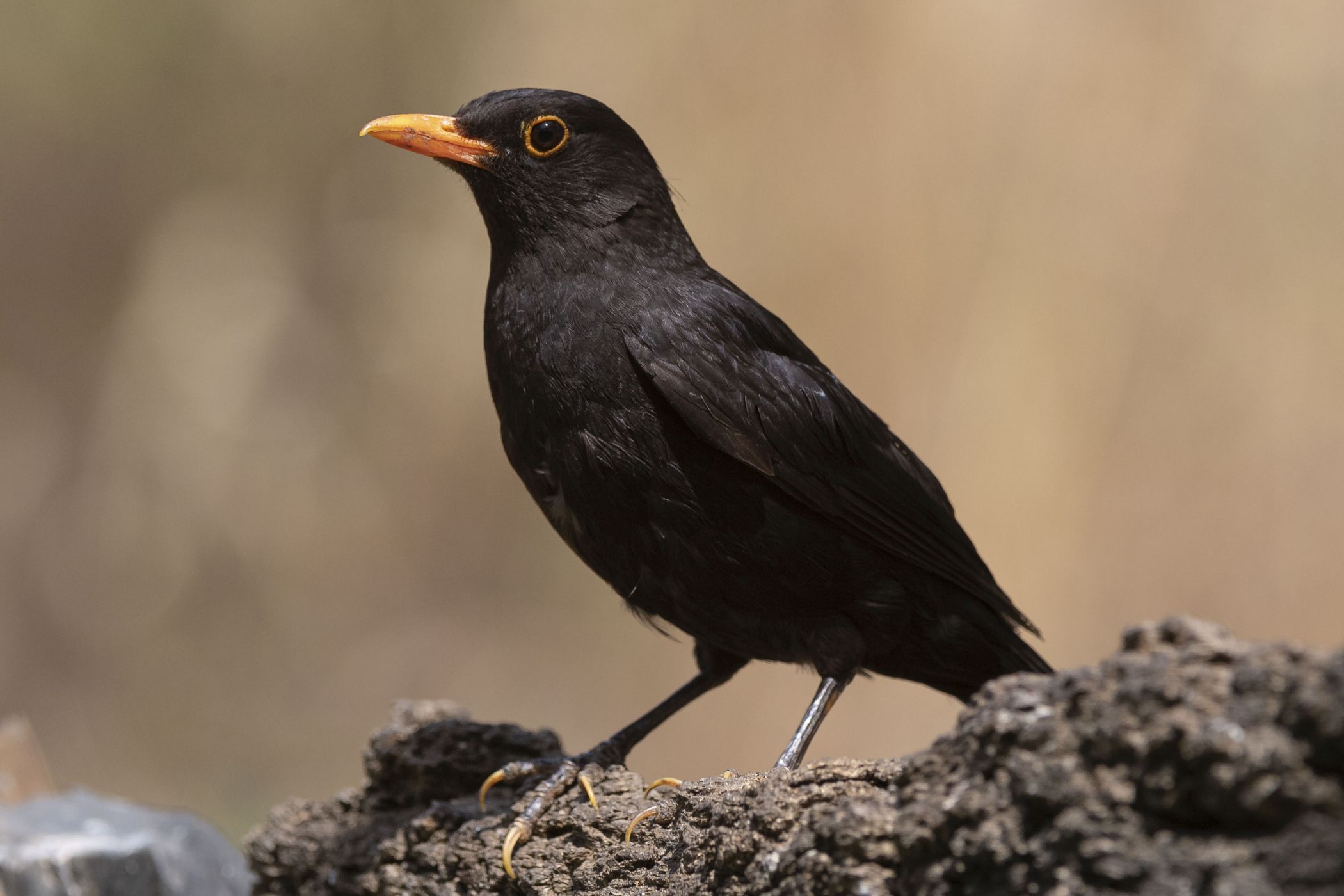
Adult males are glossy black, with an orange-yellow bill and a yellow ring round the eye; the bill dulls slightly in winter.
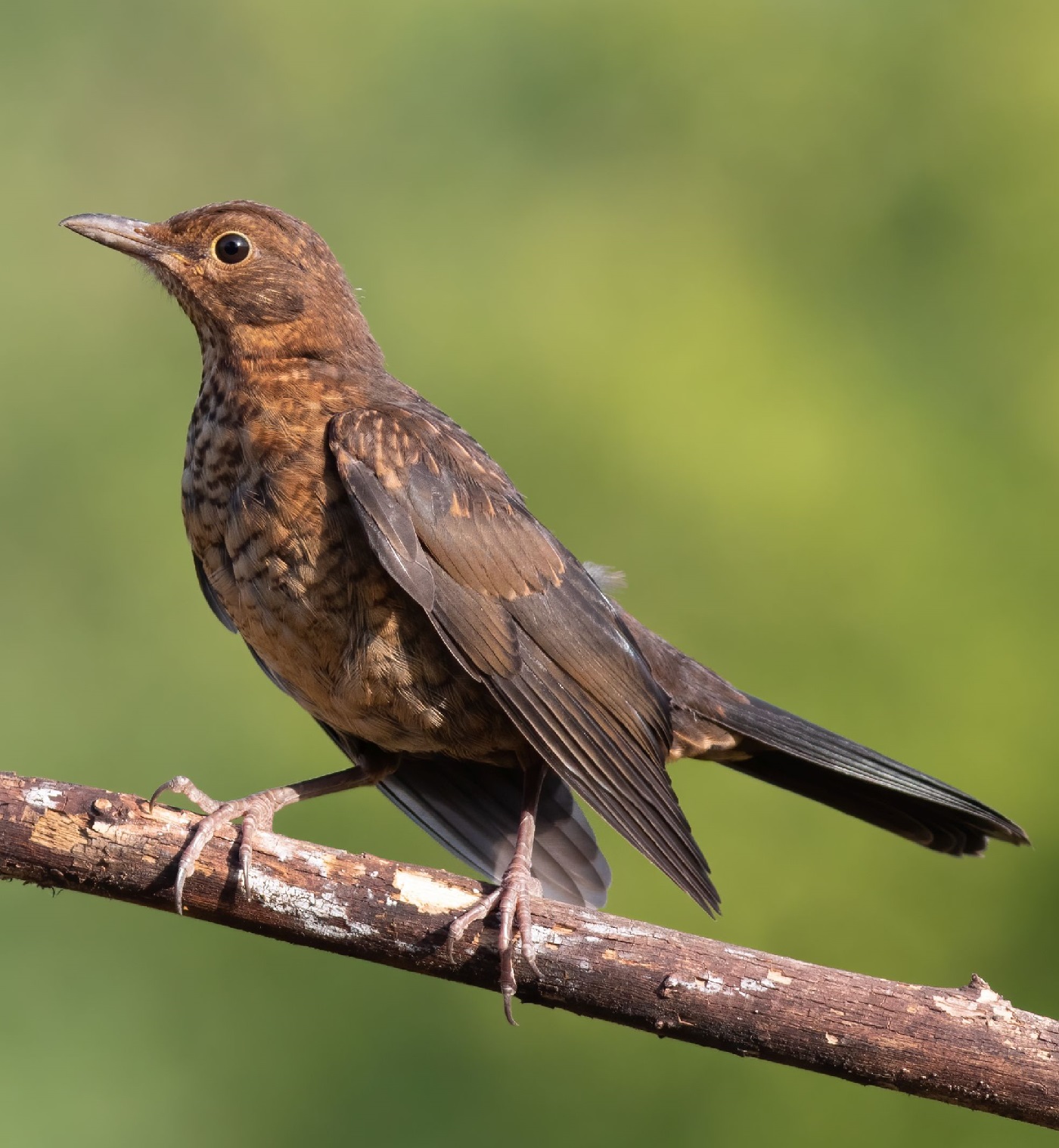
Females are sooty brown, with a pale brownish-white throat, faint breast mottling and a dull yellowish bill. Juveniles resemble them but carry pale spots above. A first-year male is black with a dark bill and a weaker eye-ring, and his folded wing stays brown.
Bill colour matters to the birds too. Territorial males react most strongly to orange, less to yellow and least to the brown of a first-year male, while females pay more attention to shine.
Higher up, the Ring Ouzel takes over, and a first-winter bird has paler wings. A Starling can pass for a Blackbird at a glance, yet it walks rather than hops and has a much shorter tail.
Lawn hunter: worms by sight and by sound
On grass the Blackbird runs and hops, stops, then moves on again. It finds earthworms mostly by eye but sometimes by ear, tugs them out of the soil, and turns over leaf litter for other invertebrates.
The menu is broad: insects, worms, seeds and berries, with the occasional small amphibian, lizard or, rarely, a small mammal. It also perches in bushes to pick berries and snatch caterpillars.
How the Blackbird’s singing year rises and falls
Full song runs from March to June. Late January brings the first young males, and quiet winter subsong keeps November to February above zero.
The Blackbird in different settings
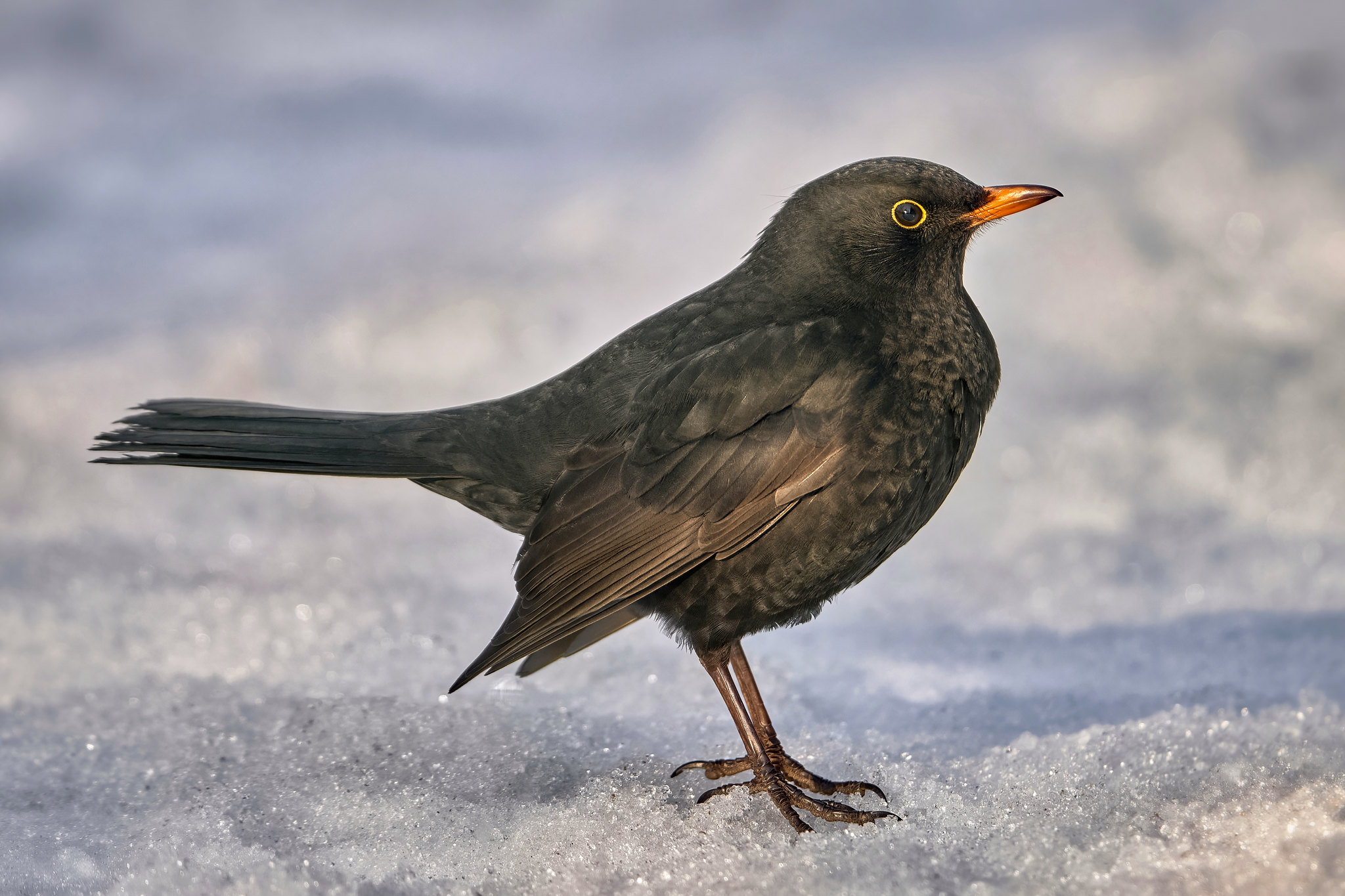
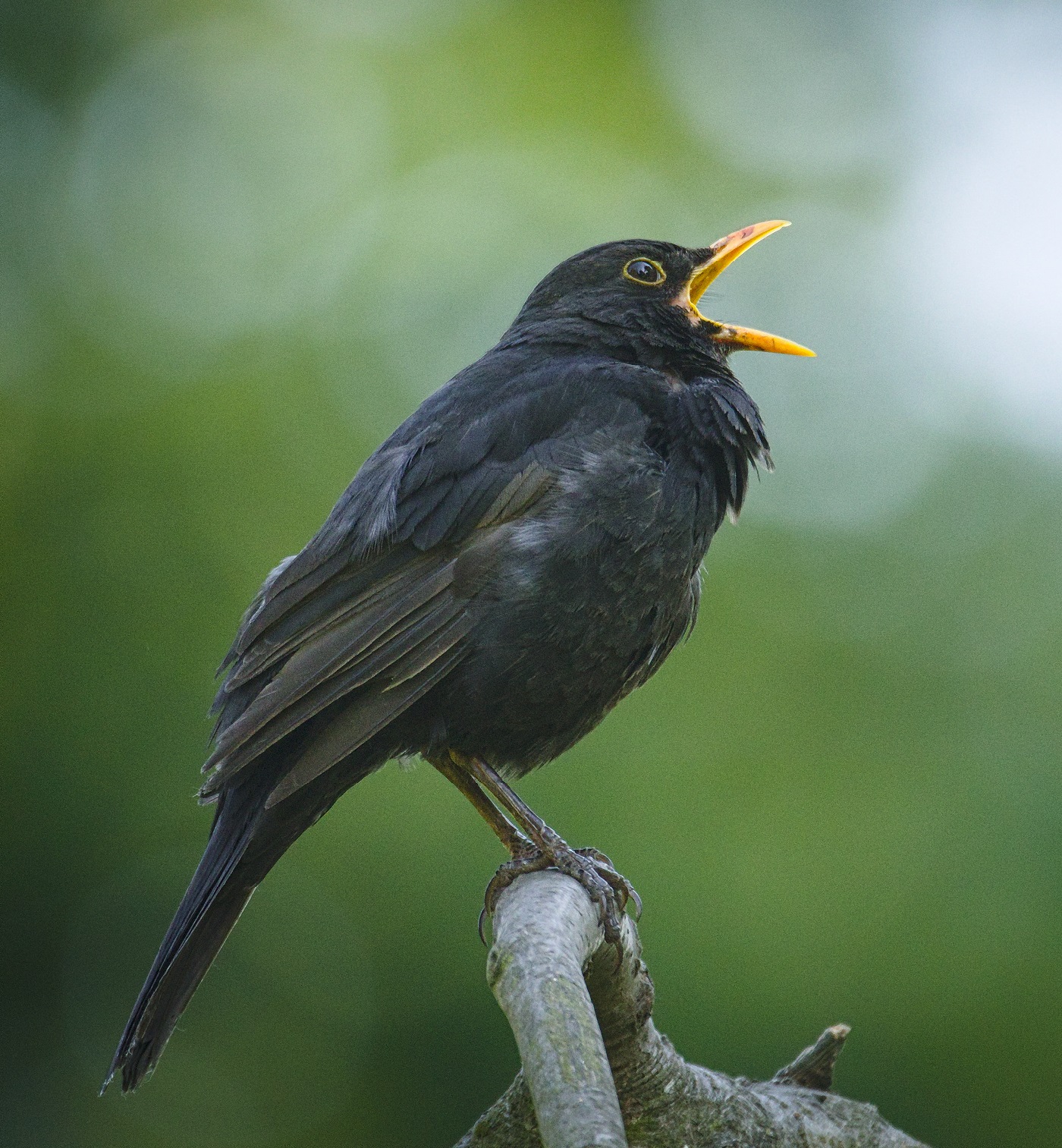
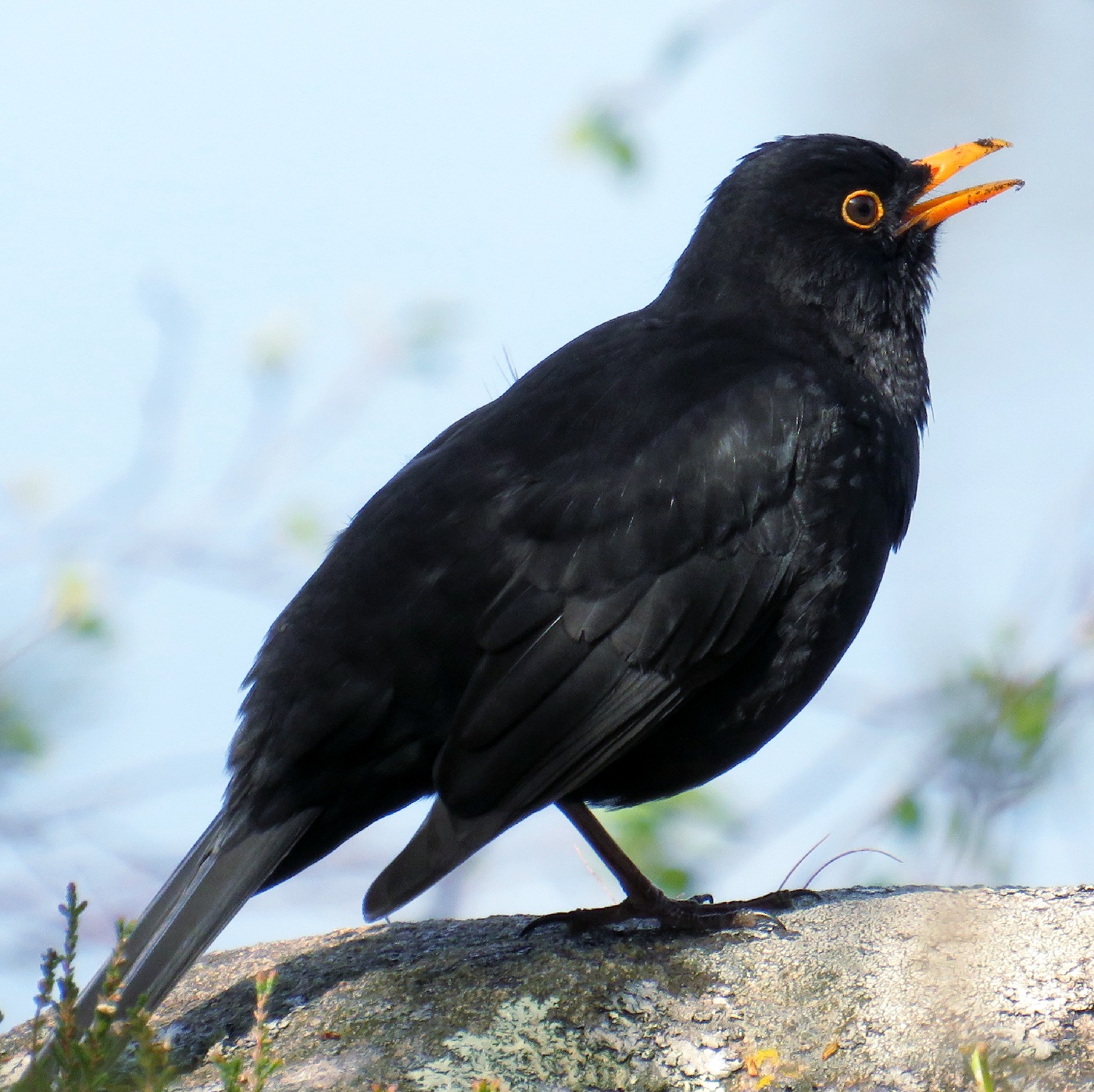
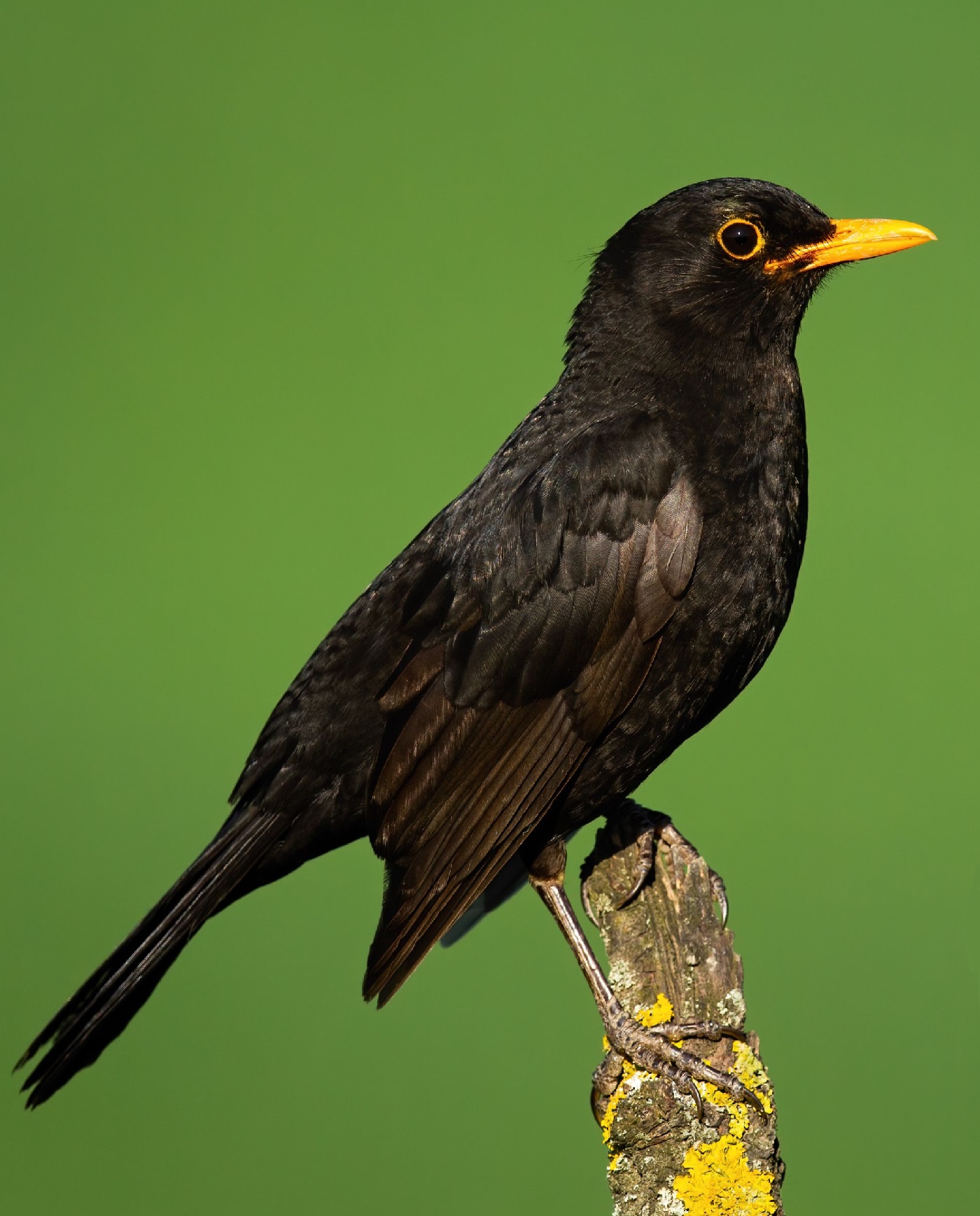
Other dark birds on the lawn
Tail length and the way the bird moves on the ground are the quickest checks.
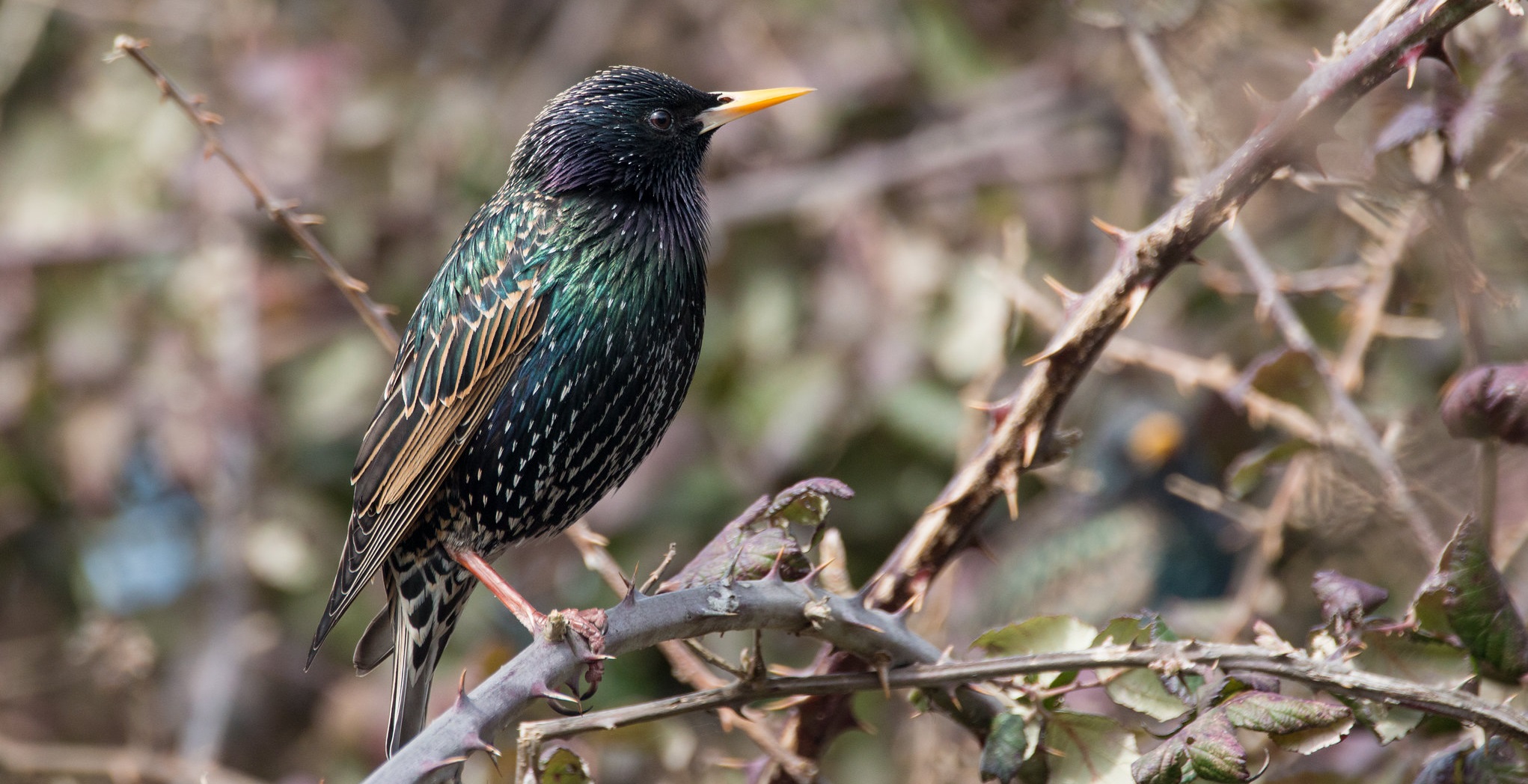
Starling
Shorter tail, pointed triangular wings and a white-spangled coat in winter; it walks instead of hopping.
Cuckoo eggs and Blackbird lifespans
Do Cuckoos lay eggs in Blackbird nests?
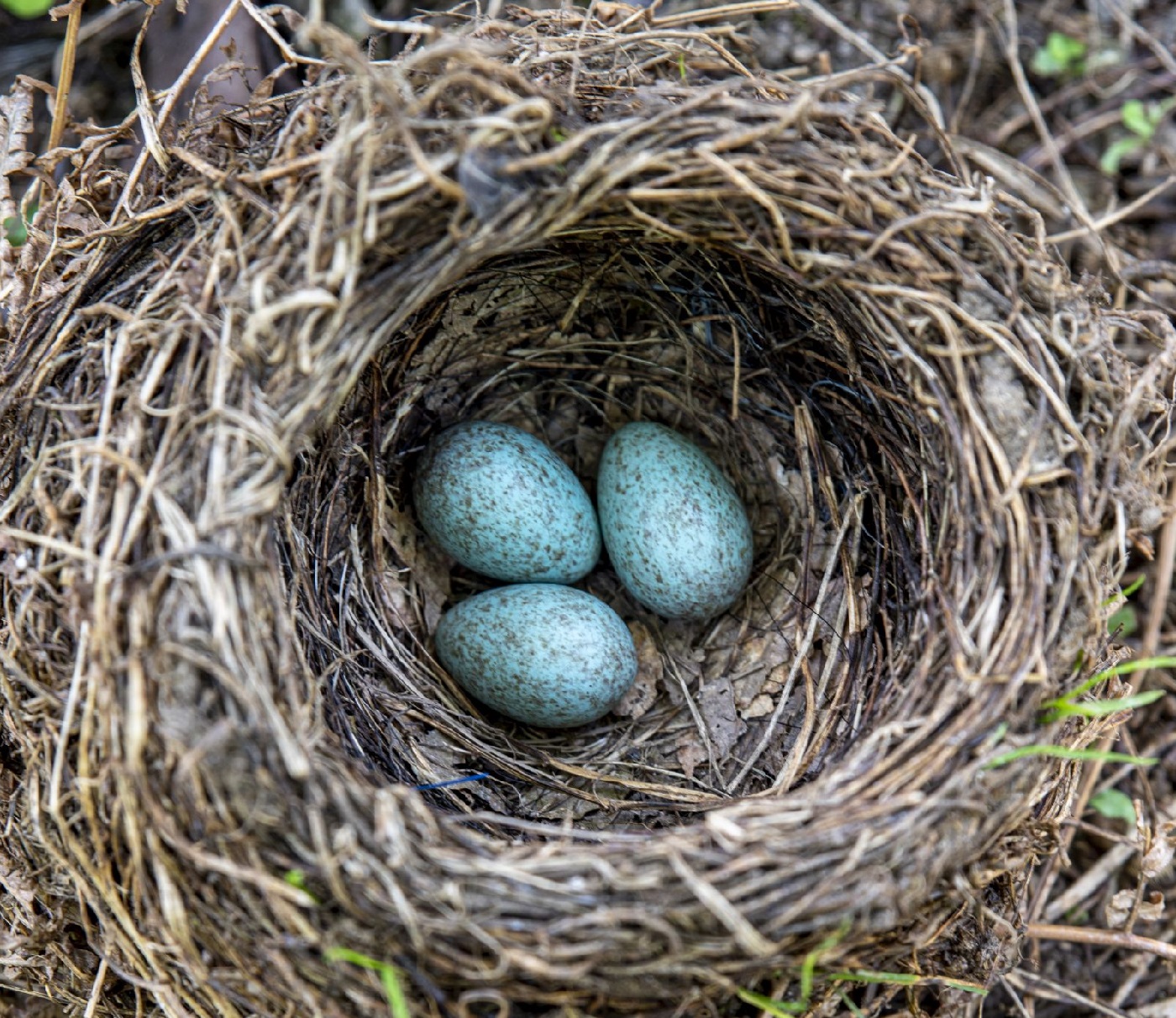
Very rarely. Blackbirds recognise adult Cuckoos and throw out eggs unlike their own; of 59,770 UK nests examined, only three held a Cuckoo egg.
How old can a Blackbird get?
The average is 2.4 years, but ringing data include one bird that reached 21 years and 10 months.