
Small birds bolt from the feeder and a grey-backed hawk shoots low over the fence: the sparrowhawk regularly hunts gardens in towns and cities. It is Ireland's commonest raptor and nests even in Dublin, close to the city centre, using parks and big gardens.
An ambush hunter that succeeds about one time in ten
Only around 10% of attacks end in a kill, so everything depends on surprise. The hawk waits out of sight in a hedge, copse, orchard or tree belt, then breaks out fast and low at birds that have come too close.
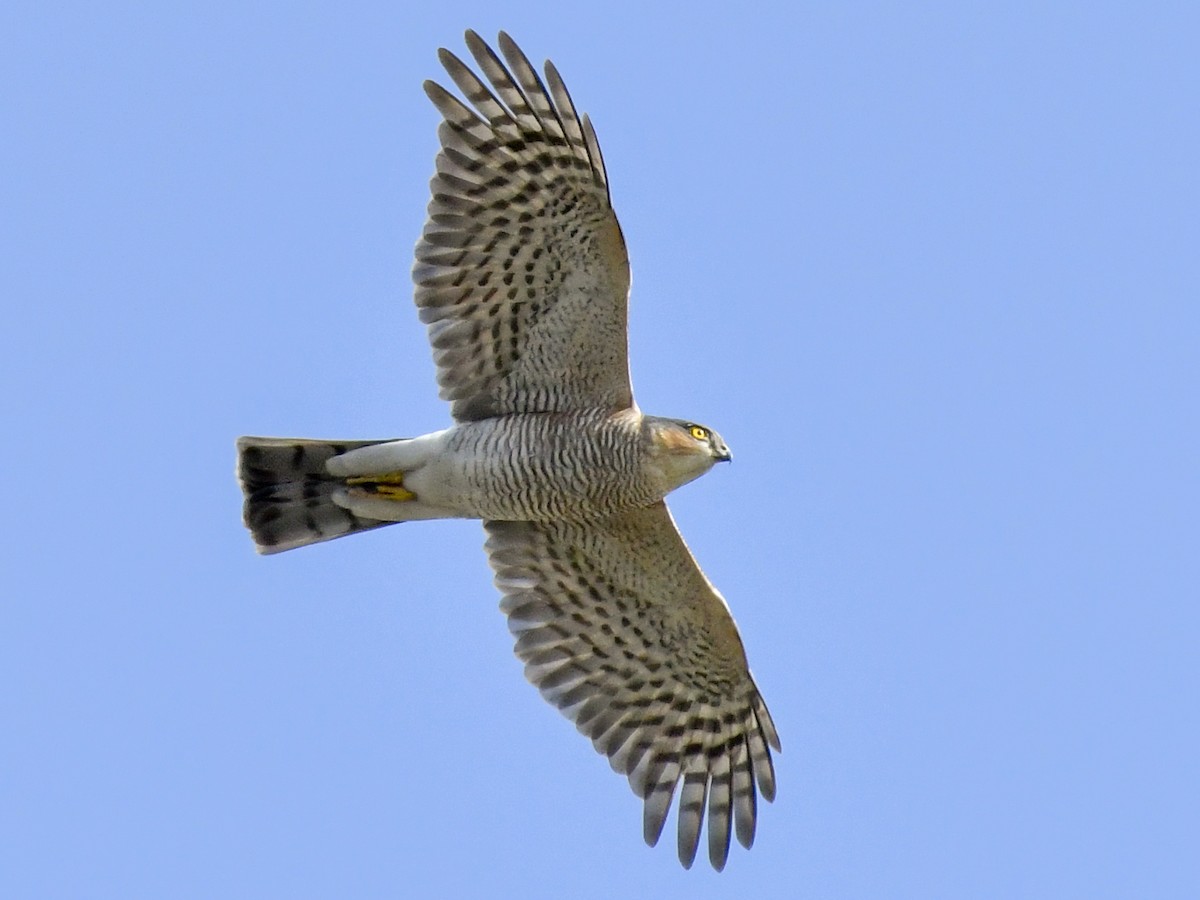
Blunt wings carry it through narrow openings in a hedge or fence, and the long, square-ended tail swings it round tight turns between trunks. A chase can end with the hawk flipping upside down to snatch prey from below, or even chasing it on foot.
Ian Newton recognised seven hunting methods, hunting by sound among them. Most of its 2–3 km a day are flown below the treetops.
Listen to the tits, not the hawk
Often the first sign is the alarm of the birds it hunts. Great Tits use one call when mobbing a predator and another when escaping a hawk close by.
A distant sparrowhawk in flight draws a different alarm, so high that the tit hears it well and the hawk does not.
The hawks themselves are noisiest in summer. For about a month after their first flight the young stay near the nest, and their begging cries to the parents carry a considerable distance.
Tits for him, thrushes for her
The size gap splits the menu. Males mostly catch tits, finches, buntings and sparrows, regularly up to about 40 g; females go for thrushes and starlings and can tackle birds of 500 g or more.
Birds that feed well away from cover, or stand out by colour or behaviour, are caught more often, so House Sparrows and great tits are at risk. The prey list runs to more than 120 species.
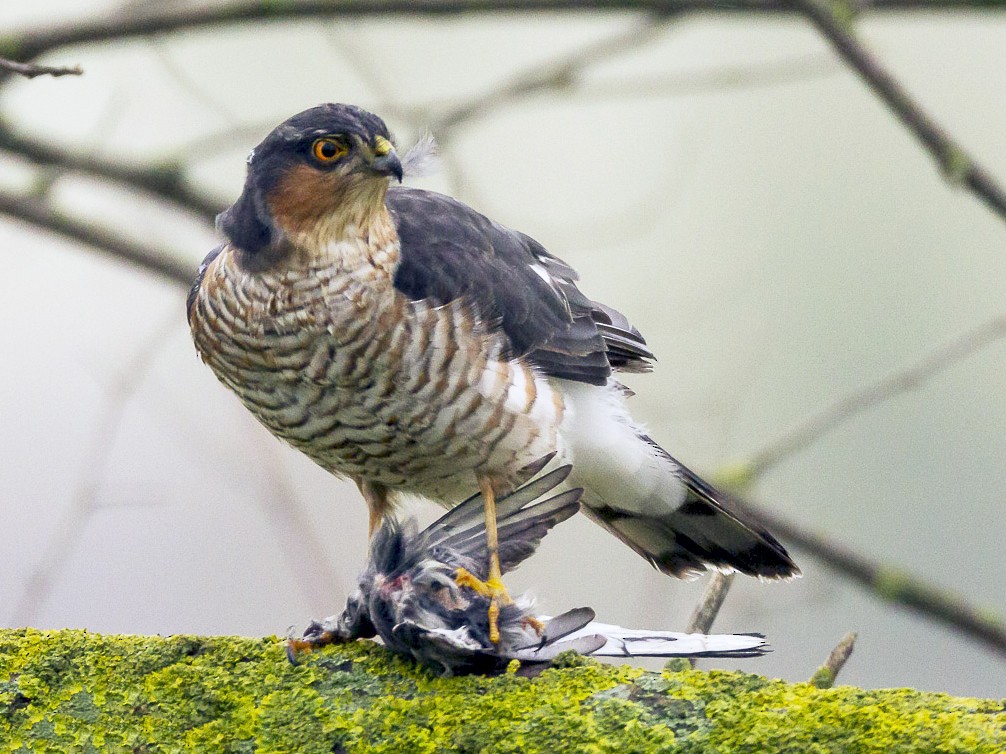
Standing on its catch, the hawk plucks it and usually starts on the breast muscles, leaving the bones.
A fresh twig platform every spring
Pairs breed in well-grown woodland, often conifer or mixed, open enough to leave a choice of flight paths. Each year a new nest goes up near the last one, the male doing most of the building: a loose platform of twigs about 60 cm across, sometimes on an old Wood Pigeon nest.
Four or five eggs follow, laid two or three days apart, and hatch after 33 days. While the chicks are small she stays with them and he does the hunting, bringing six kills a day in the first week and ten by the last.
The young move out onto branches at 24–28 days and are fed for roughly another month. Breeding success hinges on the female keeping her weight up while he feeds her.
Short wings, long tail and a big gap between the sexes
The female can be 25% larger than the male and up to twice his weight, one of the widest size differences in any bird. That pattern is typical of the hawks that hunt other birds.
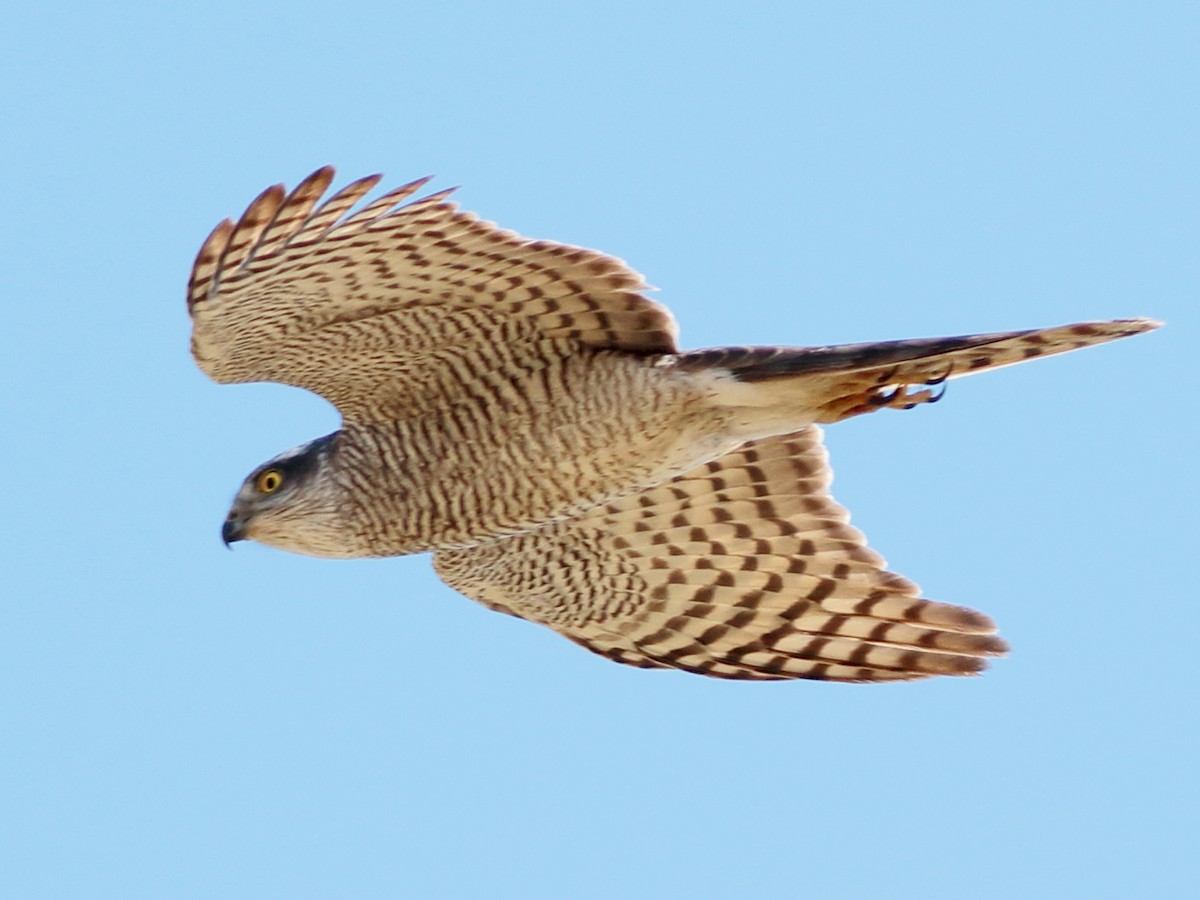
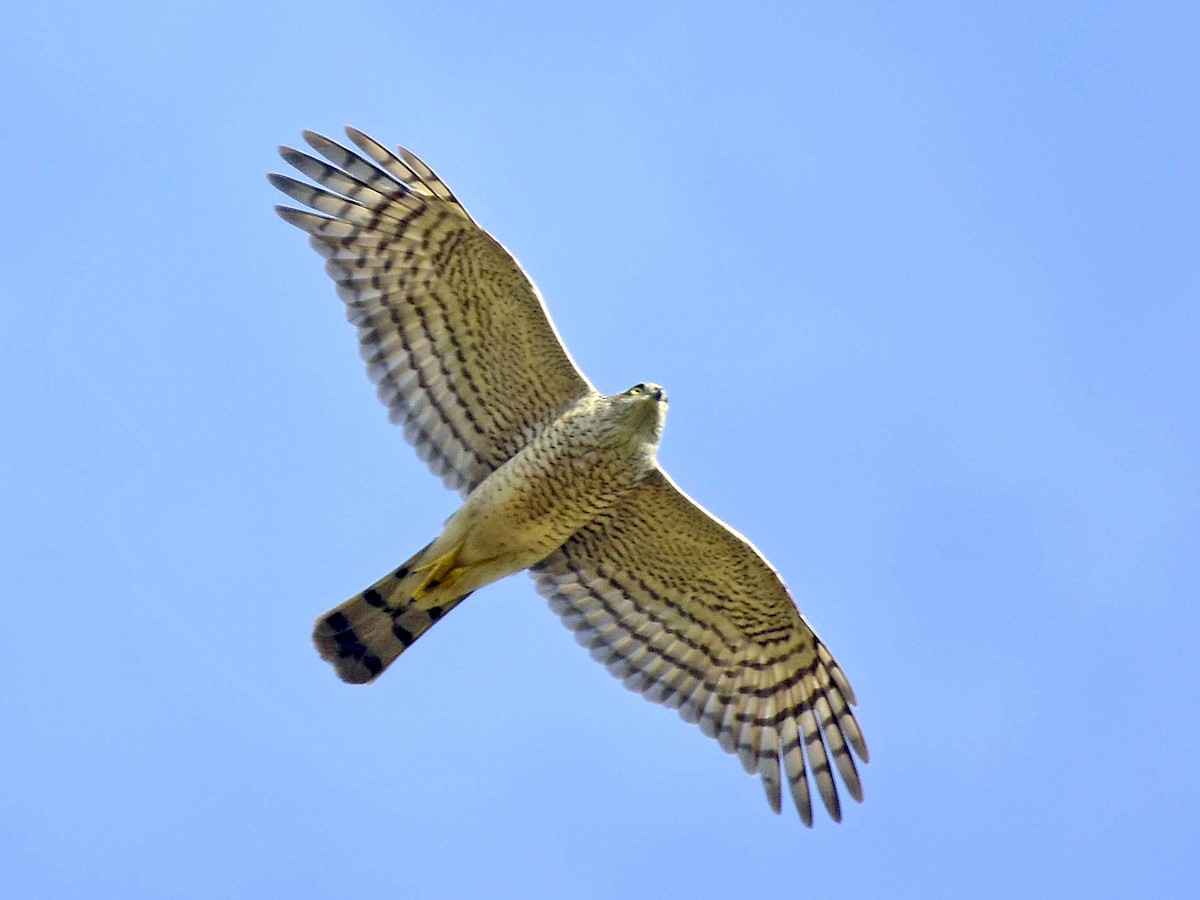
An adult male is slate-grey above, sometimes bluish, with fine reddish barring below that looks plain orange at range. The female is grey-brown above with brown bars below, and juveniles are warm brown with coarse bars or spots.
In flight, watch the rhythm: a few flaps, then a glide, giving an undulating line. A big female can be confused with a male Goshawk, which is bulkier and longer-winged with slower wingbeats.
Loudest when the young leave the nest
British and Irish sparrowhawks can be seen year-round, while birds from the colder north of Europe move south for winter. Females are heaviest in May at laying time, and the noisy fledgling weeks follow in summer.
Sparrowhawk: photos to compare
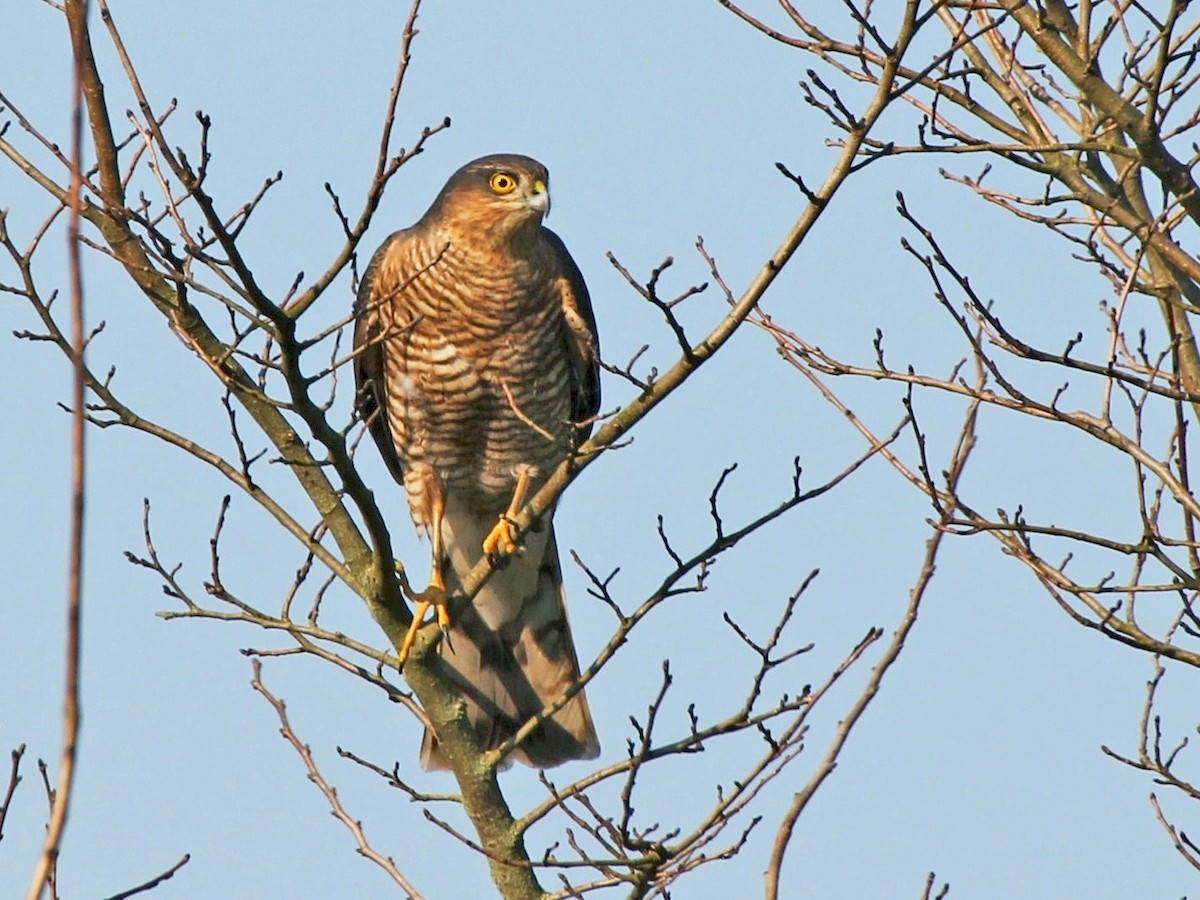
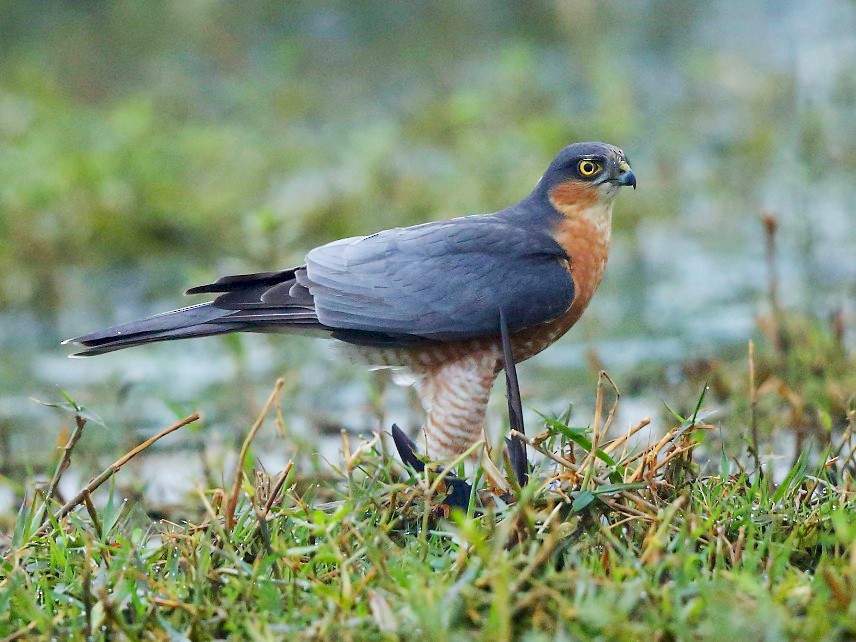
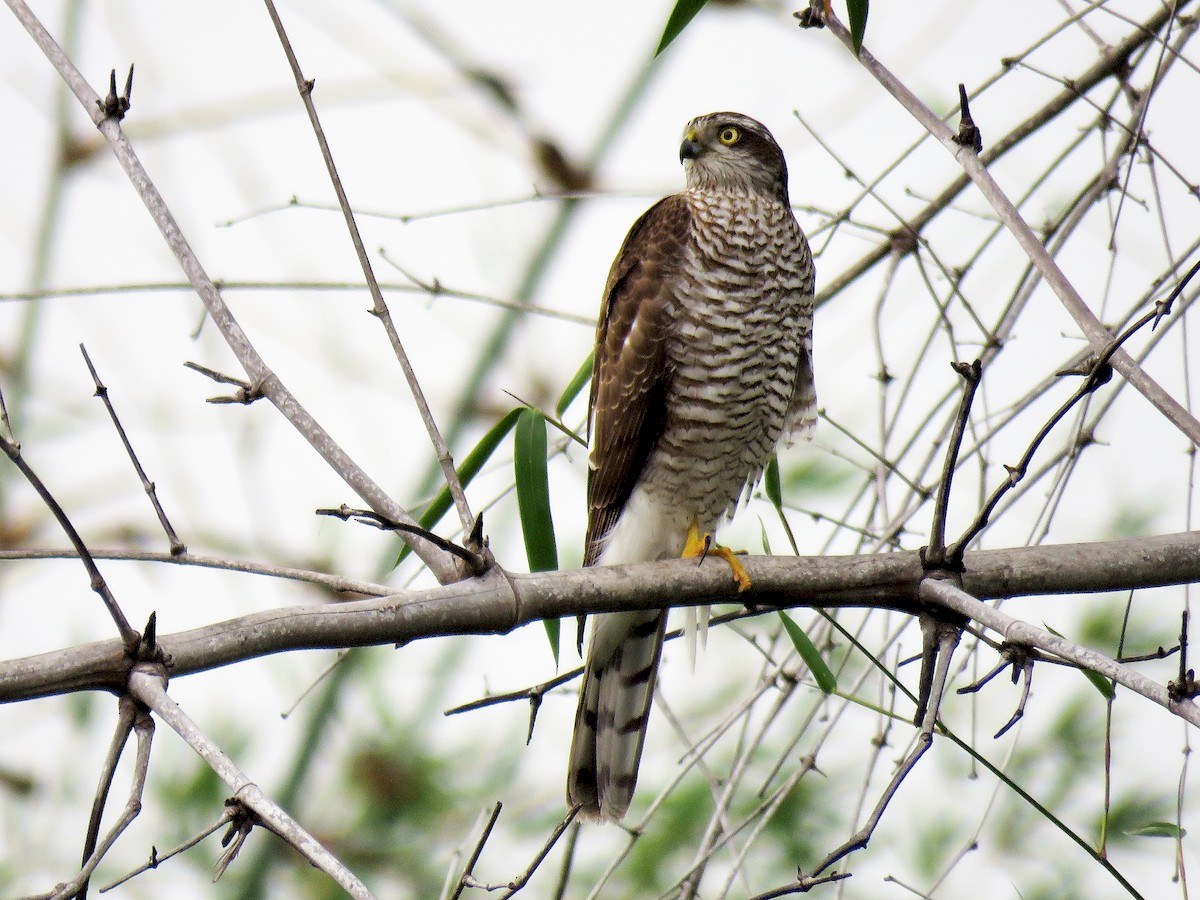
Hawk or falcon along the hedge line
Wing shape and flight rhythm are the fastest checks.
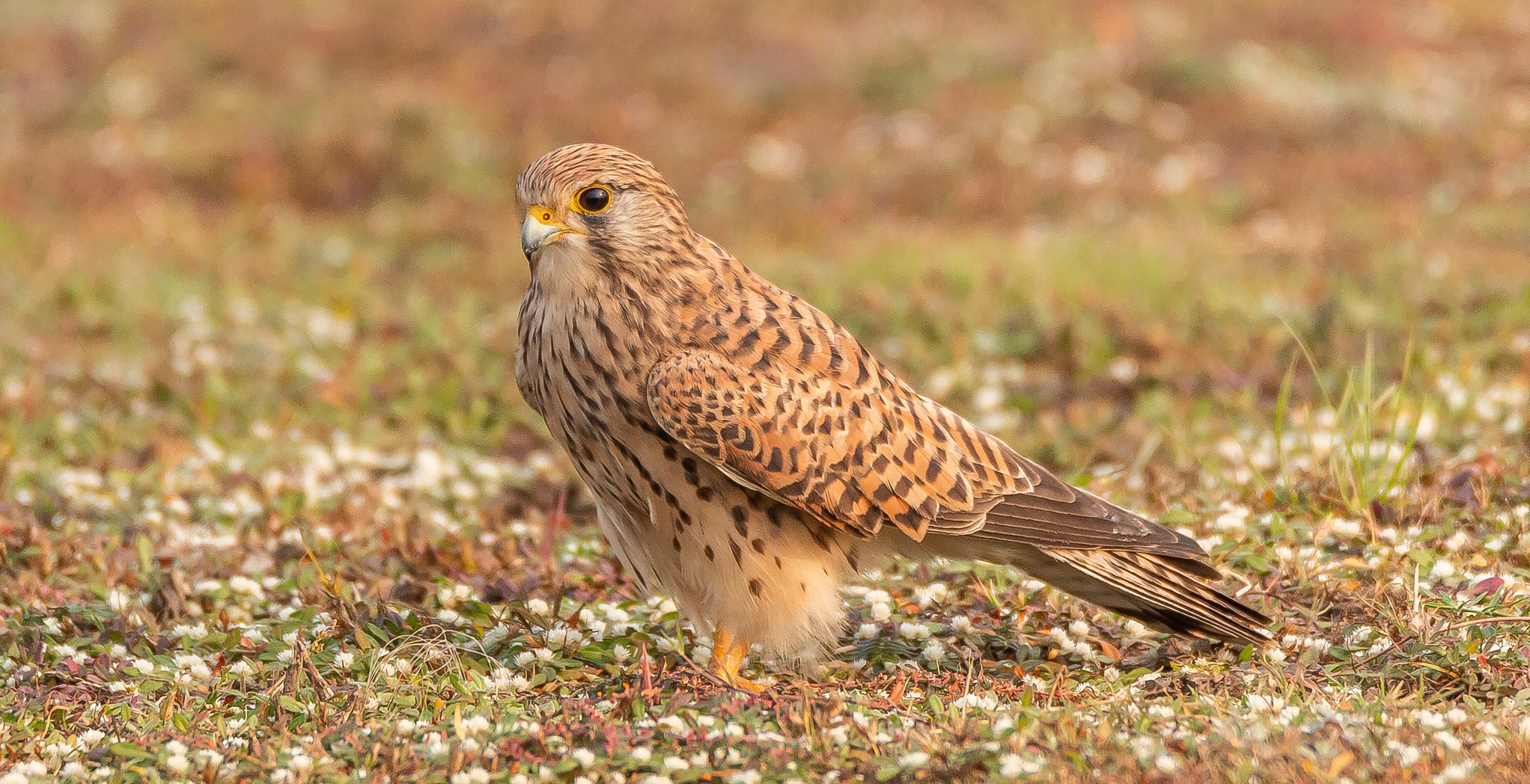
Kestrel
Long, pointed falcon wings and frequent hovering over open ground; the sparrowhawk has short, rounded wings and hunts from cover.
Sparrowhawks, pigeons and songbirds: the evidence
Do sparrowhawks kill many racing pigeons?
Very few. A two-year Scottish study published in 2004 put the sparrowhawk's share at under 1% of racing pigeons, against at least 2% for peregrines, while owners lost 56% of their birds each year.
Are sparrowhawks to blame for fewer songbirds?
Long-run figures from the Common Bird Census suggest not: year-to-year changes in songbird numbers followed the same pattern with or without the predators present. A 1949–1979 study at Bookham Commons, Surrey, found no songbird more common when sparrowhawks were absent.