
A broad-winged raptor circling over farmland in Britain is most likely this one: with 44,000–61,000 pairs by 2001, it is by far the commonest daytime bird of prey here. A member of the hawk and eagle family, it is now found across Ireland and in almost all of England, Wales and Scotland.
Where wood meets pasture
Buzzards live on the boundary between cover and open ground. The classic territory is a small wood, a forest edge or a shelterbelt with grassland, arable and other farmland alongside. Open moorland works too, provided a few trees remain for perching and nesting.
That edge is ideal vole country, and voles are central to the diet. In Scotland rabbits matter greatly, and in the north of Ireland, which has no native voles, rabbits come first.
Towns suit them less well, though suburbs with parks and big gardens near farms are used. In two parts of the English Midlands, the densest populations sat among old, unimproved grazing and mature woods.
Fence posts, telegraph poles and long, patient sits
Scan the obvious perches: treetops, bare branches, telegraph poles and fence posts, plus rocks and ledges in the uplands. A resident bird may spend more than half its day sitting still, so a hunched shape on a post deserves a look through binoculars.
Aloft it soars with ease but looks heavy in level flight. From February, territorial pairs circle high on slightly raised wings. The male's sky-dance is a rollercoaster: a steep climb until he stalls, a drop on closed wings, then up again, often 10 to 20 times in a row.
Outside the breeding season, check large fields for birds walking on the ground. Counts of 15–30 foraging in a single field have been made, mostly of young birds.
A plaintive ‘pee-yow’ and a mew like a cat
The main call is a drawn-out, mournful ‘pee-yow’ or ‘peee-oo’ that carries a long way. Pairs use it to stay in contact, and it turns more excited in display flights.
Tone gives away the mood. Aggression makes it sharper and more ringing; a bird chasing an intruder stretches it out and lets it waver; near the nest the warning becomes a yelp, and real alarm cuts it short and explosive.
Listen too for a mew like a cat, repeated in flight or from a perch, and a repeated ‘mah’ when mates answer each other. Residents call all year.
No two quite alike: reading a variable plumage
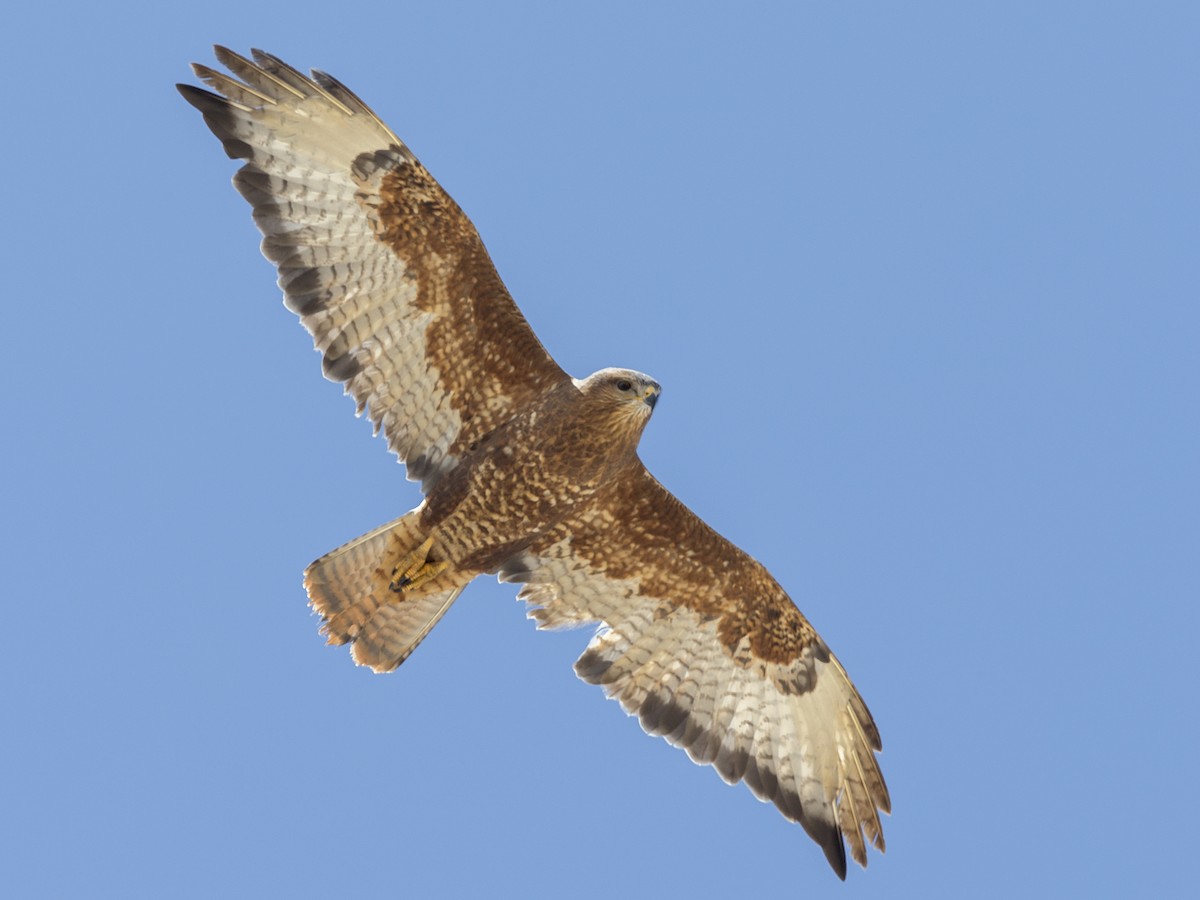
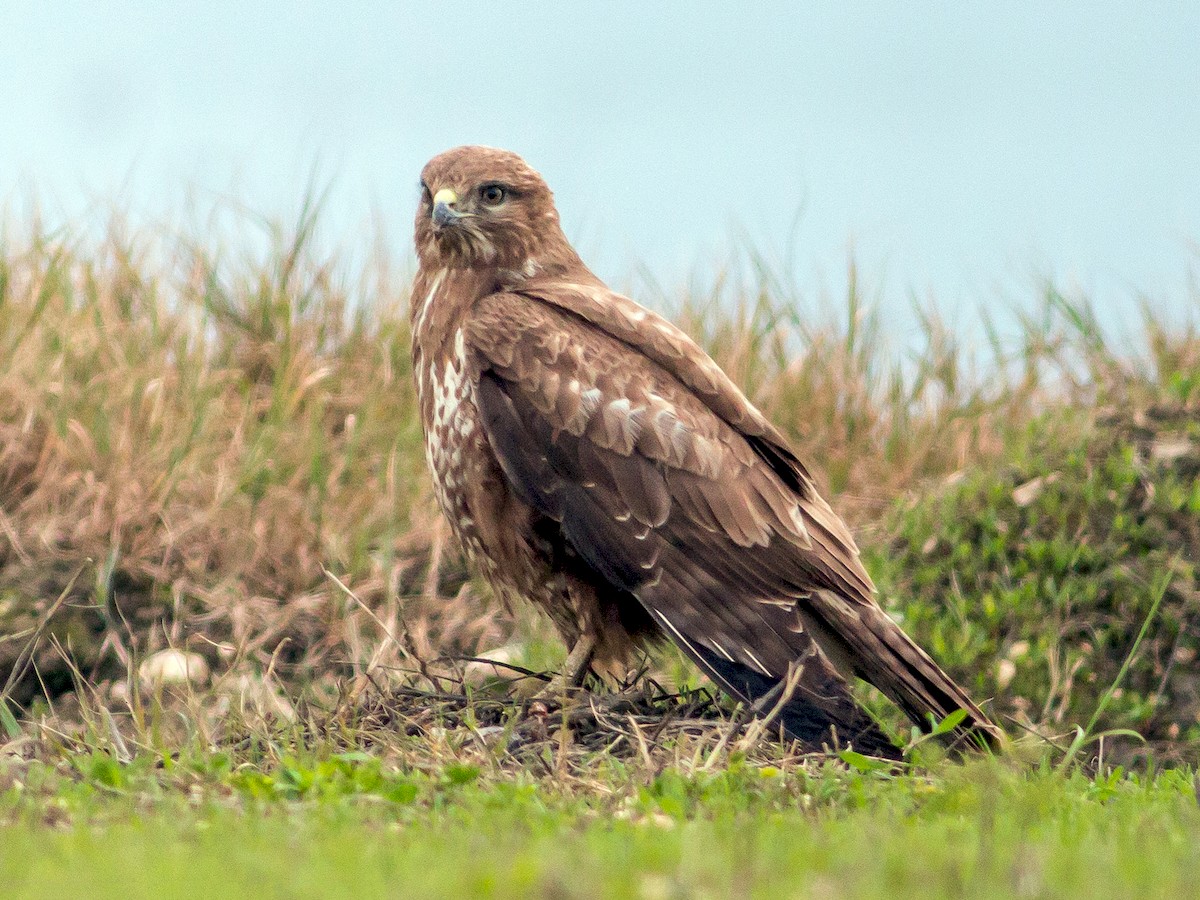
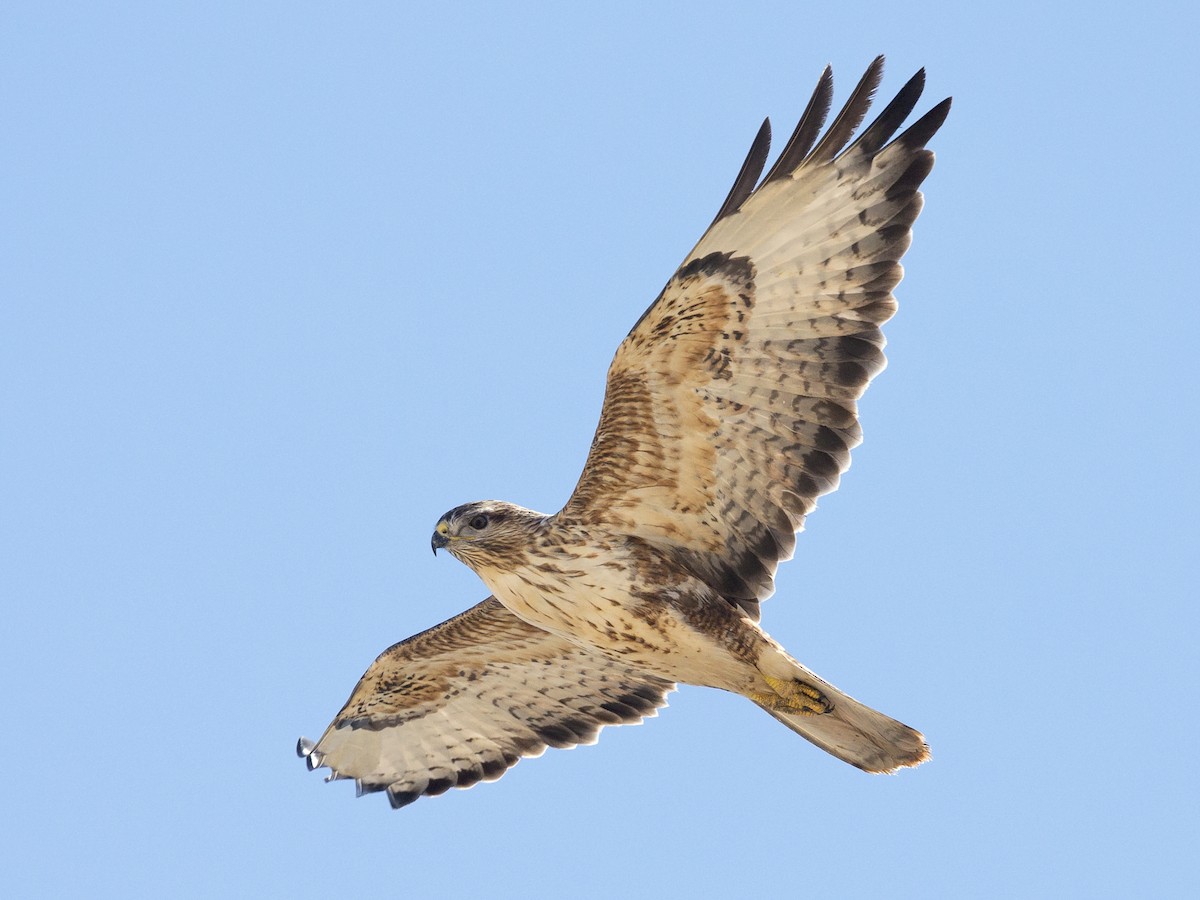
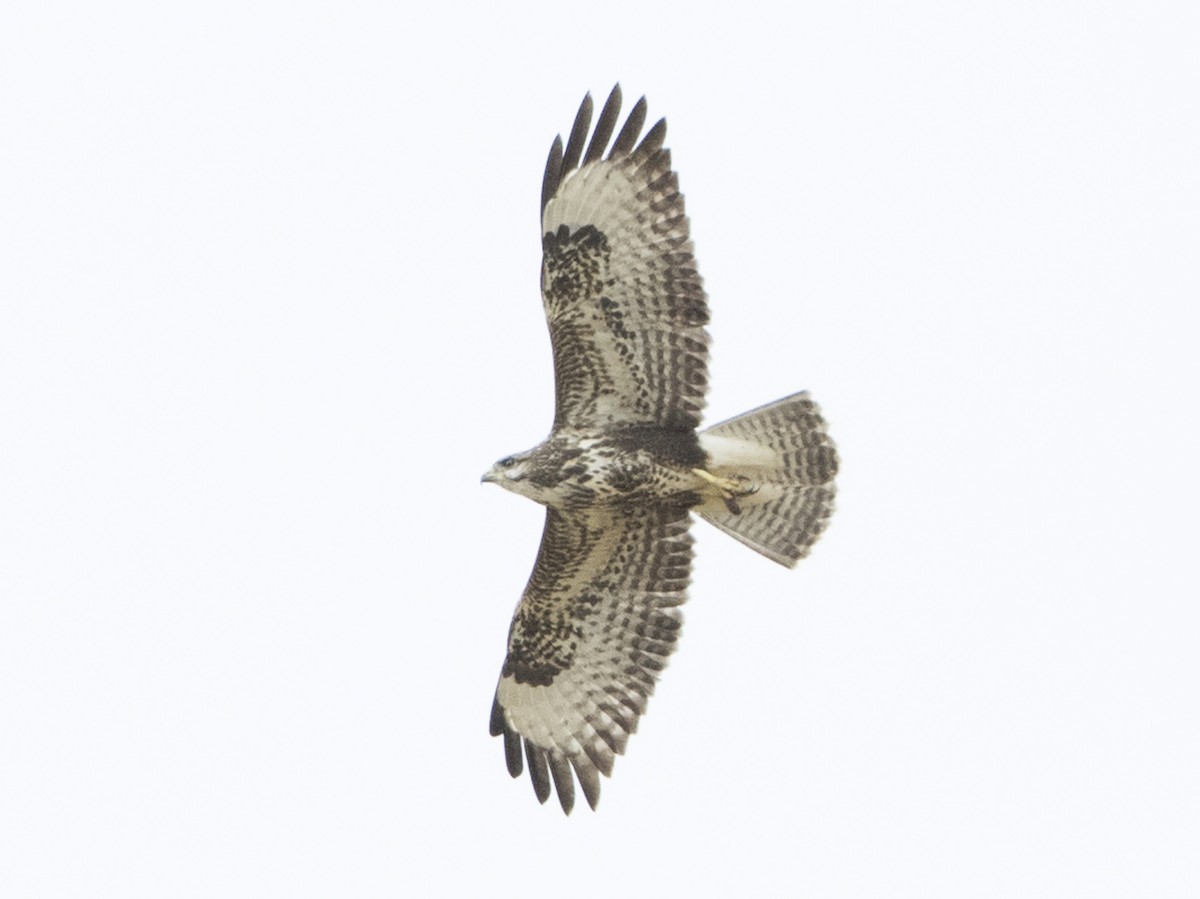
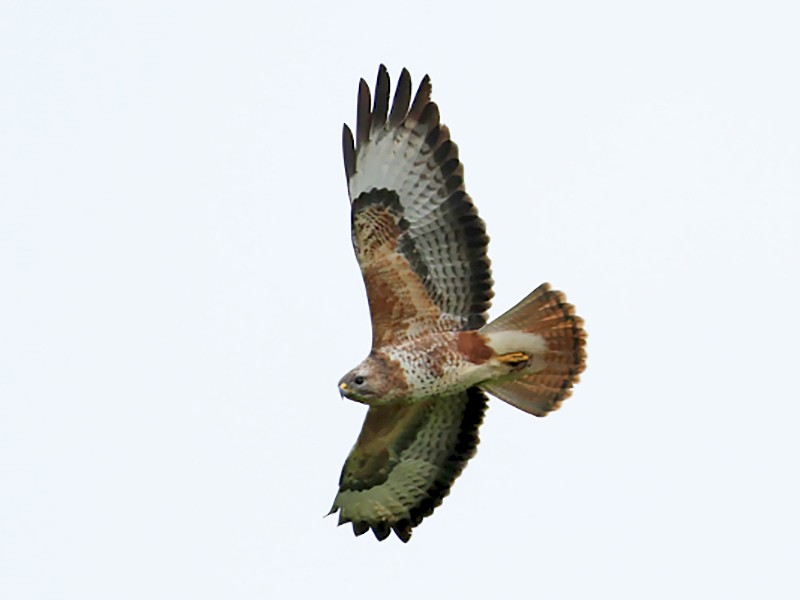
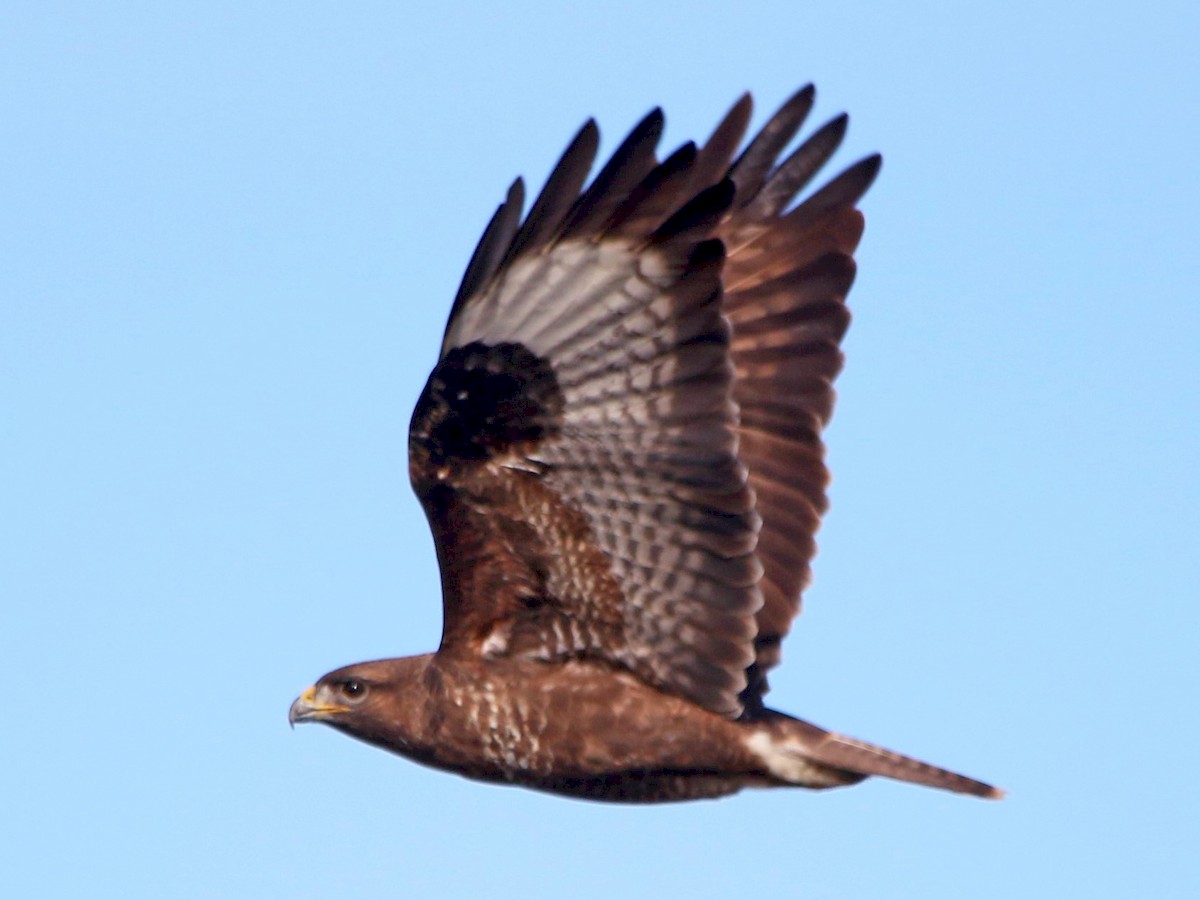
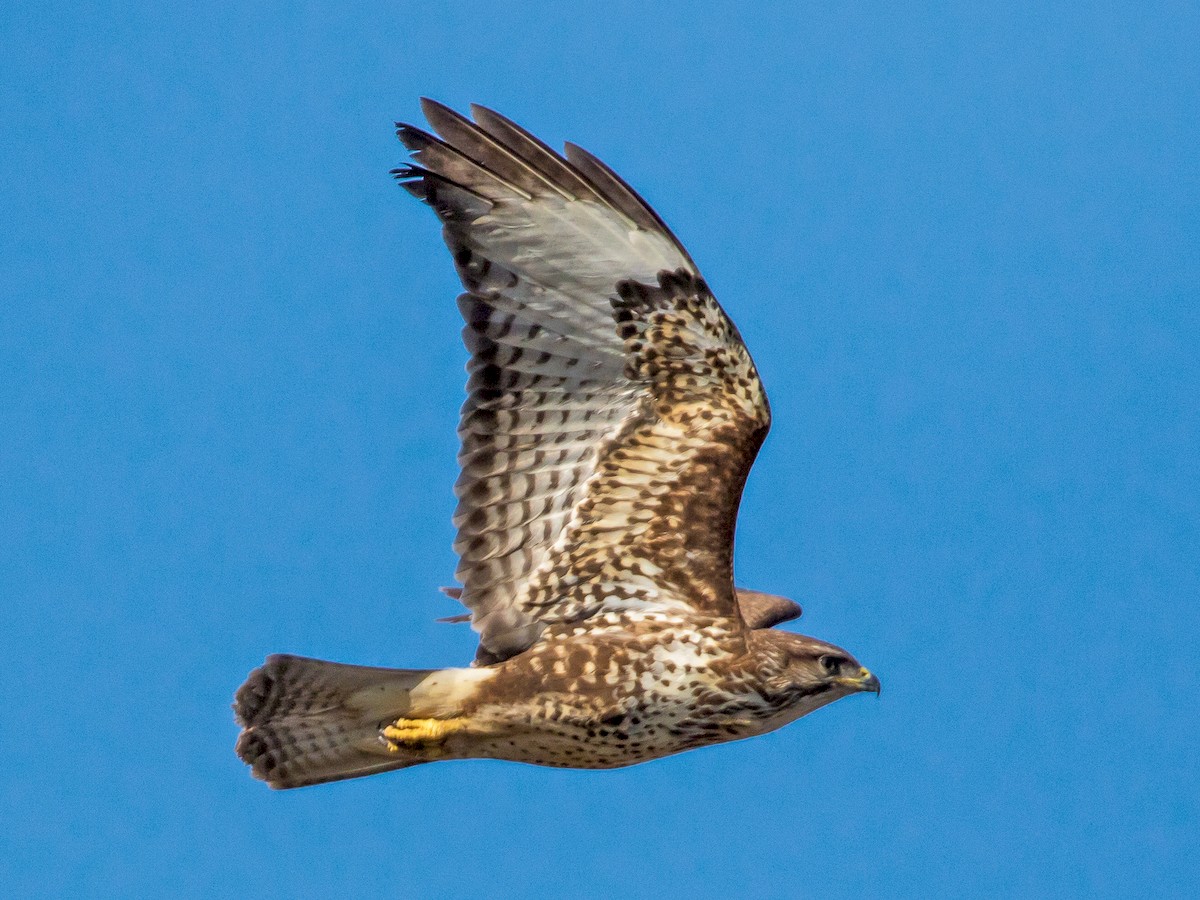
Start with size and shape. At 40–58 cm with a 109–140 cm span, it is clearly bigger than a Kestrel or a Sparrowhawk, with a round head and a fairly short tail.
A typical British bird is dark brown above, with a streaked white throat, a darker chest and a pale U across the breast. Beyond that, plumage ranges from nearly black-brown to mostly white, although a Europe-wide study covering 2000–2022 found the extremes becoming rarer.
From below in flight, the rear edge of the wing looks dark and paler birds show dark wrist patches shaped like commas. From above, a broad dark band near the tail tip is one of the best marks. Juveniles have paler eyes and streaks rather than bars underneath.
Calling all year, displaying from February
Adults here mostly stay on their home ground through the year and keep calling. Territorial flights start in February, laying follows in April, and sky-dances return in autumn.
What the Buzzard looks like
Ireland, earthworms and the comeback after persecution
Do buzzards breed in Ireland?
Yes. They recolonised Ireland in the 1950s and had reached 26 pairs by the 1990s. Extra food put out for them is said to have helped, especially where rabbits have become scarce.
Do buzzards really eat earthworms?
They do. In Europe the invertebrate share of the diet is mostly earthworms, beetles and caterpillars, eaten mainly by young birds still learning to hunt or where winters are mild. Over 300 prey species have been recorded in all, from ants to rabbits.
Why are there more buzzards than there used to be?
British numbers climbed gradually after a period of persecution, habitat change and prey shortages. At least 238 persecuted birds were recovered in England between 1975 and 1989. In the late 1950s, when people caused most deaths, life expectancy was just 6.3 years.